
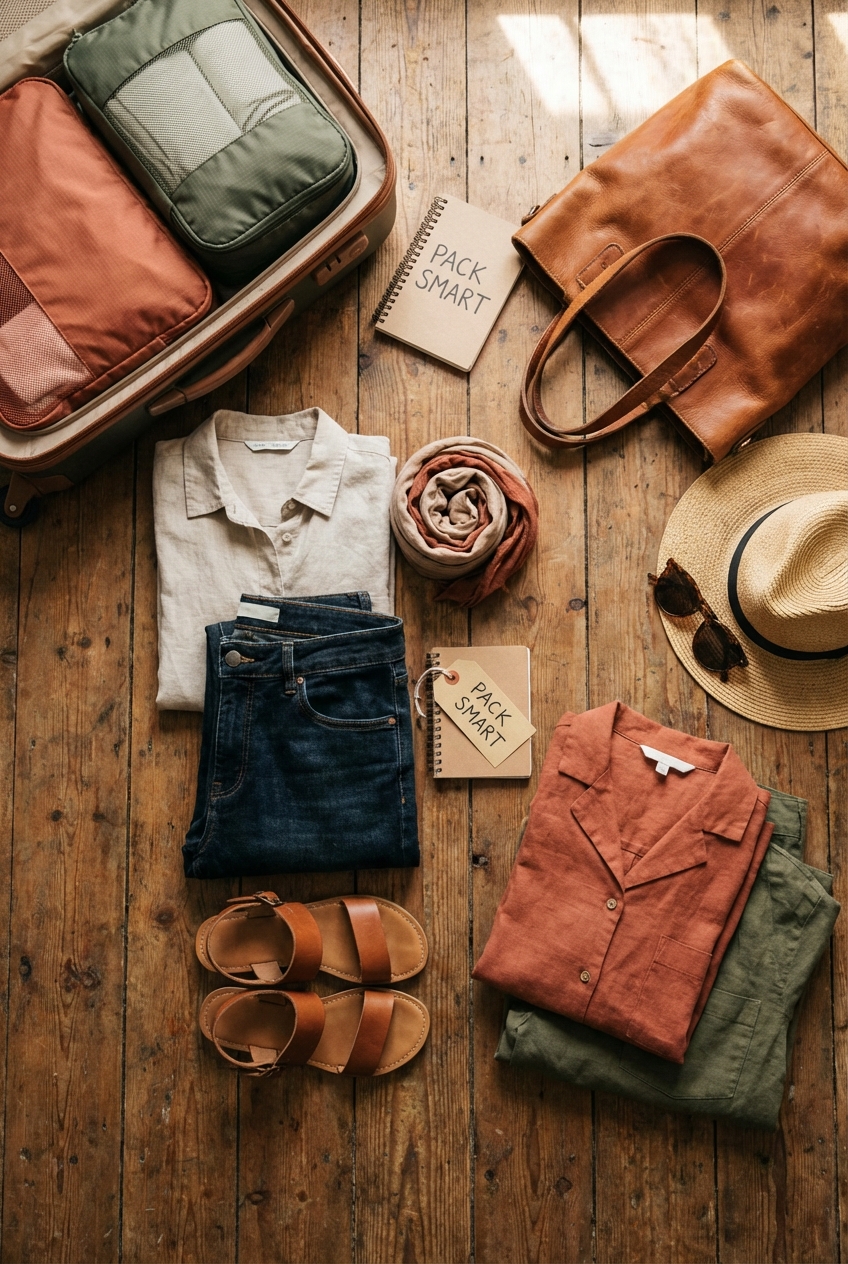
Travel Capsule Wardrobe Packing Smart For Any Destination
There was a time early in my styling career when I believed options were the ultimate luxury. I would arrive in Milan or Paris with two massive suitcases, convinced that having a different outfit for every possible scenario was the key to being well-dressed. I was wrong. I spent half my trip wrestling with luggage and the other half paralyzed by decision fatigue in a messy hotel room.
True luxury is actually efficiency. It is the ability to zip up a carry-on knowing you have exactly what you need to look chic, polished, and appropriate for any venue. A well-curated travel capsule wardrobe eliminates the stress of “what to wear” and allows you to focus on the experience of the destination itself.
Whether you are heading to a design conference in Copenhagen or a relaxation retreat in Cabo, the principles of a functional wardrobe remain the same. It is about versatility, fabric choice, and a cohesive color story. If you need visual inspiration on how to piece these looks together, be sure to check out the Picture Gallery at the end of the blog post.
The Architecture of a Capsule: The Rule of Three
Just as we balance textures and distinct elements in a living room, a travel wardrobe relies on structural balance. The most common mistake travelers make is packing individual outfits rather than interchangeable pieces. This leads to a heavy suitcase full of “one-hit wonders.”
To combat this, I use a modified version of the “Rule of Three.” For a standard one-week trip, you generally need three bottoms (pants/skirts) and nine tops. This 1:3 ratio works because pants can be worn multiple times without washing, whereas tops sit closer to the skin and are more memorable in photos.
Stylist’s Note: Always apply the “Three-Outfit Rule” before an item earns a spot in your suitcase. If a blouse only matches one pair of trousers, it stays home. It must coordinate with at least three other items to be worth the luggage space.
The Core Formula
- 2-3 Bottoms: Usually one denim, one tailored trouser, and one skirt or short depending on the climate.
- 5-7 Tops: A mix of base layers, button-downs, and one statement piece.
- 1-2 Dresses or Jumpsuits: These are your “one-and-done” pieces for evenings or days when you don’t want to coordinate separates.
- 2 Layers: One lightweight cardigan or blazer and one weather-appropriate outer layer (trench or coat).
Fabric First: Material Matters
In interior design, we choose performance fabrics for high-traffic areas. In travel fashion, we must choose performance fabrics for high-stress situations. The most beautiful silk blouse is useless if it looks like a crumpled tissue the moment you pull it out of your bag.
You need materials that drape well, resist creasing, and can be spot-cleaned in a pinch. Natural fibers are generally more breathable, but they require careful selection. A 100% linen suit is a nightmare for travel unless you embrace the wrinkles as a style choice. Instead, look for smart blends.
The Best Travel Fabrics
- Merino Wool: This is the gold standard. It is temperature-regulating, naturally antimicrobial (meaning it doesn’t hold odors), and resists wrinkles.
- Triacetate or Tencel: These semi-synthetic fibers drape beautifully like heavy silk but are much more durable and resistant to creasing.
- Cashmere: For colder climates, cashmere provides the highest warmth-to-weight ratio. It packs down small but keeps you incredibly warm.
- Jersey Knits: A high-quality cotton/modal blend jersey is perfect for dresses because it shakes out easily once hung up.
Common Mistake + Fix:
Mistake: Packing heavy denim or chunky cotton sweaters that take up half the suitcase.
Fix: Wear your heaviest items (jeans, boots, heavy coat) on the plane. Pack the thinner, layerable items.
Establishing the Color Palette
A cohesive color palette is the secret to a capsule that feels limitless. If every top matches every bottom, the number of potential outfit combinations grows exponentially. This is the same logic used when selecting finishes for a home renovation; continuity creates flow.
I recommend sticking to a strict palette of two neutrals and one accent color. Neutrals ground the look and ensure you look sophisticated. The accent color adds personality and prevents the wardrobe from feeling boring.
Selecting Your Neutrals
Choose your base based on your coloring and the destination’s vibe.
Urban/Chic: Black and White.
Coastal/Soft: Navy and Cream.
Earthy/Warm: Camel and Olive.
Adding the Accent
Once the foundation is set, pick one accent color to run through the capsule. If you choose emerald green, you might pack a green silk scarf, a green bathing suit, and a blouse with a green print. This allows you to mix and match without clashing.
The Shoe Strategy
Footwear is the most challenging category because shoes are heavy, rigid, and take up significant volume. This is where I see the most “packing regret.” You do not need a different pair of shoes for every dinner.
The hard rule is three pairs maximum for a 7-10 day trip. This covers almost every eventuality if you choose the styles correctly. Comfort is non-negotiable here; nothing ruins a trip faster than blisters from footwear that hasn’t been road-tested.
The Trio That Works
- The Walking Shoe: A sleek, white leather sneaker is currently acceptable almost everywhere, from sightseeing in Rome to a casual lunch in New York. Keep them pristine.
- The Elevated Flat or Loafer: This is your day-to-night shoe. A black horsebit loafer or a pointed-toe ballet flat looks professional for meetings and chic for dinner.
- The Evening Option: Depending on the season, this is either a block-heeled sandal or a sleek ankle boot. Avoid stilettos unless you have a specific gala to attend; cobblestones destroy heels.
Real Project Scenario:
On a recent sourcing trip to Europe, I walked over 15,000 steps a day. I brought brand new boots I hadn’t broken in. By day two, I was buying bandaids at a pharmacy. Always break in your travel shoes for at least two weeks before departure.
Contextual Packing: Destination Specifics
While the formula remains consistent, the specific pieces change based on the environment. Context is everything. You wouldn’t put a velvet sofa on a patio, and you shouldn’t wear polyester in the tropics.
The European City Break (Paris, London, Milan)
The goal here is polish. European cities generally lean more formal than American ones. Leave the athleisure and leggings at the hotel unless you are actually in the gym.
- Key Piece: A tailored trench coat. It instantly pulls together jeans and a tee.
- The Pant: Wide-leg trousers in a charcoal or navy wool blend.
- The Shoe: Leather ankle boots or loafers.
The Resort Getaway (Caribbean, Maldives, Amalfi)
Focus on breathability and ease. You want fabrics that float away from the body rather than clinging.
- Key Piece: A granddad-collar linen shirt. Wear it open over a swimsuit or buttoned up with shorts for lunch.
- The Pant: Drawstring linen trousers or silk shorts.
- The Shoe: Leather slides (flip-flops are for the pool deck only).
The Adventure Trip (Safari, Hiking, Mountains)
Function leads here, but form shouldn’t be abandoned. Stick to earth tones to hide dust and dirt.
- Key Piece: A utility jacket with plenty of pockets.
- The Pant: Technical fabric trousers that look like regular pants but wick moisture.
- The Shoe: A stylish hiking boot that can double as a walking shoe.
Accessories: The High-Impact Tools
In interior design, accessories are the “jewelry” of the room. In a capsule wardrobe, they are the secret weapon. Accessories take up almost no space but completely transform an outfit.
You can wear the same black column dress three nights in a row, and no one will notice if you switch up the accessories. One night it’s bold gold statement earrings and a red lip; the next, it’s a silk scarf tied at the neck and a sleek ponytail.
Essential Accessories
- Scarves: A large cashmere wrap serves as a blanket on the plane and a shawl on chilly evenings. A small silk square adds color to a neutral bag or neck.
- Jewelry: Stick to one metal tone (gold or silver) so everything matches. Pack one statement necklace and two pairs of earrings (one stud, one drop).
- Belts: A belt can change the silhouette of a dress or add polish to trousers. It is a tiny item with a huge visual impact.
- Sunglasses: Bring two pairs. One classic shape (like an aviator) and one trendy shape to make basic outfits feel current.
Packing Mechanics: The How-To
You have selected the perfect items. Now, how do you get them to the destination in wearable condition? The debate between rolling and folding is eternal, but the answer is actually “both.”
The Hybrid Method
Roll your knits, denim, and t-shirts. Rolling compresses the air out and prevents hard crease lines. Fold your structured items like blazers, button-downs, and stiff trousers. Lay the folded items on top of the rolled items.
Using Packing Cubes
I strictly use compression packing cubes. They compartmentalize your suitcase, acting like drawers. I dedicate one cube to tops, one to bottoms, and a smaller one to undergarments. This prevents your suitcase from exploding into chaos the first time you need a pair of socks.
What I’d do in a real project:
When packing for a client, I always slip a dryer sheet into each packing cube. It keeps clothes smelling fresh even after a long flight. I also pack a small canvas laundry bag to keep dirty clothes strictly separated from the clean capsule.
Finish & Styling Checklist
Before you zip that bag, run through this final styling checklist to ensure your capsule is airtight.
- The Zipper Check: Have you tried on every single item to ensure zippers and buttons are secure?
- The Weather Audit: Check the destination weather one last time. If rain is predicted, swap the suede shoes for leather.
- The Mix Test: Lay everything out on the bed. Does your accent color clash with any of the neutrals? If so, remove it.
- Undergarment Count: Do you have the right bra for every neckline you packed? (e.g., racerback, strapless).
- Toiletries Edit: Are your liquids actually under 3.4oz? Don’t let expensive skincare get tossed at security.
FAQs
What happens if the weather changes unexpectedly?
This is why layers are critical. Even for a tropical vacation, I always pack one lightweight cashmere sweater or a denim jacket. Weather apps are predictions, not guarantees. A thin thermal tank top takes up zero space but can be a lifesaver if a cold front moves in.
How do I handle laundry for longer trips?
If you are traveling for more than 10 days, plan to do laundry. You do not need to pack 14 days of clothes. Pack for 7 days and wash halfway through. Most hotels offer service, or you can use a sink wash for basics. I always pack a small travel bottle of gentle detergent.
Can I really wear sneakers to dinner in Europe?
In most casual to smart-casual establishments, yes, provided they are clean, sleek, and intentional. A battered gym shoe is a “no.” A pristine leather fashion sneaker paired with a midi skirt or trousers is very much “in.” However, for Michelin-star dining or the opera, switch to your flats or heels.
How do I stop my jewelry from tangling?
Avoid throwing jewelry into a pouch. Thread delicate necklaces through a drinking straw and clasp them to prevent knots. Alternatively, use a travel jewelry roll with dedicated snaps and bands to keep pieces separated and secure.
Conclusion
Mastering the travel capsule wardrobe is a skill that pays dividends for years. It shifts your mindset from “more is better” to “better is better.” When you travel with less, you move through airports with ease, you get dressed quickly, and you feel lighter.
By focusing on fabrics that perform, a color palette that harmonizes, and accessories that elevate, you ensure that you are the best-dressed person in the room—without the baggage fees. Safe travels and happy packing.
Picture Gallery


