
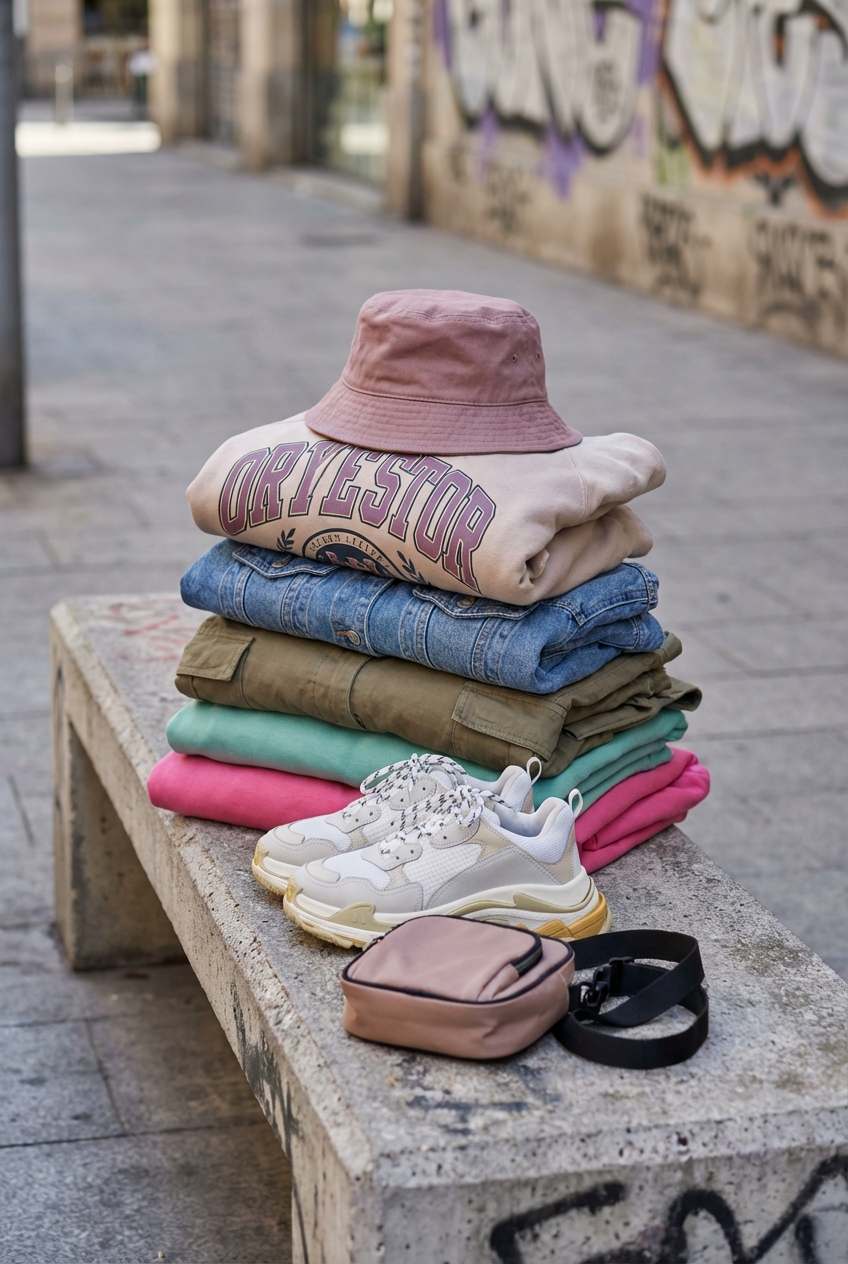
Trendy Streetwear Outfits For Urban Adventures
Introduction
I still remember my first “urban adventure” as a junior stylist in New York City. I tried to conquer a twelve-hour day of sourcing fabrics and showroom visits wearing stiff vintage denim and heels that looked great standing still but were torture in motion. By noon, I was buying bandaids at a bodega; by 3 PM, I had swapped my expensive boots for cheap tourist flip-flops just to survive the walk back to the subway.
That experience taught me the golden rule of high-end street style: utility must equal aesthetics. True streetwear isn’t just about a logo; it is about engineering an outfit that withstands 15,000 steps, fluctuating subway temperatures, and spontaneous dinner plans without looking disheveled. It requires a distinct understanding of proportion, textile weight, and layering mechanics.
In this guide, I will break down the formulas I use when styling clients for travel or city living, focusing on the technical aspects of fit and fabric. If you want to skip the theory and jump straight to visual inspiration, you can view the complete Picture Gallery at the end of the blog post.
1. The Architecture of the Pant: Volume and Break
The skinny silhouette has officially retired from the streetwear canon for now. The current standard for urban exploration focuses on volume, specifically through cargo pants, parachute styles, and relaxed-fit denim. This isn’t just a trend choice; it is a comfort necessity for mobility.
When selecting pants for a day of walking, I look for a “structured drape.” You want a fabric that holds its shape away from the leg, creating air flow. Heavyweight cotton twill (12oz or higher) or ripstop nylon are ideal because they don’t cling when humidity rises.
The most critical technical element here is the “break”—where the pant hem hits your shoe. For a modern streetwear look, you want a “full break.” This means the fabric gathers slightly on top of the shoe. However, for urban walking, you must ensure the back hem does not touch the pavement.
Designer’s Note: The Hemline Hazard
The most common mistake I see is “puddling” pants that drag on the sidewalk. While this looks cool in studio photography, it is a disaster in a real city.
- The Fix: Hem your wide-leg pants so they hover exactly 0.5 to 0.75 inches off the ground when you are wearing your intended sneakers.
- The Alternative: Choose pants with adjustable drawstrings at the ankle (bungee hems). This allows you to cinch the pant tight above the shoe if it starts raining or if the streets are dirty.
What I’d Style For A Client
- Base: High-waisted technical cargo pants in olive or charcoal.
- Fabric: Nylon-cotton blend for water resistance.
- Fit: Wide leg with articulated knees for movement.
- Utility: Minimum of four functional pockets (eliminates the need for a large bag).
2. The Science of Layering: The “Sandwich” Rule
Streetwear is defined by the silhouette, and the most flattering silhouette usually follows the “sandwich” method or the “rule of thirds.” If your bottoms are baggy and oversized, your top layer needs to offer some definition, or vice versa.
When navigating a city, temperature regulation is key. You move from a 45-degree street corner to a 75-degree subway car. I advise clients to rely on “heavyweight jersey” for their base layers. A cheap, thin t-shirt will lose its structure and stick to you after a few hours of walking. A heavyweight cotton tee (250 GSM or higher) maintains a boxy, intentional shape even after a long day.
For the mid-layer, the hoodie is the quintessential streetwear staple. However, the hood itself matters. You want a double-lined hood that stands up on its own rather than flopping flat against your back. This creates a frame for your face and adds architectural interest to the profile view.
Common Mistakes + Fixes
- Mistake: Wearing a fitted jacket over an oversized hoodie. This compresses the arms and creates uncomfortable bunching in the armpits.
- Fix: Your outer layer must always be one size grade larger or cut with a “drop shoulder” to accommodate the layers beneath. Look for outerwear specifically labeled “oversized fit.”
Specific Measurements to Watch
When looking for that perfect oversized tee or sweatshirt, ignore the standard size chart. Look at the measurements:
- Shoulder Drop: The seam should sit 2 to 3 inches past your natural shoulder bone.
- Length: For a cropped look, aim for a hem that hits at the high hip bone (iliac crest). For an oversized look, the hem should hit mid-fly on your pants.
3. Outerwear as a Shell: Blending Tech and Luxury
In high-end streetwear, the line between hiking gear and runway fashion is blurred. This is often called “Gorpcore.” For urban adventures, your outerwear acts as your shell against the elements.
The trench coat and the bomber jacket are the two pillars here. For a sharper, “clean girl” aesthetic, a maxi-length trench coat elevates a simple tracksuit instantly. It adds verticality to your frame.
However, for pure utility, I prefer a technical bomber or a varsity jacket. These hit at the waist, allowing for ease of leg movement when climbing stairs or navigating crowds.
Material Matters
I strictly advise against faux leather for full days of walking. It does not breathe. You will overheat. Instead, prioritize these materials:
- Gore-Tex or treated Nylon: Waterproof and windproof but breathable.
- Wool blends: Ideally 80% wool or higher for warmth without the bulk of a puffer.
- Canvas: Highly durable and resists snagging on door handles or fences.
Designer’s Note: Proportion Play
If you are petite (under 5’4″), be careful with the “giant coat, giant pants” combo. It can swallow you.
- My Rule: If wearing wide-leg pants and a long coat, leave the coat unbuttoned. This creates a vertical slice down the center of your body, revealing the waistline or the break between top and bottom, which restores your height.
4. Footwear Engineering: Suspension for the Streets
Shoes are the anchor of any streetwear look. In interior design, we talk about the foundation of a house; in styling, sneakers are that foundation. You cannot have a successful urban adventure in flat canvas shoes with zero arch support.
The current trend leans toward “chunky” silhouettes—dad sneakers, retro runners, or platform high-tops. This is fortunate because these styles offer superior cushioning. The extra rubber in a chunky sole acts as a shock absorber for concrete sidewalks.
The Platform Logic
I recommend a platform height between 1.25 inches and 2 inches.
- Why? It physically lifts your pant hems off the dirty ground.
- Visuals: It balances the volume of baggy clothes. A slim shoe disappears under wide cargo pants, making your feet look disproportionately small. A chunky shoe grounds the look.
What I’d Do in a Real Project
If I am styling a client for a weekend trip to Tokyo or London, this is the shoe rotation:
- Daytime: A retro running shoe with a mesh upper (breathability) and an EVA foam midsole (lightweight cushioning). Colors: Grey, New Balance Navy, or Cream.
- Evening/Rain: A lug-sole leather boot or a Gore-Tex high-top sneaker. The lug sole provides traction on wet subway tiles and adds an edgy, industrial aesthetic.
5. Accessory Scale: Hands-Free Functionality
The handbag you choose dictates your freedom of movement. For streetwear, clutching a bag is impractical. Crossbody bags and belt bags (worn across the chest) are the industry standard.
The placement of the bag is crucial. In streetwear styling, we wear bags higher on the body than in traditional fashion. The bag should hit at the ribcage or natural waist, not the hip. This keeps the bag secure against your core so it doesn’t swing around as you walk.
Strap Length Guidelines
- Chest Bag: Adjust the strap so the top of the bag sits 6 inches below your collarbone.
- Crossbody: The bottom of the bag should not sit lower than your hip bone.
- Strap Width: Look for wide, webbed straps (1.5 to 2 inches wide). Thin leather straps will dig into your shoulder after three hours.
Designer’s Note: The “Hardware” Check
Hardware (zippers, buckles, clasps) is where cheap streetwear reveals itself.
- Test: The zipper should glide effortlessly with one hand. If you have to hold the fabric taut to unzip it, it’s a fail. You need to be able to access your phone or wallet while holding a coffee in the other hand.
6. Color Theory: The Monochromatic & Tonal Approach
One of the easiest ways to make casual streetwear look “expensive” is to limit your color palette. High-end designers often utilize monochromatic or tonal color schemes. This creates a continuous vertical line that is pleasing to the eye.
The “All Black” Texture Rule
If you are dressing in all black (a city staple), you must mix textures.
- The Mistake: Black cotton leggings + black cotton tee + black cotton hoodie. This looks flat and washed out.
- The Fix: Black leather (or coated denim) pants + black matte jersey tee + black nylon bomber jacket. The light reflects differently off each surface, creating depth.
The Earth Tone Algorithm
For a softer, more approachable vibe, I use the “Sand and Stone” palette.
- Layer 1: Cream or Off-White top.
- Layer 2: Beige or Khaki pants.
- Layer 3: Olive or Brown outerwear.
- Why it works: These colors are inherently natural and hide city dust better than stark white or pastels.
7. Headwear: The Final Polish
A hat is rarely just an accessory in streetwear; it is often the focal point. It also serves the practical purpose of managing hair in windy conditions.
The structured baseball cap (fitted or snapback) is timeless. However, the “dad hat” (unstructured cotton) has been the reigning champ for a relaxed vibe. Recently, we are seeing a return to the bucket hat, specifically in fuzzy textures like shearling or faux fur for colder months.
Face Shape & Hat Profile
- Round Face: Opt for a structured cap with a higher crown. This adds height. Avoid tight beanies that compress the head.
- Long/Oval Face: Bucket hats and beanies with a cuff work beautifully as they cut the vertical length slightly.
- Square Face: A beanie worn slightly back on the head softens strong jawlines.
Finish & Styling Checklist
Before you head out the door, run through this mental checklist to ensure your outfit is functional and cohesive.
- The Hem Test: Raise your knee to your chest. Does the pant restrict you? If yes, change.
- The Squat Test: Can you squat down without your pants sliding down? High-waisted is essential for sitting on park benches or low walls.
- The Weather Proofing: Do you have at least one water-resistant layer?
- The Volume Balance: Is one half of your body fitted and the other loose? (Or is the oversized look intentional and structured?)
- The Hardware Match: Are your zippers/buckles consistent (all silver or all gold)?
- The Sock Game: Are your socks intentional? If ankles are showing, wear no-show socks. If wearing chunky sneakers, crisp white crew socks are the standard.
FAQs
Can I wear streetwear if I’m over 40?
Absolutely. Streetwear is about comfort and attitude, not age. Swap the graphic logos for high-quality plain fabrics. Focus on luxury materials like cashmere hoodies, premium denim, and leather sneakers. The silhouette remains the same, but the finish becomes more refined.
How do I transition these outfits from day to night?
The easiest switch is the shoe and the bag. Swap your chunky sneakers for a sleek, block-heel bootie. Swap the nylon crossbody bag for a structured leather shoulder bag. Keep the cargo pants and bodysuit; simply add a blazer over the top to sharpen the look for dinner.
What is the best fabric for humidity?
Avoid gray cotton (sweat shows instantly). Go for “loopback” french terry, which absorbs moisture away from the skin, or linen-blends. However, pure linen wrinkles too much for a polished streetwear look, so a cotton-linen blend is superior.
How do I keep white sneakers clean in the city?
I treat all client sneakers with a hydrophobic spray (like Crep Protect or Jason Markk) before they ever hit the pavement. It creates a barrier against liquids and dirt. Carry a “sneaker eraser” or wipes in your bag for immediate spot cleaning if you get scuffed.
Conclusion
Mastering trendy streetwear for urban adventures is about respecting the environment you are in. The city is a dynamic, gritty, fast-paced landscape. Your clothing should be your armor and your expression. By focusing on durable fabrics, intentional proportions, and footwear that respects human biomechanics, you can navigate the concrete jungle with the confidence of a runway model and the comfort of a local.
Remember that the best outfit is one you don’t have to adjust constantly. Once the fit is right, you can stop thinking about your clothes and start enjoying the adventure.
Picture Gallery


