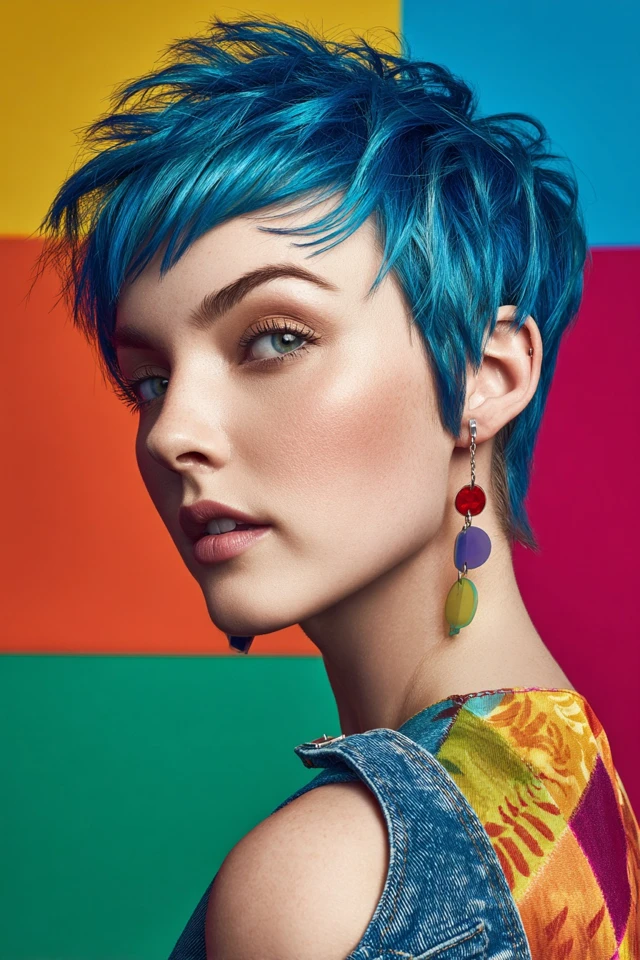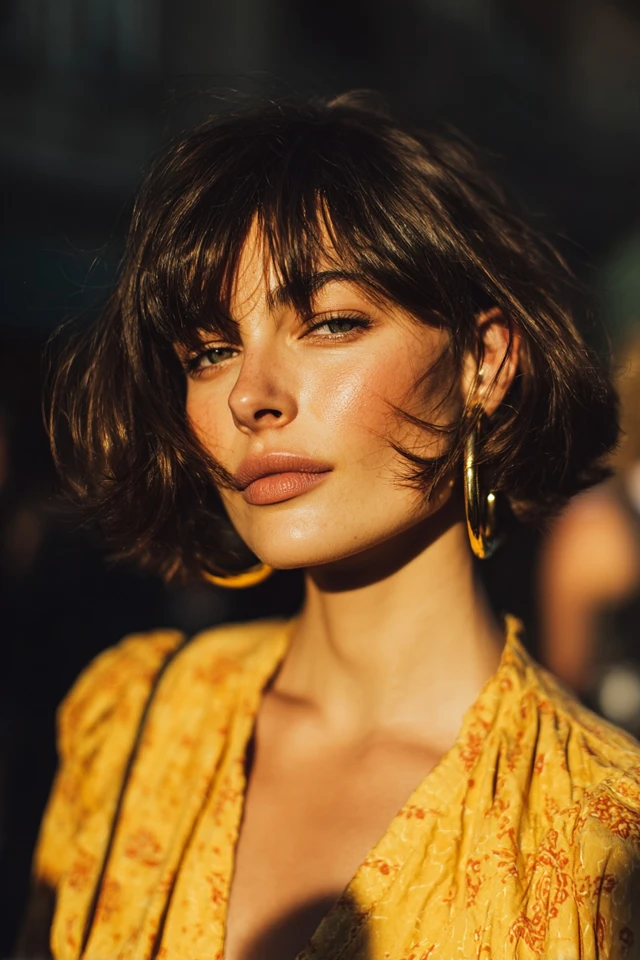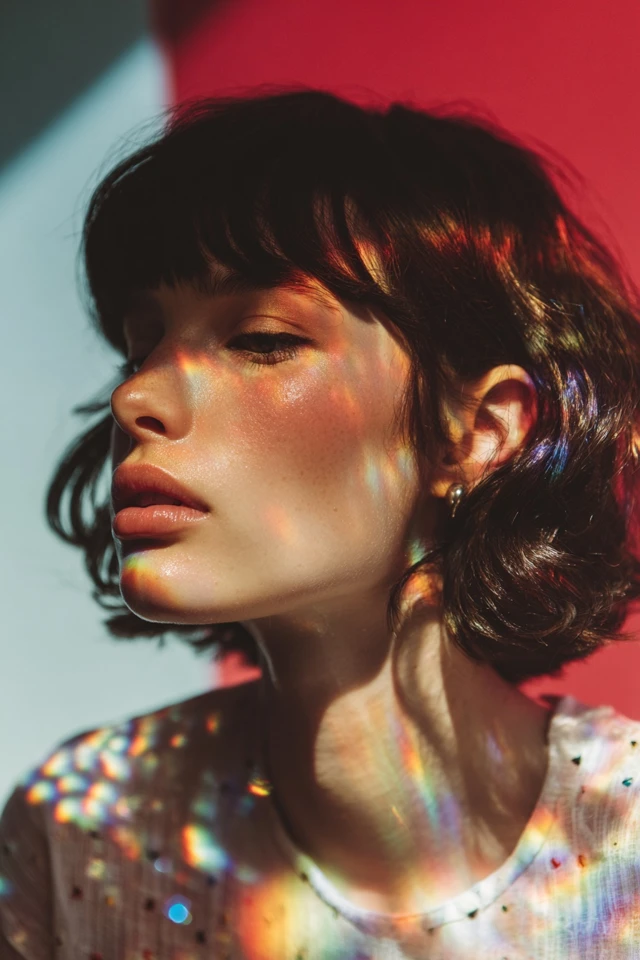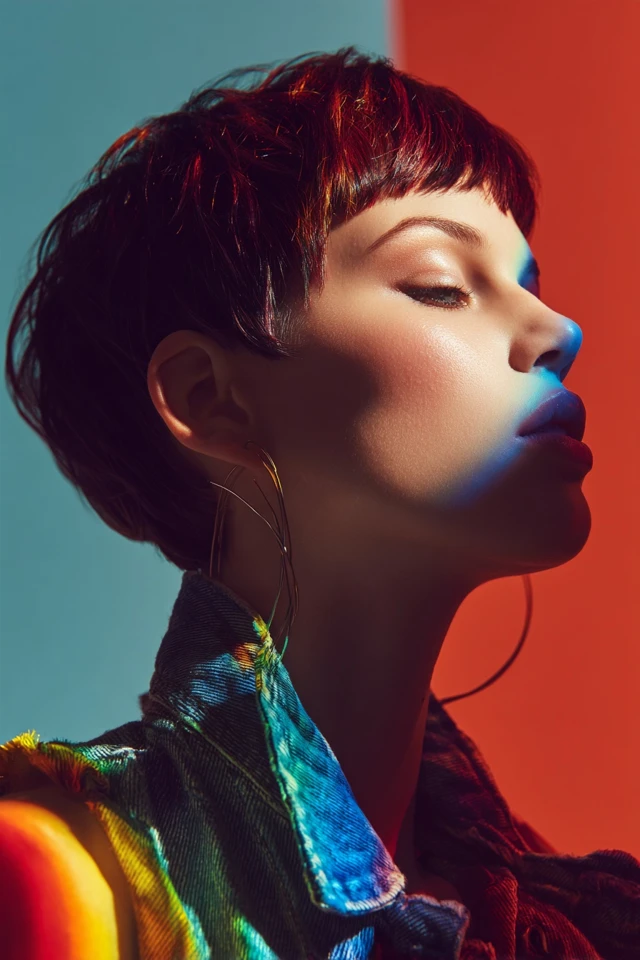
Short Haircuts for Women: Ultra Short Blunt Cut Guide
- Words by
- Julio Arco
- Published
- Reading
- 4 min
An ultra short blunt cut is a single-length crop with a sharp, straight edge, usually ending between the chin and the ear or higher at the nape. Its main appeal is shine: one clean edge reflects light evenly, so healthy hair looks glossy without any product doing the work.
Among very short haircuts for women, it is also one of the more forgiving for fine hair, because the blunt line makes the ends look fuller. Here is who it suits, how to style it, and how to keep it looking sharp.
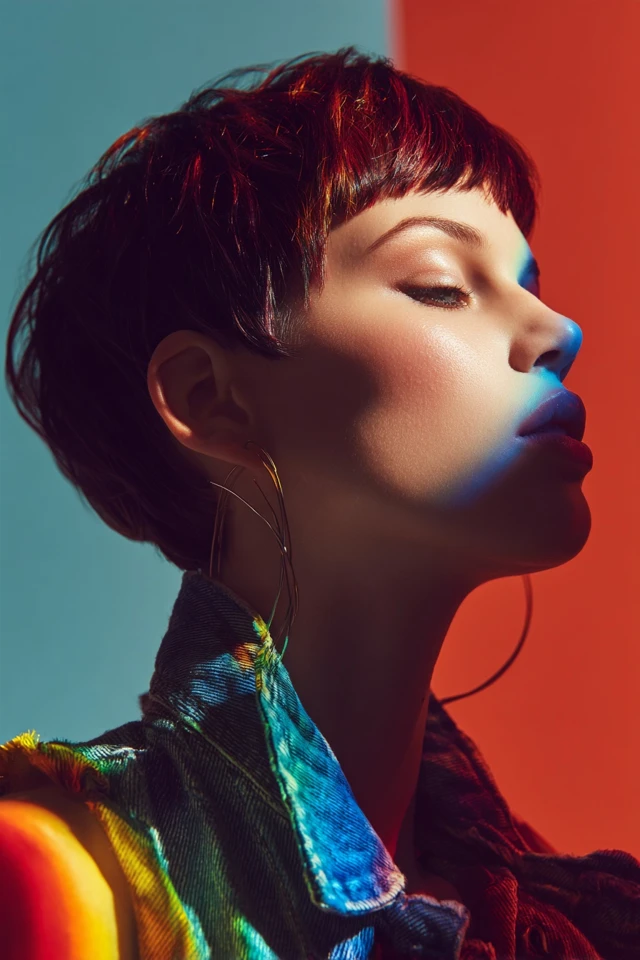
Why does a blunt cut look so shiny?
Light bounces off a smooth surface in one direction. When the ends are cut straight and the cuticle is intact, the hair acts like a flat surface, and your eye reads that as shine. Layers and feathered ends break that surface into many small angles, which is why textured cuts look softer and less glossy.
Through the lens of evidence-based design, I'd treat the edge as the feature here. Texture changes how a color reads, and a smooth, even edge makes even a dark brown look deeper and more saturated.
Who suits an ultra short blunt cut?
Oval and heart-shaped faces usually carry the sharp line easily, since it follows the jaw. A rounder face can still wear it: ask for the length to land just below the chin and for a slightly softened edge, so the line does not stop at the widest part of the face.
It is one of the short haircuts for thin hair worth considering. A single-length edge concentrates the weight at the bottom, so fine strands look denser. Very thick, coarse or tightly coiled hair behaves differently: the cut will need a stylist who is used to your texture, and the shape will puff rather than hang straight unless you stretch or press it.
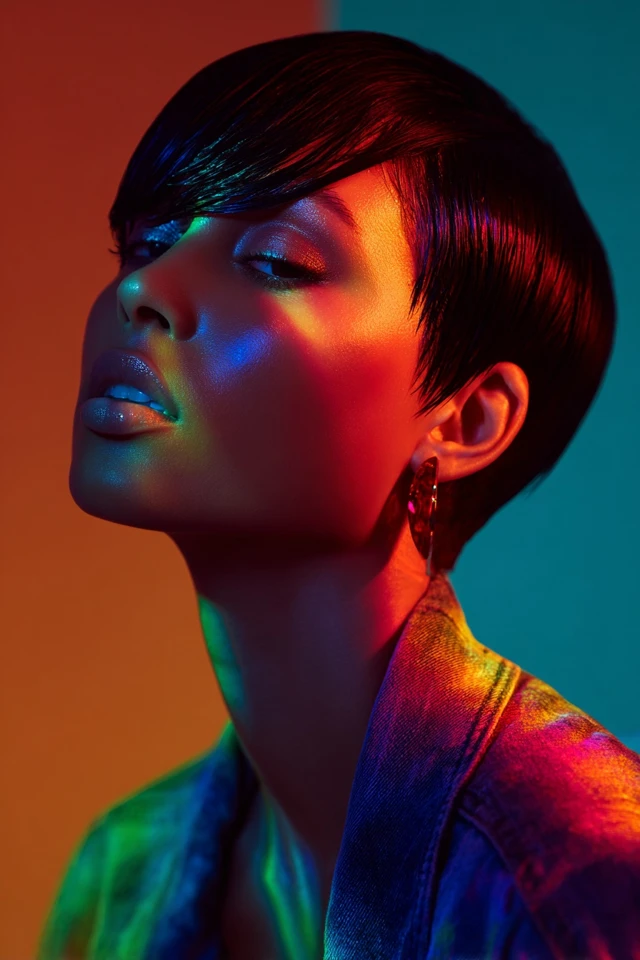
How do you keep a blunt cut looking crisp?
The edge is the whole point, so it is the first thing to go when the cut grows out. Plan a trim roughly every 4-6 weeks for the sharpest line. Waiting longer is fine if you like it softer, but the shape will lose its geometry.
Daily care is simple, which makes this one of the short haircuts that require little upkeep, as long as you keep up with trims:
- Detangle wet hair gently. The American Academy of Dermatology advises a wide-tooth comb instead of a brush on wet hair, since hair is delicate when wet.
- Skip the brushing ritual. The AAD calls the idea of 100 brush strokes a day a myth.
- If you straighten, use dry hair on low or medium heat. The AAD says flat irons should not be used more often than every other day.
- Use a leave-in conditioner if the ends look dull. Dermatologist Zoe D. Draelos, MD, FAAD, says: "You should see less frizz. Your hair should be easier to brush or comb, so you'll have less breakage."
For scalp or hair-health concerns such as breakage or thinning, check with a dermatologist.
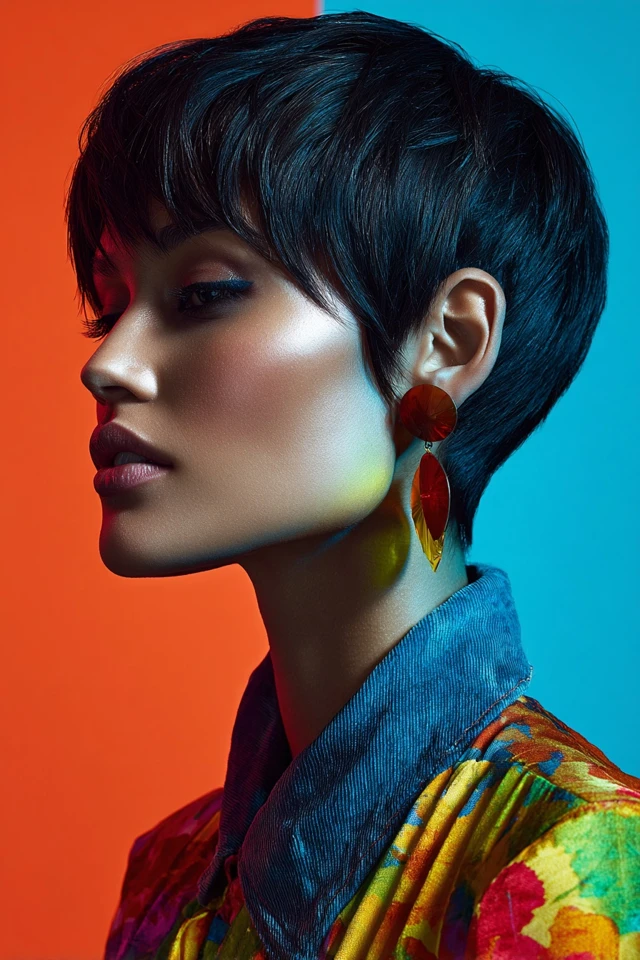
How do you style it?
Blow-dry with the nozzle pointing down the hair shaft, from root to end, so the cuticle lies flat. A small amount of smoothing serum on the ends is enough. Part placement changes the look more than any product: a center part is graphic and symmetrical, a deep side part adds softness near the face.
If you want a little movement, a few face-framing pieces or a short fringe work well. For other options, see a short layered fringe, a neck-hugging sleek cut, or a wash-and-go short cut if you prefer even less styling.
What should you wear with it?
A short cut shows the neck and shoulders, so the neckline matters more. As an architect trained in evidence-based design, I'd treat the neckline as the first thing the eye reads after the hair edge. Crew necks, boat necks and open collars repeat the clean line. Soft, flowing fabrics make a nice contrast to the precision of the hair, while structured cotton, tailored wool and leather echo it.
Hair color matters too. Cooler shades such as ash brown or platinum look crisp and modern, while caramel and copper feel warmer. Choose by what flatters your skin undertone and what you will maintain, since color touch-ups add salon visits.
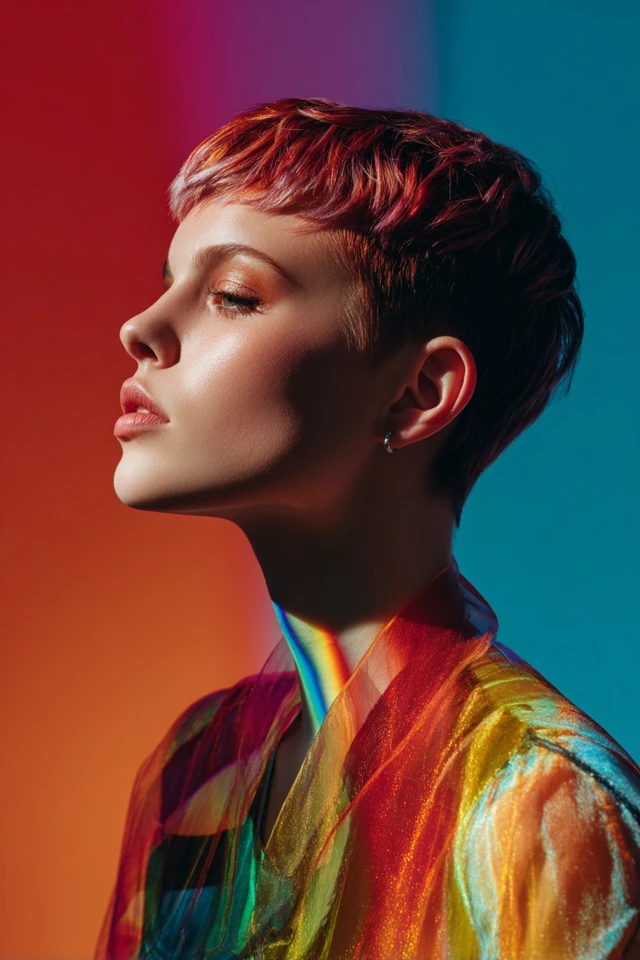
How does it compare with other short cuts?
The blunt crop sits next to the bob in popularity, so if you are comparing the most popular short haircuts, think of it as the sharpest, shortest version of that family. A longer take is the blunt bob with a glass-like finish. Cropped hair has a long history as a fashion statement: an 1883 Indianapolis newspaper report, documented by BYU ScholarsArchive, described a woman cutting off her long hair as sacrificing virtue to the "Moloch of the present mode."
When you book, bring two or three photos and say where you want the line to land: at the chin, jaw or ear. A clear length reference helps more than the words "ultra short."
Frequently asked questions
What is the best short haircut for seniors over 60?
A chin-length or slightly shorter blunt cut is a common choice, because it needs little styling and makes fine or thinning-looking hair appear fuller. Pick the length with your stylist based on your hair density and texture.
What is the most popular short haircut?
The bob in its many versions, including the blunt bob, is among the most requested short cuts. Pixie cuts and cropped styles follow close behind.
How often should you trim an ultra short blunt cut?
About every 4-6 weeks keeps the edge sharp. If you like a softer line, you can stretch it a bit longer.
Filed under Haircuts