
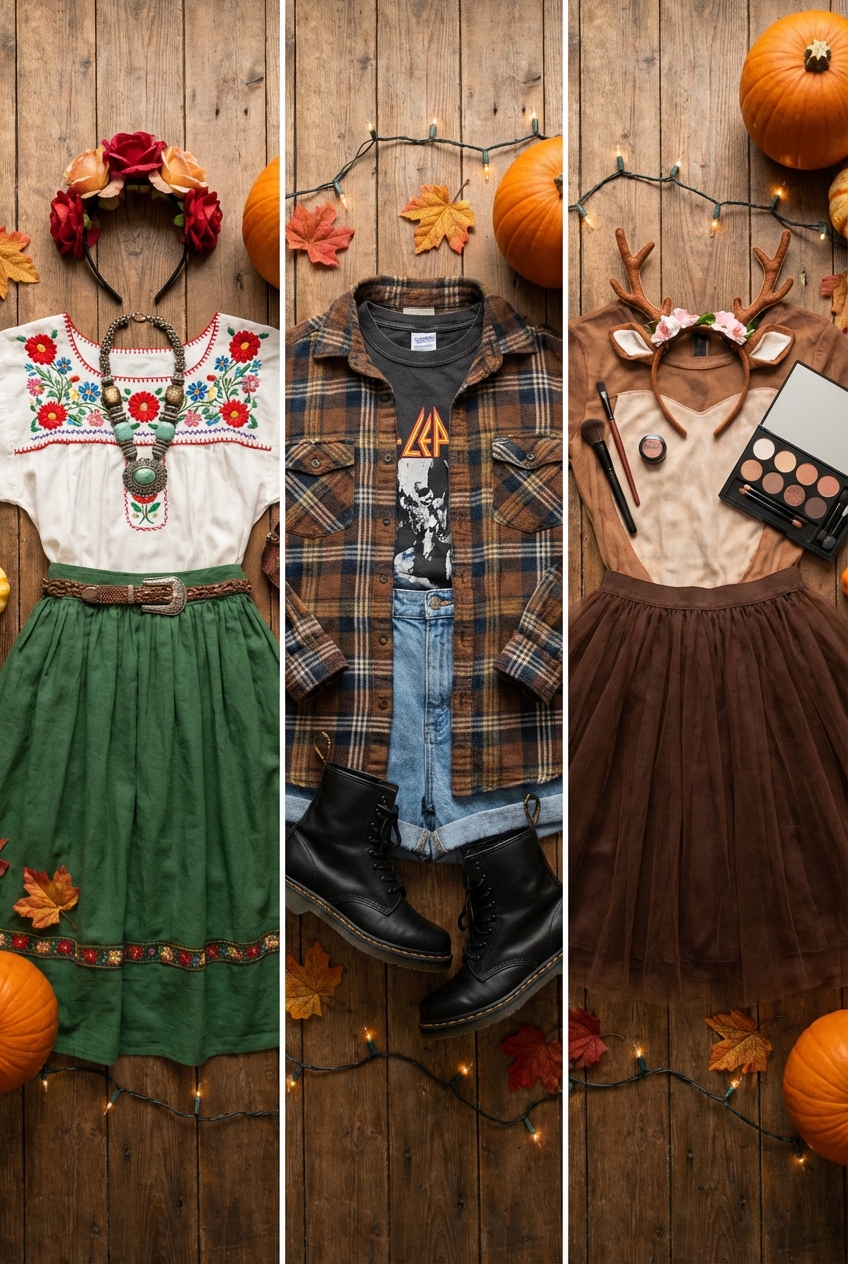
Unique Costume Ideas For Halloween Parties
Halloween is the one night of the year where the rules of daily dressing completely dissolve. As a fashion stylist, I view this holiday not as an excuse to buy a pre-packaged outfit from a pop-up store, but as an opportunity to exercise pure creativity and structural design. It is the ultimate runway moment where you can experiment with volume, texture, and persona without the constraints of practical daywear.
I remember styling a client for a high-profile masquerade in New York City a few years ago. We avoided the typical superhero tropes and instead focused on an architectural concept involving rigid wireframes and sheer organza. The result was not just a costume; it was a walking piece of art that commanded the room. That is the energy we are aiming for: high-concept, well-executed, and tailored to fit you perfectly.
In this guide, I will walk you through unique, high-fashion costume concepts that borrow principles from couture design and structural engineering. For visual inspiration on how to execute these looks, be sure to check out the Picture Gallery at the end of the blog post.
The Living Masterpiece: Reinterpreting Fine Art
Transforming a famous painting into a wearable garment is one of the most sophisticated ways to approach a costume party. This requires a keen eye for color palettes and texture rather than a literal translation. Think of Gustav Klimt’s “The Kiss” or a surrealist piece by Magritte.
To achieve a Klimt-inspired look, focus on gold leaf application and geometric patterning. You want to source a heavy gold brocade or jacquard fabric for the base of a caftan or structured gown. I recommend layering mixed metallic textures; combine sequins with matte gold lame to create depth under venue lighting.
Designer’s Note: The biggest failure point here is fabric weight. Cheap, thin synthetics will not hang correctly to mimic the heavy drapery seen in oil paintings. Always line your garments with a medium-weight cotton or satin to give the external fabric the proper “fall” and swing.
What I’d do in a real project:
- Base Layer: A floor-length gold silk slip dress cut on the bias.
- The Art: Hand-paint geometric shapes onto a sheer overlay using textile paints.
- Makeup: Extend the gold leaf from the garment onto the neck and cheekbones for continuity.
Architectural Avant-Garde
This category borrows heavily from interior design principles, focusing on silhouette, scale, and negative space. We are looking at Iris van Herpen or Alexander McQueen for inspiration. The goal is to alter the human shape using structural elements.
You can achieve this by using boning, wire, and stiff interfacing to create exaggerated hips or shoulders. Use materials like neoprene or scuba knit because they hold a raw edge without fraying and maintain a sculptural shape.
Common mistakes + fixes:
- Mistake: Ignoring door widths and seating. I have seen incredible costumes ruined because the wearer couldn’t fit through a standard 30-inch doorway.
- Fix: If you build wide, ensure the extensions are collapsible or flexible. Use zip-ties or snaps to detach large structural wings or hip panniers when you need to sit in a car or a booth.
For lighting, consider weaving micro-LED fairy lights into the layers of sheer fabric. This mimics the lighting design of a room, creating a glow from within rather than relying on harsh external overhead lights at the party.
The “New Look” Noir
There is nothing quite as striking as period-correct vintage tailoring. Specifically, the Christian Dior “New Look” silhouette from 1947 offers a dramatic waist-to-hip ratio that reads beautifully at parties. This is costume-as-fashion, leaning into film noir vibes.
The key to this look is understructure. You cannot achieve the silhouette with a dress alone; you need a proper foundation.
- The Waist: A steel-boned corset is non-negotiable here. It should reduce the natural waist by 1-2 inches for that exaggerated hourglass.
- The Skirt: You need a petticoat with at least three layers of hard tulle. The hem should hit exactly at mid-calf (tea length) to show off the ankles and shoes.
- The Jacket: Look for a “Bar Suit” style jacket with padded hips.
Pro-level rule of thumb: When wearing a wide-brimmed hat associated with this era, the brim should never be wider than your shoulders. This ensures the head-to-body proportion remains balanced and prevents you from poking other guests in a crowded room.
High-Fashion Zodiac
Astrology is popular, but we want to elevate it beyond a simple graphic tee. Think Schiaparelli couture: celestial embroidery, velvet, and heavy hardware. This is about embodying the element of the sign (Fire, Earth, Air, Water) through luxury materials.
For a water sign (Pisces, Cancer, Scorpio), use iridescent organza and pearl embellishments. Layering different opacities of blue and green creates a water-like effect as you move.
For earth signs, lean into moss-green velvet and floral appliqués. In interior design, we often use velvet to absorb light and add warmth; the same applies here. It photographs beautifully because it doesn’t reflect the flash, giving you a rich, regal look.
Measurements and Placement:
If you are applying crystals or embroidery to a bodice, ensure they stop 1 inch away from the underarm area. Friction from sequin-on-skin contact will cause severe irritation within 30 minutes of dancing.
Botanical Couture
This is where landscape design meets fashion. Instead of a generic flower costume, think of an overgrown, secret garden taking over a mannequin. This look requires texture and chaos controlled by a strong silhouette.
Start with a corset base. I recommend using high-quality silk flowers, not the cheap dollar-store variety. Deconstruct the flowers—pull the petals apart and glue them individually to the fabric to create organic, vine-like movement rather than static blooms.
Designer’s Note: A common issue with botanical costumes is shedding. Hot glue often becomes brittle in cold weather or snaps when the fabric flexes.
The Fix: Sew the heavy elements onto the base fabric. Use glue only for small filler petals. Use a flexible fabric glue like E6000 rather than hot glue for areas that need to stretch.
What I’d do in a real project:
- Palette: Monochromatic green or dried autumn florals (browns, beiges, creams) for a “decaying beauty” look.
- Texture: Mix dried moss (preserved) with silk chiffon to blur the lines between hard and soft materials.
- Scent: I often spritz a cedar or floral fragrance on the fabric so the costume engages another sense.
The Monochrome Villain
Villains often have the best wardrobes because their characters demand sharp tailoring and intimidating silhouettes. Think Cruella (the Emma Stone punk version) or a high-fashion interpretation of Maleficent.
The rule here is texture variation within a single color. If you are dressing in all black, you must mix leather, lace, silk, and wool. If everything is the same cotton fabric, you will look like a black blob in photos.
Styling Checklist for Monochrome:
- Reflective: Patent leather or vinyl (shoes, belt, corset).
- Matte: Wool crepe or cotton (pants, cape).
- Sheer: Chiffon or mesh (sleeves, neckline).
- Plush: Velvet or faux fur (collar, cuffs).
This layering reflects light differently at different depths, mimicking how we layer textures in a monochromatic living room to prevent it from looking flat.
Finish & Styling Checklist
Before you step out the door, run through this stylist-approved checklist. These are the practical constraints that separate a pro look from an amateur one.
1. The Sit Test
Put on your full costume, including undergarments. Sit down on a hard chair and a soft sofa. Does the corset dig into your hips? does the skirt ride up too high? Does the wire structure collapse? Adjust your boning or hem length now, not at the party.
2. Shoe Engineering
If you are wearing new heels, break them in three days prior with thick socks.
Pro Tip: Add gel insoles specifically to the ball of the foot. Fashion costumes often require standing for hours. I also recommend scuffing the soles of new shoes with sandpaper to prevent slipping on spilled drinks or polished floors.
3. Lighting Check
Take a photo of yourself with the flash ON and one in dim lighting.
Why: Some fabrics become transparent under a camera flash. You want to discover this in the safety of your home, not after the event photos are posted online.
4. The “Bathroom” Strategy
It sounds unglamorous, but it is vital. If you are wearing a unitard, catsuit, or complex layer system, how do you use the restroom?
The Fix: Install a hook-and-eye closure or snaps at the crotch (like a bodysuit), or ensure you can unzip the bodice without assistance. If you need a team to help you unzip, you need a different design.
FAQs
Q: How do I make a cheap store-bought costume look expensive?
A: Fit and fabric distress. Take the costume to a tailor (or do it yourself) to nip in the waist and shorten hems to the correct height. Store-bought costumes are “one size fits many,” which means they fit no one well. Secondly, use sandpaper or watered-down acrylic paint to add depth and weathering to pristine, cheap fabrics.
Q: What is the best fabric for a costume that needs to look high-end but is budget-friendly?
A: Velvet or Scuba Knit. Polyester velvet hides cheap construction because the pile absorbs light. Scuba knit has a structural weight that mimics expensive neoprene, holding its shape without needing complex linings.
Q: How do I handle outerwear with a costume?
A: Do not ruin a look with a generic North Face jacket. Incorporate the warmth into the design. If it is cold, wear a faux fur stole, a velvet opera cape, or thermal layers beneath the costume. Skin-tone fleece-lined tights are a stylist’s secret weapon for winter parties.
Q: Can I mix metals (gold and silver) in a costume?
A: Absolutely. Mixed metals are a huge trend in both interiors and fashion. The key is to have a dominant metal (say, 70% gold) and use the other as an accent (30% silver) to create intentional contrast rather than a messy look.
Conclusion
Creating a unique Halloween costume is about applying the principles of good design—scale, proportion, texture, and color—to the human form. Whether you are channeling a vintage Dior silhouette or constructing an avant-garde architectural piece, the difference between a “costume” and a “look” lies in the details.
Focus on fit, invest in the right undergarments, and do not be afraid to alter standard items to suit your vision. When you walk into the party, you want the confidence that comes from knowing your outfit is not just worn, but designed.
Picture Gallery


