
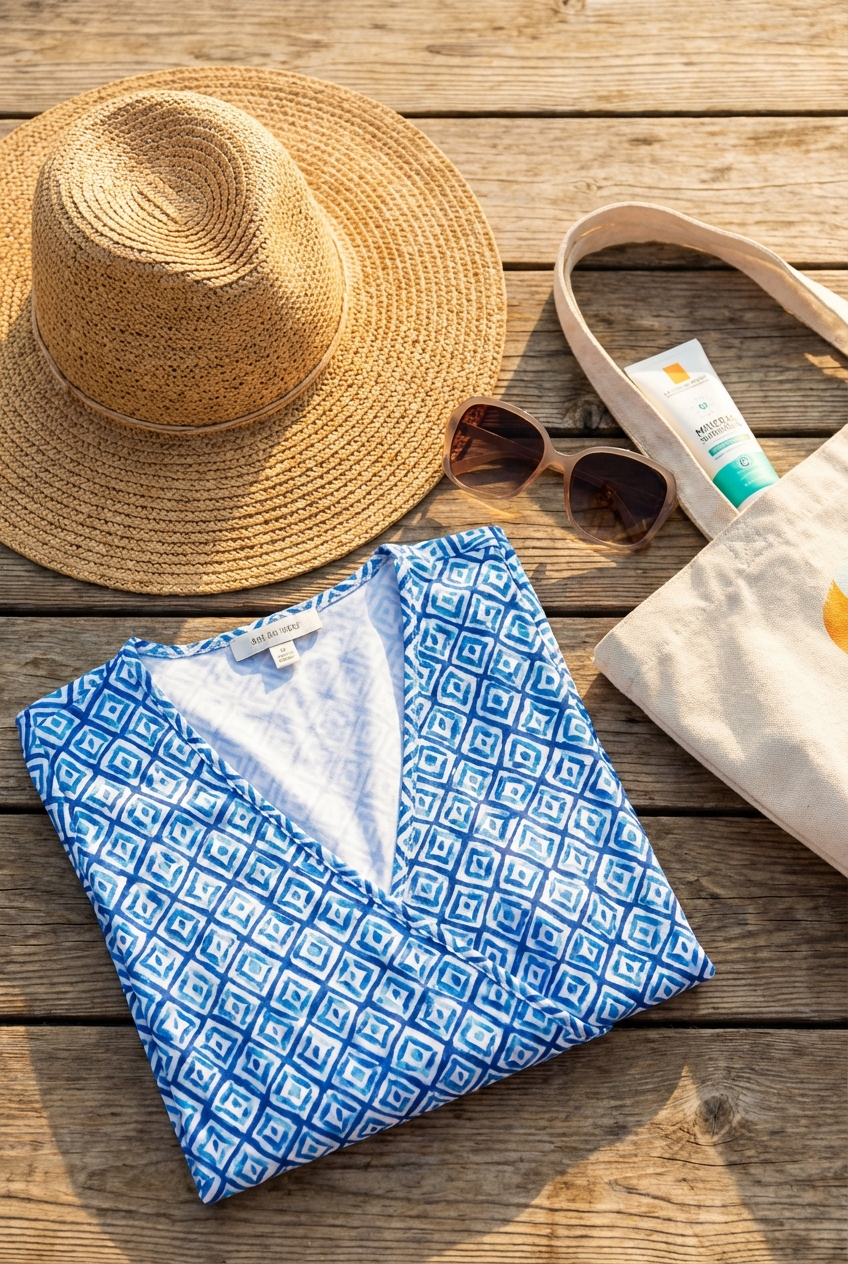
Uv Protective Clothing Fashion Meets Skin Safety
Introduction
For years, I operated under the assumption that a luxury vacation wardrobe simply meant silk kaftans, linen trousers, and an oversized pair of sunglasses. I treated sun protection as an afterthought—something to be applied from a bottle rather than integrated into my styling choices. That changed during a photoshoot in the Maldives, where I watched a model in a high-end, sheer cover-up sustain a severe burn despite slathering on lotion.
True style requires longevity, and nothing ages a look—or a person—faster than sun damage. As a fashion expert, I now approach UV protection with the same rigor I apply to tailoring or fabric selection. It is not about hiding under shapeless layers; it is about selecting technical textiles that offer an invisible shield while maintaining an elegant silhouette.
We are currently seeing a massive shift in the industry where “sun smart” is becoming synonymous with “chic.” To see how we translate these technical rules into stunning outfits, be sure to check out the Picture Gallery at the end of the blog post.
The Science of Style: Understanding UPF
Before we discuss cuts and colors, we have to talk about the metric that matters: UPF (Ultraviolet Protection Factor). While SPF measures how long a sunscreen protects skin from reddening, UPF measures the amount of UV radiation that can penetrate a fabric to reach your skin.
Think of UPF as the thread count of safety. A standard white cotton t-shirt usually has a UPF of about 5, which is surprisingly low. This means 1/5th of the sun’s UV rays are passing right through to your skin.
When I curate a travel wardrobe for clients going to high-sun destinations, I look for a UPF rating of 50+. This blocks 98% of the sun’s rays. It allows you to enjoy the aesthetic of the outdoors without constantly worrying about reapplication in covered areas.
Designer’s Note: The “Hold Up” Test
One lesson I learned early in my career is that labels can be misleading, but the light never lies. If you are shopping vintage or lack a specific UPF rating, hold the garment up to a strong light source.
If you can see the light bulb clearly through the weave, the sun can see your skin. Tight weaves are the non-negotiable standard for physical protection.
Fabric Composition and Weave Density
In interior design, we choose upholstery based on durability; in fashion, we must choose UV fabrics based on density. Synthetic fibers like nylon, polyester, and acrylic naturally reflect more radiation than bleached cottons or linens.
However, many high-end designers are now treating natural fibers with UV-absorbing dyes to bridge the gap between comfort and function. Unbleached cotton contains natural lignins that act as UV absorbers, making raw silk or unbleached linen safer choices than stark white variations.
There is also a misconception that darker colors make you hotter. While they absorb heat, they also absorb UV rays better than pastels, keeping them away from your skin. A deep navy or charcoal tunic offers significantly better protection than a pale yellow one of the same material.
Common Mistakes + Fixes
Mistake: Assuming wet clothes offer the same protection as dry ones.
Fix: When fabric gets wet, the fibers often stretch or become more transparent, reducing the UPF rating by up to 50%. Always pack a dry change of clothes or choose hydrophobic fabrics for water activities.
The Architecture of the Hat
The hat is the most critical accessory in a sun-safe wardrobe, but not all hats are created equal. I often see clients wearing trendy visors or loosely woven straw fedoras that look cute but offer zero protection to the scalp or hairline.
The architecture of a protective hat requires specific measurements. You need a brim of at least 3 inches (approx. 7.5 cm) around the entire circumference. This is the minimum scale required to shade the nose, cheeks, and the delicate skin on the back of the neck.
Avoid straw hats with visible pinholes in the weave. While they provide ventilation, those pinholes create a “dappled light” effect that can still result in burns on the scalp. Look for tightly woven raffia or canvas bucket hats that are lined with a UPF 50+ material.
What I’d Do in a Real Wardrobe Consultation
- Measure the brim: I literally take out a tape measure. If it is under 3 inches, it is a fashion hat, not a sun hat.
- Check the crown: I ensure the top of the hat is lined. Scalp burns are common and dangerous.
- Test the packability: A good travel hat must survive being crushed in a suitcase. I look for materials with memory wire in the brim.
Resort Wear: The Long-Sleeve Swimsuit Revolution
Ten years ago, a long-sleeve swimsuit was considered purely utilitarian. Today, it is a high-fashion statement. The “rash guard” has evolved into the “surf suit,” featuring beautiful botanical prints, zippers, and ruching that flatters the body.
I advise clients to invest in a sleeved one-piece for active beach days. This eliminates the need to worry about shoulders, back, and chest—the areas that age the fastest. Pairing a sleeved suit with a flowing maxi skirt creates an effortless “apres-swim” look that transitions perfectly to lunch.
When selecting these pieces, pay close attention to the zipper quality and the seam placement. Flatlock seams are essential to prevent chafing, especially when the garment is wet and sandy.
Pro-Level Rule of Thumb: The Neckline
The chest (décolletage) is often the first place to show sun damage in the form of hyperpigmentation and crepey skin.
The Rule: For every hour of direct exposure, raise the neckline by an inch. If you are paddleboarding at noon, choose a crew neck or mock neck silhouette over a deep V.
Everyday Armor: Integrating Protection in City Life
UV damage does not only happen at the beach. It happens during your commute, while sitting near a window at brunch, and while driving. Glass blocks UVB rays (the ones that burn), but it lets through UVA rays (the ones that age).
I recommend integrating “sun shrugs” or lightweight driving cardigans into your daily rotation. These are often made from bamboo blends or modal with added UV blockers. They drape beautifully and can be tossed in a handbag.
Driving gloves are another vintage revival trend that serves a functional purpose. Hands are a dead giveaway of age due to sun exposure on the steering wheel. A pair of fingerless, UPF-rated gloves in a nude or chic black tone can save you thousands in laser treatments later.
Real-World Constraint: The “Hot” Commute
Challenge: You want coverage, but it is 90 degrees on the subway platform.
Solution: Look for “cooling” technical fabrics. These are usually synthetics engineered to wick moisture and feel cool to the touch. Brands often label this as “Cool-touch” or “Ice-fil” technology.
Maintenance: Washing Your Shield
You treat your silk and cashmere with care; you must do the same for UV-protective clothing. The UV-blocking capabilities of a garment can degrade if washed incorrectly.
Detergents with optical brighteners (chemicals that make whites look whiter) can actually strip the UV-absorbing qualities of the fabric. Fabric softeners are also a major prohibited item, as they clog the weave and reduce moisture-wicking capabilities.
Always wash these garments in cold water on a gentle cycle. The heat from a dryer can break down the elastic fibers (spandex or Lycra) that keep the weave tight. If the fit becomes loose, the protection decreases.
Designer’s Note: The Lifespan
I tell my clients that a UV shirt has a lifespan of about 30 to 40 washes before the protection begins to fade, unless the protection comes from the physical weave itself.
Lesson: Rotate your key pieces. Do not rely on one single cover-up for an entire three-week vacation.
Finish & Styling Checklist
When I finalize a vacation or summer wardrobe for a client, I run through this specific checklist to ensure we have covered both aesthetics and safety. Use this to audit your own closet.
The Foundation
- Swimwear: At least one long-sleeve swimsuit or rash guard set for peak sun hours (10 AM – 2 PM).
- The “Third Piece”: A lightweight UPF 50+ cardigan or wrap that lives in your tote bag.
- Legs: Wide-leg linen-blend trousers or a maxi skirt (tight weaves only).
The Accessories
- Headwear: One wide-brim hat (3 inches+) with a chinstrap for breezy boats.
- Eyewear: Oversized frames with 100% UVA/UVB protection.
- Hands: Driving gloves or hand covers for long road trips.
The Tech Check
- Fabric Test: Hold garments up to the light. Can you see the bulb? If yes, use sunscreen underneath.
- Fit Check: Is the garment too tight? Stretching reduces protection. Size up for a relaxed drape.
FAQs
Does a regular white t-shirt protect me from sunburn?
Generally, no. A standard white cotton t-shirt has a UPF of roughly 5 to 7. If it gets wet, that drops to about 3. It provides very minimal protection compared to a specialized UPF 50+ garment.
Can I just add a laundry additive to make my clothes UV protective?
Yes, there are laundry treatments available that wash UV protection into everyday clothes. They typically last for about 20 washes. This is a great solution for your favorite vintage pieces that you can’t bear to part with but want to make safer.
Do dark colors actually protect better than light colors?
In terms of physics, yes. Dark or bright colors (like navy, black, or red) absorb UV rays rather than allowing them to penetrate the fabric and reach your skin. However, many light-colored UPF-specific fabrics are chemically treated to offer high protection despite being pale.
Does the protection wash out over time?
If the protection is due to a chemical finish on the fabric, it will gradually wash out over time (usually 30-50 washes). If the protection is due to the physical weave of the fabric (like denim or tight polyester), it will last as long as the garment stays in good condition and doesn’t thin out.
Conclusion
Fashion has always been about evolution, and today, the smartest wardrobe is one that serves a dual purpose. We have moved past the era where sunburn was an accidental souvenir of a good trip.
Integrating UV-protective clothing is not about sacrificing style; it is about respecting your skin and investing in your future self. By choosing dense weaves, wide brims, and intelligent textiles, you can curate a look that is as timeless as it is protective.
When you step out into the sun, do so with confidence, knowing your outfit is doing the work for you. True luxury is effortless, and there is nothing effortless about recovering from a burn.
Picture Gallery


