
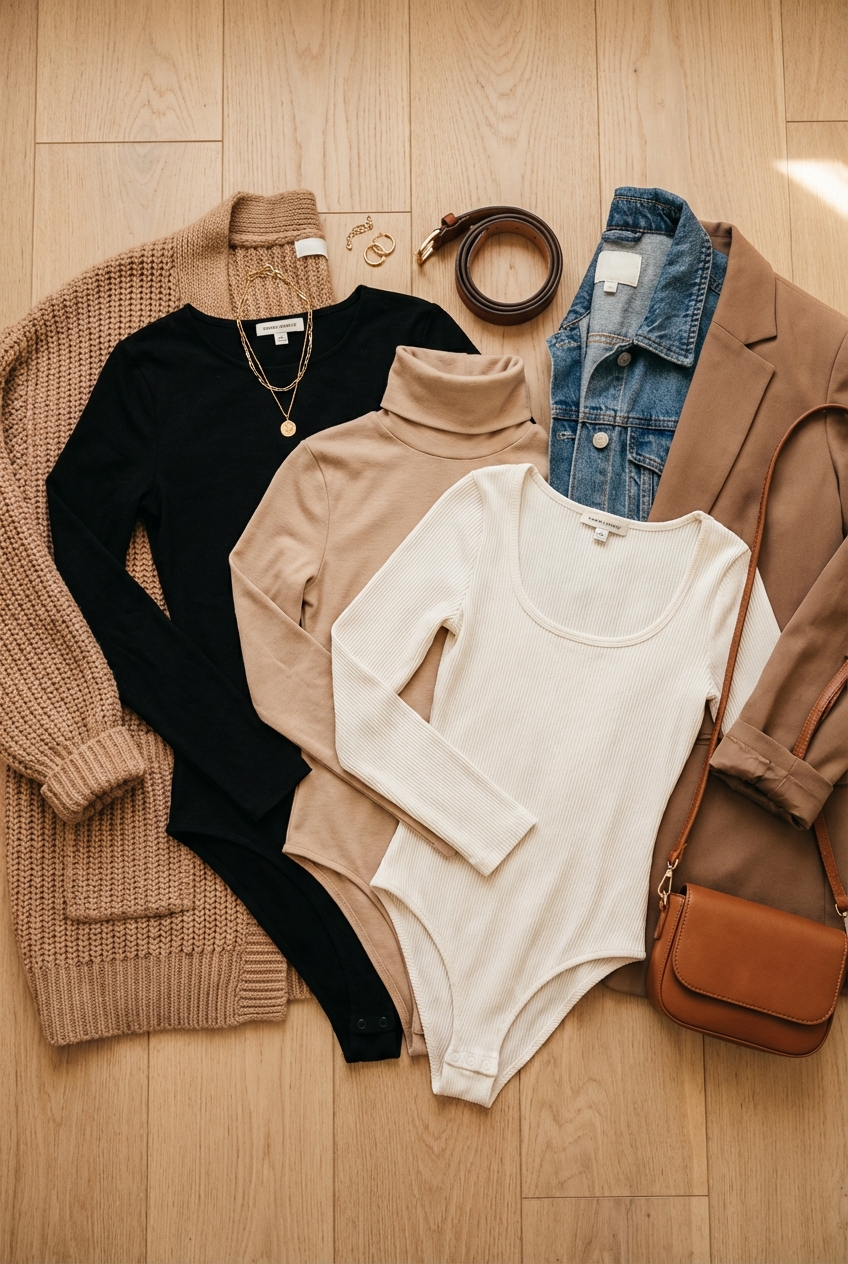
Versatile Bodysuits For Sleek Layering
There was a specific moment early in my styling career when I realized the absolute necessity of a good bodysuit. I was on set for an editorial shoot, trying to keep a silk blouse tucked into high-waisted trousers on a model who had to move constantly. Every time she posed, the fabric bunched at the waist or untucked completely, ruining the clean silhouette we were trying to achieve.
We swapped the blouse for a high-quality, double-lined bodysuit, and the difference was immediate. The lines were seamless, the waist looked snatched, and the outfit stayed pristine regardless of movement. That day changed how I approach foundation pieces for my private clients, proving that the right base layer is not just about comfort—it is about architectural integrity for your outfit.
In this guide, I will walk you through the technical details of selecting the right bodysuit, from navigating torso lengths to choosing the correct compression levels for different events. If you want visual inspiration on how to style these pieces, check out the Picture Gallery at the end of the blog post.
Decoding The Fit: Torso Length and Rise
The most common complaint I hear from clients regarding bodysuits is physical discomfort, specifically regarding the “rise” or the length of the torso. If a bodysuit is too short, it pulls aggressively at the shoulders and the gusset, creating an unbearable fit that no amount of styling can hide.
Stylist’s Note: The “Pull” Test
When trying on a bodysuit, raise your arms straight above your head. If the garment significantly digs into your shoulders or creates a “wedging” sensation at the bottom, it is too short for your torso. You do not need to size up in width; you need to look for brands that offer “Tall” sizing or adjustable gussets.
Measuring for Comfort
Most standard size charts rely on bust and waist measurements, often ignoring vertical length. However, vertical tension is what determines comfort. If you have a long torso (meaning your rise is longer than average), standard sizing will likely be uncomfortable.
Look for bodysuits with adjustable hook-and-eye closures at the crotch rather than fixed snaps. These typically offer about an inch of variance, which can make the difference between a sleek fit and a painful day.
The Back Rise
Pay attention to the cut of the bottom. A full-coverage brief often creates Visible Panty Lines (VPL) under trousers. For the smoothest layering under silk skirts or fitted slacks, a thong back or a laser-cut cheeky cut is non-negotiable.
Fabric Science: Compression vs. Drape
Not all bodysuit fabrics serve the same purpose. In high-end styling, we categorize them by function: sculpting, smoothing, or decorative. Understanding the GSM (grams per square meter) or “weight” of the fabric helps you decide where it belongs in your wardrobe.
Sculpting Fabrics (High Compression)
These usually contain a high percentage of Elastane or Spandex (over 15%). They act as shapewear and a top in one.
Best for: Wearing under blazers or with loose, wide-leg denim.
Look for: Double-lined bonded nylon. It should feel thick and substantial, not flimsy.
Finish: Usually matte or slight sheen.
Smoothing Fabrics (Natural Fibers)
Cotton, modal, and bamboo blends offer breathability but less hold. These are your everyday essentials.
Best for: Weekend wear, travel, and layering under heavy knits.
Look for: Ribbed textures. The ribbing adds structure to softer fabrics, preventing them from looking like sleepwear.
Decorative Drapes (Silk and Satin)
These mimic the look of a tucked-in blouse but with the security of a bodysuit base.
Best for: Evening wear and office settings.
Styling Tip: Ensure the bottom half (the panty portion) is a softer jersey material. Satin does not stretch well, so a satin bottom is often uncomfortable.
Necklines and Bra Solutions
The neckline dictates the bra situation, which is often the hurdle that stops women from wearing bodysuits. As a stylist, I always build the outfit from the undergarments up.
The Square Neck
This is universally flattering and opens up the décolletage.
Bra Solution: A balconette bra. The straps set wide on the shoulders align perfectly with square necklines.
Why it works: It balances wider hips by drawing the eye to the collarbone.
The Racerback or Halter
These offer a sporty, sleek look that emphasizes the shoulders.
Bra Solution: You must use a converter clip or a specific racerback bra. Do not let straps show; it ruins the clean lines that make a bodysuit elegant.
Pro Tip: Look for built-in shelf bras in these styles if you have a smaller bust.
The Plunge V-Neck
Ideal for evening wear but requires confidence in your foundation.
Bra Solution: Plunge bras or adhesive silicone cups.
Common Mistake: Using tape that is visible at the edges. Always do a “movement check” in the mirror before leaving the house.
Creating Proportions: The Tight/Loose Rule
In interior design, we balance negative space with mass. In fashion, we balance volume with constriction. Because a bodysuit is inherently fitted, it creates a small, defined silhouette on the top half of your body.
To look chic rather than dated, you must juxtapose this tightness with volume elsewhere.
The Golden Rule of Volume
If the top is tight: The bottom should be loose.
Pair with: Wide-leg trousers, A-line midi skirts, boyfriend jeans, or paper-bag waist shorts.
Avoid: Skinny jeans with a tight bodysuit. This can look unbalanced and often appears less “high-fashion” and more “gym-wear.”
Common Mistakes + Fixes
Mistake: Wearing a thin bodysuit with low-rise jeans.
The Issue: The “hip dip” area becomes exposed, and the bodysuit rises above the waistband.
The Fix: Always pair bodysuits with high-rise bottoms. The waistband should sit at your natural waist (the smallest part of your torso) to lock the bodysuit in place and define the silhouette.
Layering for the Office: Professional Polish
Can you wear a bodysuit to a corporate office? Absolutely, but the material finish is critical. Cotton spandex blends can read too casual or athletic for a boardroom.
Selecting Office-Appropriate Finishes
Opt for “scuba” fabrics or fine-gauge knits. These materials have a smooth, matte finish that resembles high-end suiting separates. Avoid anything with a high shine or sheer panels.
The Blazer Combination
A bodysuit is the best friend of a tailored blazer. Because there is no excess fabric bunching at the waist, the blazer hangs perfectly straight.
Stylist Strategy: Choose a crew neck or mock neck bodysuit in a neutral tone (black, camel, navy).
The Bottoms: Pair with wool trousers. The contrast between the sleek bodysuit and the textured wool adds depth to the outfit.
Avoiding the “Swimsuit” Look
If a bodysuit is too tight or the fabric is too thin, it looks like a bathing suit. Ensure the garment skims the body rather than squeezing it. If you see horizontal pull lines across the bust or waist, size up.
Evening Transitions: Texture and Sheerness
For evening events, the bodysuit serves as a sleek canvas for statement jewelry and dramatic bottoms. This is where we play with texture.
Lace and Mesh
A lace bodysuit acts as a top but stays perfectly tucked into a leather skirt or silk palazzo pants.
The Layering Trick: Wear a simple black camisole underneath a sheer lace bodysuit if you prefer more coverage, or a decorative bralette if you are feeling bold.
Velvet and Metallic
Velvet bodysuits are winter staples. They provide warmth and catch the light beautifully in dim restaurant settings.
Style Pairing: Velvet looks incredible against denim. The rough texture of jeans contrasts with the plush pile of the velvet.
Accessorizing
Since the torso is streamlined, you can handle bolder accessories without looking cluttered. Chunky chain necklaces or statement earrings work well because the fabric of the bodysuit is usually unadorned.
Finish & Styling Checklist
Before you head out, run through this mental checklist that I use on set to ensure the look is polished.
Check the VPL: Turn around in a well-lit mirror. If you can see the outline of the bodysuit through your pants, switch to a thong cut or thicker trousers.
The Snap Check: Ensure the snaps at the gusset are secure. There is nothing worse than a snap popping open in public.
Opacity Test: If you are wearing black, ensure it doesn’t turn sheer when stretched across the bust. Flash photography will reveal this instantly.
Deodorant Marks: Bodysuits are tight and hard to get into. Check your sides for white streaks and remove them with a specialized sponge or a pair of pantyhose.
Waistband Alignment: Ensure your pants or skirt sit high enough to cover the “leg opening” curve of the bodysuit. You generally want the fabric to disappear into the waistband, not show skin at the hip bone (unless that is an intentional cut-out look).
FAQs
How do I use the restroom wearing a bodysuit?
This is the most practical question. Always buy bodysuits with a snap closure at the crotch. If you find a bodysuit you love that has no snaps (like a swimsuit style), save it for short events where restroom access isn’t a priority, or be prepared to fully undress.
Can I wear a bodysuit if I have a large bust?
Yes, but you need structure. Avoid backless styles that prevent you from wearing a supportive bra. Look for bodysuits with underwire built-in or thick straps that can hide heavy-duty bra straps. Square necklines are often very supportive and flattering.
How do I wash my bodysuits to keep them from shrinking?
Elastane hates heat. Never put your bodysuits in the dryer. The heat breaks down the rubber fibers, causing them to lose their “snap back” quality. Wash on cold in a mesh laundry bag (to prevent straps from tangling) and lay flat to dry.
What is the difference between a bodysuit and a swimsuit?
Material and closure. Swimsuits are made of chlorine-resistant, non-breathable nylon blends designed to dry quickly. Bodysuits are often cotton, modal, or viscose blends meant for long-term wear and breathability. Also, swimsuits rarely have snaps at the bottom.
Conclusion
The bodysuit is more than just a trend; it is a fundamental tool in a well-edited wardrobe. It solves the perennial problem of the “un-tuck” and provides a clean, uninterrupted line that elevates every other piece you wear. By focusing on the correct torso fit, choosing high-quality fabrics, and balancing your proportions, you can harness the versatility of this piece for everything from client meetings to cocktail hours.
Start with the basics—a high-quality black mock neck and a double-lined white tank style. Once you experience the confidence of a silhouette that stays in place all day, you will find it difficult to go back to standard tuck-ins.
Picture Gallery


