
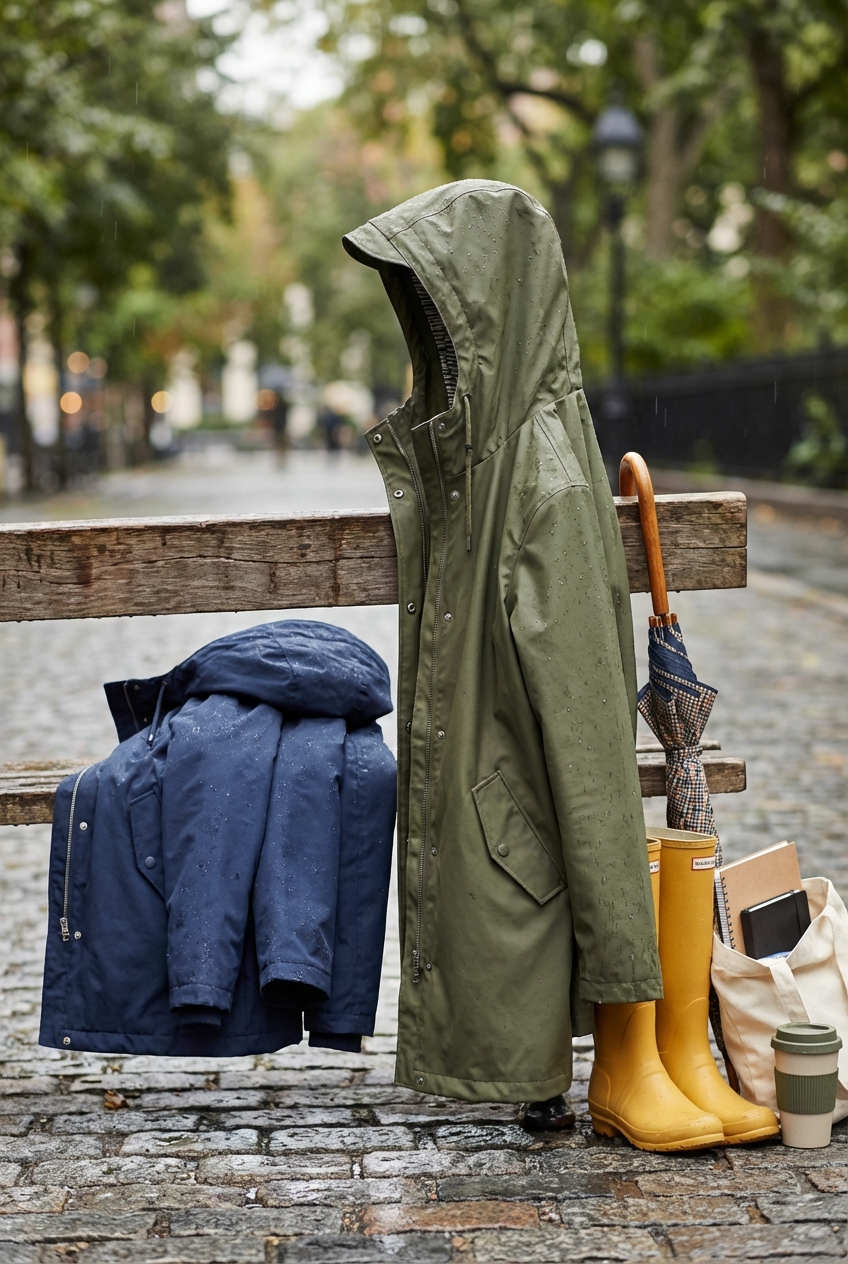
Versatile Parkas For Rainy Days
Introduction
I distinctly remember a specific Fashion Week in Paris a few years ago. It was pouring rain, the kind of relentless downpour that ruins suede boots and flattens blowouts in seconds. I watched editors and buyers scrambling out of cars, and the divide was clear: those who sacrificed their outfit for a frantic run under a newspaper, and those who effortlessly threw on a chic, structured parka and looked intentional.
That moment solidified my belief that outerwear is the most critical investment in a wardrobe. A parka is no longer just a utilitarian gear item reserved for hiking or camping trips. In the high-end market, it has evolved into a piece of tailoring that frames your silhouette while protecting your other investments—your cashmere knits and silk blouses.
If you navigate a city commute or simply refuse to let the weather dictate your schedule, finding the right parka is a game of balancing technical performance with sartorial elegance. If you are looking for visual inspiration on how to style these coats, be sure to check out the Picture Gallery at the end of the blog post.
1. The Architecture of the Coat: Silhouette and Fit
When selecting a versatile parka, the silhouette is the first thing I assess. Many mass-market options fail because they lack structure, turning the wearer into a shapeless block the moment the zipper goes up. A high-end parka should offer the same level of tailoring you expect from a wool trench or a blazer.
I always look for adjustable waist channels. These internal or external drawstrings allow you to cinch the coat to define your waistline. This is crucial when you are layering heavy knits underneath; without definition, the visual weight of the outfit becomes overwhelming.
Designer’s Note: The Volume Rule
A common mistake I see is clients buying parkas that are too fitted in the shoulders. You must account for the “negative ease” required for layering. When trying on a parka, wear your thickest blazer or a chunky cable-knit sweater. You should be able to cross your arms and hug yourself without the fabric pulling tight across the upper back. If it pulls, size up.
Length is equally important for versatility. For maximum utility in rainy weather, aim for a mid-thigh to knee-length hem. This length protects your trousers or skirt when you sit down on a damp bench or car seat.
Common Mistakes + Fixes
- Mistake: Buying a hip-length jacket for heavy rain.
- Fix: Choose a hemline that hits at least 3 inches below your hips. This prevents water runoff from soaking your pants.
- Mistake: Ignoring the armhole drop.
- Fix: Look for a slightly dropped armhole or a raglan sleeve. This accommodates structured blazers without bunching up the suit shoulders.
2. Fabric Technology: Decoding the Label
In the luxury sector, the feel of the fabric is just as important as its function. We are moving away from that stiff, noisy “crunchy” sound associated with old-school rain gear. Modern technical fabrics are soft, matte, and pliable.
I recommend looking for bonded cottons or high-density twills treated with a Durable Water Repellent (DWR) finish. These fabrics mimic the drape of traditional clothing but repel water beads instantly. Waxed cotton is another heritage option that offers a beautiful patina over time, though it is heavier and requires annual maintenance.
Breathability is the hidden luxury factor. A rubberized raincoat keeps water out, but it also traps body heat and moisture in. If you are rushing to a meeting or navigating a heated subway car, you will overheat immediately.
What I’d do in a real project:
- Check the rating: I look for a minimum waterproof rating of 5,000mm for city use. For serious climates, I look for 10,000mm.
- Test the noise: I rub the sleeves together. If it sounds like a bag of chips, I put it back. A luxury garment should be whisper-quiet.
- Inspect the backing: A bonded jersey backing feels comfortable against the skin, meaning you can wear the parka over a T-shirt in warmer spring showers.
3. Hardware and Details: The Jewelry of the Coat
The hardware on a parka is where the quality truly shows. In my styling work, I treat buttons, zippers, and toggles as the “jewelry” of the outerwear. Cheap plastic zippers are a dead giveaway of lower quality and are often the first thing to break.
Look for two-way zippers. This is a non-negotiable feature for longer coats. A two-way zipper allows you to unzip the bottom hem when you sit down or need to climb stairs, preserving the shape of the coat and preventing stress on the fabric.
Snap closures over the zipper, known as a storm flap, provide a clean, minimalist look while adding a second layer of defense against wind and rain. For a polished aesthetic, I prefer hidden snaps or matte-finish metal hardware that blends with the fabric color.
Key Feature Checklist:
- Storm Cuffs: Look for an internal ribbed cuff inside the sleeve. This stops wind and rain from blowing up your arm without ruining the clean line of the outer sleeve.
- Hood Construction: A hood must be functional, not just decorative. It needs a structured brim or bill to keep water off your face and adjustable toggles to keep it in place during high winds.
- Deep Pockets: Pockets should be lined with fleece or flannel for hand warmth. They should also feature a flap or zipper to keep your phone dry.
4. Color Theory for Grey Skies
For years, black was the default choice for rainwear. While black is practical, it can feel heavy and uninspired during the spring months or on particularly gloomy days. As a stylist, I encourage clients to build a wardrobe that enhances their mood, and color plays a huge role in that.
Navy and olive drab are the new neutrals. They are just as versatile as black but offer a softer contrast against denim or cream trousers. An olive parka, in particular, looks incredibly chic paired with an all-black or all-white outfit underneath.
If you are feeling bold, consider a stone or “greige” (grey-beige) color. Light-colored outerwear looks undeniably expensive. It requires more care regarding stains, but it elevates a rainy day look instantly. It signals that you aren’t just dressing for utility; you are dressing for style.
Styling Note: The Pop of Color
If you commit to a neutral parka, use your accessories to introduce vibrancy. A hunter green parka pairs beautifully with a burgundy leather handbag or a mustard scarf. These deep, rich jewel tones resonate well with wet, reflective city streets.
5. Layering Logic: The Rule of Thirds
A versatile parka is a shell; your comfort depends on what lies beneath. I use the “Rule of Thirds” when styling clients for cold, wet weather: Base, Insulator, and Shell. The parka is the shell, but the insulator determines the season.
For winter, I look for parkas with detachable liners. However, many “3-in-1” coats can look bulky. A better approach is often to buy an unlined shell parka and layer a dedicated ultra-light down vest or cashmere cardigan underneath. This gives you more control over your silhouette.
When layering over a blazer for the office, ensure the parka hem completely covers the blazer hem. There is nothing more visually jarring than a suit jacket poking out from under a sporty raincoat. The parka should be the encapsulating element that streamlines the entire look.
Visual Balance:
- Slim Bottoms: Since parkas have volume, balance the look with a slim leg. Straight-leg jeans, cigarette trousers, or leggings tucked into boots work best.
- Wide Leg Trousers: If you wear wide-leg pants, the parka must be cinched tightly at the waist to re-establish your proportions. Avoid an A-line coat with A-line pants; it creates a triangle shape that widens the figure.
6. Care and Maintenance for Longevity
A high-quality parka is an investment that should last for at least five to ten years. However, technical fabrics require specific care that differs from your wool coats or silk dresses. The water-repellent coating (DWR) is not permanent; it wears off with friction and washing.
Never use fabric softener when washing a waterproof parka. The chemicals in softeners clog the microscopic pores of the fabric, destroying its breathability and waterproofing capabilities. Wash with a technical detergent designed for outerwear.
You will know it is time to “reproof” your coat when water no longer beads up on the surface but instead soaks into the face fabric (a process called “wetting out”). When this happens, wash the coat and apply a spray-on or wash-in waterproofing treatment. Heat usually reactivates the coating, so a short cycle in the dryer on medium heat is often beneficial after washing.
Storage Rules:
- Dry Completely: Never hang a wet parka in a crowded closet. Let it air dry in an open space first to prevent mildew.
- Broad Hangers: Use a wide, structured wooden or padded hanger to support the shoulders. Wire hangers will distort the shoulder shape over time.
Finish & Styling Checklist
Before you head out into the rain, run through this mental checklist to ensure your look is cohesive and functional.
The Rainy Day Edit:
- Hem Check: Does the coat cover your longest inner layer?
- Waist Definition: Have you adjusted the internal drawstrings to fit your outfit of the day?
- Hood Check: Is the hood adjusted so it won’t blow off, but isn’t crushing your hair?
- Footwear Anchor: Are you wearing boots that balance the visual weight of the coat? (Avoid delicate flats with a heavy parka).
- Bag Position: If wearing a crossbody bag, is it under the coat (for security/dryness) or over? (If over, ensure the strap doesn’t compress the shoulder insulation).
- Hardware Polish: Are the zippers running smoothly and pockets snapped shut?
FAQs
Q: Can I wear a parka with a dress?
A: Absolutely. This is one of my favorite high-low styling tricks. A rugged, olive green parka worn over a floral midi dress and leather boots creates a fantastic contrast. The key is length; the dress should either be shorter than the coat or significantly longer (midi/maxi) so the layers look intentional.
Q: How do I know if a parka is warm enough for winter?
A: Check the “fill power” if it’s down-insulated, or the grams per square meter (GSM) if it’s synthetic. For a versatile shell parka without insulation, you are responsible for the warmth via layering. I generally prefer non-insulated shells for maximum versatility across three seasons, adding my own cashmere layers as needed.
Q: Are waxed cotton jackets better than synthetic technical fabrics?
A: It depends on your lifestyle. Waxed cotton offers a heritage, countryside aesthetic and is incredibly durable, but it is heavy and lacks breathability. Synthetic technical fabrics (like Gore-Tex or proprietary equivalents) are lighter, more breathable, and generally better for active city commuting.
Q: How should a parka fit across the hips?
A: You should be able to sit down comfortably with the coat zipped up. Ideally, there should be about 2 to 3 inches of ease at the hips. If the fabric pulls horizontally across your hips or the pockets flare open, the coat is too small.
Conclusion
Embracing the rainy season is entirely about preparation. The right parka serves as your armor against the elements, allowing you to maintain your composure and your style regardless of the forecast. It bridges the gap between the practical necessity of staying dry and the desire to present a polished image to the world.
By focusing on architectural details, fabric quality, and proper fit, you turn a rainy day from a nuisance into an opportunity to showcase your layering skills. Investing in this piece is investing in your daily comfort and confidence. When you are warm, dry, and looking sharp, the weather becomes just a backdrop to your day, not the defining feature of it.
Picture Gallery


