
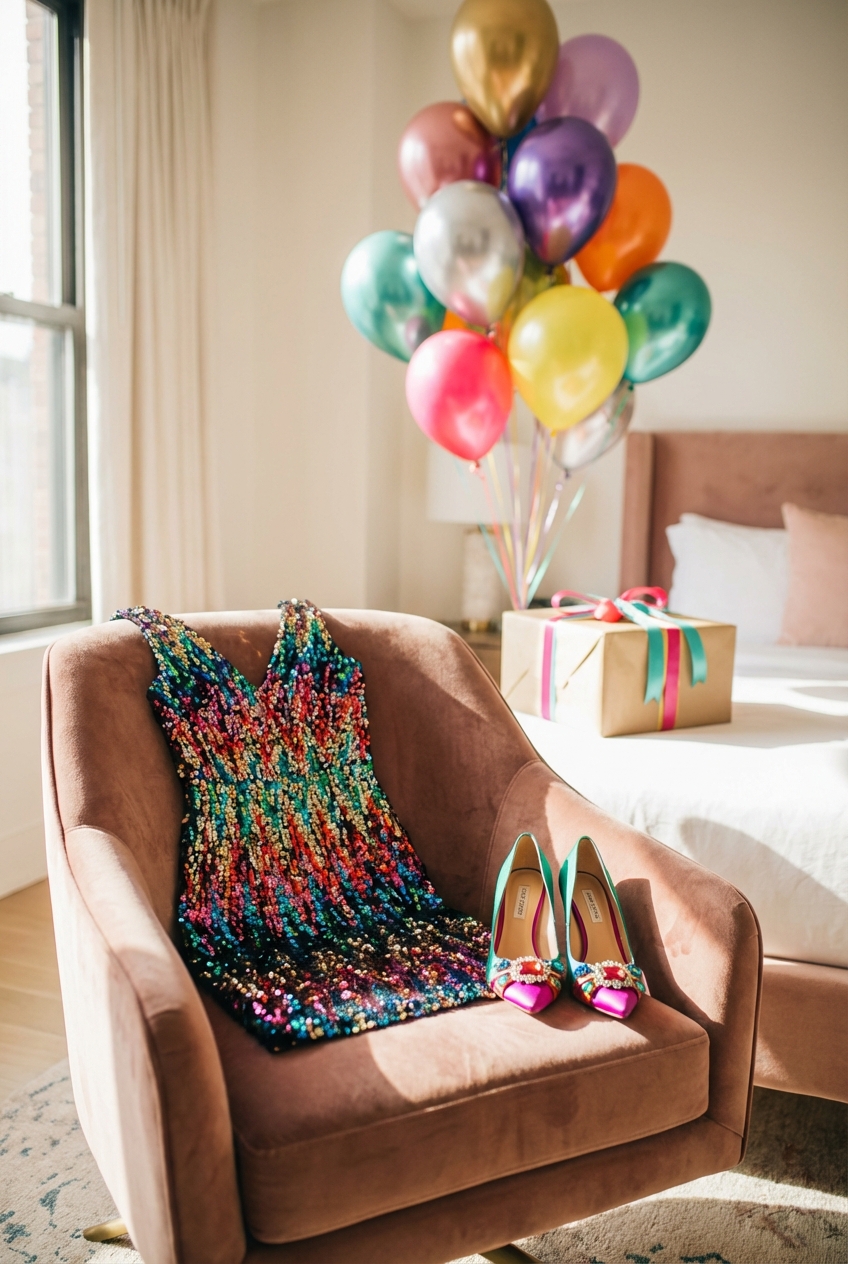
Vibrant Party Dresses For Birthday Celebrations
Introduction
I still remember the first time I convinced a client to trade her safety-net “Little Black Dress” for a shock of electric fuchsia silk. She was celebrating her 40th birthday and was terrified of looking like she was trying too hard. When she stepped out of the fitting room, the change wasn’t just in the mirror; her posture shifted, her chin lifted, and she owned the space.
That is the power of a vibrant birthday dress. It signals to the room—and more importantly, to yourself—that you are the protagonist of the evening. As a stylist, I have learned that dopamine dressing is not just a trend; it is a psychological tool we use to set the tone for the year ahead.
However, navigating bright colors and bold textures requires a strategy to avoid looking costumey. It is about balancing saturation with silhouette and understanding how fabric reacts to venue lighting. If you are looking for visual inspiration to spark your creativity, make sure to browse the curated Picture Gallery at the end of the blog post.
Defining Your Palette: Color Theory and Skin Undertones
Choosing a vibrant dress is not simply about picking a color you like; it is about finding the hue that harmonizes with your skin’s undertone. When I work with clients, we start by determining if they are cool, warm, or neutral. This dictates whether we look for a blue-based scarlet or an orange-based poppy red.
If you have cool undertones (veins appear blue), jewel tones are your secret weapon. Think deep emeralds, sapphire blues, and violet. These colors create a crisp contrast that makes the skin look porcelain rather than washed out.
For warm undertones (veins appear green), you want earth-anchored brightness. Mustard yellow, chartreuse, and warm coral are incredibly flattering. These shades pick up the golden highlights in your complexion and create a natural glow without the need for heavy bronzer.
Designer’s Note: The Lighting Trap
One lesson I learned the hard way involves fitting room lighting. Fluorescent store lights are cool and harsh, while evening venues usually have warm, dim ambient lighting. A dress that looks neon in a store might turn muddy in a candlelit restaurant. Always walk the dress to a window or natural light source to see its true pigment before purchasing.
Fabric Physics: How Material Affects Color
The fabric you choose dictates how “loud” the color appears. A bright red cotton dress reads as casual and playful, while the exact same shade in satin reads as high-glamour and intense. This is because of how the fiber absorbs or reflects light.
Matte fabrics, like crepe or heavy silk georgette, absorb light. This allows you to wear the most shocking, highlighter-bright neon colors without overwhelming the eye. The lack of sheen grounds the color, making it look expensive rather than cheap.
Reflective fabrics, such as silk charmeuse, sequins, or velvet, act as a prism. They amplify the color. If you choose a reflective fabric, I recommend stepping back the saturation slightly. Instead of a neon lime satin, opt for a rich chartreuse. This balance ensures the dress looks elegant, not like a glow stick.
Common Mistakes + Fixes
- Mistake: Ignoring fabric weight. Thin, vibrant fabrics often show every line and wrinkle, which ruins the polished effect of a bold color.
- Fix: Look for fabrics with a higher GSM (grams per square meter) or lined garments. If the dress is unlined, add a separate silk slip to create a fluid drape.
Silhouette Engineering: Balancing Volume and Vibration
When you turn up the volume on color, you often need to adjust the volume of the silhouette. In design, we call this “visual weight.” A dress that is both neon pink and features massive ruffles, puff sleeves, and a floor-length train is usually too much for a standard cocktail party.
The Rule of Opposites:
If the color is extremely loud, keep the cut architectural and sleek. A column dress or a simple slip dress in vivid tangerine is chic. The simplicity of the lines lets the color do the talking.
Conversely, if the silhouette is dramatic—think feathers, tiers, or oversized bows—choose a monochromatic vibrant hue rather than a busy print. This keeps the focal point clear. You want people to see you in the dress, not just a moving pile of fabric.
What I’d Do in a Real Project
If I am dressing a petite client in a maxi dress with a bold print, I ensure the dress has structural breaks. This might be a high slit, a plunging neckline, or cutouts at the waist. These breaks show skin, which breaks up the block of intense color and prevents the dress from swallowing her frame.
The Venue Factor: Matching Intensity to Environment
Context is the invisible accessory. A neon sequin mini dress is perfect for a dimly lit club in Miami but will feel jarring at a garden brunch. As a stylist, I always ask for the venue before pulling options.
For Low-Light Settings (Clubs, Lounges, Evening Galas):
You need fabrics that catch the light. Sequins, metallics, and high-gloss satins are engineered for this. In dark environments, colors lose their vibrancy. A “bright” navy will just look black. You must go lighter and brighter than you think to stand out.
For Day Events (Brunches, Garden Parties, Wineries):
Natural sunlight is unforgiving to cheap synthetic fabrics. Stick to natural fibers like silk, linen blends, or high-quality cotton poplin. Prints work beautifully here because sunlight animates the pattern.
Practical Constraints: The Sit Test
I never let a client buy a birthday dress without sitting down in it for 60 seconds. Rigid fabrics like heavy brocade or fully sequined meshes can dig into the waist or thighs. A birthday dinner involves 2–3 hours of sitting. If the dress cuts off your circulation or rides up dangerously high when seated, it stays on the rack.
Underpinnings and Tailoring: The Invisible Foundation
The difference between a dress that looks “nice” and a dress that looks “custom” is almost always what is happening underneath. Bright colors draw the eye, meaning fit issues are more noticeable than they are in black clothing.
Seamless is Non-Negotiable:
Vibrant fabrics are often less forgiving of texture. Lace underwear will show through smooth satin. You need laser-cut, seamless undergarments in a shade close to your skin tone (not the dress color).
Structural Support:
If you are wearing a strapless or backless number, do not rely on the dress alone to hold you up unless it has built-in corsetry. I recommend using high-quality boob tape rather than sticky bras, which often fail once you start dancing and sweating.
Tailoring Checklist
- The Hemline: For floor-length gowns, the hem should essentially “kiss” the floor. We measure this with the exact shoes you plan to wear. It should be 1/2 inch off the ground to prevent tripping while hiding the shoe toe.
- The Straps: Shoulders are rarely perfectly even. Shortening straps by even a quarter inch can lift the entire bodice and eliminate gaping at the bust.
- The Dart: If a dress fits your hips but gaps at the waist, have a tailor take in the back darts. This creates that bespoke “poured into it” look.
Accessorizing High-Saturation Looks
The biggest anxiety my clients have is how to accessorize a bright dress. The old rule was to match your shoes to your bag, but that feels dated now. The modern approach is about texture and tone.
Metallics are Neutrals:
Gold, silver, rose gold, and bronze are the best friends of vibrant colors. They add glamour without competing with the hue. A bright turquoise dress looks expensive with brushed gold sandals.
Color Blocking:
For the bold, pair contrasting colors. A hot pink dress with emerald green earrings is a power move. To make this work, keep the saturation levels equal. You don’t want a pastel shoe with a neon dress; the visual weight feels off.
The Nude Shoe:
If you are petite or wearing a midi length that cuts the leg, a nude sandal is your best bet. It elongates the leg line and lets the dress be the sole focus.
Styling “Rules of Thumb”
- The 60-30-10 Rule: 60% of the look is your dress, 30% is your skin/hair, and 10% is accessories. Don’t let the jewelry overtake the main event.
- Hair Up vs. Down: If the dress has a high neck or complex shoulder details, pull your hair back. If the neckline is open or strapless, wearing hair down balances the skin exposure.
Finish & Styling Checklist
Before you head out the door, run through this quick professional checklist to ensure the look is foolproof.
- Steam check: Satin and silk show water spots. Use a steamer, not an iron, and steam from the inside out to avoid water spitting on the fabric.
- Static guard: Synthetic blends cling. Spray static guard on the inside of the skirt and on your tights if you are wearing them.
- The 360 view: Check the back view in a mirror. Panty lines (VPL) destroy the elegance of a vibrant dress.
- Secure the girls: If using tape, apply it to dry skin (no lotion) 30 minutes before putting the dress on so the adhesive sets.
- Emergency kit: Pack a few safety pins and a double-sided fashion tape strip in your clutch. Straps break, and hems fall. Be prepared.
FAQs
Can I wear a vibrant dress to a black-tie birthday?
Absolutely. Black tie does not mean black dress. However, the fabric must be formal. Look for floor-length silk, chiffon, or taffeta. Avoid cotton or jersey fabrics, regardless of the color.
How do I clean a sequined or beaded party dress?
Never dry clean beaded items unless the cleaner specializes in evening wear. The chemicals can melt plastic sequins or tarnish beads. Spot clean the lining with vodka (yes, vodka removes odors) and water, and air out the dress.
What if I want to wear neon but I’m over 50?
Color has no age limit. The key is the quality of the fabric and the cut. A neon yellow tailored blazer dress or a structured midi sheath looks sophisticated on anyone. Avoid flimsy fabrics, which tend to look younger and cheaper.
Can I re-wear a memorable birthday dress?
Yes! The stigma of “being seen in it twice” is gone. To reinvent it, change the accessories. Throw a leather jacket over it to dress it down, or belt it to change the silhouette. If it is a separate skirt and top, mix them with neutrals for a completely different look.
Conclusion
Your birthday is the one day of the year where you have absolute permission to take up space visually. A vibrant party dress is more than just fabric; it is an announcement of joy. Whether you choose a fiery red, a deep electric blue, or a shimmering gold, the “right” dress is the one that makes you want to stay on the dance floor until the lights come up.
Don’t be afraid to experiment with color theory, but remember the practical logistics of fit and fabric. When you feel secure in the engineering of the dress, your confidence will naturally shine through. Trust your instinct, tailor for your body, and wear the color unapologetically.
Picture Gallery


