
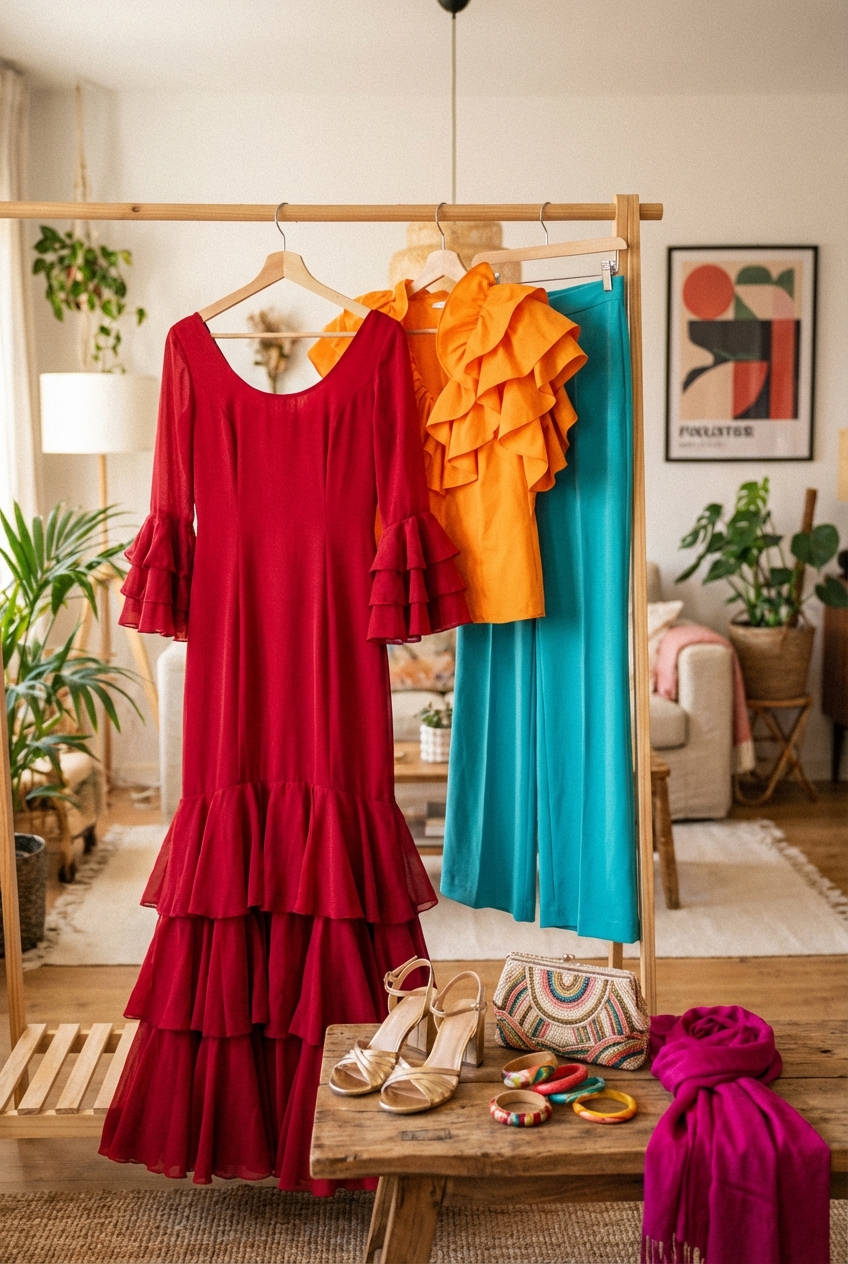
Vibrant Salsa Night Dresses With Bold Ruffles Turning Heads With Every Twirl
There is a specific electricity that fills the room when the clave beat drops and the brass section kicks in. As a stylist who has dressed clients for everything from social dancing socials to high-stakes ballroom competitions, I know that your outfit is more than just fabric; it is your partner on the dance floor. The right salsa dress doesn’t just sit on your body; it amplifies every hip motion, accentuates every spin, and demands attention from the sidelines.
I remember my first time styling a semi-professional dancer for a showcase. We focused entirely on the sparkle and ignored the structural integrity of the ruffles. The dress looked beautiful on the hanger, but the moment she did a double spin, the skirt collapsed rather than flared. That lesson stayed with me: in Latin dance fashion, physics matters just as much as aesthetics. You need garments that understand centrifugal force.
Whether you are looking for a dress for a casual night at a Havana-themed club or a competition-ready ensemble, the goal is high-impact movement. We are going to explore how to choose bold ruffles, vibrant colors, and performance-ready fabrics that keep you comfortable while you set the floor on fire. If you are looking for visual inspiration to spark your creativity, be sure to check out our curated Picture Gallery at the end of the blog post.
The Physics of the Ruffle: Volume and Movement
When we talk about salsa dresses, ruffles are rarely just decorative. They serve a kinetic purpose. A well-placed ruffle exaggerates the speed of your movement, making your spins look faster and your hip action look sharper. However, not all ruffles are created equal.
In high-end dance fashion, we look for ruffles reinforced with horsehair braid (crinoline) at the hem. This is a flexible, synthetic mesh strip sewn into the edge of the fabric. It gives the ruffle structure and “bounce,” ensuring that when you stop spinning, the dress snaps back into place rather than hanging limp.
Designer’s Note:
One of the most common issues I see is “ruffle overload” on petite frames. If you are under 5’4″, avoid massive horizontal tiers of ruffles that go all the way down the skirt. This cuts your visual height in half. Instead, opt for diagonal or asymmetrical ruffles that draw the eye upward and elongate the leg line.
You also need to consider the weight of the fabric used for the ruffles. Organza and chiffon are standard because they catch the air beautifully. Heavy satin ruffles can look luxurious, but they add significant drag. If you are dancing three or four songs in a row, a heavy dress will exhaust you faster than you realize.
Common Mistakes + Fixes
- Mistake: Choosing raw-edge ruffles that fray after one wash or vigorous dance session.
- Fix: Always inspect the hem. Look for a “rolled hem” or a “serged edge” with high-density thread coverage. This ensures longevity.
- Mistake: Ruffles placed directly on the widest part of the hip.
- Fix: Look for ruffles that start just below the hip bone or cascade diagonally across the body to flatter your silhouette.
Fabric Technology: Sweat, Stretch, and Stability
Salsa is an intense cardio workout disguised as a social activity. You are going to sweat, and your dress needs to handle it gracefully. As a fashion expert, I strictly advise against standard cotton or silk for a night of dancing. These natural fibers absorb moisture and hold it, leaving visible wet spots and becoming heavy and clingy.
The gold standard for Latin dance dresses is a high-quality Lycra or Spandex blend, usually mixed with polyester or nylon. You specifically need “4-way stretch.” This means the fabric stretches both vertically and horizontally. This is non-negotiable. If a dress only has 2-way stretch (horizontal only), it will ride up constantly, forcing you to pull it down every time you raise your arms.
Mesh inserts are another vital component for both style and ventilation. High-end dresses often use “power mesh” in the bodice. This material is sheer but incredibly strong, acting almost like shapewear. It keeps everything secure while allowing heat to escape from your core.
What I’d do in a real project:
If I am designing a custom look for a client who sweats heavily, I line the bodice with a moisture-wicking athletic fabric (similar to high-end yoga gear) before adding the decorative outer layer. I also choose busy patterns or darker colors (royal blue, deep purple, black) for the torso area to camouflage any perspiration marks that might occur.
Color Theory Under Club Lighting
Lighting in a salsa club or ballroom is very different from natural daylight. It is usually dim, colored, and moving. When choosing a vibrant dress, you must consider how it interacts with artificial light. Pastels often wash out and look grey in low light. To turn heads, you need saturation.
Neon colors (lime green, hot pink, electric orange) react with the UV “black lights” often found in clubs, making you literally glow. Red is the classic salsa color for a reason; it reads as passionate and high-energy, but be careful with the shade. A blue-based red (crimson) pops more under stage lights than an orange-based red, which can look muddy.
Metallic finishes and sequins are your best friends here. A matte fabric absorbs light, while a glossy or sequined fabric reflects it. As you move, that reflection creates a strobe effect that enhances your musicality visually. If you are on a budget, a simple black dress can be transformed into a showstopper simply by adding a belt or appliqué with high-quality crystals.
The 60/30/10 Rule for Dance Wear
Just like in interior design, we use ratios for color balance in fashion styling:
- 60% Main Color: The base fabric of the dress (e.g., Electric Blue).
- 30% Texture/Secondary Color: The ruffles, fringe, or mesh inserts (e.g., Black mesh).
- 10% Accent/Sparkle: Rhinestones, metallic trim, or accessories (e.g., Silver crystals).
Security and Fit: The “Shake Test”
Nothing kills the vibe of a salsa night faster than a wardrobe malfunction. In Latin dance, you are being spun, dipped, and led through intricate arm patterns. Your dress must stay put. Strapless dresses are generally a risk unless they have a built-in bodysuit and heavy-duty elastic gripping tape along the neckline.
I always recommend designs with straps. Cross-back straps are superior to halter necks for long nights of dancing. Halter tops place all the weight of the dress on your cervical spine (neck), which can cause headaches after an hour. Cross-back styles distribute that tension across your shoulders and back.
The “Shake Test” is a mandatory step in my fitting process. Before buying a dress, put it on in the dressing room and jump up and down, twist vigorously, and lift your arms above your head. If the skirt rides up to a dangerous level or the neckline gaps open, it is not dance-floor appropriate.
Pro Tip on Skirt Length:
The ideal salsa length is usually asymmetrical. A “high-low” hem or a side slit allows for maximum leg stride without the danger of your heel catching in the hem. Floor-length gowns are strictly for formal ballroom waltzes; for salsa, you want the hem to clear your knees or feature a high slit so you don’t trip your partner.
Undergarments: The Invisible Foundation
The structure of your dress relies entirely on what is worn underneath. Standard bras often fail in dance settings because straps slip. For open-back salsa dresses, which are very popular for cooling purposes, you have a few specific options.
A built-in bodysuit with snap crotch closure is the industry standard for high-end dance wear. This ensures that even during a high kick or a dip, you remain covered. If your dress doesn’t have a built-in bodysuit, invest in “dance trunks” or high-waisted briefs that match the dress color exactly. Never rely on standard lingerie.
For bust support, adhesive silicone cups can work for smaller chests, but they can slip when you sweat. A better option is a convertible bra with clear straps, or having bra cups sewn directly into the lining of the dress. This is a simple alteration that any local tailor can do for under $30, and it changes the comfort level dramatically.
Designer’s Note:
Fishnet tights are a staple in the Latin dance world, but not just for looks. Professional “toffee” or “tan” colored fishnets actually help hold the soft tissue of the legs firm, reducing jigging and hiding cellulite or bruises. They are much more durable than standard pantyhose and won’t run if you snag them with a rhinestone.
Styling the Complete Look: Shoes and Jewelry
A vibrant dress demands the right accessories, but functionality must come first. Let’s talk shoes. A standard stiletto is dangerous for salsa. You need a designated Latin dance shoe with a suede sole. The suede provides the perfect balance of grip and slip, allowing you to spin without torquing your knee.
For heel height, 2.5 inches to 3 inches is the standard flare heel. This creates a beautiful leg line while maintaining stability. If you are wearing a dress with bold ruffles, avoid shoes with heavy ankle straps or fringe, as they can catch on the hem of the skirt.
Jewelry choices should be strategic. Long pendant necklaces are a hazard; they swing out during turns and can hit your partner in the face. Stick to large, sparkling earrings—rhinestone chandeliers or hoops are classic. Ensure your earrings are lightweight. Heavy earrings will be painful after three songs.
Common Mistakes + Fixes:
- Mistake: Wearing bracelets with prongs or charms.
- Fix: These are notorious for snagging on your partner’s shirt or your own hair. Wear smooth bangles or fabric wristbands with glued stones (no prongs).
- Mistake: Glazed or leather-soled street heels.
- Fix: If you don’t have dance shoes, take your leather heels to a cobbler and have them add a suede bottom, or scuff the bottoms heavily with sandpaper for grip.
Finish & Styling Checklist
Before you head out the door, run through this final checklist to ensure your look is as functional as it is fashionable.
The Visual Check:
- Does the color pop against your skin tone?
- Are the ruffles sitting correctly, or do they need a quick steam?
- Is the hemline uneven or caught on any embellishments?
The Mechanics Check:
- Raise arms fully: Does the bodice stay in place?
- Do a test spin: Does the skirt flare without tangling between your legs?
- Check fasteners: Are all zippers locked and hooks secured?
The Safety Bag:
- Clear nail polish (for stopping runs in tights).
- Safety pins (essential for strap failures).
- Eyelash glue (works for re-sticking gems or securing loose fabric edges).
- Shoe brush (to clean suede soles if the floor is slippery).
FAQs
Can I wear a salsa dress for other types of dancing?
Yes, absolutely. Salsa dresses are generally interchangeable with other Latin rhythm dances like Cha-Cha, Rumba, and Samba. However, they may be too short or restrictive for smooth dances like Foxtrot or Waltz, which require longer strides and different body contact.
How do I wash a dress with ruffles and rhinestones?
Never put a high-end dance dress in the washing machine. The agitation will destroy the horsehair hem and strip the rhinestones. Hand wash in cold water with a gentle detergent. To remove odors without washing, spray the armpits and bodysuit lining with a mixture of cheap vodka and water. The alcohol kills bacteria and evaporates odorless.
What is the difference between a practice dress and a performance dress?
A practice dress is usually made of heavier, simpler Lycra with fewer embellishments to withstand frequent washing. A performance dress will have lighter fabrics, more expensive stone work, and more volume in the skirt. Don’t wear your $500 performance dress to a crowded club where drinks might be spilled on it.
My ruffles look flat. How do I revive them?
Hang the dress in the bathroom while you take a hot shower (don’t get it wet, just let the steam hit it). If the horsehair braid is bent, you can gently iron it on a very low heat setting with a pressing cloth between the iron and the fabric. This will reshape the plastic mesh inside the hem.
Conclusion
Choosing the right salsa dress is about finding the intersection where bold fashion meets athletic function. The perfect dress gives you the confidence to take up space on the floor. It amplifies your rhythm through the movement of the ruffles and highlights your passion through vibrant color.
Remember that the most expensive dress isn’t always the best one; the best dress is the one that stays secure, manages moisture, and moves in harmony with your body. When you aren’t worried about your straps slipping or your skirt tripping you, you are free to lose yourself in the music.
Whether you opt for electric blue fringe, fiery red ruffles, or a sleek black number with a dangerous slit, wear it with intention. The dance floor is your stage—dress for the performance you want to give.
Picture Gallery


