
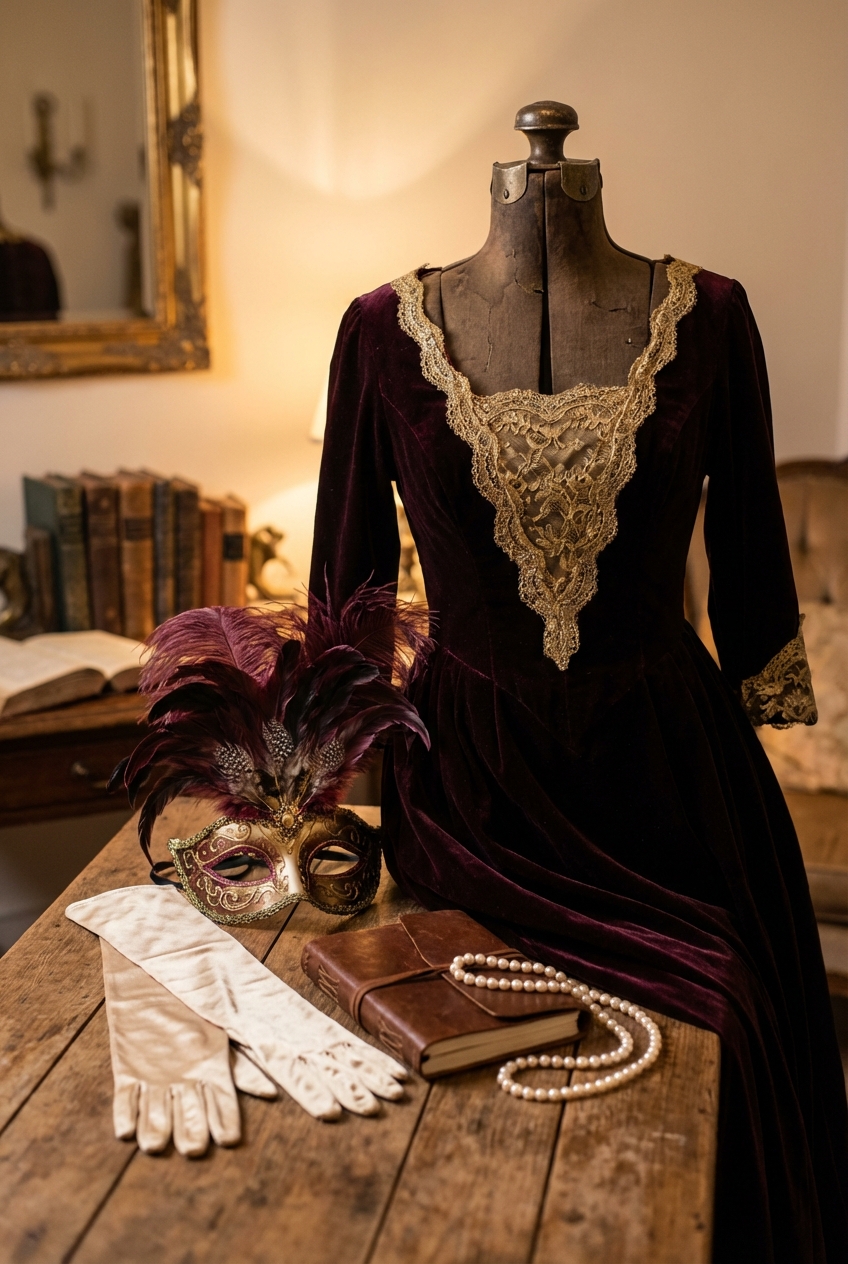
Vintage Inspired Dresses For Masquerade Balls Timeless Elegance For A Magical Evening
There is a distinct electricity in the air the moment an invitation to a masquerade ball arrives. It is one of the few remaining occasions in modern society where we are not only permitted but encouraged to embrace theatricality and opulence. I recall my first significant masquerade event in Venice during Carnival. I spent weeks agonizing over a reproduction 18th-century gown, worrying if the panniers (side hoops) would fit through the doorframes of the palazzo.
When the night arrived, the anonymity provided by the mask and the sheer weight of the velvet created a feeling of transcendent confidence. That evening taught me that a masquerade is not just a party; it is a piece of performance art where you are both the viewer and the subject. The dress you choose is your costume, your armor, and your statement piece all at once.
However, navigating the world of vintage-inspired evening wear can be daunting. There is a fine line between looking like a high-fashion visionary and looking like you raided a costume rental shop. Achieving that timeless elegance requires an understanding of silhouette, fabric behavior, and the interplay between the gown and the mask. If you are seeking visual inspiration to spark your creativity, be sure to look at the curated Picture Gallery located at the end of this blog post.
Defining Your Era: Marie Antoinette, Victoria, or Gatsby?
The first step in selecting a vintage-inspired gown is committing to a specific era. A common error I see is a “mishmash” aesthetic, where a 1920s flapper headband is paired with a Victorian corset. This confuses the eye and breaks the illusion of elegance. You need a cohesive narrative for your look.
The three most popular and effective eras for masquerade balls are the Rococo period (late 18th century), the Victorian Gothic era (late 19th century), and the Roaring Twenties. Rococo is characterized by pastels, wide hips, and elaborate embroidery. It is playful, excessive, and perfect for a “fantasy” theme. Victorian styles offer drama with dark velvets, bustles, and high necklines, ideal for “midnight” or “mystery” themes.
The 1920s silhouette is vastly different, relying on drop waists and intricate beading rather than structural volume. This era is generally easier to wear if you plan on dancing vigorously, as it lacks the restriction of a corset. However, it requires a higher level of detailing to look formal enough for a ball.
Designer’s Note: The Volume Rule
In my years of styling for galas, I have learned that volume commands respect, but it requires spatial awareness. If you choose a ballgown with a hoop skirt or petticoats, you must account for the venue. If the event is in a crowded club or a small historic home, a 1920s column dress or a 1930s bias-cut gown is a smarter choice than a 6-foot-wide Rococo skirt.
Fabric Selection: The Foundation of Luxury
When aiming for a high-end vintage look, the fabric is more important than the design itself. Cheap synthetic satin that is overly shiny will immediately cheapen the look, especially under the harsh flash of event photography. You want fabrics that absorb light or reflect it softly.
Velvet is the gold standard for winter masquerades. It has a depth and richness that looks expensive and hides minor fit issues. Silk taffeta is excellent for structured gowns because it holds its shape and creates that satisfying “rustle” sound when you walk. For a lighter, ethereal look, opt for layers of soft tulle or chiffon, but ensure there are enough layers to create opacity.
Lace can be stunning, but it is high-risk. High-quality lace has a specific weight and texture; low-quality lace looks like plastic netting. If your budget is tight, avoid all-over lace and choose a solid fabric like crepe or velvet instead. It will always photograph better than cheap lace.
Common Mistakes + Fixes
- Mistake: Choosing unlined sequins for a 1920s look. These often snag on everything and scratch the skin.
- Fix: Look for beading on a mesh overlay with a silk or heavy rayon slip underneath. The weight of the beads should pull the fabric down, creating a slinky, fluid movement.
- Mistake: Wearing a single layer of tulle.
- Fix: Vintage skirts relied on density. If you buy a tulle skirt, you likely need to add a petticoat underneath to achieve the correct vintage silhouette and avoid transparency.
The Silhouette and Fit: Tailoring is Non-Negotiable
Vintage dresses were rarely sold “off the rack” in the modern sense; they were fitted to the wearer. To achieve a timeless look, your dress must fit impeccably. The most critical measurement in a ballgown is the “hollow-to-waist” and “waist-to-hem.”
The bodice must sit flush against your skin without gaping. In strapless or off-the-shoulder styles, the support must come from the waist and boning, not from the tightness of the top edge. If the dress is too tight at the top, it creates unflattering spillover; if it is too loose, you will spend the entire night pulling it up.
Hem length is equally vital. For a floor-length masquerade gown, the hem should just graze the floor when you are wearing your heels. It should not pool significantly unless you have a dedicated train handler (which most of us do not).
What I’d Do in a Real Project
When styling a client, I aim for the hem to sit exactly 1 inch off the floor. This allows the shoe toe to peek out when walking, prevents tripping, and keeps the hem from getting dirty. If the dress has a train, I immediately install a bustle or a wrist loop. You cannot dance with a train on the floor; it will get stepped on and ripped within the first hour.
Coordinating the Mask with the Neckline
The mask is the centerpiece of your outfit, but it often clashes with the neckline of the dress. This is a proportion game. If you are wearing a high-necked Victorian dress, a full-face mask can look suffocating and claustrophobic. A half-mask or a stick mask is better here to show some skin and break up the heavy fabric.
Conversely, if you are wearing a strapless or low-cut Rococo gown, you have plenty of “open space” around the décolletage. This allows for a larger, more elaborate mask with feathers or extensions without overwhelming your frame.
You must also consider the attachment method. Ribbon ties are traditional and romantic, but they can slip on silky hair. Elastic bands are secure but ugly. Stick masks are incredibly chic and great for photos, but they render one hand useless for the entire night.
Designer’s Note: The Hair Factor
Always decide on your mask before finalizing your hairstyle. If the mask ties around the head, you need a hairstyle that accommodates the ribbon and hides the knot. An intricate updo is usually the safest bet for securing a mask. If you plan to wear your hair down, ensure the mask fits securely without sliding, as you won’t have the friction of the hair tie to help hold it in place.
Color Theory for Dimly Lit Venues
Masquerade balls are notoriously dark. They rely on candlelight, mood lighting, and shadows to create atmosphere. This lighting environment drastically changes how colors appear.
Pastels and muted colors can look gray or “washed out” in low light. While a pale lavender dress looks lovely in the showroom, it might disappear in a ballroom. Jewel tones are your best friend for these events. Emerald green, sapphire blue, ruby red, and deep amethyst pop beautifully in dim light.
Black is a classic choice and always elegant, but it can disappear into the shadows if the fabric lacks texture. If you choose a black dress, ensure it has beading, velvet texture, or satin highlights to catch the light. Metallics like gold, silver, and bronze are also excellent choices as they act as their own light source.
Pro-Level Rule of Thumb: The 60/30/10 Rule
Apply this interior design rule to your outfit. 60% of your look is the main dress color. 30% is the secondary color (perhaps the lining of a cape, or the mask color). 10% is the accent (jewelry, shoe buckles, lipstick). This ensures your look is balanced and not monotonous.
Undergarments and Structure: The Secret to the Look
The silhouette of a vintage dress is almost always created by what is worn underneath it. You cannot achieve a 1950s Dior “New Look” shape without a crinoline, nor can you get a Victorian hourglass without a corset or long-line bra.
Modern shapewear (like Spanx) smooths the body, but it does not reshape the silhouette. True vintage style requires structural undergarments. If your dress has a heavy skirt, a hoop skirt or petticoat keeps the fabric away from your legs, which actually keeps you cooler and makes walking easier.
For corsetry, fit is paramount. A fashion corset is different from a tight-lacing corset. For an event, wear a corset that is 2 to 4 inches smaller than your natural waist, but no more. You need to be able to breathe, eat, and laugh.
Common Mistakes + Fixes
- Mistake: Wearing a hoop skirt without a petticoat over it.
- Fix: The “bones” of the hoop will show through the dress fabric, looking like ribs. Always layer a soft tulle petticoat over the hoop and under the dress to smooth out the ridges.
- Mistake: Ignoring static cling.
- Fix: Vintage fabrics and hosiery love static. Spray your tights and the inside of your skirt with an anti-static spray before leaving the house.
Finish & Styling Checklist
Before you step out the door, run through this final checklist. These details separate the costumes from the couture.
- The Sit Test: Can you sit down in your dress? If you are wearing a hoop, practice the “swoop and sit” maneuver to prevent the hoop from flying up.
- The Fasteners: Check every hook, eye, and zipper. Rub a bar of soap on stubborn vintage zippers to help them glide.
- The Mask Fit: Wear your mask for 10 minutes at home. If it pinches your nose or blocks your peripheral vision, adjust the padding now.
- The Shoes: Scuff the soles of new heels with sandpaper. Ballroom floors are slippery; you need traction.
- Emergency Kit: Pack a small clutch with safety pins, double-sided fashion tape, lipstick, and bobby pins.
- Steam Check: Ensure there are no wrinkles. Nothing ruins the illusion of luxury faster than a creased hem.
FAQs
Q: Can I wear a short dress to a masquerade ball?
A: Generally, no. Traditional masquerade balls are “Black Tie” or “White Tie” events, implying floor-length gowns. A tea-length dress (hitting mid-calf) can work for 1950s themes, and a knee-length dress works for 1920s themes, but anything shorter than the knee usually reads as too casual or “club wear” for a formal ball.
Q: Should my mask match my dress exactly?
A: Exact matches can sometimes look a bit tacky, like a “set.” It is more sophisticated to coordinate. If your dress is emerald green, a gold mask with green crystals is better than a mask made of the exact same green fabric. Contrast and texture are key.
Q: Is it okay to rent a high-end dress?
A: Absolutely. Services like Rent the Runway or local costume archives are fantastic resources. Since a ballgown is a statement piece you might only wear once, renting allows you to access higher-quality designer fabrics (like Marchesa or Badgley Mischka) that might be out of budget to purchase.
Q: How do I handle a purse with a ballgown?
A: Do not carry a shoulder bag. It ruins the line of the shoulders and looks pedestrian. You need a minaudière (a small, hard-cased clutch) or a drawstring reticule (a soft pouch) that matches the era of your dress. It should be just big enough for your phone and lipstick.
Conclusion
Attending a masquerade ball is a rare opportunity to step outside of your daily life and embody a character of mystery and grace. The key to nailing the vintage-inspired look lies in the details—the weight of the velvet, the crispness of the hem, the structure of the undergarments, and the coordination of your mask.
By choosing a specific era and adhering to the silhouette rules of that time, you elevate your look from a mere costume to a fashion statement. Remember that elegance is as much about how you carry yourself as it is about what you wear. Shoulders back, chin up, and move with the confidence of someone who owns the ballroom.
Enjoy the anonymity, the music, and the magic of the evening. When you put the effort into the foundation and the fabrics, the night becomes truly unforgettable.
Picture Gallery


