
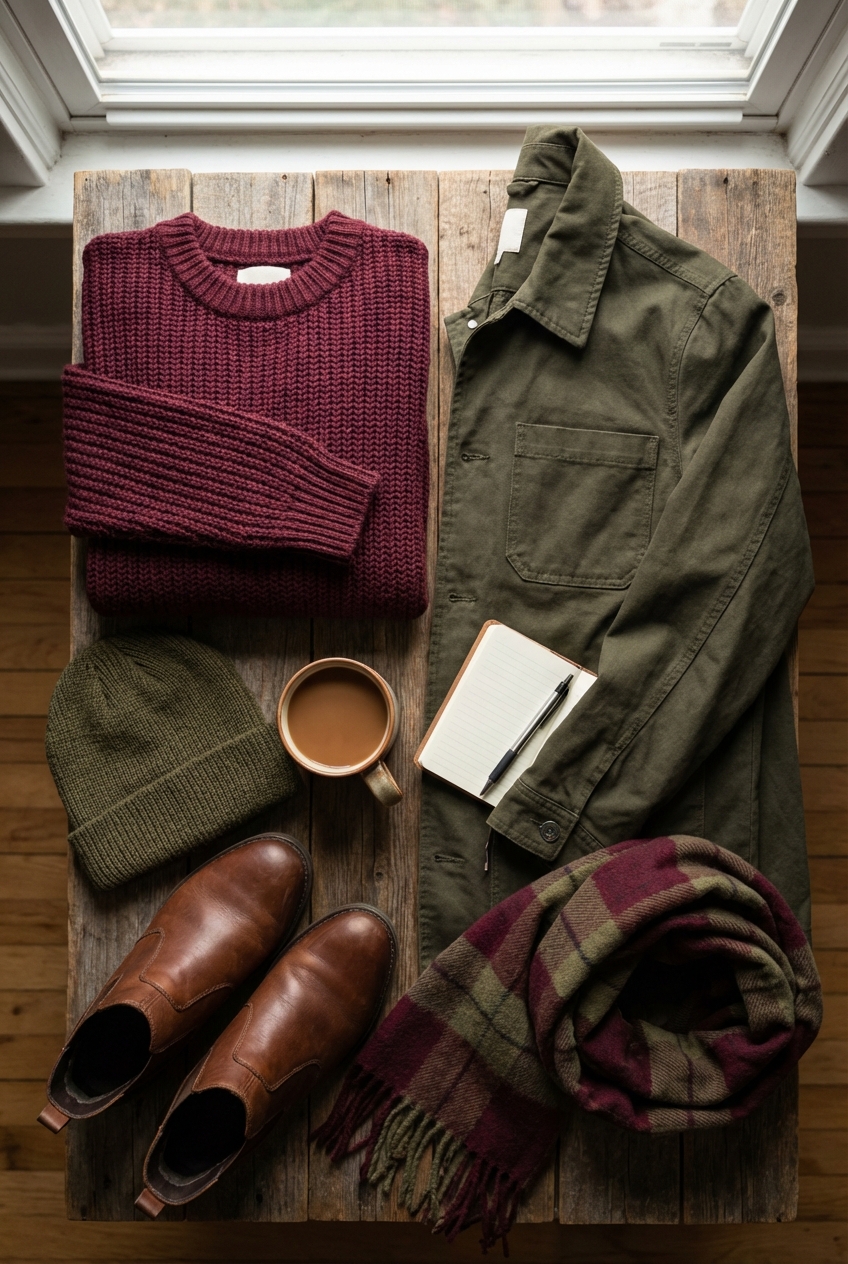
Warm Burgundy And Deep Olive Outfits For Cozy Looks
There is a distinct moment in the styling season when we pivot from the bright, crisp whites of summer into something much more substantial and grounding. For me, that shift is defined by the marriage of deep burgundy and earthy olive. These aren’t just colors; they are mood setters that evoke a sense of luxury, warmth, and sophistication without trying too hard.
In my years working as a fashion stylist, I have found that clients often shy away from mixing two strong colors, preferring to pair one with black or denim. However, blending merlot tones with forest greens creates a rich, chromatic depth that neutrals simply cannot achieve. It suggests a high level of sartorial confidence.
The secret to mastering this look lies not just in the colors themselves, but in the textures you choose to layer. If you are looking for visual inspiration, I have curated a comprehensive Picture Gallery at the end of this blog post.
The Psychology and Science of the Color Pairing
Understanding why these colors work together is the first step to styling them effectively. Burgundy and olive sit on opposite sides of the color wheel, creating a complementary relationship that is naturally pleasing to the human eye.
Burgundy is essentially a deep shade of red with purple or brown undertones, signaling warmth and power. Olive is a yellow-based dark green that acts as a neutral in the fashion world. When you pair them, the red undertones of the burgundy make the green pop, while the green grounds the intensity of the red.
Designer’s Note: Watch Your Undertones
A common mistake I see is mixing cool-toned burgundy (which leans purple) with a warm, yellow-heavy olive. This can create visual friction.
- The Fix: If your burgundy is cool (think cranberry or wine), pair it with a cooler, greyer olive (think military drab).
- The Fix: If your burgundy is warm (think oxblood or brick), pair it with a rich, golden olive.
Mastering Texture: The Key to High-End Styling
When you are wearing dark, moody colors, the fabric becomes the most important variable. Flat cottons in these shades can look dull or muddy. To achieve a luxury aesthetic, you must prioritize light reflection and tactile depth.
I always advise clients to follow the “Rough/Smooth Rule.” If one piece absorbs light, the other should reflect it. For example, a heavy wool olive coat (rough/matte) looks incredible over a silk burgundy blouse (smooth/shiny).
Recommended Fabric Pairings:
- Cashmere and Leather: Pair a chunky olive cashmere knit with a sleek burgundy leather skirt. The softness of the wool balances the harshness of the leather.
- Velvet and Denim: A burgundy velvet blazer elevates a pair of dark olive denim trousers. Velvet catches the light and reveals the complexity of the dye.
- Silk and Wool: A burgundy wool trouser with a sharply pressed crease provides structure for a fluid olive silk camisole or blouse.
Proportions and Silhouette: The Rule of Thirds
Color blocking with deep tones can sometimes cut the body in half visually, making you look shorter. As a stylist, I rely heavily on the “Rule of Thirds” to maintain a long, elegant line. You never want a 50/50 split where your top and bottom are equal lengths.
Implementation Strategy:
- The 1/3 to 2/3 Ratio: Tuck a burgundy turtleneck into high-waisted olive wide-leg trousers. The top creates the top 1/3, and the trousers create the bottom 2/3. This elongates the legs.
- The Long Layer: Wear a monochromatic inner column (e.g., all burgundy) and layer a long olive trench coat over it. The coat should hit at the mid-calf, roughly 44 to 48 inches from the shoulder depending on your height.
Common Silhouette Mistake + Fix
- Mistake: Wearing a bulky olive sweater over a burgundy midi skirt where the sweater hem hits the widest part of your hips. This adds visual bulk and shortens the frame.
- Fix: Perform a “French Tuck” (front tuck only) to define the waistline, or choose a cropped sweater that hits exactly at the waistband of the skirt.
Footwear and Hardware: Finishing the Look
Accessories are the anchors of any outfit. When working with burgundy and olive, the choice of metal hardware and leather goods is critical.
Leather Goods
Avoid introducing black leather into this pairing unless you are very intentional about it. Black can sometimes look too harsh against the warmth of olive and burgundy. Instead, opt for rich cognac, espresso brown, or nude leather for your bags and shoes.
Jewelry Metals
Gold is the superior choice here. The yellow undertones in gold jewelry harmonize beautifully with olive and amplify the warmth in burgundy. Silver can look a bit stark and disconnected unless the olive tone is very grey-leaning.
What I’d Do in a Real Project:
If I were styling a client for a fall event, I would pair burgundy knee-high leather boots with an olive knit dress.
- The Rule: Ensure there is no skin gap between the boot and the dress hem for a seamless look, or leave at least 3 inches of skin showing. Anything in between (like 0.5 inches) looks like an accident.
Occasion-Specific Styling Formulas
To make this practical, here are three specific formulas I use for clients depending on where they are going.
1. The Corporate Office
- The Outfit: A tailored olive suit (blazer and trousers) worn with a burgundy silk blouse.
- Why it works: Olive is softer than black or navy but just as professional. The burgundy adds a touch of authority without being aggressive.
- Shoe pairing: Pointed-toe suede pumps in a matching burgundy or a neutral beige.
2. Weekend Brunch
- The Outfit: Dark wash jeans (or olive corduroys), a burgundy oversized cable-knit sweater, and an olive utility jacket.
- Why it works: It is comfortable but looks intentional. The utility jacket adds structure to the slouchy knit.
- Shoe pairing: White leather sneakers to brighten the look, or brown Chelsea boots.
3. Evening Dinner Date
- The Outfit: A burgundy slip dress layered under an olive leather moto jacket.
- Why it works: The juxtaposition of the delicate slip dress against the tough leather is a classic “cool girl” fashion trope.
- Shoe pairing: Strappy gold heels or sleek ankle boots.
Stylist’s Checklist: The Final Mirror Check
Before you walk out the door, run through this mental checklist. These are the exact things I look for during a final fitting.
- Lint Check: Dark colors like burgundy and olive show lint and pet hair aggressively. Do you have a travel roller?
- Hemlines: Does your coat completely cover your skirt, or is the skirt peeking out? Ideally, the coat is longer, or the skirt is significantly longer (4+ inches).
- Hardware Match: Is the hardware on your bag the same metal tone as your earrings and belt buckle? Mixing metals is fine, but matching them looks cleaner.
- Balance: If you are wearing a voluminous top, are your bottoms fitted? If your trousers are wide-leg, is your top fitted or tucked in?
- Lighting Test: Step into natural light. Do the colors still clash? Sometimes indoor lighting hides a mismatched undertone.
Frequently Asked Questions
Can I wear this color combination in the spring or summer?
Absolutely, but you need to adjust the fabric weights and the specific shades. For warmer months, switch to a lighter sage olive and a brighter berry or raspberry tone. Swap wools and leathers for linens and cotton blends.
Does this combination work for all skin tones?
Yes, but the placement matters. If you have a cooler skin undertone, burgundy is likely very flattering near your face, so wear that as a top and keep the olive on the bottom. If you have warm, golden undertones, olive green near the face will make you glow.
How do I wash dark burgundy and olive items without fading?
Dark dyes are prone to bleeding and fading. Always wash these garments inside out in cold water. I recommend using a detergent specifically formulated for dark colors. Never put high-quality denim or wool in the dryer; air drying preserves the fiber integrity and color depth.
Is it okay to add a print?
Yes. Leopard print is effectively a neutral and pairs incredibly well with this combo. A leopard belt or scarf acts as a perfect bridge between the two solids. Alternatively, a plaid that incorporates both colors is a fantastic statement piece.
Conclusion
Embracing the combination of warm burgundy and deep olive is a testament to sophisticated styling. It moves beyond the safety of monochromatic neutrals and steps into a world of rich, narrative color.
By focusing on fabric quality, maintaining proper proportions, and choosing the right accessories, you can create looks that are both cozy and undeniably high-fashion. Remember that confidence is the final layer of any outfit. When you feel good in what you are wearing, the colors naturally shine brighter.
Picture Gallery


