
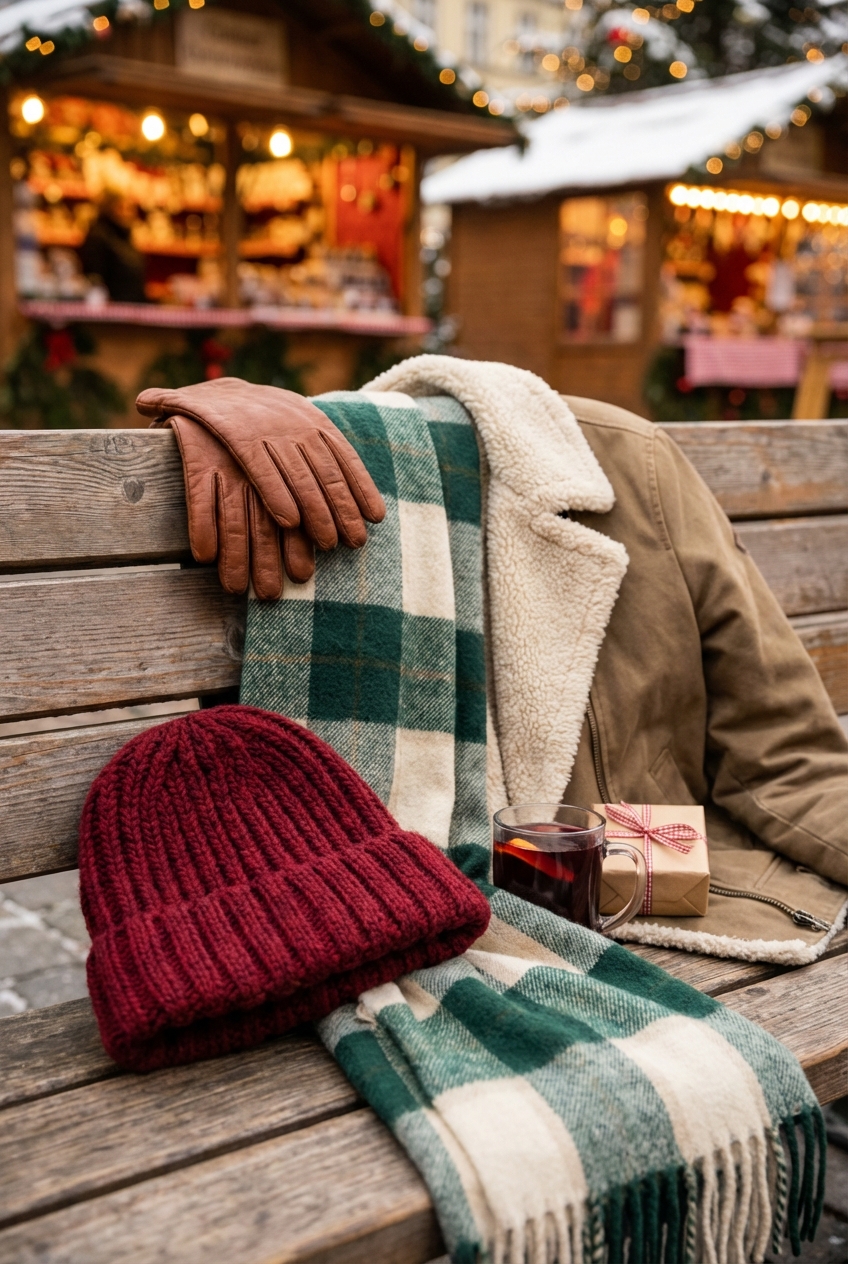
Warm Outerwear For Christmas Market Adventures
Introduction
There is a distinct magic to European-style Christmas markets that we wait for all year. The twinkling lights against a dark winter sky and the scent of roasted chestnuts create an atmosphere that feels ripped straight from a holiday movie. However, nothing ruins that cinematic moment faster than the biting reality of standing still in freezing temperatures for hours on end.
As a fashion stylist, I have seen too many clients sacrifice warmth for a photo opportunity, only to end up miserable and shivering by the second stall. You do not have to choose between looking like a Michelin man and freezing in a thin trench coat; the secret lies in technical fabric knowledge and precise layering ratios. Real style in winter is about capability just as much as it is about aesthetics, ensuring you can comfortably sip your gluhwein while navigating cobblestone streets.
In this guide, I will walk you through the investment pieces that blend high-end design with thermal efficiency. If you are looking for specific visual inspiration on how to style these looks, I have curated a comprehensive Picture Gallery at the end of this blog post.
Understanding Fabric Composition: The Warmth Equation
The biggest mistake I see shoppers make is buying coats based on “hand-feel” rather than the care label. A coat can feel thick and heavy but offer zero insulation if it is made primarily of acrylic or polyester. For a Christmas market where you are largely stationary, you need natural fibers that trap body heat.
Look for wool coats with at least 70% wool content, though 90% to 100% is the gold standard for high-end investments. If you see “virgin wool” or “boiled wool,” even better, as these denser weaves block wind more effectively. For extreme cold, cashmere blends add loft and warmth without adding weight, though they are more delicate in wet snow.
Stylist’s Note: The Synthetic Trap
A 100% synthetic coat acts like a plastic bag; it traps moisture (sweat) inside, which eventually makes you colder as it cools against your skin. Natural fibers breathe, regulating your temperature as you move from the crowded, warm stalls to the open, windy walkways.
The Shearling Statement: Luxury Meets Utility
If I could recommend only one coat for a snowy market adventure, it would be a genuine shearling or a high-quality faux shearling. The leather exterior acts as a windbreaker, while the wool interior creates a microclimate of warm air against your body. It is the ultimate barrier against the damp chill often found in European cities during December.
When selecting a shearling coat, pay close attention to the weight. Vintage shearling can be incredibly heavy, causing shoulder fatigue after an hour of walking. Modern luxury designers have mastered the art of thinning the leather hide just enough to maintain durability while significantly reducing the weight.
Common Mistakes + Fixes
Mistake: Buying a shearling coat that is too fitted in the armholes.
Fix: Always size up or choose a drop-shoulder cut. Shearling is thick fabric; you need an extra 1 to 2 inches of ease in the bicep area to accommodate a chunky knit sweater underneath without restricting circulation.
The Longline Wool Coat: Tailored Precision
For a look that transitions seamlessly from a daytime market to a nice dinner, a floor-grazing wool coat is unbeatable. The length is functional; it covers your legs, which are often the first part of the body to get cold in jeans or trousers.
In terms of silhouette, look for a double-breasted closure. The overlapping fabric on the chest provides a double layer of wool right over your core, doubling the warmth compared to a single-button closure. Additionally, ensure the coat has a functional collar that can be flipped up and buttoned to protect the neck from drafts.
What I’d Do in a Real Project
If styling a client for a trip to Vienna or Strasbourg, I would select a camel or charcoal wool coat that hits at the mid-calf. I would immediately take it to a tailor to ensure the hem is exactly 2 inches above the boot line to prevent slush stains, but low enough to block the wind.
The Elevated Puffer: High-Tech Insulation
Puffer coats have graduated from ski slopes to high-fashion staples. For a Christmas market, you want a puffer that features a matte finish rather than a sporty high-gloss look. This small detail elevates the outfit and pairs better with dressy boots and wool trousers.
Focus on “fill power” if you are buying down. A fill power of 600 is standard, but 800+ is what you want for standing outdoors at night. If you prefer synthetic insulation due to allergies or ethics, look for Primaloft Gold or similar high-performance alternatives that mimic the clustering of down feathers.
Stylist’s Note: The Belt Factor
A massive puffer can swallow your figure. I always recommend styles with a belted waist or an internal drawstring. Cinching the waist isn’t just for vanity; it seals off the torso, preventing cold air from shooting up the back of the coat.
Layering Logistics: The Invisible Warmth
Your outerwear is only as good as what you wear underneath it. The goal is to create trapped air pockets without creating bulk that restricts movement. Start with a merino wool base layer—never cotton—right against the skin to manage moisture.
The mid-layer is where you can play with texture. A cashmere turtle neck or a chunky cable knit adds depth to the look. However, ensure your sweater isn’t so thick that it distorts the line of your coat. If your coat is tailored, opt for fine-gauge cashmere. If your coat is oversized, you can get away with heavy fisherman knits.
Common Mistakes + Fixes
Mistake: Wearing a short cardigan that leaves the lower back exposed when you reach for something.
Fix: Use the “tuck or tunics” rule. Either tuck your base layer fully into high-waisted trousers or wear a tunic-length sweater that covers the hips completely.
Footwear and Accessories: The Critical Details
You cannot enjoy a Christmas market if your feet are frozen. Forget your standard leather fashion boots; you need boots with a lug sole. The rubber thickness separates your foot from the frozen ground, conducting less cold than a thin leather sole.
For accessories, prioritize materials over patterns. A 100% cashmere beanie is significantly warmer than a chunky acrylic knit. Leather gloves should be lined with cashmere or silk. Tech-touch fingers are non-negotiable—you do not want to expose your hands to the air every time you need to check a map or take a photo.
What I’d Do in a Real Project
I advise clients to buy boots a half-size larger than their shoe size for winter trips. This allows for a thick wool sock (like Smartwool) while maintaining an air gap around the toes. If the boot is tight, circulation cuts off, and feet get cold instantly.
Finish & Styling Checklist
Before you head out the door, run through this final stylist check to ensure maximum comfort and chicness.
- Check the Hemline: Ensure your coat completely covers your skirt or dress hemline for a clean, elongated silhouette.
- The Sit Test: Can you sit down comfortably? If the buttons pull dangerously tight across the hips, unbutton the bottom toggle or choose a looser fit.
- Scarf Placement: Tuck the ends of your scarf inside the coat before belting it. This locks the scarf in place and adds chest insulation.
- Bag Strategy: Opt for a crossbody bag worn under your open coat, or a durable leather tote worn over the shoulder. Avoid handheld clutches that freeze your fingers.
- Hardware Check: Metal zippers can get extremely cold against the chin. Ensure your coat has a “zipper garage” (a piece of fabric covering the top) or wear a scarf high enough to buffer it.
FAQs
What is the best coat length for petite women?
For petite frames, I recommend knee-length or just below the knee. A floor-length coat can overwhelm a smaller frame. Look for coats with higher pocket placements and narrower lapels to draw the eye upward and elongate the body.
Can I wear a trench coat to a Christmas market?
Generally, no. Traditional cotton gabardine trench coats offer zero thermal insulation. However, if you have a wool trench or a leather trench lined with shearling, that works beautifully. If you must wear a cotton trench, you will need an ultra-light down vest underneath.
How do I clean my wool coat after spilling gluhwein?
Do not rub the stain! Blot it gently with a clean cloth to absorb the liquid. Once you are back at your hotel or home, spot clean with a tiny amount of wool detergent and cool water. If the stain persists, take it to a professional dry cleaner immediately—heat will set the sugar.
Is faux fur actually warm?
High-quality modern faux fur is very warm because the synthetic fibers are dense and block wind effectively. However, cheap faux fur often lacks a wind-blocking backing layer. Test it by blowing on the fur; if you can feel your breath easily on the other side, it won’t stand up to the wind.
Conclusion
Dressing for a Christmas market is the ultimate exercise in balancing fashion with function. It is about respecting the environment—the cold, the wind, the cobblestones—while still expressing your personal style. By investing in the right materials like heavy wool, down, and shearling, and paying attention to the technical details of fit and layering, you can enjoy every moment of the festive season.
Remember that the most stylish woman at the market is the one who looks comfortable and confident, not the one shivering in a thin jacket. Embrace the volume of winter textures, play with rich colors that complement the festive lights, and layer with intention.
Picture Gallery


