
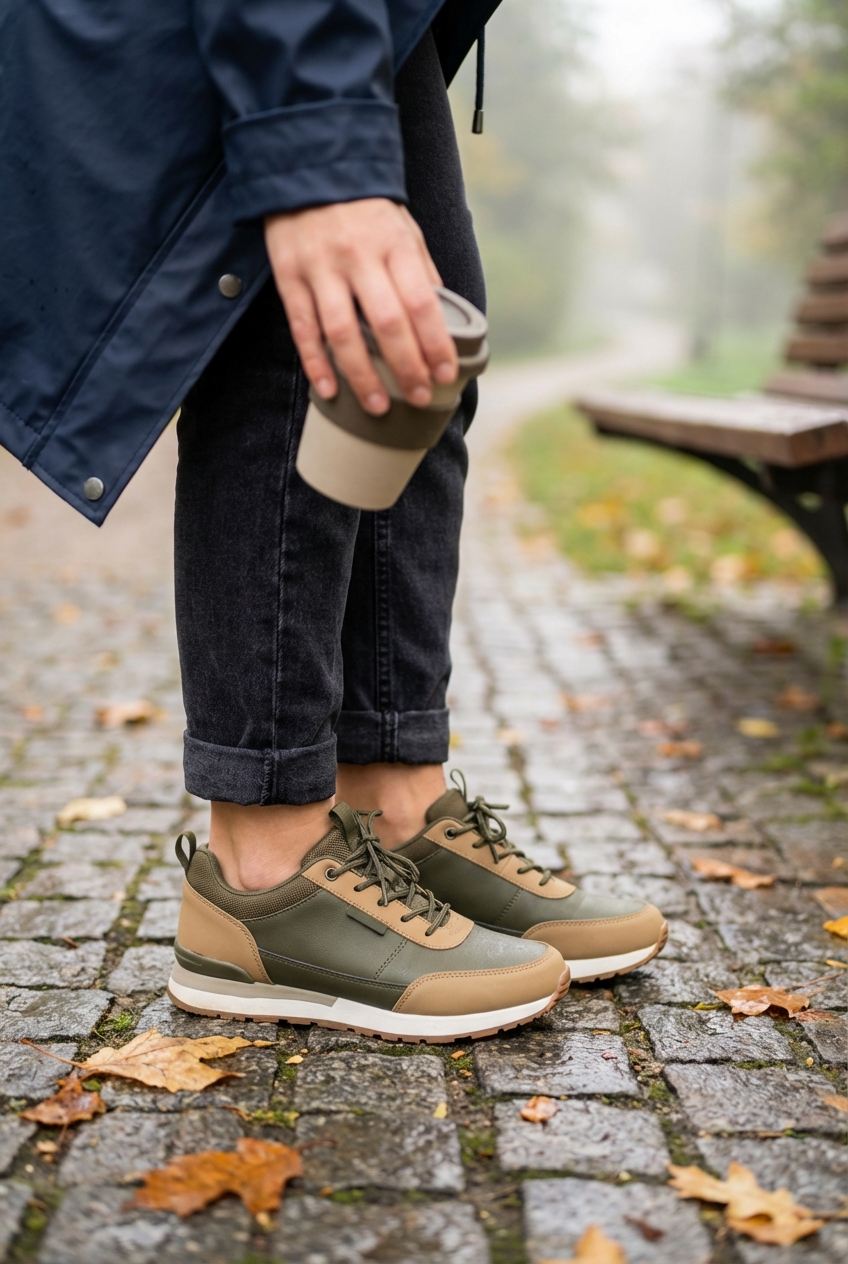
Water Resistant Sneakers For Damp Weather Outings
There is perhaps nothing more humbling in the world of fashion than a sudden downpour when you are wearing the wrong shoes. I distinctly remember a specific Tuesday during New York Fashion Week when I opted for a beautiful, untreated suede loafer. By the time I walked three blocks to the venue, the shoes were ruined, and my mood had dampened along with my socks.
For years, the choice was binary: wear clunky, unattractive rubber boots or sacrifice your favorite sneakers to the elements. Fortunately, textile technology and high fashion have finally converged. We now have access to footwear that maintains a sharp, editorial silhouette while providing the hydrostatic resistance necessary for damp commutes.
This guide isn’t just about keeping your feet dry; it is about maintaining the integrity of your entire outfit in less-than-ideal conditions. For visual inspiration on how to style these looks, be sure to check out the curated Picture Gallery at the end of this blog post.
The Technical Foundation: Materials That Actually Work
Before we discuss aesthetics, we must address the physics of water resistance. In my years of styling clients for travel and varied climates, I have learned that “water-resistant” is a spectrum, not a guarantee. You need to know exactly what you are putting on your feet.
The gold standard remains Gore-Tex and similar ePTFE membranes. These materials contain microscopic pores that are 20,000 times smaller than a water droplet but 700 times larger than a water vapor molecule. This allows perspiration to escape while blocking rain, preventing that clammy “plastic bag” feeling common in cheaper rain gear.
However, newer rubberized leathers are making a massive splash in the luxury market. These involve coating high-quality leather with a polyurethane layer. The look is sleek, matte, and incredibly modern. It works perfectly for city environments where you encounter puddles but not deep hiking trails.
Designer’s Note: The “Seam” Lesson
Here is a lesson I learned the hard way on a rainy location shoot. A shoe can have waterproof fabric, but if the seams aren’t sealed, you will get wet. When shopping, run your finger along the stitching where the upper meets the sole. If it feels like standard cotton thread without a taped backing or heavy glue seal, water will wick right through that point within 20 minutes of exposure.
The “Gorpcore” Influence: Styling Trail Runners
The “Gorpcore” trend—bringing hiking and camping aesthetics into high fashion—is a blessing for damp weather. Technical trail runners are designed specifically for wet, uneven terrain. The key to pulling this off without looking like you got lost on the way to a mountain is intentional contrast.
I strictly advise against pairing technical hiking sneakers with actual hiking gear unless you are actually hiking. In a city setting, the juxtaposition is what makes the look chic. Pair chunky, lug-soled waterproof runners with soft, fluid fabrics.
Try a silk midi skirt or a pleated wool trouser. The weight of the shoe grounds the lightness of the fabric. This creates a silhouette that feels practical yet curated. It signals that you are prepared for the weather but haven’t sacrificed your personal style.
Common Mistakes + Fixes
Mistake: Wearing ankle-length leggings with chunky waterproof sneakers.
Why it fails: This creates a “lollipop” effect where the foot looks disproportionately large compared to the leg.
The Fix: Switch to a straight-leg or wide-leg pant that breaks over the top of the shoe. This balances the volume of the sneaker with the rest of your frame.
The Minimalist Approach: Treated Leather and Synthetics
Not everyone wants the aggressive aesthetic of a trail runner. For my corporate clients or those with a minimalist wardrobe, I source “stealth” rain sneakers. These look like standard white or black court shoes but hide a waterproof membrane.
When styling these, treat them exactly as you would a standard leather sneaker. They pair beautifully with cropped suit trousers or dark denim. The goal here is invisibility; no one should know you are wearing rain gear.
Look for gusseted tongues. This is a construction detail where the tongue is sewn to the sides of the shoe upper, creating a seal. Without this, water from your pant hem can drip down the tongue and straight into your socks, rendering the waterproof exterior useless.
Mastering Proportions: Hemlines and Ankle Exposure
The biggest challenge in damp weather isn’t the shoe itself; it is how the shoe interacts with your pants. As a stylist, I obsess over the “break”—where the pant leg hits the shoe. In dry weather, we can let trousers pool on the floor. In damp weather, this is a recipe for disaster.
The 1-Inch Rule: When tailoring pants for rainy seasons, I aim for the hem to hover exactly one inch off the ground when you are wearing shoes. This prevents the fabric from wicking moisture from the pavement via capillary action.
If you prefer a cropped look, you must consider the ankle gap. Exposed skin in 40-degree rain is uncomfortable and visually jarring. I recommend investing in high-quality wool socks that match the color of either the shoe or the pant. This creates a continuous vertical line, elongating the leg even while wearing flat shoes.
Color Theory for Gray Days
The instinct is to wear black shoes in bad weather to hide dirt. While practical, it can be heavy and boring. Waterproof materials are much easier to clean than canvas or suede, which grants us permission to experiment with color.
I love using a waterproof sneaker as a “pop” piece. If you are wearing a classic beige trench coat and black trousers, a sneaker in a deep olive, burgundy, or even a slate blue adds depth. These earth tones read as neutrals but feel more intentional than plain black.
If you do opt for white waterproof sneakers (which are surprisingly easy to wipe down), ensure the sole is also white or a light gum color. A black sole on a white upper often looks too athletic for a polished casual outfit.
What I’d Do in a Real Project: The Wardrobe Module
When building a capsule wardrobe for a client in a rainy city like Seattle or London, I follow a strict formula. I don’t just buy a shoe; I build a “damp weather module.” Here is the checklist I use to ensure the sneakers actually function within their closet.
- The Commuter Test: I pair the sneakers with the client’s heaviest coat. If the shoes look too dainty, the outfit is top-heavy. We switch to a chunkier sole to balance the visual weight.
- The Sock Coordination: We buy three pairs of merino wool socks specifically for these sneakers. Cotton holds moisture and causes blisters; wool wicks it away. We ensure the sock height clears the top of the sneaker collar by at least two inches to prevent rubbing.
- The Trousers Check: We test the shoes with the client’s go-to jeans. If the denim is stiff and gets stuck behind the tongue of the shoe, it looks messy. We tailor the jeans or cuff them permanently to sit cleanly above the laces.
Care and Maintenance for Longevity
Even the most expensive waterproof membrane will fail if you mistreat it. Dirt and oil clog the pores of the fabric, compromising breathability. I treat my rain sneakers with the same reverence as my leather boots.
After a muddy outing, rinse them immediately. Do not let mud dry on the technical fabric, as it can degrade the water-repellent coating (DWR) on the surface. Use a soft brush and lukewarm water—never harsh detergents.
You must re-proof your sneakers. Every six months, I use a spray-on DWR treatment. You will know it is time when water stops beading up on the surface and starts “wetting out” (making the fabric look dark). A quick spray restores the factory-level protection.
The Drying Rule
Never, under any circumstances, put wet sneakers near a radiator or heater. Direct heat dries out the adhesives holding the sole to the upper. This causes delamination, where the sole peels away. Always stuff them with newspaper and let them air dry at room temperature.
Stylist’s Finish & Styling Checklist
Before you head out the door, run through this quick mental checklist to ensure your look is cohesive and functional.
- Check the Laces: Are your laces dragging? Wet laces are heavy and untie easily. Tuck them into the shoe or use a double knot.
- Balance the Silhouette: If your sneakers are chunky, keep your top half structured (e.g., a trench coat or blazer) rather than an oversized hoodie.
- Sock Barrier: Are you wearing moisture-wicking socks? Cotton socks inside waterproof shoes will create a sauna effect.
- Hem Height: Roll your cuffs once if the pavement is particularly wet to avoid wicking.
- Visual Link: Try to match a detail on the sneaker (a logo color or lace color) to an accessory you are wearing, like a scarf or bag.
Frequently Asked Questions
Can I just spray my regular canvas sneakers with waterproofer?
You can, but it is a band-aid solution. Sprays add a surface-level repellent, but they don’t seal the seams or the tongue. In a heavy rain, your feet will get wet within minutes. Sprays are best for protecting against stains, not standing water.
Are high-tops better than low-tops for rain?
Generally, yes. High-tops prevent water from splashing up off the heel and into the shoe. They also provide more coverage for your ankles. However, if you are just dashing from a car to a building, low-tops are sufficient and often easier to style.
How do I stop my waterproof sneakers from squeaking?
Squeaking often happens when moisture gets trapped between the insole and the outsole. Remove the insole and sprinkle a tiny amount of baby powder or baking soda underneath it. This reduces friction and absorbs residual moisture.
Do waterproof sneakers stretch like leather shoes?
Typically, no. The waterproof membrane is a synthetic layer that does not have the same give as natural leather. Always buy the size that fits perfectly (or slightly roomy for thick socks) right out of the box. Do not count on a “break-in” period for width.
Conclusion
Navigating damp weather does not require you to abandon your personal style. By selecting sneakers that utilize advanced membranes like Gore-Tex or treated leathers, you can maintain a sophisticated, high-fashion aesthetic regardless of the forecast.
Remember that the success of the look relies on how you integrate the shoe with the rest of your wardrobe. Pay attention to your pant hems, balance the visual weight of the shoe with your outerwear, and never underestimate the power of a good wool sock. With the right pair, a rainy day becomes just another opportunity to showcase your styling expertise.
Picture Gallery


