
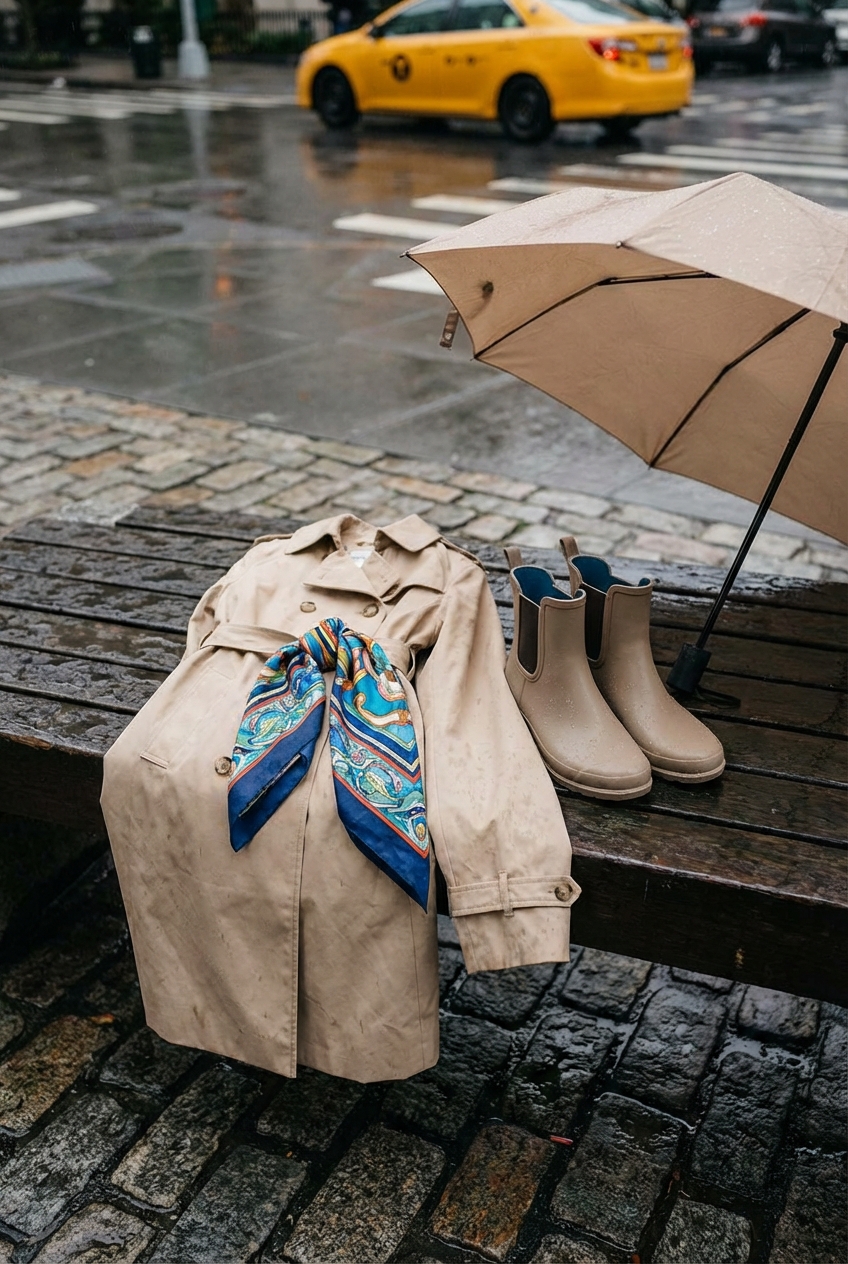
Waterproof Trench Coats For Rainy Spring Commutes
There is nothing quite as humbling as a rainy spring morning in the city. You spend time curating the perfect layered look, blow-drying your hair, and selecting the right shoes, only to have it all undone the moment you step out the door. I learned this lesson the hard way early in my career, ruining a vintage silk blouse because I trusted a coat that was merely “water-resistant” during a twenty-minute walk to a client meeting.
The difference between arriving at your destination looking like a drowned rat versus a polished professional comes down to one garment: the trench coat. However, not all trenches are created equal. To survive the commute, you need a piece that marries high-performance technical fabric with the sharp tailoring expected in a high-end wardrobe.
Finding that balance is easier said than done, as many waterproof options lean too heavily into “hiking gear” territory. If you are looking for visual inspiration on how to style these pieces, make sure to check out the Picture Gallery at the end of the blog post.
The Distinction: Waterproof vs. Water-Repellent
The most common mistake I see clients make is confusing water-repellent with waterproof. In fashion marketing, these terms are often used interchangeably, but they perform very different functions during a downpour.
Water-repellent (often labeled as DWR) means the fabric has been treated with a coating that makes water bead up and roll off. This works perfectly for a light drizzle or a mist. However, if you are sitting on a damp train seat or walking for fifteen minutes in steady rain, the pressure will eventually force water through the fabric.
True waterproof garments rely on a membrane or a tight weave that physically blocks water molecules from entering. For a spring commute, you want a coat with sealed or taped seams. Even the most waterproof fabric is useless if rain leaks through the stitching holes at the shoulders.
Designer’s Note: The Breathability Factor
Here is a lesson I learned from styling editorial shoots outdoors: rubberized raincoats look incredible in photos, but they are saunas in real life.
If you buy a fully rubberized or PVC trench, you will not get wet from the rain, but you might arrive damp from perspiration. For a commute that involves walking or taking the subway, prioritize “breathable waterproof” fabrics like Gore-Tex blends or high-density cotton ventile.
The Silhouette: Tailoring Rules for Outerwear
When investing in a trench coat, the fit is not just about aesthetics; it is about coverage. A coat that is too short or too tight compromises your protection against the elements.
For spring weather, I always advise clients to size their trench coats to fit over their bulkiest blazer or chunky knit. You should have a full range of motion in your arms. If you hug yourself, the fabric across the back should not pull tight.
Length Logic
The hemline is critical for keeping your lower body dry.
- The Knee Rule: Ideally, a functional trench should hit at least two inches below your knee.
- Midi Length: For maximum protection, a mid-calf length (midi) is superior. It prevents rain from splashing up onto your trousers or tights as you walk.
- Sleeve Length: Sleeves should extend past the wrist bone to the middle of your palm. This ensures your cuffs stay dry when you bend your arm to hold an umbrella or a tote bag.
Fabrications That Work Harder
We often associate trench coats with cotton gabardine. While traditional gabardine is tightly woven and water-resistant, it can get heavy and soggy in a deluge.
Modern luxury fashion has evolved. Look for technical blends that mimic the matte finish of cotton but include nylon or polyester fibers for durability. These blends resist wrinkling, which is vital if you have to fold your coat over your arm once you reach the office.
Common Mistakes + Fixes
Mistake: Buying a delicate fabric like silk-blend or suede for a rainy day trench.
Fix: Save those textures for dry autumn days. For spring rain, stick to treated cotton, waxed cotton, or technical microfibers.
Mistake: Ignoring the lining.
Fix: Ensure the lining is breathable (like viscose or cotton) rather than cheap polyester, which traps heat and static.
Key Functional Details
A fashion-forward trench must still serve a purpose. When I evaluate a coat for a client, I look for specific construction details that elevate the garment from a simple cover-up to a piece of engineering.
The Storm Flap
You may think the extra flap of fabric on the upper back is just decorative. It is actually designed to ensure that water running off your shoulders drips onto the ground rather than soaking into the back of the coat. Never stitch this flap down; it needs to hang loose to work effectively.
Neck Closures
Check for a “throat latch” or a collar that can be buttoned all the way up. On windy days, the ability to seal the neck opening prevents rain from dripping down your chest. A good trench will have a hook-and-eye closure at the collar stand specifically for this purpose.
Color Theory for Gray Days
The instinct is often to buy a black trench to hide dirt. While black is practical, it can feel heavy and somber for spring.
Classic beige or “stone” is the traditional choice, but be wary of shades that wash you out. If you have cool undertones, look for a greige (gray-beige) or taupe. If you have warm undertones, a rich camel or khaki is more flattering.
What I’d Do in a Real Project
If I were building a capsule wardrobe for a client, I would suggest a deep olive green or a midnight navy. These colors are just as versatile as black but feel more sophisticated. They also hide splashed mud stains significantly better than classic beige.
Belt Placement and Cinching
The belt is the defining feature of a trench coat. It provides shape to what is essentially a large volume of fabric.
The belt loops on many off-the-rack coats are placed for an “average” torso length. If you are petite or have a high waist, the belt might sit too low, dragging your visual proportions down.
Styling Tip
Do not rely on the buckle. For a carefree, high-fashion look, knot the belt at the waist.
- Front Knot: Tie a half-hitch knot slightly to the side (never dead center) to define your waist without looking too rigid.
- Back Tie: When wearing the coat open, tie the belt in a knot at the small of your back. This cinches the coat slightly, giving it a tailored shape even when unbuttoned, preventing it from overwhelming your frame.
Layering Logistics
The spring commute presents a unique temperature challenge. It might be 50 degrees and raining in the morning, but 65 and sunny by the afternoon.
Your waterproof trench is the outer shell. Underneath, you need breathable layers. Avoid heavy wools that will make you sweat under the waterproof membrane.
The Blazer Dilemma
If you wear suit jackets or blazers to work, bring your blazer with you when you try on trench coats. You need to ensure the armholes of the coat are cut high enough to allow movement, but wide enough to accommodate the structured shoulder of a jacket. If the coat bunches at the armpit, it will be uncomfortable during a commute.
Maintenance and Care
A high-quality waterproof trench is an investment. To keep it functioning, you must care for the waterproofing.
Over time, the DWR coating on technical fabrics will wear off. You will know this is happening when water stops beading up and starts soaking into the top layer of the fabric (a phenomenon called “wetting out”).
Reviving the Coat
You do not need to buy a new coat when this happens.
1. Wash the coat according to the care label (usually a gentle cycle with a technical cleaner).
2. Apply a reproofing spray or wash-in treatment designed for waterproof gear.
3. Tumble dry on low heat (if permitted) or iron on a low setting. Heat often reactivates the water-repellent finish.
Footwear Coordination
Your trench coat does not exist in a vacuum; it must coordinate with your footwear.
The current trend favors lug-sole boots or sleek Chelsea boots. Ensure there is a gap between the hem of your coat and the top of your boots to avoid visual heaviness, unless you are wearing a full maxi-length coat.
If you wear knee-high rain boots, a knee-length trench creates a seamless line of protection. This is the most practical silhouette for heavy downpours.
Investment vs. High Street
Is it worth spending $2,000 on a heritage brand trench? In my experience, yes and no.
Heritage brands often use superior cotton gabardine that is tightly woven and incredibly durable. The hardware (buckles, buttons) is usually genuine horn or heavy metal, which lasts longer.
However, many high-street brands now offer excellent “tech” trenches. Look for brands that specialize in minimalism and utility. The key is to check the fabric composition. Avoid 100% polyester that feels thin or swishy. Look for weight and substance.
Finish & Styling Checklist
Before you head out into the rain, run through this quick mental checklist to ensure your look is polished and practical.
What I’d do for a client styling session:
- Check the Shoulders: The seam should sit exactly at the edge of your shoulder bone. If it droops, the coat looks messy. If it pulls, you cannot layer.
- Secure the Flaps: Ensure the gun flap (the flap on the front shoulder) is buttoned so it doesn’t flap in the wind.
- Pocket Check: Can you fit your gloved hands in the pockets comfortably? Are they deep enough to hold your phone securely?
- The Sit Test: Sit down while buttoned up. Does the coat pull across the hips? If so, the buttons may pop or the fabric may stretch. Size up.
FAQs
Q: Can I shorten a waterproof trench coat?
A: It is risky. If the coat has taped seams or a bonded hem, a standard tailor cannot alter it without ruining the waterproofing at the bottom. You need a tailor who specializes in technical outerwear or leather.
Q: How do I stop the belt from falling out?
A: Most high-end trenches have small buttons or tabs on the belt loops to keep the belt secure. If yours doesn’t, a tailor can add a simple thread tack to keep the belt from sliding out when you take the coat off.
Q: Is a hood mandatory?
A: For a true commute coat, yes. Ideally, look for a detachable hood. This gives you the sleek look of a classic trench on dry days and the utility you need on wet mornings. Carrying an umbrella is not always feasible in a crowded city.
Q: Can I wear a trench coat over a dress?
A: Absolutely. The rule of thumb is that the coat should be longer than the dress. If your dress hem peeks out below the coat, it disrupts the visual line and, more importantly, the dress hem will get wet.
Conclusion
Navigating a rainy spring commute does not require sacrificing your personal style. By understanding the technical differences between waterproof and water-resistant, and prioritizing the right fit and features, you can turn a gray morning into a fashion moment.
A great waterproof trench coat is more than just rain gear; it is armor. It protects your outfit, elevates your silhouette, and allows you to arrive at your destination with confidence, regardless of the forecast. Invest in the right one, and you will find yourself actually looking forward to the rain.
Picture Gallery


