
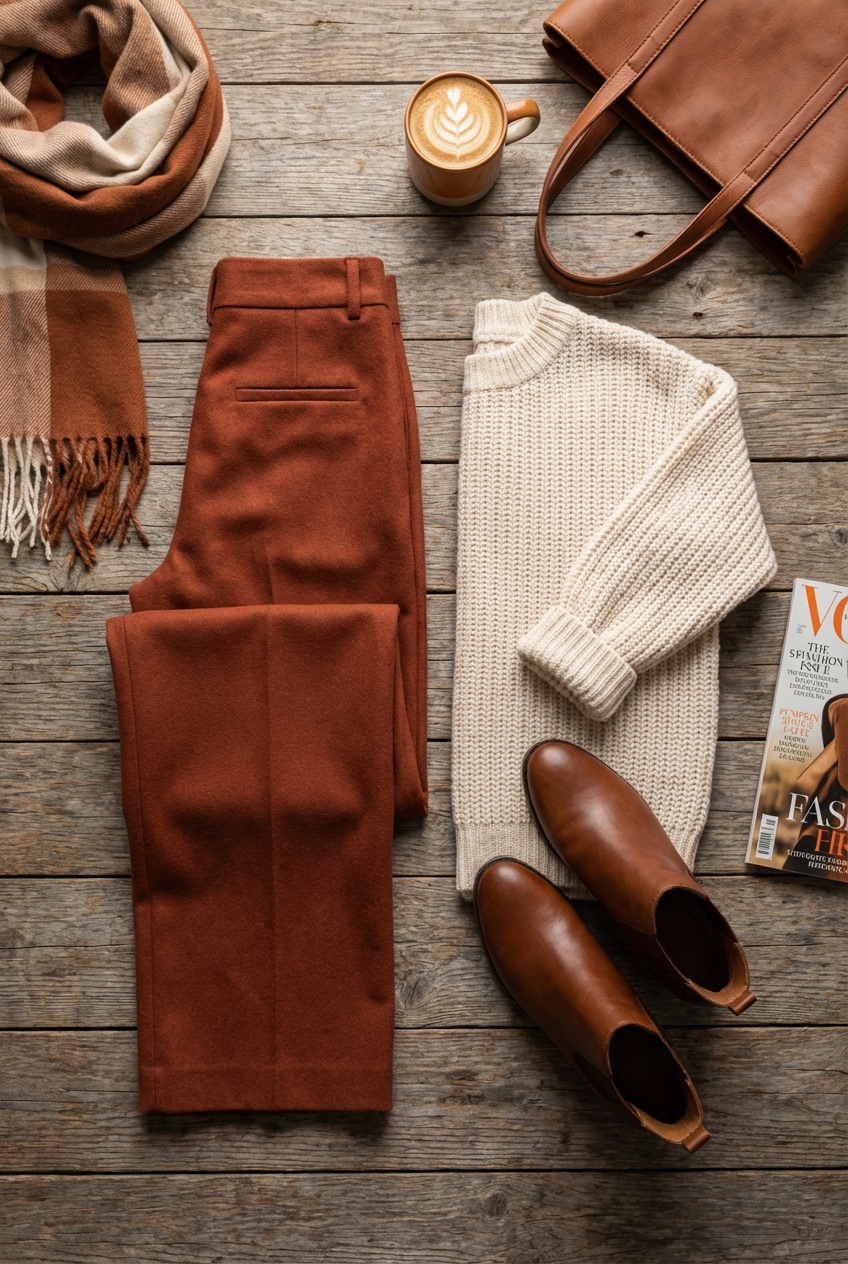
Wide Leg Wool Trousers For Fall Street Style
There is a distinct shift in the air when October hits. The humidity breaks, the light turns golden, and suddenly, the idea of structure in our wardrobe becomes appealing again. For years, I relied on skinny jeans or heavy leggings to get through the autumn months, but everything changed when I styled my first editorial shoot featuring exclusively wide-leg wool trousers. Seeing how the fabric moved and how the silhouette commanded attention without sacrificing comfort was a revelation.
Now, as a stylist, I consider a pair of high-quality wide-leg wool trousers to be the absolute anchor of a fall wardrobe. They bridge the gap between the relaxed ease we learned to love during the work-from-home era and the polished authority required for the office or city streets. However, getting this look right requires a bit of engineering. It is not as simple as buying a size up and hoping for the best; it requires attention to tailoring, fabric weight, and proportion.
In this guide, I am going to break down exactly how to select, fit, and style these trousers to create effortless street style looks. We will cover the technical details of wool weights, the mathematics of the perfect hemline, and the styling tricks I use on set to make legs look miles long. If you are looking for visual inspiration, keep reading because I have curated a comprehensive Picture Gallery at the end of the blog post.
The Architecture of the Fit: Proportions and Scale
When clients tell me they “can’t wear wide-leg pants,” it is almost always an issue of proportion, not body type. In interior design, we talk about scale; in fashion, we talk about the rule of thirds. The goal with wide-leg trousers is to create a visual ratio where your legs appear to take up two-thirds of your vertical line, while your torso occupies one-third.
To achieve this, the rise of the trouser is non-negotiable. You need a high rise—typically measuring between 11 and 13 inches depending on your torso length—that hits at your natural waist (the smallest part of your torso). If the waistband sits on your hips, a wide leg will visually shorten you and make the outfit feel heavy and bottom-heavy. The waistband acts as the fulcrum of the entire look.
The width of the leg opening also matters significantly. For a street-style look that feels modern but manageable, look for a leg opening circumference between 20 and 24 inches. Anything narrower reads as a bootcut; anything wider enters palazzo territory, which can be difficult to manage on wet fall sidewalks.
Designer’s Note: The “Sit Test”
When you try on trousers, do not just stand in front of the mirror. Sit down on a low chair. Wool is a non-stretch fiber (unless blended), and a high-waisted fit that feels snatched while standing can become excruciating when seated if there isn’t enough ease in the hips. If the “whiskers” (horizontal creases) across the front lap are pulling tight, or if the pockets flare open like ears, you need to size up and take the waist in.
Fabric Intelligence: Selecting the Right Wool
Not all wool is created equal, and for fall street style, the drape is everything. You want a fabric that has enough weight to hang straight down from the hip without clinging to the thigh, but not so much stiffness that it looks like cardboard.
I always recommend looking for “worsted wool” or “wool gabardine” for trousers. These fabrics are tightly woven with a smooth finish. They are durable, resist pilling, and have a fluid drape that moves beautifully when you walk. Avoid heavy, fuzzy woolens like thick tweeds or bouclé for wide-leg cuts unless you are very tall, as the added bulk combined with the wide silhouette can add visual weight that most people try to avoid.
Check the lining before you buy. This is a dealbreaker for me. Wool trousers must be lined, preferably with viscose, cupro, or Bemberg (a high-quality rayon). Polyester linings trap heat and static, causing the wide legs to cling awkwardly to your shins as you walk. The lining should ideally go down to the knee. This prevents the wool from itching your thighs and protects the fabric from stretching out at the knees after a long day of sitting.
Common Mistakes + Fixes
Mistake: Buying 100% wool trousers that are unlined.
Fix: If you find a vintage pair you love that is unlined, take them to a tailor to have a half-lining installed. It usually costs around $40-$60 but adds years to the life of the garment and saves your skin from irritation.
Mistake: Ignoring the “itch factor.”
Fix: Test the wool against your neck or wrist. If it itches there, it will be unbearable on your legs. Look for “Super 100s” or higher on the label, which indicates a finer, softer fiber diameter.
The Hemline Mathematics: Shoes and Tailoring
This is the most critical section of this guide. A wide-leg trouser lives or dies by its hemline. Unlike skinny jeans which stop at the ankle, wide-leg trousers need to interact with the floor and your shoe in a specific way to look expensive and intentional.
The “break” refers to where the pant leg hits the shoe. For a modern fall street style aesthetic, you generally want a “shiver break” or a “full break.” A shiver break means the hem just barely grazes the top of the shoe, hanging perfectly straight without folding. A full break means the fabric hits the shoe and folds once (puddles slightly) before the hem ends.
Here is the rule I follow for measurements: The hem should hover exactly 0.25 to 0.5 inches off the ground when you are wearing your intended heel height. This is crucial. You cannot hem these pants for flats and then wear them with heels (they will look like high-waters), and you cannot hem them for heels and wear them with flats (you will destroy the hem by dragging it through street grime).
What I’d Do in a Real Project
If I am styling a client who needs versatility, I ask them to commit to a specific “heel bracket.”
- The Commuter Bracket: Sneakers, loafers, and combat boots (0.5 to 1.5-inch lift). We hem the pants to graze the top of a chunky loafer.
- The Office/Dinner Bracket: Block heels and ankle boots (2.5 to 3.5-inch lift). We hem the pants to fall halfway down the heel shaft.
Do not try to find a middle ground. It rarely works. Pick your shoe lane and tailor accordingly.
Styling Up Top: Balancing the Volume
Since we have established a high volume on the bottom half of your body, the top half needs to provide balance. The most common error I see is pairing wide-leg trousers with an oversized, untucked tunic or a long, baggy cardigan. This swallows your shape entirely.
For fall street style, the objective is to highlight the waist. A fitted turtleneck tucked seamlessly into the waistband is a classic that never fails. It creates a sleek, column-like effect. If you prefer knitwear that is a bit chunkier, use the “French tuck” or “half-tuck” method—tuck the front of the sweater in just enough to reveal the button or clasp of the trousers, and let the back hang loose. This defines the waistline without feeling formal.
Layering adds another dimension. A cropped jacket—one that hits exactly at the waistband of the trousers—is a power move. Think cropped leather moto jackets, short trench styles, or boxy wool jackets. The hem of the jacket and the waist of the pants should meet, creating that “two-thirds leg” proportion we discussed earlier.
If you must wear a long coat, go all the way. A floor-length wool coat worn open over wide-leg trousers looks incredible because it creates vertical lines that frame the outfit. The danger zone is the hip-length jacket; a blazer that hits at the widest part of your hips worn over wide-leg pants can make you look boxy. If you wear a blazer, belt it at the waist or choose a boyfriend cut and wear it open to maintain the vertical line.
Footwear Strategy: Anchoring the Look
The shoe choice for wide-leg wool trousers is about visual weight. Because the pant leg has so much fabric and movement, a delicate ballet flat or a flimsy sandal often looks disappearing and unbalanced. You need a shoe that can “stand up” to the weight of the wool.
For fall, a pointed-toe boot is my secret weapon. The pointed toe extends the visual line of the leg past the hem, making you look taller. A square toe also works beautifully for a retro, structured aesthetic. The key is that the toe box needs to be elongated enough to peek out from under the hem when you walk.
Chunky sneakers are a staple of street style. The “dad sneaker” trend works surprisingly well here because the volume of the shoe balances the volume of the pant leg. Just ensure the hem of the trousers falls properly over the tongue of the sneaker so it doesn’t bunch up awkwardly.
Texture Coordination
- Glossy Leather: If your wool trousers are matte (like flannel), wear patent leather or polished leather boots to add contrast.
- Suede: If your trousers are a shiny gabardine, suede boots can soften the look and add fall texture.
- Color Continuity: For maximum leg-lengthening, match your boot color to your trouser color. Charcoal boots with charcoal wool trousers create an unbroken vertical line.
Maintenance and Care for Longevity
High-quality wool trousers are an investment, and with proper care, they can last for decades. The biggest enemy of wide-leg trousers is the “hem drag.” Even if you tailor them perfectly, there will be days when you switch shoes or encounter a puddle.
Inspect your hems weekly. If you see the fabric starting to fray or stain at the very bottom, take them to a dry cleaner immediately. They can often clean and re-press the hem before the damage becomes permanent. If the fraying is bad, a tailor can add a “heel guard”—a small strip of durable tape sewn inside the back hem—to take the abuse instead of the wool.
Wool does not need to be dry cleaned after every wear. In fact, over-cleaning will strip the natural lanolin from the fibers and make them brittle. Instead, invest in a good steamer. Steam your trousers after wearing them to relax the wrinkles and kill odor-causing bacteria. Brush them down with a natural bristle garment brush to remove city dust and lint.
Store them hanging by the cuffs (upside down) using a clamp hanger. The weight of the waistband will naturally pull out wrinkles as they hang in your closet. Ensure they have space to breathe; jamming wool pants into a packed closet invites moths and permanent creasing.
Finish & Styling Checklist
Before you head out the door, run through this mental checklist to ensure your look is polished and proportional. This is the exact process I use with clients before an event.
- The Rise Check: Is the waistband sitting at your true natural waist? If it has slipped down to your hips, add a belt to hoist it back up.
- The Hem Break: Look in a full-length mirror. Is the hem hovering just off the ground? If it is pooling and dragging, switch to a higher heel immediately.
- The Waist Definition: Have you defined your waist? Ensure your top is tucked or cropped to reveal the waistband.
- The Static Test: Walk across the room. Is the wool clinging to your socks or tights? If so, run a wire hanger down the inside of the leg or use a static guard spray.
- The Lint Scan: Wool is a magnet for pet hair and fuzz. Do a quick pass with a lint roller, especially on the back of the legs near the hem.
- The Pocket Check: Are the pockets laying flat? If they are popping open, the pants might be too tight or sitting too high. Smooth them down or consider a shapewear garment for a smoother line.
FAQs
Can I wear wide-leg wool trousers if I am petite (under 5’4″)?
Absolutely. The key for petite women is to ensure the fit is fitted through the hip and thigh before flaring out. Avoid pleats, which add volume to the midsection. Opt for a flat-front trouser with a vertical crease pressed down the center of the leg. This crease acts like an arrow, drawing the eye up and down. Always wear a heel or a platform sneaker to maximize height.
What is the best way to handle static cling with wool trousers in winter?
Static is caused by friction and dryness. The best defense is a Bemberg or Cupro lining. If your pants are already clinging, wearing a slip underneath can help. In a pinch, apply a small amount of moisturizing lotion to your legs before getting dressed; hydrated skin produces less static electricity than dry winter skin.
Are pleats in or out for fall street style?
Pleats are definitely “in,” but they require a specific fit. Single or double forward-facing pleats offer a classic, menswear-inspired look that is very trendy right now. However, pleats add volume. If you have a curvier hip, ensure the pleats lay completely flat when you are standing. If they pull open, the pants are too small.
Can I wear these trousers in the rain?
Wool is naturally water-resistant to a degree, but a soaking rain will ruin the press and can cause the fabric to smell like… well, wet sheep. If it is pouring, tuck your wide-leg trousers into rain boots for the commute (it looks utilitarian and chic) and let them out once you are indoors. Or, opt for a different outfit on storm days.
Conclusion
Embracing wide-leg wool trousers for your fall wardrobe is about stepping into a silhouette that commands respect. It creates a sense of movement and drama that tight clothing simply cannot replicate. While it requires a bit more thought regarding tailoring and shoe pairings, the payoff is a look that feels timeless, sophisticated, and incredibly comfortable.
Remember that confidence in this style comes from the fit. Do not settle for a pair that drags on the ground or cuts into your waist. Treat your trousers like an architectural element of your outfit—get the foundation right, and the rest of the styling becomes effortless. Whether you pair them with a vintage band tee and a blazer or a monochrome cashmere knit, these trousers will elevate your street style game instantly.
Picture Gallery


