
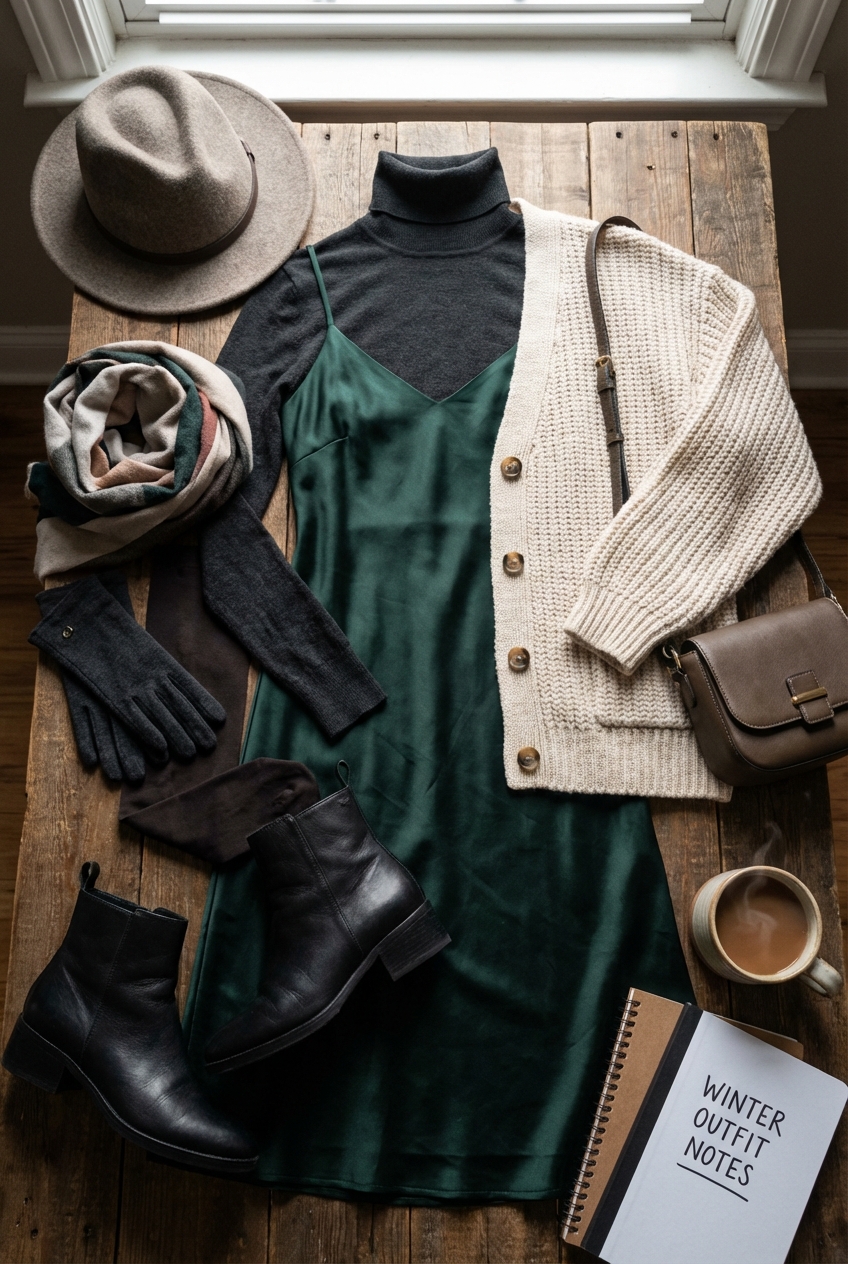
Winter Slip Dress Outfit Ideas
For years, I believed the myth that the slip dress was strictly a summer residency item. I remember packing for a February trip to Paris Fashion Week early in my career and leaving my favorite silk bias-cut dress behind, convinced I would freeze if I tried to style it. That was a mistake I only made once.
The truth is that the slip dress is actually one of the most versatile foundational garments for cold weather styling. Its fluid nature allows it to act as a sleek base for heavy textures without adding bulk to your silhouette. When you master the art of thermal layering and textural contrast, this piece becomes a winter workhorse.
In this guide, I will break down exactly how to transition this delicate piece into freezing temperatures while maintaining a high-fashion edge. We will cover weight ratios, boot heights, and the specific fabrics you need to keep warm. Make sure you browse through the curated Picture Gallery at the end of this blog post to see these concepts in action.
1. The Invisible Foundation: Thermal Engineering
Before we discuss what goes on top, we have to address what goes underneath. A slip dress offers zero insulation on its own. The mistake most people make is relying solely on a coat for warmth, leaving them freezing the moment they step indoors.
In my styling work, I rely heavily on second-skin layers. You want a bodysuit rather than a t-shirt. A t-shirt will inevitably bunch up around your waist and ruin the smooth, cascading line of a bias-cut dress. Look for merino wool blends or high-tech thermal fabrics that are thin but dense.
Stylist’s Note: The Static Factor
One specific issue with layering synthetics under silk is static cling. It can ruin the drape entirely. I always keep a small travel-size anti-static spray in my kit.
If you are in a pinch, run a wire hanger over the dress or apply a tiny amount of moisturizer to your legs before dressing. This creates a barrier that prevents the fabric from sticking to your tights or base layers.
2. The Heavy Knit Juxtaposition
The most chic way to style a slip dress in winter is by playing with “textural juxtaposition.” This is a fancy way of saying you need to pair the shiny, delicate silk with something matte, heavy, and rough. A chunky cable-knit sweater is the perfect partner for a slip dress.
The key here is managing the waistline. If you simply throw a long sweater over a midi dress, you risk cutting your body in half and looking shapeless. You need to create a visual break.
The “Bra Tuck” Technique
I use this trick constantly on set. Instead of tucking a bulky sweater into the delicate waistband of a skirt (which creates a lump), tuck the hem of your sweater up into the underwire or band of your bra.
This crops the sweater perfectly at your natural waist without damaging the silk dress underneath. It allows the skirt portion of the dress to flow freely.
Fabric Weight Rules
- Cashmere: Soft enough that it won’t snag delicate satins.
- Mohair: adds incredible texture but can shed; be careful with black slip dresses.
- Cotton knits: Generally too stiff for winter styling; stick to wools for better drape.
3. The Turtleneck Underlayer
Channeling the iconic 90s aesthetic is a foolproof way to winterize your dress. Layering a fitted turtleneck under the dress changes the entire category of the garment. It moves the look from “evening wear” to “daytime architectural.”
However, fit is non-negotiable here. The turtleneck must be form-fitting. Any slack in the sleeves or torso will create ripples under the dress. I prefer ribbed knits for this because they hug the body and add a vertical line that elongates the torso.
Color Theory in Layering
Monochromatic: A black turtleneck under a black slip dress creates a jumpsuit effect. It is slimming and extremely elegant.
High Contrast: A cream turtleneck under a copper or navy dress highlights the construction of the dress. Use this if your dress has interesting strap details or a unique neckline you want to show off.
4. Outerwear Proportions and Lengths
Choosing the right coat is where many outfits fail. The relationship between your coat hem and your dress hem defines the silhouette. In high-end styling, we look for two distinct ratios.
The Maxi Coat (The Enveloper)
A floor-length wool coat is the most dramatic option. Ideally, the coat should be the same length or slightly longer than the dress. This creates a clean, uninterrupted column of color.
If the coat is shorter than the dress, it tends to look messy unless the difference is intentional and significant.
The Cropped Jacket (The Accent)
If you aren’t wearing a long coat, go short. A shearling aviator jacket or a cropped puffer that hits at the hip bone works beautifully. This highlights the waist and allows the full movement of the skirt.
Common Mistakes + Fixes
- Mistake: Wearing a mid-length pea coat that ends at the widest part of your hips.
- Fix: This boxy shape clashes with the fluid dress. Swap it for a belted trench or a cropped leather moto jacket to define the waist.
5. Boot Strategy and Legwear
You cannot survive winter in pumps. The transition to boots is necessary, but the shaft height is critical. The goal is to avoid cutting off your leg line.
The Knee-High Rule
My favorite look is a pair of tall leather boots that disappear under the hem of the dress. This provides continuous coverage, which keeps you warm and looks incredibly expensive.
When the boot meets the hem, you don’t break the visual line of the leg. Opt for structured leather rather than slouchy suede to contrast with the soft dress.
The Combat Boot Clash
For a daytime, grunge-inspired look, combat boots are excellent. Because these are ankle height, you will have a gap between the boot and the dress. This is where your tights choice matters.
I recommend sheer black tights (20-30 denier) for a bit of dimension, or fleece-lined tights that mimic the look of sheer skin. Opaque black tights can sometimes look too heavy and flat against a delicate silk.
6. Textural Accessories
Accessories are the final glue that holds a winter outfit together. Since a slip dress is visually “light,” your accessories need to add visual weight.
I love using oversized scarves. A giant wool scarf wrapped multiple times creates a cozy focal point that balances the lightness of the skirt. It signals to the eye that this is a winter look, intentional and seasonal.
What I’d Do in a Real Project
If I were styling a client for a winter dinner date:
- Base: Champagne silk midi slip dress.
- Top: Oversized beige cashmere sweater (bra-tucked).
- Shoes: Chocolate brown knee-high leather boots.
- Outerwear: Teddy bear coat in a similar neutral tone.
- Result: A tonal, textural masterclass that feels like a warm hug but looks like a runway moment.
7. The Belted Blazer Approach
For the office or a business-casual setting, the oversized blazer is your best friend. A boxy, wool-blend blazer adds masculinity to the feminine slip dress.
However, an open oversized blazer over a loose dress can sometimes look like you are drowning in fabric. This is where a belt comes in.
Cincher belts tailored over the blazer create a peplum effect. It gives you structure and warmth simultaneously. Ensure the blazer is long enough to cover your hips; a cropped blazer with a belt can look dated.
Finish & Styling Checklist
Before you head out the door, run through this quick stylist check to ensure your outfit is practical and polished.
- Static Check: Did you use anti-static spray? Walk around the room to ensure the dress isn’t clinging to your tights.
- Hemline Audit: Does your coat completely cover the dress, or is it significantly shorter? Avoid the awkward “2 inches of dress hanging out” look.
- Warmth Factor: Are you wearing a thermal bodysuit? If not, do you have a heavy enough knit on top?
- Boot Gap: If wearing ankle boots, are your tights in good condition? No runs or snags.
- Proportion Control: If the top layer is bulky, is the waist defined (either by a tuck, a belt, or a crop)?
- Fabric Care: Is the ground wet? If so, rethink a floor-length slip dress. Salt stains are nearly impossible to remove from silk.
FAQs
Can I wear a slip dress to a formal winter wedding?
Absolutely. Choose a slip dress in a heavier weight silk or velvet. Pair it with a faux fur stole and closed-toe pumps. Ensure you have a formal wool coat for the arrival. Avoid cotton or linen blends, as they look too casual.
What creates the best silhouette for petite frames?
If you are petite, avoid the oversized sweater over the dress, as it can overwhelm you. Instead, opt for the turtleneck underneath the dress. This maintains the vertical column of the dress and keeps your waist visible.
How do I stop my tights from ripping against zipper details?
Slip dresses often have invisible side zippers that can snag tights. I recommend applying a small piece of clear tape over the zipper pull on the inside of the dress, or wearing a smoothing short over your tights to protect them.
Is velvet a better option than silk for winter?
From a thermal perspective, yes. Velvet is denser and traps more body heat. It also reads more “winter” visually. However, silk can be just as warm if layered correctly with merino wool underneath.
Conclusion
The slip dress is not just a relic of nineties grunge or a summer fling; it is a legitimate cornerstone of a sophisticated winter wardrobe. By understanding the principles of layering, weight distribution, and textural contrast, you can extend the life of your wardrobe significantly.
Don’t be afraid to experiment with heavy wools and leathers against the soft grain of the silk. That tension between tough and tender is exactly what makes winter style so compelling. Stay warm, but keep it fashion-forward.
Picture Gallery


