
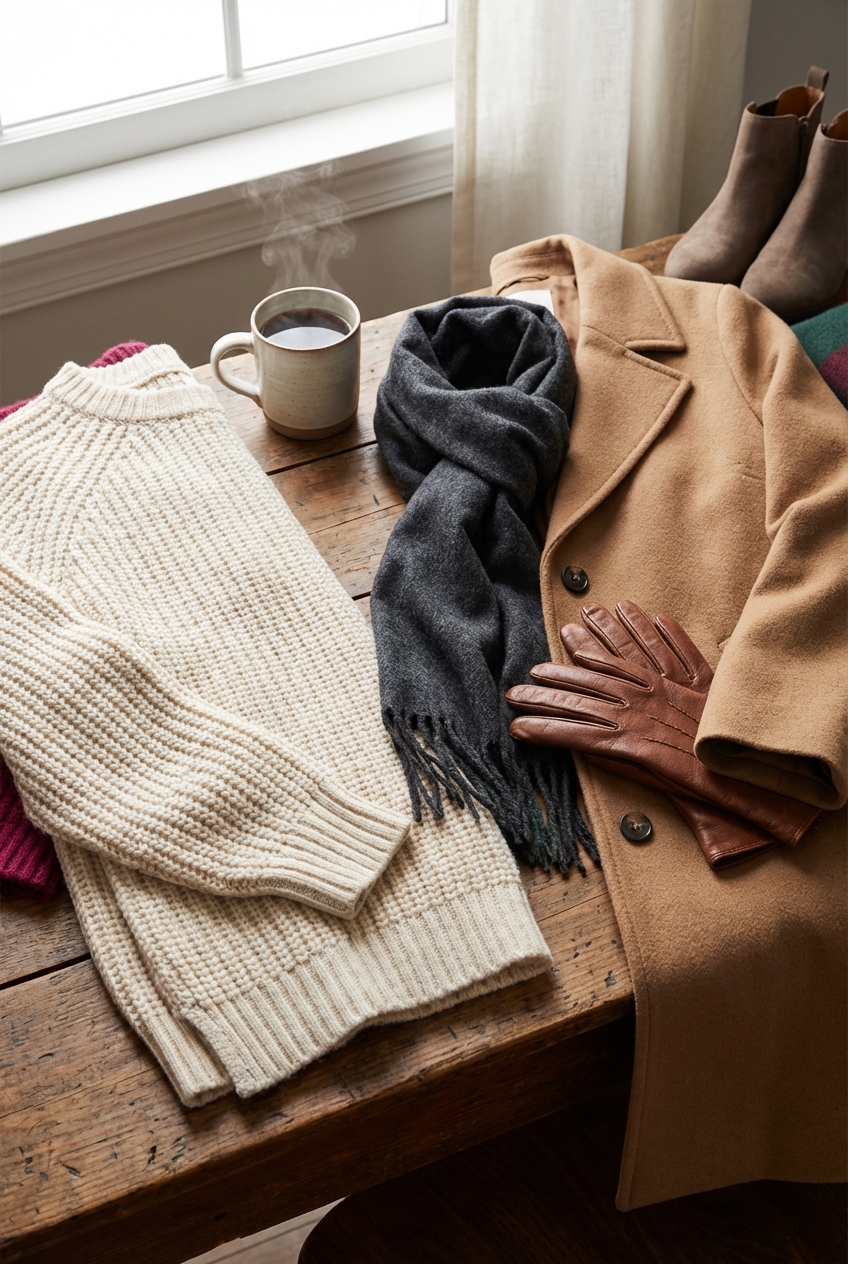
Winter Wardrobe Update Chic Layering With Knits And Wool For Cold Weather
Introduction
There is a precise moment every year when the crisp autumn breeze turns into a biting winter chill, and suddenly, my clients’ requests shift from “I need something cute for brunch” to “how do I leave the house without freezing?” As a high-end stylist, I have spent years mastering the delicate balance between thermal preservation and sartorial elegance. It is entirely possible to stay warm without looking like a shapeless marshmallow, but it requires a strategic approach to fabrics and fit.
Many people mistakenly believe that warmth comes strictly from the thickness of a single garment. In reality, effective winter dressing is an architectural endeavor. We build heat traps using specific fibers and utilize negative space to allow the body to regulate temperature. A giant parka over a cotton t-shirt will never keep you as warm—or look as polished—as three thin layers of high-quality wool and silk.
In this guide, I am going to break down the exact layering formulas I use for editorial shoots and private clients during the coldest months. We will look at micron counts, hemline ratios, and the physics of insulation. For those who want to see these combinations in action, keep in mind that the Picture Gallery is at the end of the blog post.
The Physics of the Base Layer: Material Matters
The biggest mistake most people make happens before they even put on a sweater. If your base layer is cotton, you have already lost the battle against the cold. Cotton absorbs moisture and holds it against the skin, which cools you down rapidly as soon as you step outside.
For a true high-end winter wardrobe, your base layer must be hydrophobic and thermal-regulating. I almost exclusively recommend Merino wool or silk for this layer. Merino wool fibers have a natural crimp that traps dead air, creating an insulating shield, while also wicking sweat away from the body.
Here is the rule of thumb for purchasing base layers: look for “next-to-skin” softness. This usually means Merino wool with a fiber diameter of 18.5 microns or lower. Anything higher than 21 microns will feel itchy against sensitive areas like the torso and arms.
Stylist’s Note: The “Second Skin” Fit
When fitting a client, I ensure the base layer has zero drag. It should sit flush against the skin without restricting circulation. If the base layer is loose, cold air circulates between the fabric and your body, negating its thermal properties.
Common Mistakes + Fixes
Mistake: Wearing a thick tank top under a fitted sweater.
Fix: This creates visible lines and bulk at the shoulders. Switch to a long-sleeve, seamless silk thermal. It adds warmth down the arms and eliminates the “lumpy shoulder” look.
Mastering the Mid-Layer: Knits and Weight Ratios
The mid-layer is the workhorse of your winter wardrobe. This is where we introduce texture, color, and serious insulation. The goal here is to trap the heat generated by your body that passed through the base layer.
When selecting knitwear, pay attention to the “gauge” of the knit. A fine-gauge cashmere sweater (12-gauge or higher) offers incredible warmth with minimal bulk, making it perfect for office settings or layering under tailored blazers. Conversely, a chunky cable knit (3 to 5-gauge) creates more loft and traps more air, but it requires a looser outer shell.
I often advise clients to invest in ply count rather than just brand names. Two-ply cashmere is the minimum standard for durability and warmth. Single-ply knits may be cheaper, but they will develop holes and lose their shape within a season.
What I’d Do in a Real Wardrobe Audit
- Assess the Necklines: If you have a crew neck base layer, I pair it with a V-neck mid-layer to reduce bulk around the throat.
- Check the Armholes: High-cut armholes on a sweater make it impossible to layer a blazer over it. I look for slightly dropped shoulders for the mid-layer to accommodate the base layer comfortably.
- Fabric Content Check: I reject any “knit” that is more than 30% acrylic. Acrylic does not breathe; it makes you sweat, which then freezes. Stick to wool, cashmere, alpaca, or blends of these.
The Third Piece: Calculating Coat Proportions
The outer layer, or shell, protects you from wind, precipitation, and the environment. However, from a styling perspective, the interaction between your coat and your outfit defines the silhouette.
A common styling failure is the “hemline war.” This happens when a long cardigan or skirt hangs two inches below a coat that is too short. It visually cuts the legs off and looks unkempt.
The Golden Rule of Coat Lengths:
Your coat should either be significantly shorter than your under-layer (like a cropped shearling jacket over a maxi dress) or at least two inches longer than your skirt or knitwear. This creates a clean, intentional vertical line.
Stylist’s Note: Buying for Layers
When you buy a winter coat, do not try it on over a t-shirt. Bring your thickest cable-knit sweater to the store. You need to ensure you have full range of motion in the arms and shoulders. If the buttons pull across the chest when you are layered up, the coat is too small, regardless of what the size tag says.
Lower Body Layering: Beyond Basic Denim
Jeans are surprisingly poor insulators. Denim gets cold and stays cold. For winter, I transition my clients to wool trousers, corduroy, or lined options.
Wool trousers are a staple in luxury winter dressing. Look for pants lined with cupro or viscose to the knee. This lining prevents the wool from scratching and adds a wind block. If you must wear denim, the layering needs to happen underneath.
For skirts and dresses, the “denier” of your tights is the metric to watch.
- Sheer (10-20 Denier): Purely aesthetic, zero warmth.
- Opaque (40-70 Denier): Good coverage, mild warmth.
- Thermal (100+ Denier): Essential for freezing temps.
The “Fake Translucence” Trick
A secret weapon in high-end fashion is fleece-lined tights that are dyed to look like sheer black hose over skin. They give the elegant appearance of a 20-denier tight but offer the warmth of sweatpants. This allows you to wear wool mini-skirts in January without freezing your knees.
Accessories as Thermal Regulators
Accessories are not just decoration; they are the seals on your heat envelope. You lose a significant amount of heat through your extremities and the gaps where your clothes end.
Scarves:
Size matters here. A fashion scarf is usually 12 inches wide. A winter utility scarf needs to be at least 25 to 30 inches wide and 70 inches long. This volume allows you to wrap it twice around the neck and tuck it into the coat collar, effectively sealing the top of your jacket against wind.
Gloves:
Leather gloves are chic, but leather on its own is cold. Ensure your leather gloves have a cashmere or silk lining. For tech-heavy lifestyles, look for gloves with conductivity woven into the fingertips so you don’t have to expose your hands to text.
Common Mistakes + Fixes
Mistake: Leaving a gap between the boot top and the pant hem.
Fix: Wear taller socks that bridge the gap. Cashmere socks are a luxury, but a thick wool blend works just as well. If wearing cropped trousers, swap to a shaft boot that slides up under the pant leg to maintain the “column of warmth.”
Understanding Texture Contrast
When you are bundled up, you lose your physical shape. To prevent looking like a blob, we use texture to create visual interest. This is the difference between a boring outfit and a styled look.
If you are wearing a matte wool coat and matte wool trousers, the look falls flat. You need contrast.
- Shine: Add a leather belt or patent leather boots.
- Fluff: Incorporate a mohair or angora scarf against a flat wool coat.
- Weave: Pair a ribbed turtleneck with smooth tailored trousers.
Stylist’s Note: Monochromatic Depth
If you are dressing in all black or all cream (very chic for winter), texture is non-negotiable. I mix silk, heavy wool, and leather within the same color family. This catches the light differently and gives the outfit dimension.
Fabric Care and Maintenance
High-quality winter layers are an investment. If you treat them like fast fashion, you will destroy them. Wool and cashmere are natural fibers that require specific maintenance to retain their thermal properties and appearance.
The Resting Rule:
Never wear the same cashmere sweater two days in a row. The fibers need 24 hours to bounce back to their original shape and air out. This prevents elbows from bagging out and reduces the frequency of washing.
De-Pilling:
Pilling is not necessarily a sign of bad quality; it is a characteristic of soft fibers. However, it looks messy. Do not pull pills off by hand. Use a battery-operated fabric shaver for flat knits and a cashmere comb for textured knits. Lay the garment flat on a hard surface to do this safely.
Storage Checklist
- Knits: Always fold. Never hang. Gravity will stretch the shoulders and ruin the silhouette.
- Coats: Use wide-shoulder wooden hangers to support the structure of the coat. Wire hangers will destroy the shoulder pads.
- Off-Season: Clean everything before storing to prevent moth damage. Moths are attracted to body oils and food residue, not just the wool itself.
Finish & Styling Checklist
Before you walk out the door, run through this quick mental checklist to ensure your layering is functional and fashionable.
1. The Sit Test: Can you sit down comfortably? If your layers bunch up tightly around the waist, you will be uncomfortable all day. Adjust the tuck of your base layer.
2. The Neck Seal: Is there exposed skin at the collarbone? If so, add a scarf or swap to a turtleneck.
3. The Wrist Check: When you raise your arms, do your sleeves expose your wrists? If yes, you need longer gloves or a longer base layer.
4. Static Guard: Winter air is dry. Spray a little anti-static spray on your tights and the inside of your coat lining to prevent cling.
5. Proportion Balance: If you are wearing a bulky puffer coat, keep the bottom half streamlined (skinny jeans or leggings). If you are wearing wide-leg trousers, keep the top half more fitted.
FAQs
Q: I’m allergic to wool. What are my options for warm layering?
A: Look for high-tech thermal synthetics from outdoor brands (like Patagonia or Arc’teryx) for your base layer. For mid-layers, cotton fleece is okay if the base layer is good, but consider Alpaca. Many people who are allergic to the lanolin in sheep’s wool can tolerate Alpaca because it is lanolin-free and hypoallergenic.
Q: How do I layer without looking bulkier than I am?
A: The key is thin, dense layers rather than thick, fluffy ones. Use a silk camisole, followed by a thin Merino turtleneck, followed by a fitted blazer. You get three layers of warmth with very little added volume. Also, belt your coat to define your waist.
Q: Can I wash my “Dry Clean Only” wool at home?
A: Often, yes, but proceed with caution. Most wool can be hand-washed in a sink with tepid water and no-rinse wool wash (like Eucalan). Never wring it out. Roll it in a towel to extract water and lay it flat to dry. However, for structured coats or lined blazers, always stick to dry cleaning to preserve the internal interfacing.
Q: How do I stop my scarf from shedding on my coat?
A: This is common with mohair or cheaper wool blends. Put the scarf in a ziplock bag and freeze it for 24 hours before wearing. This helps lock the fibers in. Eventually, the loose fibers will stop shedding after a few wears.
Conclusion
Building a winter wardrobe that is both warm and stylish is less about buying more clothes and more about understanding the materials you own. By prioritizing natural fibers like wool and cashmere, mastering the art of the base layer, and paying attention to proportions, you can navigate the coldest months with confidence.
Remember that comfort is the ultimate luxury. If you are shivering, you will never look chic, no matter how expensive your coat is. Take the time to audit your current closet, check the fabric tags, and invest in the missing links—usually the unsexy items like quality thermal underwear and proper socks. Once the foundation is right, the style follows naturally.
Picture Gallery


