
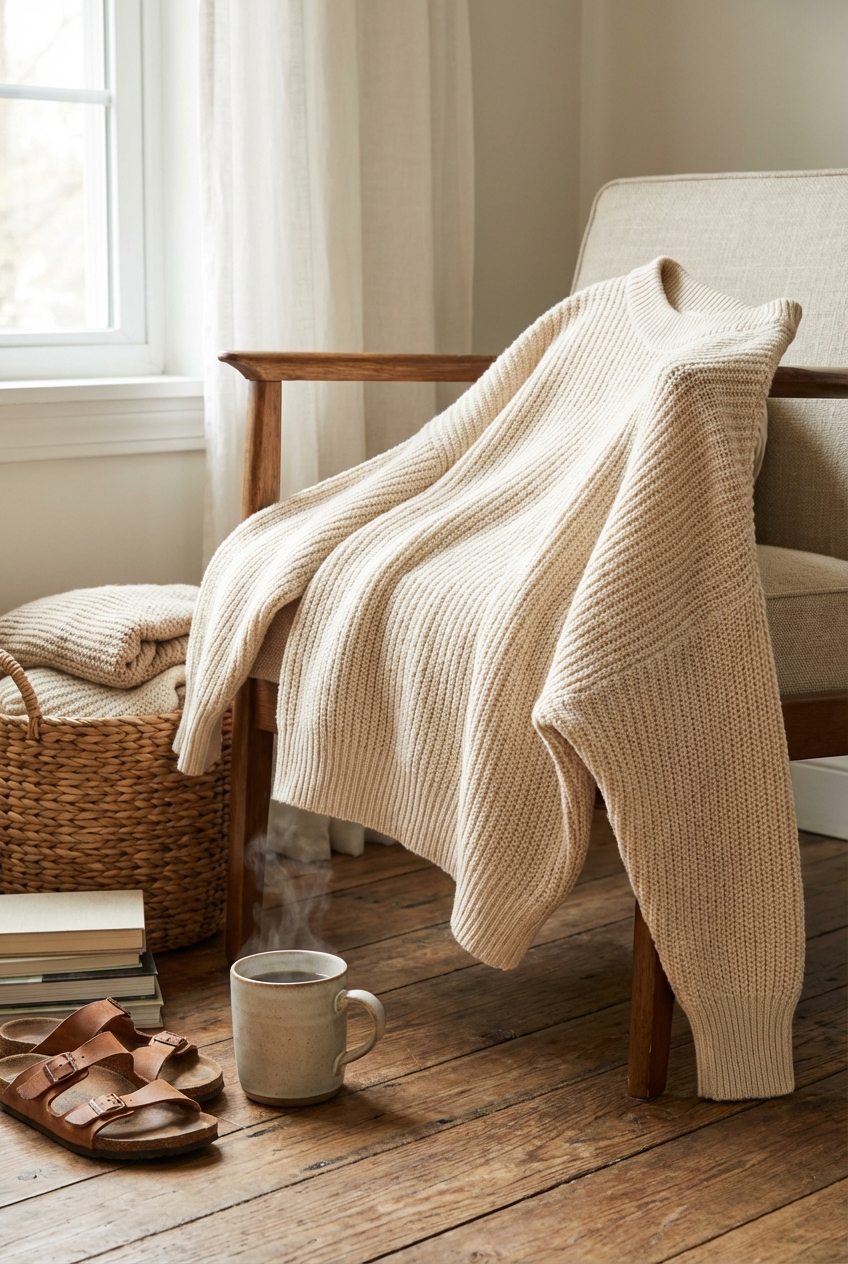
Batwing Sleeves In Relaxed Knit Tops
Introduction
There is a distinct moment in every styling consultation where a client puts on a piece that feels like pajamas but looks like a million dollars. For many of my high-end clients, that “aha” moment comes courtesy of the batwing sleeve. This architectural silhouette, characterized by a deep armhole that tapers significantly toward the wrist, offers a level of drama and comfort that few other cuts can match. It is not just a throwback to the 80s; it is a masterclass in modern volume.
I recall a specific fitting with a client who was terrified of bulky knits. She was convinced that anything oversized would swallow her petite frame and make her look wider rather than chic. We selected a fine-gauge cashmere batwing sweater in a monochromatic cream tone and paired it with structured leather trousers. By simply pushing up the sleeves to expose her wrists and tucking the front hem, the look transformed from “overwhelmed” to “effortlessly expensive.” It is all about how you manage the fabric.
Batwing sleeves require a shift in perspective regarding how clothes should fit. They do not skim the body in traditional ways; they create their own shape. This guide will walk you through exactly how to style these relaxed knits so they look intentional and flattering, rather than sloppy. If you need visual inspiration after reading through the rules, remember that the Picture Gallery is at the end of the blog post.
Understanding the Silhouette and Architecture
The batwing sleeve, often cousin to the dolman sleeve, is unique because the sleeve is usually cut from the same piece of fabric as the bodice. There is no shoulder seam in the traditional sense. This creates a continuous, sloping line from the neck down to the wrist.
The magic of this cut lies in the excess fabric under the arm. When your arms are down, this fabric drapes in folds against the side of the body. This creates a blurring effect on the waistline and bust, which can be incredibly forgiving.
However, the defining feature that makes it “fashion” rather than “frumpy” is the taper. A true batwing must become fitted at the forearm or wrist. This contrast between the volume of the body and the slimness of the lower arm is what gives the garment its structure. Without that taper, you are essentially wearing a poncho.
Designer’s Note: The Wrist Rule
One rule I live by is that you must showcase the narrowest parts of your body when wearing volume. With batwing tops, the wrist is your best asset.
- Always push the sleeves up to the elbow or three-quarter length.
- This reduces the visual “heaviness” of the knit.
- It signals that the volume is a stylistic choice, not an accident.
Selecting the Right Fabric and Gauge
When it comes to batwing sleeves, fabric choice is not just about warmth; it is about gravity. The way the fabric hangs will determine whether you look sleek or boxy.
The Case for High-Drape Fibers
You want materials that collapse into themselves. High-quality merino wool, cashmere, silk-blends, and viscose are excellent choices. These fibers have weight but are pliable. When you lower your arms, the excess fabric under the armpit should fall vertically, creating a slimming line down the side of your torso.
Avoiding the “Stiff” Trap
Avoid stiff cottons, heavy synthetic acrylics, or thick cable knits in a batwing cut. These materials tend to stand away from the body rather than draping against it. If the fabric is too rigid, the batwing shape will stay extended even when your arms are down, making your torso look as wide as your wingspan.
Gauge Guidelines
- Fine Gauge: Best for tucking into skirts or trousers. Creates a sleek, blouse-like effect.
- Medium Gauge: Ideal for everyday casual wear. ample structure but still drapes.
- Chunky/Heavy Gauge: Very difficult to pull off in a batwing cut without adding significant visual bulk. Proceed with caution.
Balancing Proportions: The Bottom Half
In fashion, we constantly work with the “Rule of Opposites.” If you have volume on top, you generally need a streamlined silhouette on the bottom. This is non-negotiable with relaxed batwing knits.
The Skinny Silhouette
Despite trend cycles shifting toward wide-leg pants, the skinny jean or fitted legging remains the best partner for a batwing top. The visual V-shape created by broad shoulders (accentuated by the sleeves) tapering down to slim ankles creates a powerful, statue-like silhouette.
Textural Contrast
Since knitwear absorbs light, pair it with bottoms that reflect it to keep the outfit dynamic.
- Faux Leather Leggings: The sleek shine contrasts beautifully with the matte fuzz of a sweater.
- Coated Denim: A great alternative to leather that offers more structure.
- Silk Skirts: For a softer look, a bias-cut slip skirt works, provided it skims the hips closely before flaring slightly at the hem.
Common Mistakes + Fixes
Mistake: Wearing a batwing sweater with a wide A-line skirt or palazzo pants.
Why it fails: You become a rectangle. There is no definition at the waist or hips, and the figure is lost in fabric.
The Fix: Swap the wide bottoms for a pencil skirt or a straight-leg trouser. If you must wear wide pants, the top must be a very fine gauge and tucked in tightly to define the waist.
Mastering the Tuck
Because batwing tops have excess fabric at the sides, the hemline is often wide and loose. Leaving it completely untucked can cut your body in half and shorten your legs visually.
The French Tuck
This is essential. Tuck just the front three to four inches of the sweater into your waistband. Let the back and sides hang loose. This defines your waistline while allowing the architectural drape of the sides to remain visible.
The Rubber Band Trick
If your knit is too thick to tuck into your pants without creating a bulge:
- Gather a small section of the hem at the side or front.
- Tie it off with a clear hair elastic inside the sweater.
- Flip the “tail” under the hem.
- This cinches the sweater slightly, causing it to roll under and sit at the waist without needing to be tucked into the waistband.
Navigating the Layering Challenge
The number one complaint I hear about batwing sleeves is: “I can’t wear a coat over this.” It is a valid logistical concern. Traditional fitted blazers or trench coats with set-in sleeves will bunch up at the armpits, causing discomfort and ruining the line of the outfit.
Outerwear Solutions
You need outerwear that mimics the volume of the knit.
- Capes and Ponchos: These are the natural best friends of the batwing. They accommodate any amount of sleeve volume effortlessly.
- Oversized Wool Coats: Look for “drop shoulder” coats. The shoulder seam on these coats sits down on the bicep, leaving plenty of room in the armhole for your knitwear.
- Vests: A puffer vest or a long tailored wool vest keeps your core warm while letting the dramatic sleeves roam free.
Layering Underneath
If you want to layer a shirt under the batwing, ensure the shirt is fitted. A crisp white collared shirt poking out from the neckline and hem of a batwing sweater is a classic, preppy look. However, ensure the shirt sleeves are slim enough not to fight with the tapered wrist of the sweater.
Necklines and Accessories
The neckline of your batwing top dictates the vibe of the outfit. Because there is so much fabric on the torso, showing skin at the neck is often necessary to break up the block of color.
Boat Necks and Off-the-Shoulder
Batwings are frequently cut with wide boat necks. This is incredibly flattering as it extends the shoulder line and balances the hip width.
- Styling Tip: Let the sweater slip off one shoulder. This asymmetry adds allure and prevents the “blanket” look.
- Bra Choice: Invest in a high-quality convertible strapless bra. Visible straps ruin the clean architectural lines of this style.
Jewelry Coordination
Because the canvas (your torso) is large and often unpatterned, jewelry plays a key role.
- Long Pendants: A long necklace creates a vertical line down the center of the body, which helps to visually divide the width of the top.
- Statement Cuffs: Since the sleeves taper to the wrist, the eye is drawn there. A bold gold cuff or a stack of bangles emphasizes this narrow point.
- Earrings: If you are wearing a cowl neck or high-neck batwing, skip the necklace and opt for statement earrings to draw the eye up to your face.
Real-World Lessons: Managing Volume for Different Body Types
One size rarely fits all in high-end styling. Here is how I adapt the batwing trend for different clients.
For the Petite
The fear is looking shorter. To combat this, I keep the outfit monochromatic. A charcoal batwing sweater with charcoal skinny jeans creates an unbroken vertical line. I also insist on a heel—even a small kitten heel—to elongate the leg. Avoid tunics that hit mid-thigh; the sweater should end at the hip bone.
For the Curvy / Large Bust
Batwings can actually be great for larger busts because they don’t pull across the chest like fitted shirts. However, avoid high crew necks. A V-neck batwing breaks up the chest area. Ensure the fabric is a matte jersey or fine knit that creates a vertical drape, rather than a horizontal pull.
For the Tall
You can get away with more volume. You are the only candidate who can successfully pair a batwing top with a wide-leg trouser, provided the waist is cinched. You can also wear the longer, tunic-style batwing tops that cover the hips without looking like you are drowning.
Finish & Styling Checklist
Before you walk out the door, run through this mental checklist to ensure your relaxed knit is reading “chic” rather than “sloppy.”
What I’d Do in a Real Project:
- Check the cuffs: Are they snug? If they have stretched out, the sleeve loses its shape. I often steam the cuffs to shrink them back or take them to a tailor to be taken in.
- Verify the tuck: Is the front tuck centered? Does it reveal the belt buckle or waist button? It should.
- Assess the undergarments: With relaxed knits, a smooth T-shirt bra is essential. Lace textures often show through fine jersey knits.
- Lint roll: Because there is a lot of surface area, lint and hair are more visible. Give it a quick pass.
- Balance the shoe: If the top is heavy, the shoe needs presence. A boot or a chunky loafer often works better than a delicate sandal.
FAQs
Q: Can I wear a batwing top to the office?
A: Yes, but choose a fine-gauge knit. Chunky, oversized knits read too casual. Pair a fine merino batwing with a pencil skirt and pointed-toe heels for a look that is professional yet comfortable.
Q: How do I wash these tops without ruining the shape?
A: Never hang a batwing sweater. The weight of the sleeves will drag the shoulders down and stretch the piece out of recognition. Always fold them. Hand wash or use the delicate cycle, and lay flat to dry, reshaping the arms as it dries.
Q: My batwing sweater keeps sliding off my shoulders. What can I do?
A: This is common with boat necks. You can use “fashion tape” to secure the neckline to your shoulders. Alternatively, wear a camisole underneath in a matching color so that if it slips, you are still covered.
Q: Can I wear a crossbody bag with a batwing sleeve?
A: It is tricky. The strap cuts across the “wing” of the sleeve and ruins the drape, often bunching the fabric awkwardly. A shoulder bag, clutch, or tote is a much better option for this silhouette.
Conclusion
The batwing sleeve in a relaxed knit top is a testament to the idea that comfort and style are not mutually exclusive. It is a bold, architectural choice that requires a bit of courage and a good understanding of proportion. When you respect the volume of the garment and balance it with sleek pairings and smart accessories, you achieve a look that is sophisticated, modern, and incredibly easy to wear.
Don’t be afraid of the fabric. Embrace the drape, highlight your wrists, and enjoy the unique silhouette that only a batwing can provide. It is a staple that belongs in the wardrobe of anyone who values an effortless aesthetic.
Picture Gallery


