
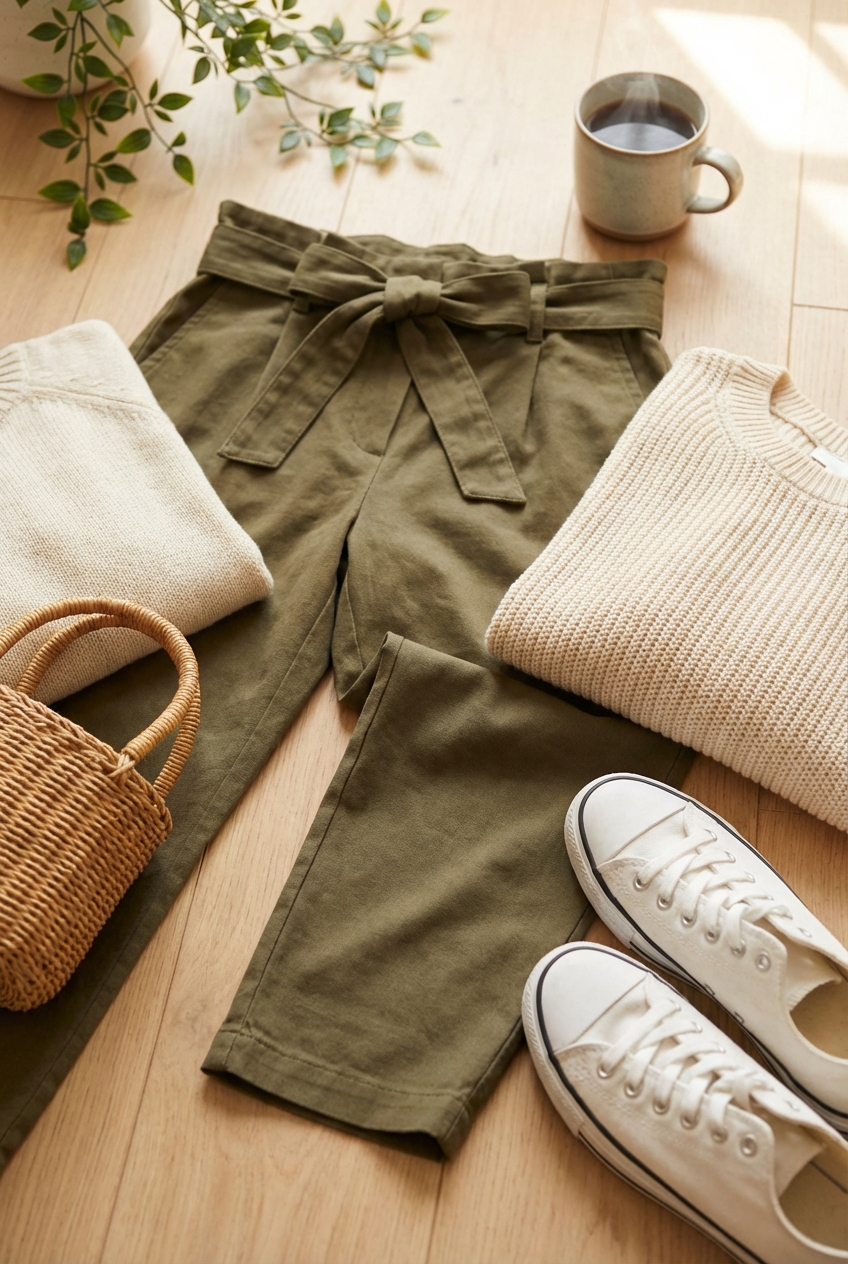
Casual Paperbag Waist Pants For Relaxed Looks
Paperbag waist pants are often the most misunderstood item in a modern capsule wardrobe. I recall a fitting with a client who immediately tried to push them down to her hips, creating a disorganized silhouette that looked more messy than chic. Once we adjusted the rise to hit her natural waist and swapped a bulky sweater for a sleek bodysuit, her entire demeanor changed.
These trousers are a powerhouse for relaxed styling because they offer the comfort of loungewear with the architectural interest of tailored clothing. The gathered waist acts as a built-in accessory, cinching the midsection while allowing for a forgiving fit through the hips and thighs. However, they require a strict adherence to proportion rules to avoid overwhelming your frame.
In this guide, I will break down exactly how to style these trousers for a sophisticated, casual aesthetic. You can find specific outfit formulas and visual examples in our Picture Gallery at the end of this blog post.
1. The Architecture of Fit: Finding Your Natural Waist
The success of a paperbag waist look depends entirely on where the waistband sits on your torso. Unlike low-rise denim or mid-rise slacks, these pants must sit at your true natural waist. This is usually the narrowest part of your torso, located just above the belly button and below the ribcage.
If you wear them too low, the extra fabric at the top—the “paperbag” detail—will distort your proportions and shorten your torso. When fitting clients, I always check the rise measurement first. For most women, you are looking for a rise between 11 and 13 inches to ensure the gather sits high enough to elongate the legs.
Stylist’s Note: The Volume Rule
A common mistake I see is buying these pants in a size too small to reduce volume. This actually causes the pleats to pull open, making the hip area look wider. Always buy your true size or size up; the belt is there to cinch the waist, while the pleats should lay flat against the body when you are standing still.
2. Balancing Proportions: The Top Half
Because paperbag pants have inherent volume and texture at the waist, your top half must provide contrast. The goal is to highlight the waist definition that the pants provide. If you wear a loose, untucked shirt, you lose the waist entirely and create a “block” silhouette.
The most foolproof pairing is a fitted bodysuit. A bodysuit ensures that the fabric remains taut against the torso and eliminates the need for constant re-tucking throughout the day. It creates a clean line that directs the eye straight to the detailed waist of the pants.
The Crop Top Alternative
If bodysuits feel too restrictive, a boxy crop top is your next best option. The hem of the top should hit exactly where the waistband of the pants begins. This sliver of separation—or just a seamless meeting of fabrics—maintains the integrity of the waistline without adding bulk inside the waistband.
3. Mastering the Tuck: Techniques for Non-Fitted Tops
You do not always have to wear skin-tight tops to make this look work. A classic cotton button-down or a relaxed linen tee can look effortlessly chic if you master the tuck. The key is removing excess fabric from around the waistline so the paperbag detail can shine.
For button-downs, I use the “military tuck” method. Tuck the shirt in fully, then pinch the excess fabric at the side seams and fold it back before belting the pants. This keeps the front and back smooth while hiding the bulk at the sides where it is less noticeable.
For lightweight sweaters or tees, the “French tuck” is essential. Tuck only the very front center of the top into the pants, letting the back and sides hang loose. This defines the waist visually while maintaining a relaxed, casual vibe appropriate for weekend wear.
4. Footwear Strategy: Managing the Hem Break
Your shoe choice dictates the formality of the look and changes how the pant leg falls. Since paperbag pants often feature a tapered or straight leg, they are incredibly versatile. However, the wrong shoe can cut off your leg line, especially given the high waist.
For a truly relaxed daytime look, white leather sneakers are a standard go-to. However, you must ensure the hem of the pants hits at the ankle bone. If the fabric pools over the sneaker, the look becomes sloppy. I often have clients cuff the hem twice to show a sliver of ankle, which visually breaks up the fabric and lightens the look.
Elevating the Casual Look
If you are transitioning to a casual dinner, swap sneakers for mules or block-heel sandals. A shoe with an open vamp (the top part of the foot) extends the leg line. Avoid ankle-strap shoes if your pants are cropped, as the strap and the hem will create two horizontal lines close together, shortening the leg.
5. Fabric Selection: Structure vs. Drape
The material of your paperbag pants will determine how much volume you are adding to your frame. In my experience styling for editorials, stiff fabrics like heavy denim or canvas create a very exaggerated, architectural shape. This works well for straight body types but can feel bulky on curvier figures.
For a softer, more forgiving silhouette, look for Tencel (Lyocell), silk blends, or washed linen. These fabrics have “drape,” meaning they fall vertically against the body rather than standing away from it. Tencel is particularly excellent for paperbag styles because it is fluid but has enough weight to not cling to imperfections.
A Note on Linen
Linen is the ultimate casual luxury fabric, but it wrinkles. Embrace the wrinkles as part of the texture. If you want a crisper look, choose a linen-rayon blend, which retains the breathability of linen but resists deep creasing.
6. The Sash Dilemma: Tying and Swapping
Most paperbag pants come with a matching fabric sash. While convenient, this sash can sometimes add too much bulk to the front profile, looking more like a bathrobe tie than a tailored accessory. If the bow feels too feminine or bulky for your style, you have options.
How to Tie a Flat Knot
Instead of a standard bow, tie a “half knot.” Cross the left side over the right and pull it through as if starting a bow, but just let the ends hang flat. This creates a vertical line down the front of the pants, which is slimming and much more modern.
Swapping for Leather
My favorite stylist trick is to remove the fabric sash entirely and replace it with a medium-width leather belt. A cognac or black leather belt instantly upgrades the pants from “loungewear” to “street style.” It adds texture contrast and provides a firmer hold on the waist. Ensure the belt is not too wide (under 2 inches is best) so it fits comfortably between the loops and the paperbag ruffle.
Finish & Styling Checklist
Before you head out, run through this quick mental checklist to ensure your outfit is balanced and polished.
- Check the Rise: Is the waistband hitting your true natural waist? Pull them up if they are sitting on your hips.
- Volume Control: If the pants are loose, is the top fitted? If the top is loose, is it tucked properly to show the waist?
- Hem Height: Are your ankles visible? If wearing flats, consider a small cuff to prevent fabric pooling.
- Knot Check: Is the fabric sash lying flat? If the bow is too bulky, switch to a flat knot or a leather belt.
- Fabric Smoothness: Are the pleats lying flat against your tummy? If they are pulling open, the pants may be too tight, or the underwear line is too thick (opt for seamless styles).
- Proportion Balance: Do you look 2/3 legs and 1/3 torso? This is the ideal ratio for this pant style.
FAQs
Can petite women wear paperbag waist pants?
Absolutely. The high waist is actually very lengthening for petite frames. The key is to avoid excessive volume in the leg. Look for a tapered or straight-leg cut rather than a wide-leg palazzo style. Also, ensure the “paperbag” ruffle at the top is not too tall (under 1.5 inches), or it will swallow your torso.
What outerwear works with these pants?
This is tricky because the waist has volume. You want to avoid jackets that hit right at the waist, as they will fight with the ruffles. Opt for a cropped denim jacket that hits above the waist, or a long trench coat or duster cardigan that stays open, creating a vertical column.
Are paperbag pants appropriate for the office?
Yes, if the fabric is right. Avoid linen or jersey for the office. Opt for a structured cotton twill, wool blend, or crepe fabric. Pair them with a silk blouse (tucked in) and a leather belt instead of the fabric sash to make the look more professional.
How do I prevent the “pooch” effect in the front?
This usually happens when there is too much fabric bunching from a tucked-in shirt. Switch to a bodysuit to eliminate that bulk. Also, ensure the pants fit your hips properly; if they are too tight, the pleats pull open and create the illusion of a rounder stomach.
Can I wear boots with paperbag pants?
Yes, specifically “sock boots” that hug the ankle. Because the pants are usually loose, you need a boot with a very tight shaft to slide under the pant leg without creating a lump. Avoid wide-shaft slouchy boots.
Conclusion
Paperbag waist pants are a testament to the idea that style and comfort can coexist beautifully. They offer a relaxed sophistication that tight denim simply cannot replicate. By focusing on the architecture of the fit—specifically the rise and the hem—and balancing the volume with fitted tops, you can create a look that feels both effortless and intentional.
Remember that fashion is about proportions. This specific trouser style changes your natural ratio, lengthening the legs and defining the waist. Embrace that shift. Whether you are running errands in sneakers and a tee or heading to a lunch date in a bodysuit and mules, these pants provide a versatile canvas for your personal style.
Picture Gallery


