Wrap Coats for Transitional Weather: How to Pick and Wear
- Words by
- Julio Arco
- Published
- Reading
- 5 min
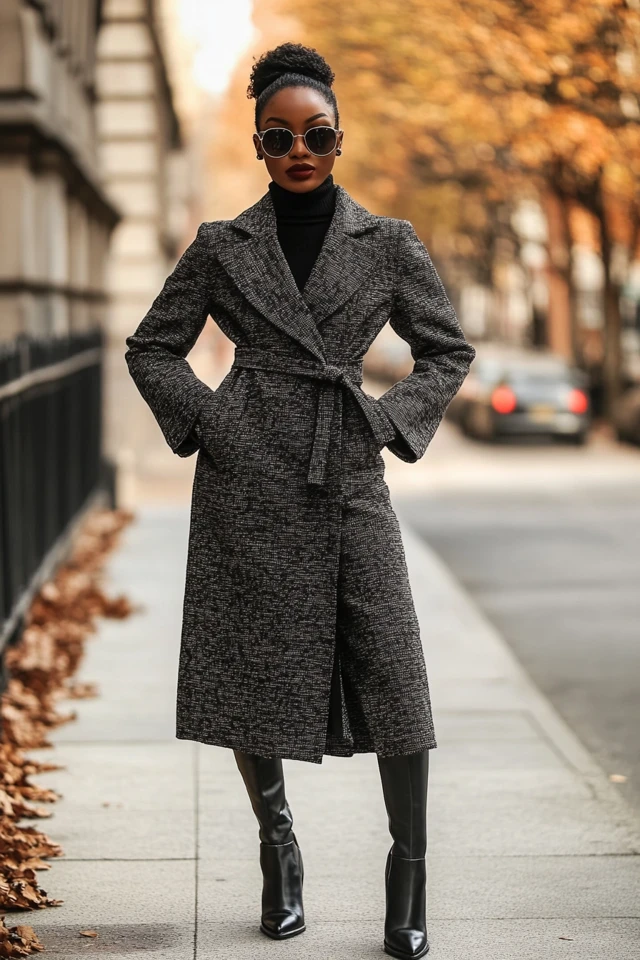
A wrap coat is an open-front coat with no buttons or zipper that closes by crossing one side over the other and tying a belt at the waist. It suits in-between weather because you can cinch it on a cool morning and loosen it when the sun comes out.
For most people, the best pick is a mid-weight wool blend in a neutral color, ending between the knee and mid-calf. The rest of this guide covers fit, fabric, belt choices and outfit formulas.
What makes wrap coats work in changing weather?
The closure is the whole idea. Because the belt sets how snug the coat sits, the same piece handles a thin shirt on a mild day or a chunky knit when it turns colder. There are no buttons to line up over bulky layers.
A wrap coat also drapes rather than stands stiff, so it moves with you. That is why it feels easier to wear than a structured, double-breasted coat.
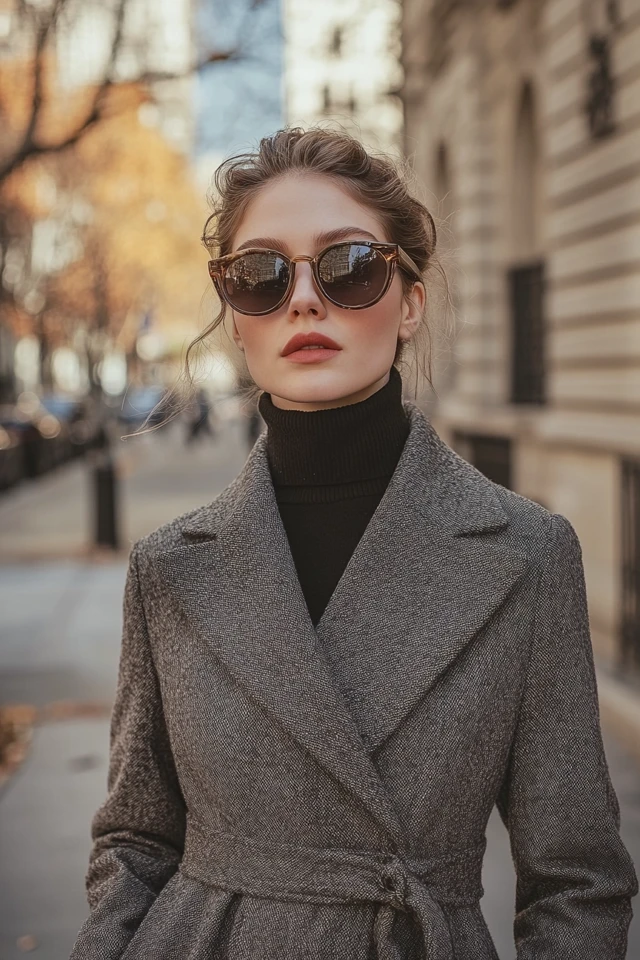
Are wrap coats flattering?
Usually, yes, and the reason is simple perception. The belt marks a waist line, and the eye reads that line first. A diagonal front panel adds a long vertical line down the body, which tends to look streamlined.
If a wrap coat looks shapeless on you, that is a fit problem, not a you problem. Check these points:
- Shoulder seams should sit where your shoulders end. A dropped seam is fine only if the coat is clearly meant to be relaxed.
- The belt should sit at your natural waist, the narrowest part of your torso, or slightly above it.
- The overlap should close without gaping across your chest when the belt is tied.
Through the lens of evidence-based design, I'd treat the belt as the focal point of the coat. Where it sits decides how your proportions read, so move it a couple of inches up or down before judging the coat.
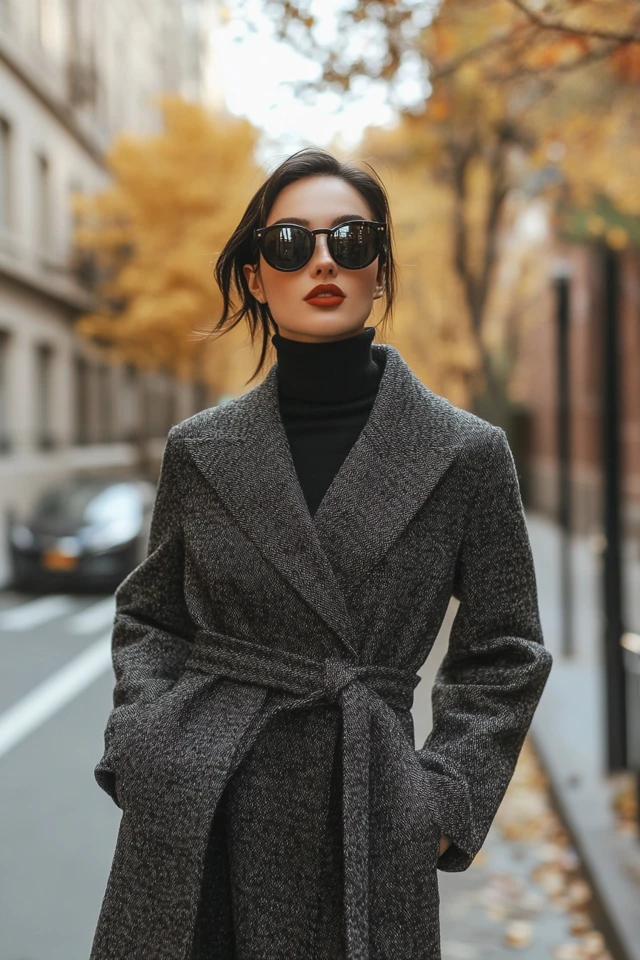
How to choose wrap coats for women: fabric, length and belt
Fabric
Wool and wool blends give warmth and a clean drape, and they are the safest choice for cool days. Lightweight cotton or twill suits mild weather. Soft knits and fleece feel casual and cozy. Cashmere blends feel very soft against the skin, though they usually need more careful care.
For wet spring days, look for a water-repellent finish on the label instead of assuming a wool coat will shed rain.
Length
A hip-length or just-above-the-knee coat reads casual and works well with trousers. A knee-to-mid-calf length looks more polished and covers dresses and skirts. Petite frames often do well with a length at or just above the knee, so the coat doesn't swallow the legs.
Belt and closure
A self-tie belt gives the most adjustment. A wide belt makes a stronger waist statement. A belted wrap jacket with a hidden snap or button underneath stays closed more reliably in wind. A coat with no belt at all falls open and looks looser.
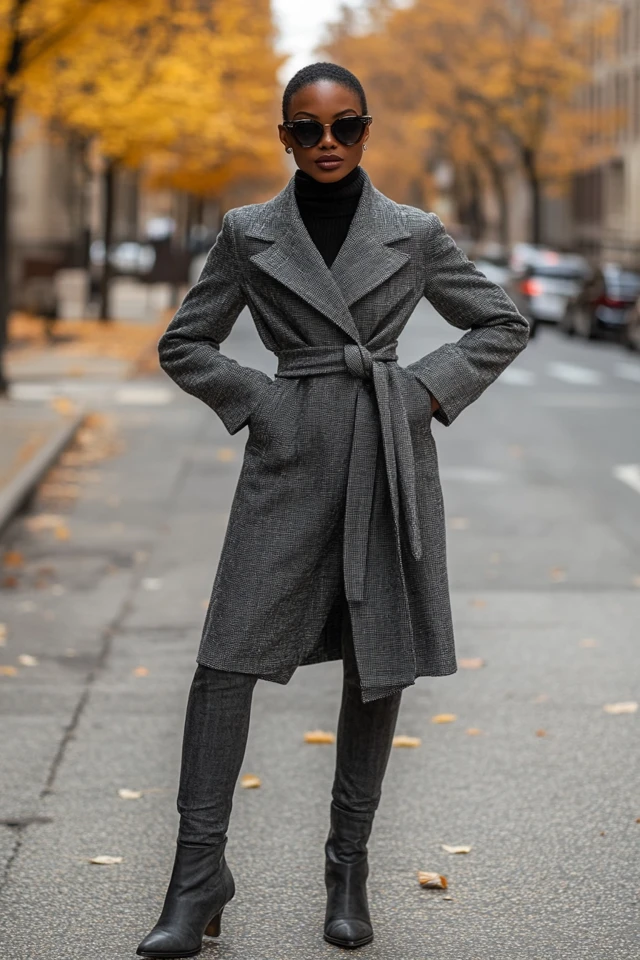
Belted or relaxed: which silhouette suits you?
A belted coat in a classic fit gives shape and works well if you like your waist defined. A relaxed wrap coat, cut roomier with a dropped shoulder, is better over knits and feels easier for everyday errands. If you want an open, boxy shape without a belt, the relaxed swing coats are a close cousin.
Size up only if you plan to layer over thick sweaters. Otherwise a coat that is too big collapses at the shoulders and loses its line.
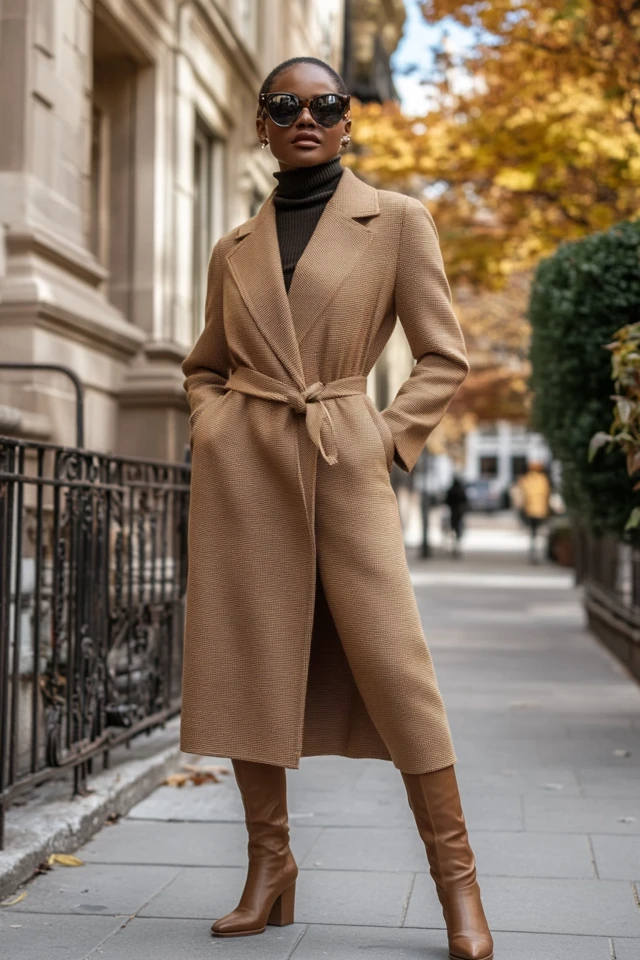
How to wear a wrap coat
Keep the coat as the statement and make what is underneath simple. Match the length of the coat to the hem beneath it: the coat should be longer than a dress or tunic, so no fabric peeks out awkwardly.
- Tie the belt in a loose knot at the front for a soft look, or wrap it once more and tie at the side for a tighter line.
- Leave it untied and let the belt hang for a relaxed, open look over a slim base layer.
- Push the sleeves up slightly if the coat is cut roomy.
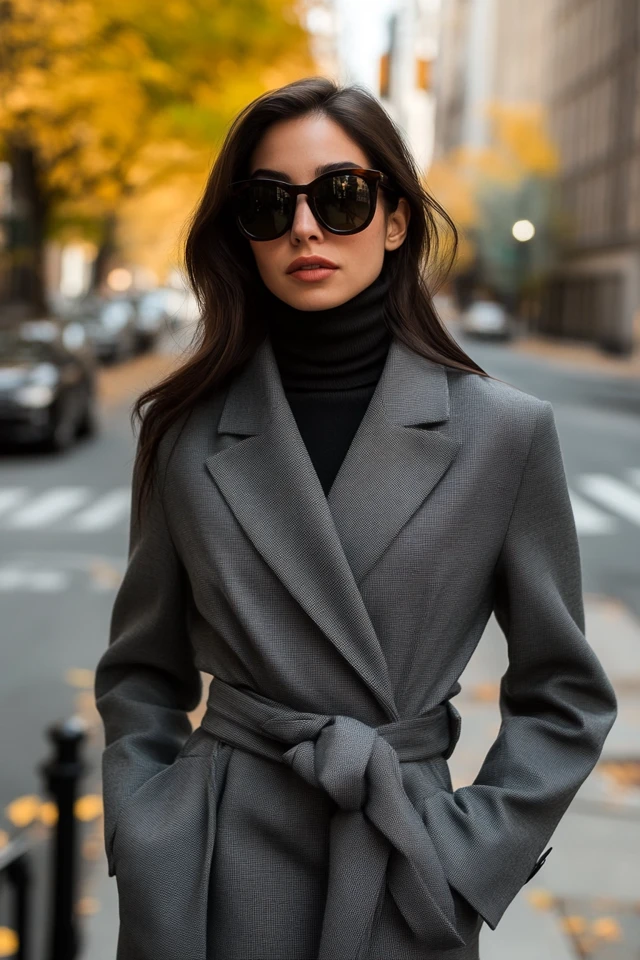
Wrap coat outfit casual ideas
For a wrap coat outfit casual enough for weekends, these formulas are easy to repeat:
- Wool-blend wrap coat, high-waisted jeans, a tucked sweater and ankle boots.
- Lightweight wrap coat over a midi dress and clean sneakers, with a scarf.
- Relaxed wrap coat over a T-shirt, straight-leg trousers and loafers.
- Water-resistant wrap coat with a turtleneck, slim pants and rain boots.
For work, a long neutral coat over tailored trousers and a silk or crepe blouse looks pulled together. For evening, a wrap coat in a smooth fabric over a fitted dress or jumpsuit does the job without a bulky parka.
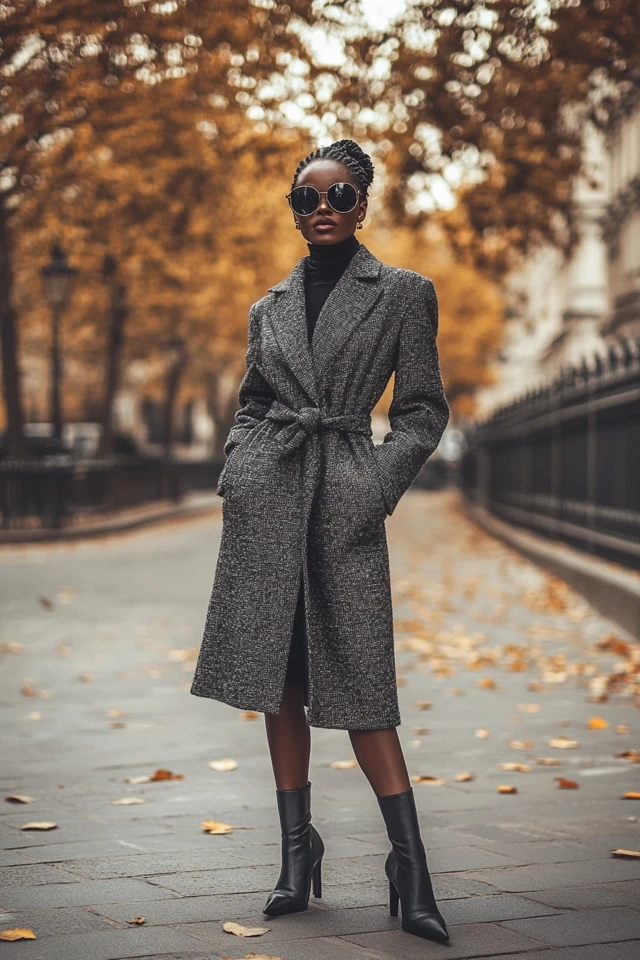
Which colors and patterns work best?
Camel, black, gray and beige go with nearly everything, which is useful if this is your only in-between coat. Deeper colors like emerald or cobalt read bold against neutral outfits. Pastels look lighter and suit spring. Plaid and houndstooth add interest, but keep the clothes underneath plain so the pattern doesn't compete.
Texture matters as much as color. As an architect trained in evidence-based design, I'd pick a matte, slightly brushed wool over a shiny finish if you want the color to look calm and rich, because a smooth gloss catches light and makes the shade look sharper.
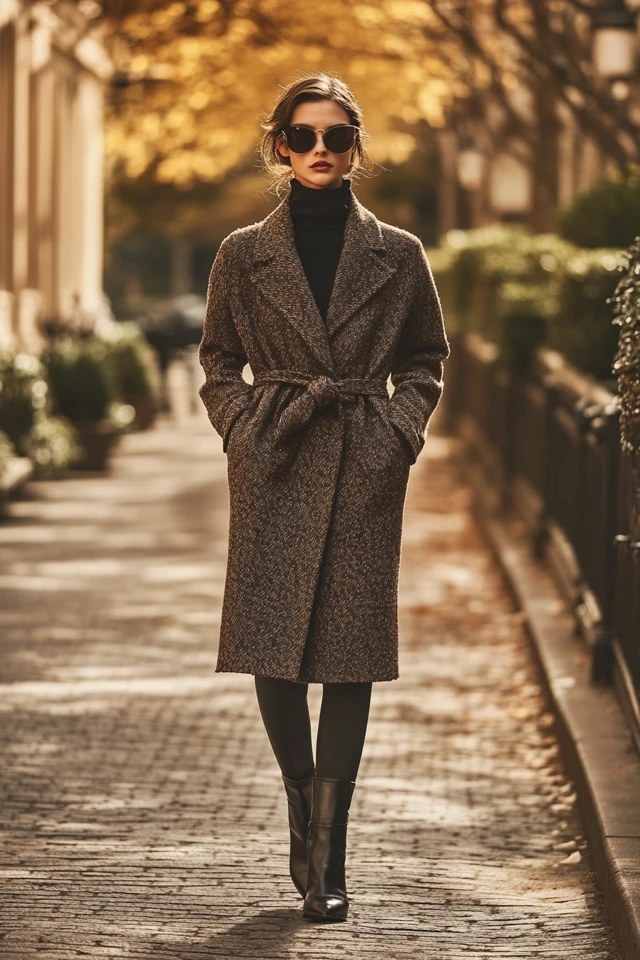
Layering under a wrap coat on colder days
A wrap coat is easy to layer, but what you put next to your skin matters on cool days. Texas A&M's Howdy Health advises that the layer closest to your skin should be made of moisture-wicking materials, and to avoid cotton because it absorbs moisture and can keep it next to your skin. That guidance is written for cold-weather exercise, but it is a useful hint if you walk a lot in your coat.
On top of that base, add a thin knit, then the coat. For more layering ideas, see capsule wardrobe ideas for transitional weather, or compare with neutral trench coats if you want a more structured option. Our neutral wrap coats for cool days post goes deeper on color.
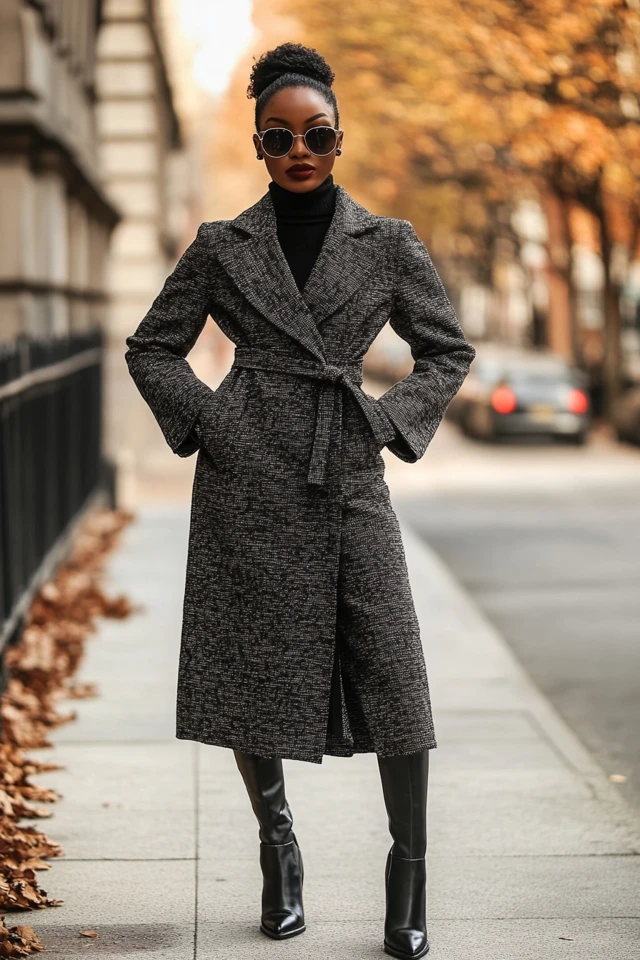
How to care for a wrap coat
- Check the care label first. Many wool and cashmere coats are dry-clean only.
- Spot clean small marks with a damp cloth.
- Air the coat after wearing before you put it away.
- Steam wrinkles on a low setting instead of ironing directly.
- Store it on a sturdy, wide hanger so the shoulders keep their shape.
Frequently asked questions
What is a wrap jacket?
A wrap jacket crosses one front panel over the other and closes with a tie belt or sash instead of buttons. It is usually shorter and lighter than a full-length wrap coat.
What coats make you look slimmer?
Coats with a defined waist, a long vertical front line and a close but not tight fit tend to look slimmer. A belted wrap coat in a matte, mid-weight fabric and a dark or single color usually does this well.
Can petite women wear long wrap coats?
Yes, if the shoulders fit and the belt sits at the natural waist. Choosing a hem at or just below the knee and wearing a small heel or boot keeps the proportions balanced.
Can wrap coats be worn in winter?
Yes, if the fabric is thick enough, such as a heavy wool blend. Size the coat to fit over a knit, and add a scarf and gloves on the coldest days.
Filed under Wardrobe Basics