
Wrap Coats for Cool Transitional Days: Neutral Picks
- Words by
- Julio Arco
- Published
- Reading
- 4 min
A wrap coat is an open-front coat with no buttons or zipper, closed by a belt or by overlapping the front panels. In a neutral shade like camel, beige, gray or taupe, it is one of the easiest layers for cool days when a winter coat is too much and a cardigan is too little.
The belt does the work of a thermostat: tie it snugly in the morning, loosen it or leave it open as the day warms up.
What is a wrap coat?
A wrap coat (sometimes called a wrap jacket when it is shorter) folds across the body and fastens at the waist. Because there are no buttons, the fit adjusts to what you wear underneath, from a thin turtleneck to a chunky knit.
Most are made in midweight fabrics such as wool blends, cashmere or brushed cotton. These give some insulation without the bulk of a padded coat, which suits spring and fall.
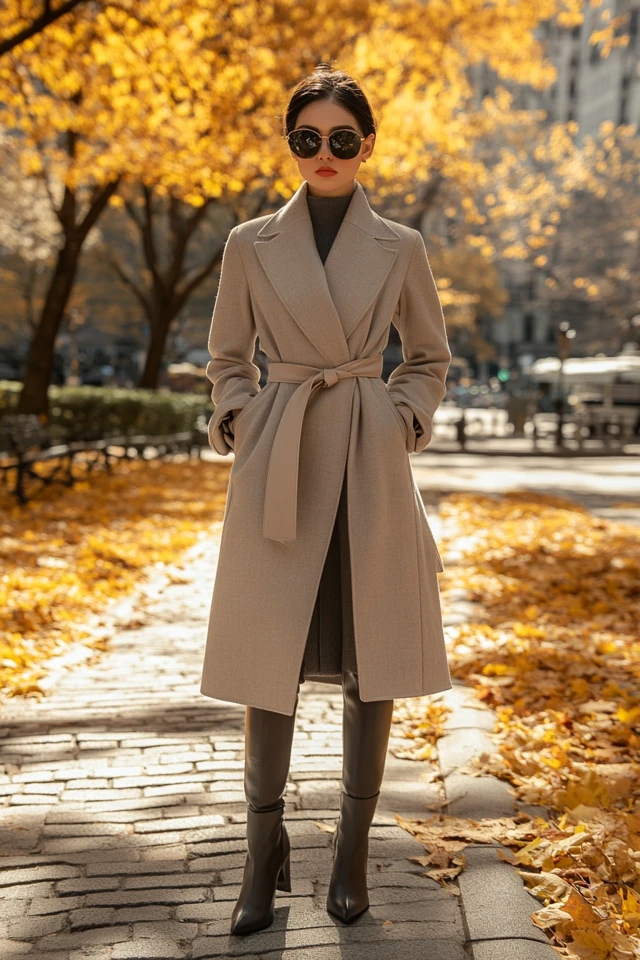
Are wrap coats flattering?
For most people, yes, and the reason is simple proportion. The belt marks the waist, and the long vertical line of the open front draws the eye up and down rather than across. If you prefer a looser shape, a relaxed wrap coat worn open or loosely tied still keeps that vertical line.
A jacket that pulls at the shoulders or bunches at the belt is a fit problem, not a you problem. Check the shoulder seam first: it should sit where your shoulder ends. Then check that you can fit your usual sweater underneath without the front panels straining.
If you want a slimmer line, pick a fabric with some drape rather than a stiff one, and keep the length at or just below the knee.
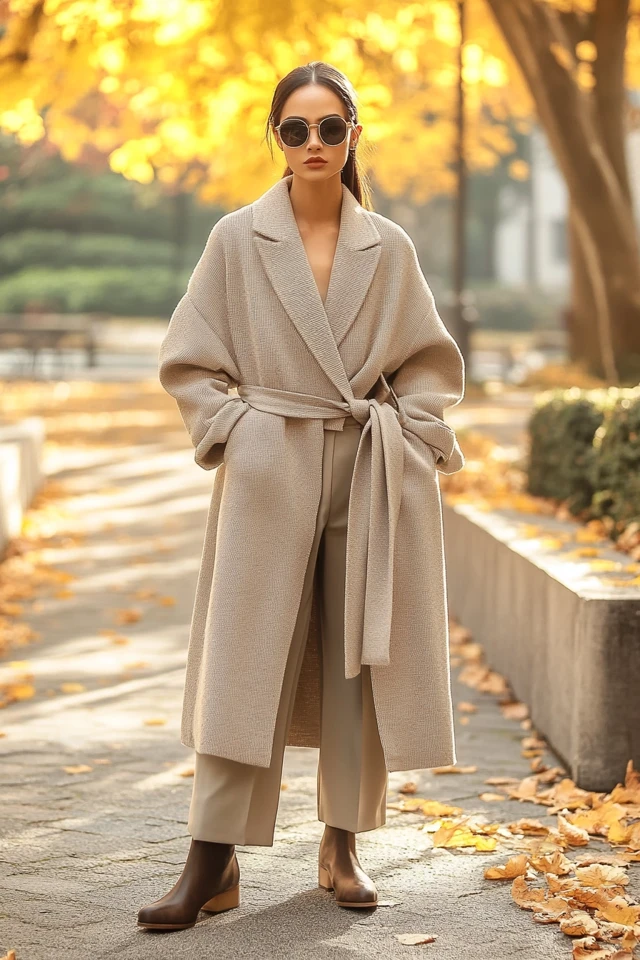
Why neutral colors work so well
Through the lens of evidence-based design, I'd pick neutrals for a transitional coat because they let texture do the talking. Camel reads warm next to skin, gray reads cooler and quieter, and beige or taupe sit lightly against spring pastels or earthy fall tones.
A neutral coat also gives you a calm backdrop. Whatever you wear underneath, from a jewel-toned knit to an all-cream outfit, the coat frames it instead of competing with it.
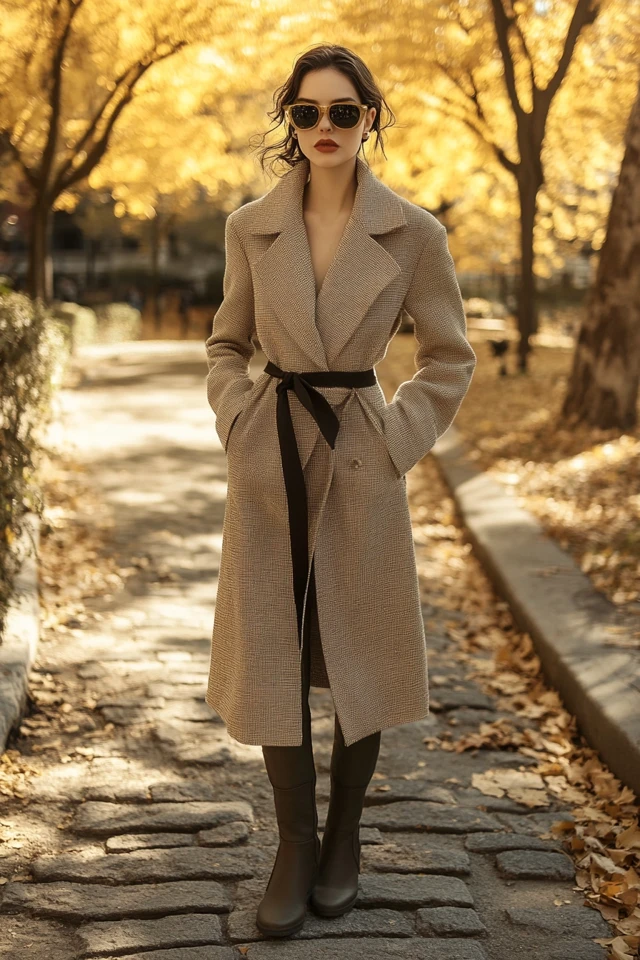
How to wear a wrap coat
A casual wrap coat outfit
Layer it over a chunky sweater, jeans and ankle boots. Add a scarf for texture and a crossbody bag. Leave the belt loosely tied or let it hang open for a wrap coat outfit casual enough for errands or coffee.
For the office
Wear it over a tailored blouse and slim trousers, or a midi dress. Cinch the belt to define the waist and finish with loafers or heeled boots.
For the evening
A wrap coat over a slip dress or a fitted jumpsuit looks sleek, especially with pointed-toe shoes. Keep the coat plain and let one accessory, like earrings or a clutch, stand out.
For temperature swings
Pair it with a lightweight turtleneck, cropped trousers and loafers. Add gloves or a scarf for the morning and take them off later. For a similar layer, see these stylish wrap coats for transitional weather.
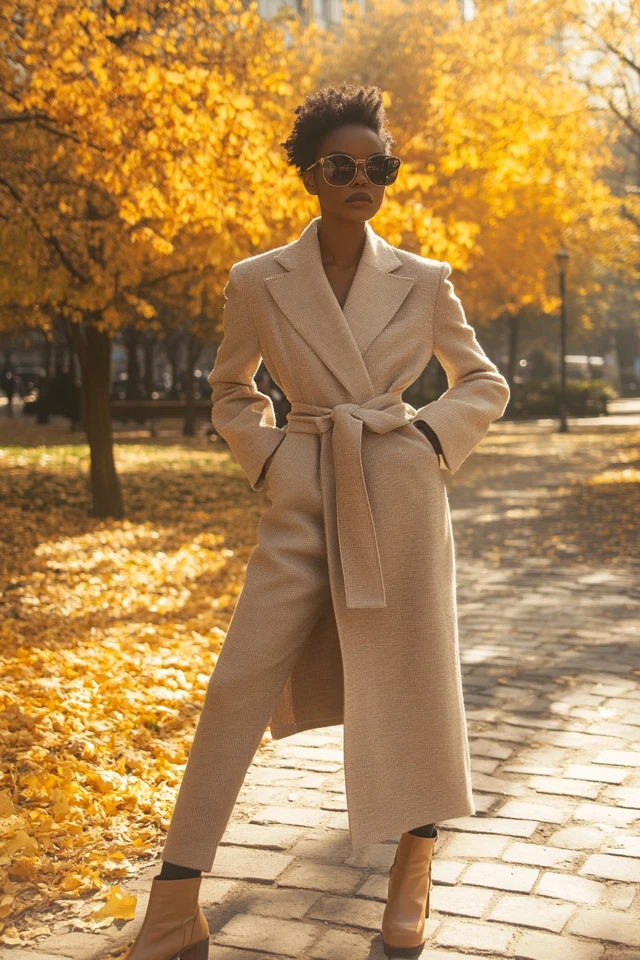
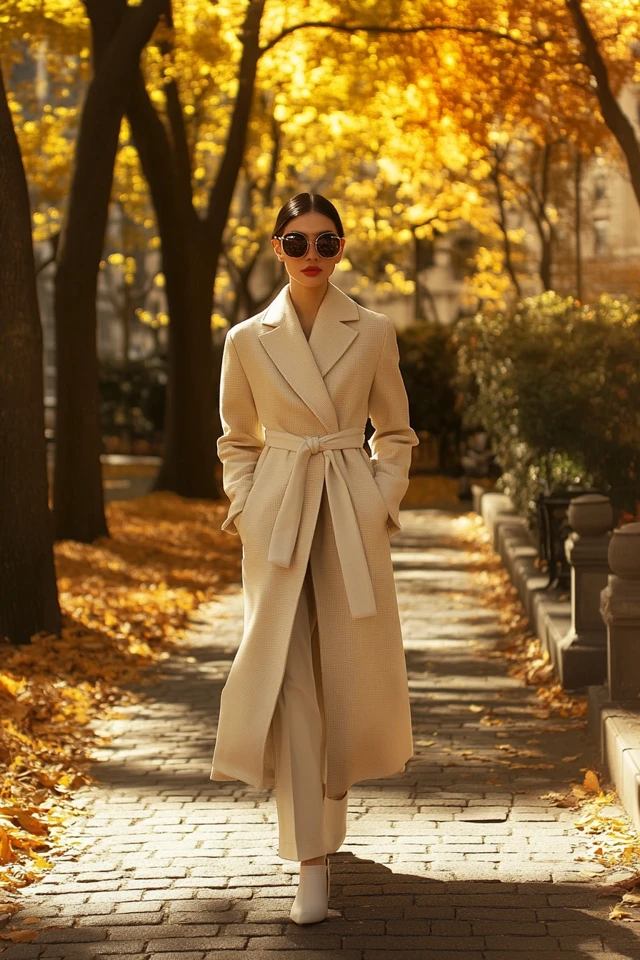
How to tie the belt
For a classic look, tie a simple knot or bow at the front. For a softer, more draped effect, knot it loosely at the side or back, or let the ends hang. If the coat gaps at the chest when belted, tie it a little lower rather than tighter.
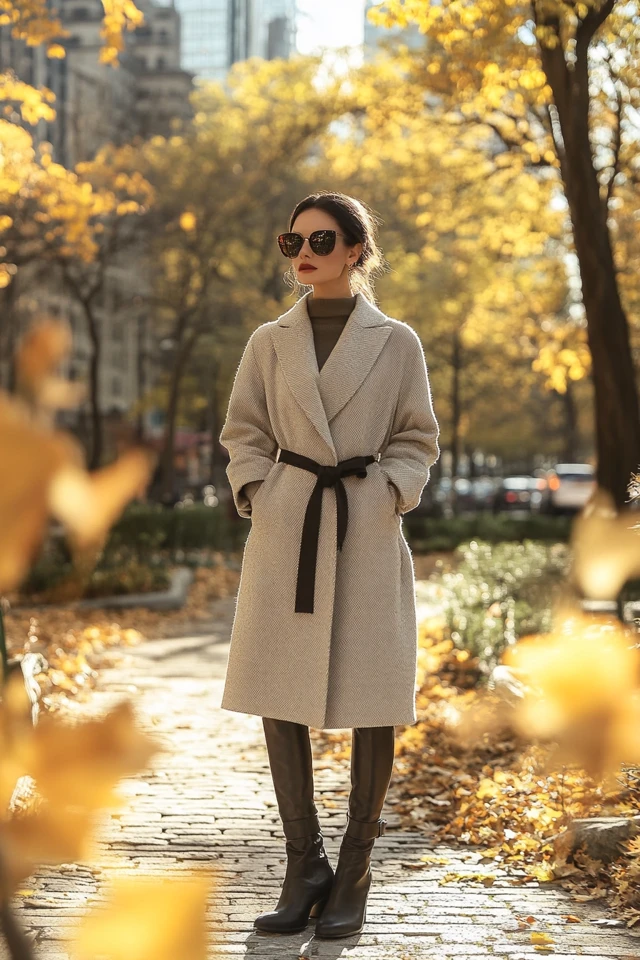
Size, fit and fabric details
- Fabric: wool or cashmere blends for warmth and softness, brushed cotton for a lighter feel.
- Fit: choose a size that fits over a sweater without the sleeves riding up. Sleeves should reach the wrist bone, or just past it when you reach forward.
- Length: knee-length is the most flexible. Longer reads more dramatic and can overwhelm a petite frame.
- Details: deep pockets are useful, and wide lapels or a double-faced fabric add interest without needing extra accessories.
Warmth also depends on what is under the coat. For cold-weather activity, Texas A&M's Howdy Health advises that the layer closest to your skin should be made of moisture-wicking materials, and to avoid cotton because it absorbs moisture and can keep it next to your skin. That is exercise advice, but it applies if you walk a lot in your coat on a chilly day.
If a straight-cut look suits you better, compare with neutral trench coats for transitional seasons or a relaxed swing coat.
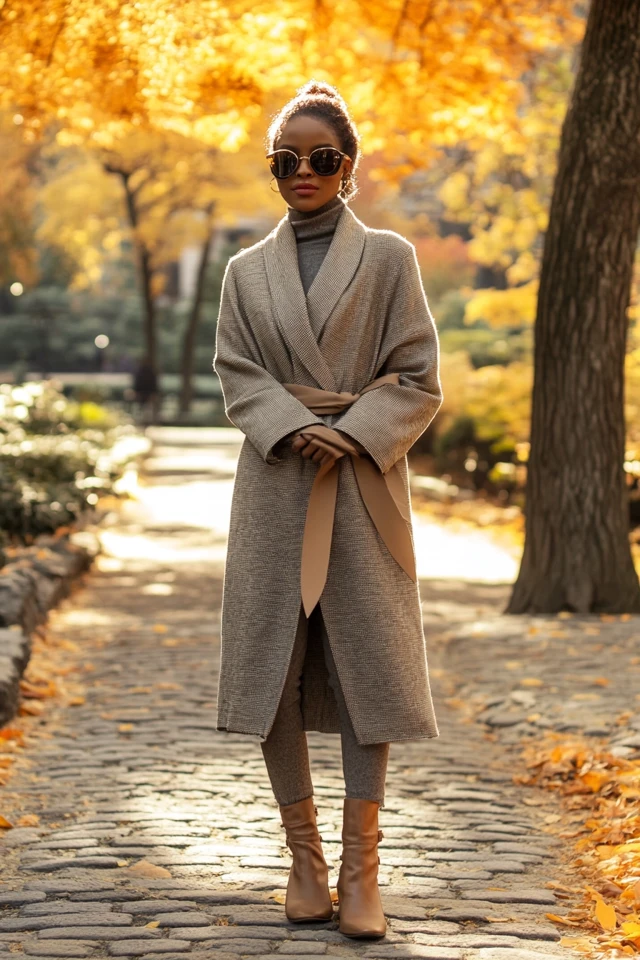
Caring for a wrap coat
- Spot clean small stains with a damp cloth. Check the care label before using any detergent.
- Wool and cashmere coats usually do best with professional dry cleaning.
- Hang it on a padded hanger in a cool, dry place with room around it.
- Brush off lint and dust with a fabric brush.

On the cooler end of the season, a flowy cardigan wrap is a lighter option, and a neutral coat pairs well with a neutral wrap dress.
Frequently asked questions
What is a wrap jacket?
A wrap jacket is a coat or jacket with an open front that crosses the body and closes with a belt or tie instead of buttons or a zipper. It is usually shorter and lighter than a full wrap coat.
Are wrap coats warm enough for winter?
They suit mild to cool weather best. In real cold, choose a heavier wool wrap winter jacket or add a thick sweater or thermal layer underneath.
What coats make you look slimmer?
Coats that define the waist and keep a long vertical line, like belted wrap coats in a fabric with drape, tend to read slimmer. A knee-length cut in a single color helps.
Are neutral tones flattering on every skin tone?
Neutrals work for many people, but they read differently next to skin. If camel looks sallow on you, try gray or taupe, or put a scarf in a brighter color near your face.
Filed under Weather Style