Cotton Comfort: Embracing Breathable Fabrics Year-Round
- Words by
- Julio Arco
- Published
- Reading
- 4 min
For humid weather, pick lightweight natural fabrics like linen and cotton, or a quick-drying synthetic if you will be sweating a lot. Cut matters as much as fiber: loose, unclingy shapes let air move and keep damp cloth off your skin.
Cotton, the fabric this post started with, is a good everyday choice. It just isn't the winner in every kind of heat, so here is how it compares.
What is the best fabric for hot and humid weather?
Humidity is hard on clothes because sweat doesn't evaporate easily. The best fabric for hot and humid weather is one that is light, open in weave and dries quickly. The City of Philadelphia's Board of Health notes that lightweight fabrics like cotton and linen are breathable, absorb sweat, and dry quickly.
Weave changes the answer too. A loose voile or gauze cotton feels very different from a dense twill, even though both are cotton. Hold the fabric up to a window: if you can see light through the weave, air will pass through it as well.
Linen vs cotton for humid weather
Both are plant fibers and both breathe, but they behave differently once you sweat. Georgia Tech's news center reports that cotton's moisture vapor transmission rate is lower than linen's, meaning it doesn't dry as quickly.
In practice, linen feels crisp and dries fast, and it wrinkles. Cotton feels softer against the skin and wrinkles less, but it stays damp longer. Through the lens of evidence-based design, I'd choose by how the surface feels on the skin: if a stiff, textured weave bothers you, a soft cotton you actually wear will keep you more comfortable than a linen you tug at all day.
- Choose linen for very hot, sticky days when you will be outside for hours.
- Choose lightweight cotton (voile, poplin, seersucker, chambray) for office days, softness and fewer wrinkles.
- Choose a linen-cotton blend if you want both: some of linen's speed with more softness.
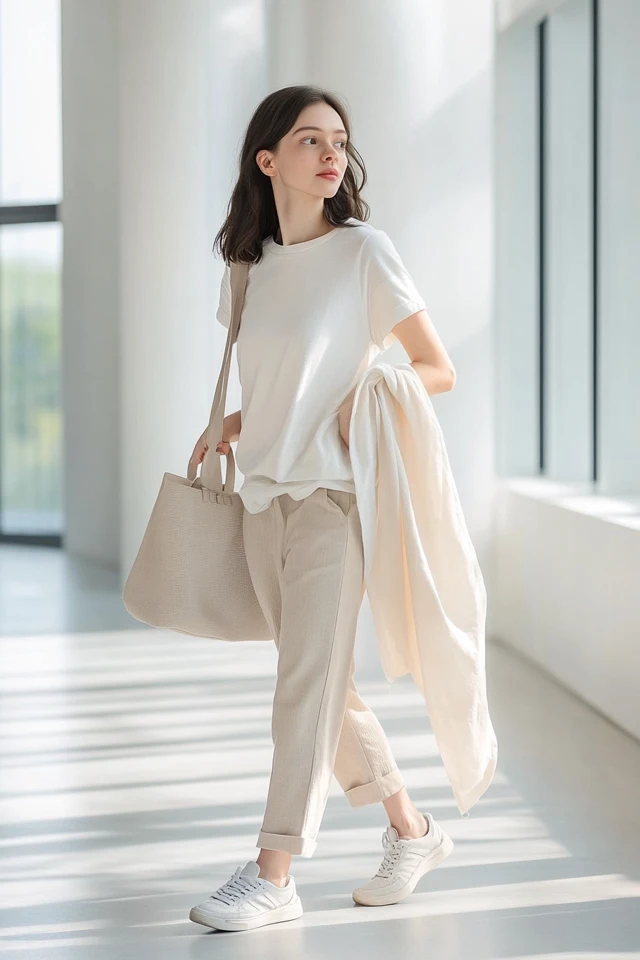
For more outfit ideas in these two fibers, see rustic linen and cotton outfits for summer comfort.
What is the best fabric for excessive sweating?
If you sweat heavily, drying speed matters more than softness. Texas A&M's Howdy Health advises choosing quick-drying, sweat-wicking fabrics, such as polyester, polypropylene, nylon, or nylon-blend. These pull moisture along the fabric so it can evaporate instead of sitting on you.
Linen is the natural option here, since it dries quickly. Wear a thin layer closest to the skin and avoid heavy, close-fitting knits. If sweating feels excessive or new for you, check with a doctor.

Which fabrics keep you cool in summer?
These are the fabrics that tend to work best for staying cool, from most to least airy:
- Linen and linen blends: open, quick to dry, textured.
- Cotton voile, gauze and seersucker: light and soft, and the puckered surface of seersucker lifts cloth off the skin.
- Chambray and thin poplin: smoother and more polished, good for work.
- Lightweight performance synthetics: best for exercise or very heavy sweating.
What are the worst fabrics for hot, humid weather?
The worst fabrics for hot humid weather are the ones that trap heat or hold water. Heavy denim, thick twill, flannel, wool knits and tightly woven polyester that doesn't wick all fall into that group. Satin and other smooth, dense synthetics can feel clammy because air can't move through them.
Cotton has a different problem when you are active. Howdy Health says to avoid cotton because it absorbs moisture and can keep it next to your skin. That advice is written for cold-weather exercise, but the same property explains why a soaked cotton tee feels heavy and sticks in humidity. For a workout, wear wicking fabric. For walking around, cotton is fine.
What to wear: cuts and outfit tips for humid days
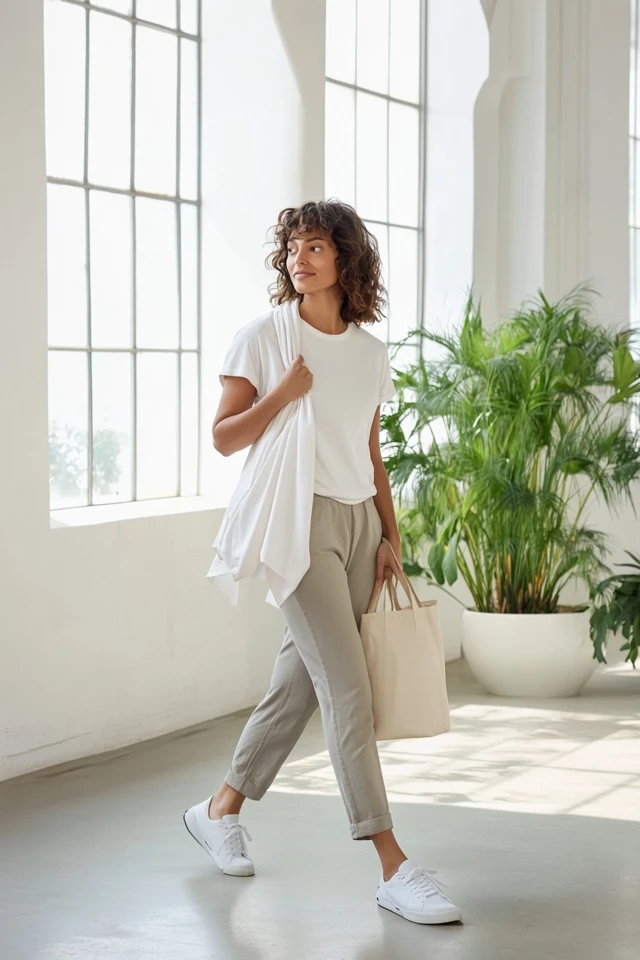
A good fabric in a tight cut will still feel hot. A few fit rules help:
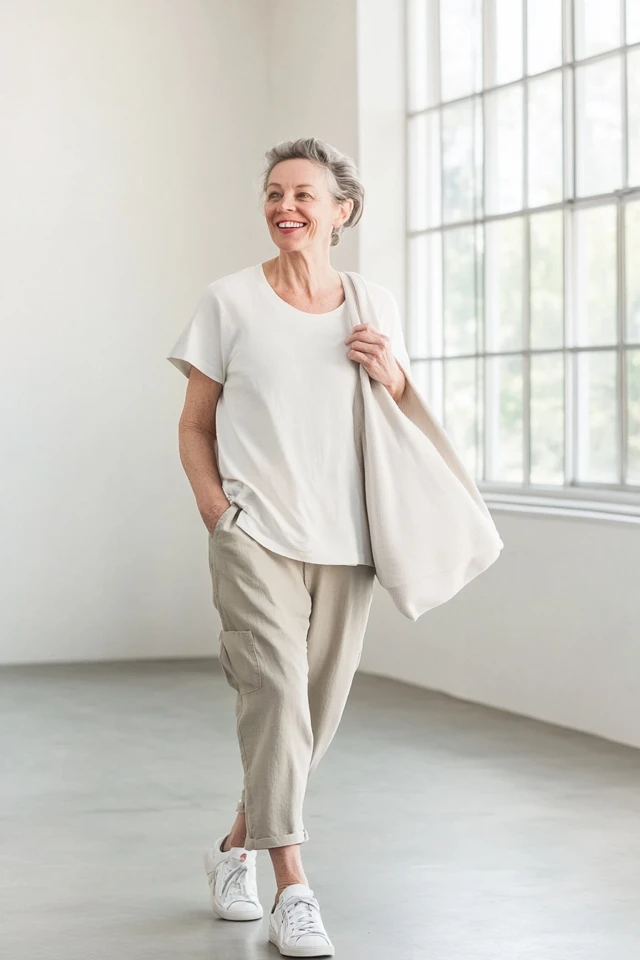
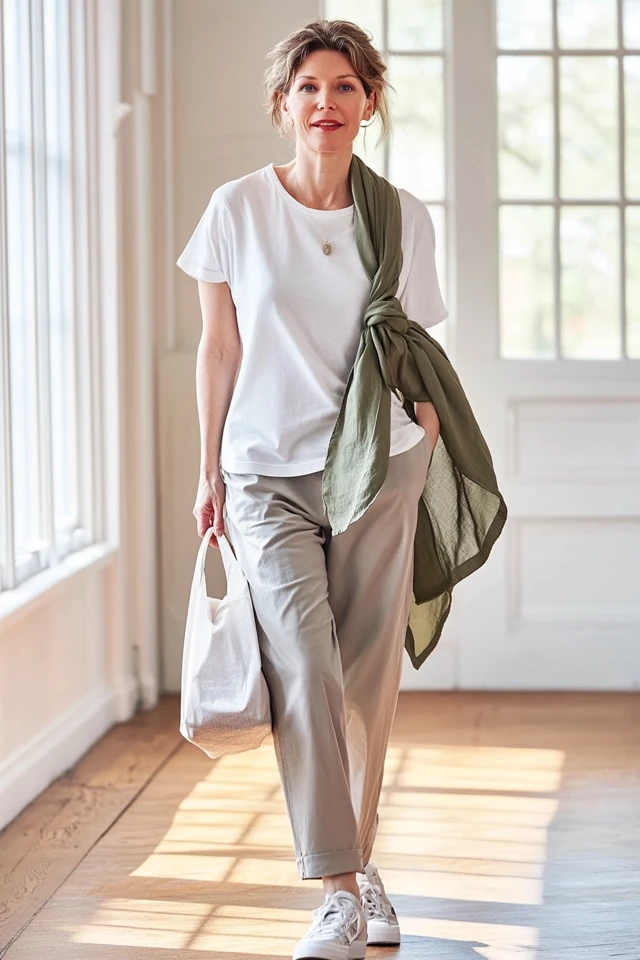
- Choose loose or semi-fitted shapes: tunics, shirt dresses, wide-leg trousers, relaxed button-downs.
- Look for sleeves and necklines that open up, like short sleeves, scoop necks and rolled cuffs.
- Keep colors light. Pale tones read cooler, and sweat marks are less visible on mid-tone prints or textured weaves than on flat gray or pale solids.
- Skip lining unless you need it, and if you do, choose cotton lining.
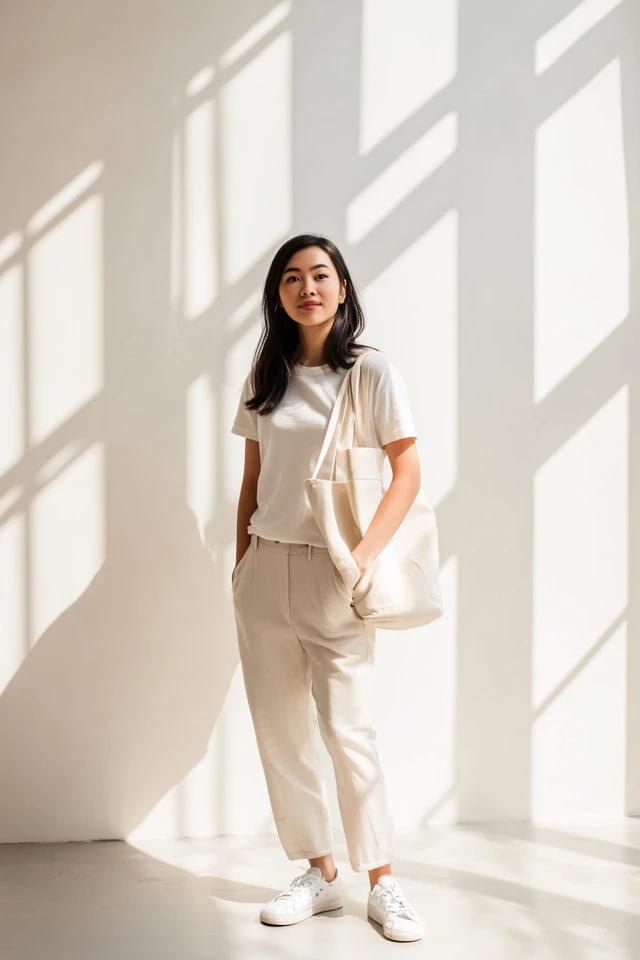
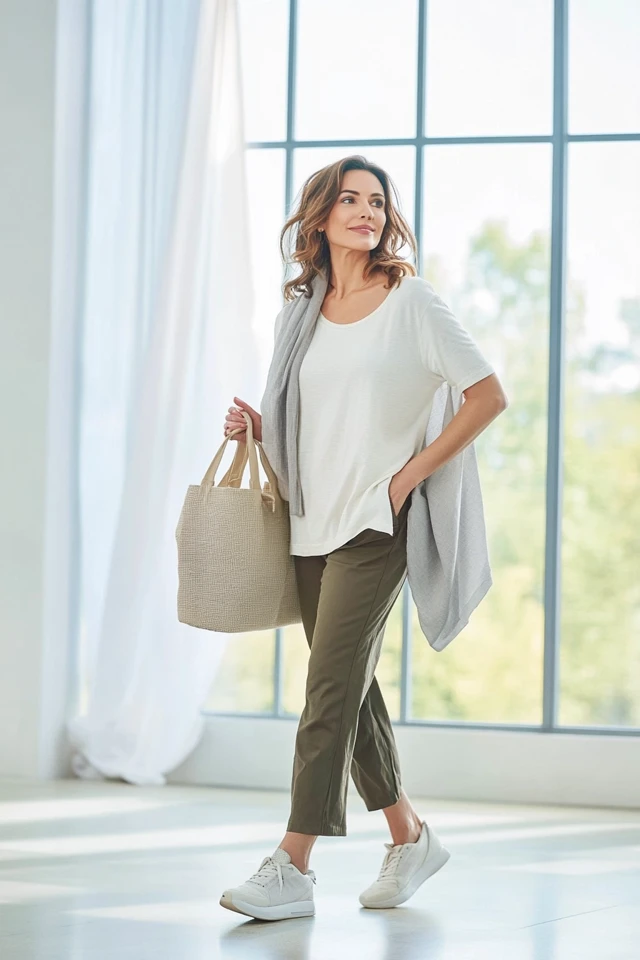
For women's outfits, a cotton or linen shirt dress, a gauze tunic with wide-leg pants, or a flowy sundress covers most situations. Add a lightweight layer such as a lightweight cardigan for air-conditioned rooms.


Does cotton work all year?
Yes, with the weight changed. Light weaves handle summer, while heavier cotton like flannel and denim is for cooler months. If you want pieces that move across seasons, all-season wardrobe pieces and the cotton and eyelet dresses post are good places to start. For riding or hiking in heat, see light cycling attire with breathable fabrics.
Frequently asked questions
What is the best fabric to wear in humid weather?
Lightweight linen and loose-woven cotton are the usual picks, since they breathe and dry reasonably fast. Choose an open weave and a relaxed fit.
What is the best fabric for excessive sweating?
Quick-drying, sweat-wicking fabrics such as polyester or nylon blends suit heavy sweating, and linen is the best natural option. If sweating worries you, ask a doctor.
What fabric is best for staying cool in the summer?
Linen, cotton voile, gauze and seersucker stay cool because air passes through them. Light colors and loose cuts add to the effect.
What are the worst fabrics for hot, humid weather?
Heavy denim, flannel, wool and dense or non-wicking polyester and satin trap heat or moisture. They tend to feel sticky quickly.
Filed under Fabrics & Textures