Rustic Linen and Cotton Outfits for Summer Comfort
- Words by
- Julio Arco
- Published
- Reading
- 4 min
For humid weather, start with linen. Cotton is the easy second choice, and a quick-dry synthetic earns a place when you expect to sweat a lot. The City of Philadelphia's Board of Health notes that lightweight fabrics like cotton and linen are breathable, absorb sweat, and dry quickly.
Fabric is only half of it. A loose cut lets air move around your body, and a light color reads cooler to the eye. Below: how linen and cotton compare, when synthetics make sense, what to skip, and how to put it together.

Linen vs cotton for humid weather
Both are natural fibers and both are comfortable in heat, but they behave differently once you start to sweat. Georgia Tech's news center points out that cotton's moisture vapor transmission rate is lower than linen's, meaning it doesn't dry as quickly.
In practice, that means a linen shirt tends to feel dry again sooner, while cotton can stay damp against your skin on a muggy afternoon. Linen also has a crisp, slightly coarse hand that holds away from the body, which helps airflow. Cotton is softer and wrinkles less, which many people prefer for tees and underwear-adjacent layers.
Through the lens of evidence-based design, I'd pick linen for anything that sits loosely (shirts, trousers, dresses) and a lightweight cotton knit for the pieces that touch your skin most, because texture changes how a fabric feels when it's damp.

What is the most breathable fabric for summer?
Linen is the usual answer, with an open weave making a big difference. Hold the fabric up to a window: if you can see light through the weave, air will pass too. A few other options work well:
- Lightweight cotton in a loose weave such as voile or gauze
- Cotton-linen blends, which soften linen's stiffness while keeping some of its quick drying
- Chambray, a thin plain-weave cotton that feels lighter than denim
Weight and weave matter as much as fiber. A heavy cotton twill will feel warmer than a thin, loose linen, even though both are natural.

What is the best fabric for excessive sweating?
If you sweat heavily, drying speed matters more than softness. Texas A&M's Howdy Health advises you to choose quick-drying, sweat-wicking fabrics, such as polyester, polypropylene, nylon, or nylon-blend. These suit walks, travel days and anything active.
The trade-off is feel. Synthetics can hold odor and sometimes feel clammy when the weave is dense, so look for open knits and loose cuts. For medical concerns about sweating, check with a doctor rather than relying on fabric alone.

Which fabrics to avoid in hot, humid weather
The worst fabrics for hot humid weather are the ones that trap heat or hold moisture against you:
- Heavy, tightly woven cotton such as thick denim or twill, which dries slowly
- Dense, non-breathable synthetics like thick polyester satin or fleece-like knits
- Anything lined with a second layer that blocks airflow
Texas A&M's Howdy Health also says to avoid cotton because it absorbs moisture and can keep it next to your skin. That advice is written for cold-weather exercise, where damp skin makes you chilly. In summer the same property is why a soaked cotton tee feels heavy during a workout, so choose a wicking fabric for hard exercise and keep cotton for easy days.

Fit and cut matter as much as fabric
A fitted linen shirt in a humid city will feel hotter than a loose one in a mid-weight cotton. Leave room at the chest, waist and under the arms so the fabric does not cling when damp.
- Wide-leg trousers and midi skirts let air circulate; see wide-leg linen pants for summer
- Button-down shirts can be opened at the collar and rolled at the sleeve, as in these breezy linen shirts
- Shorts and relaxed tees are the easiest day-off outfit: try linen shorts with relaxed tees
Colors that read cooler
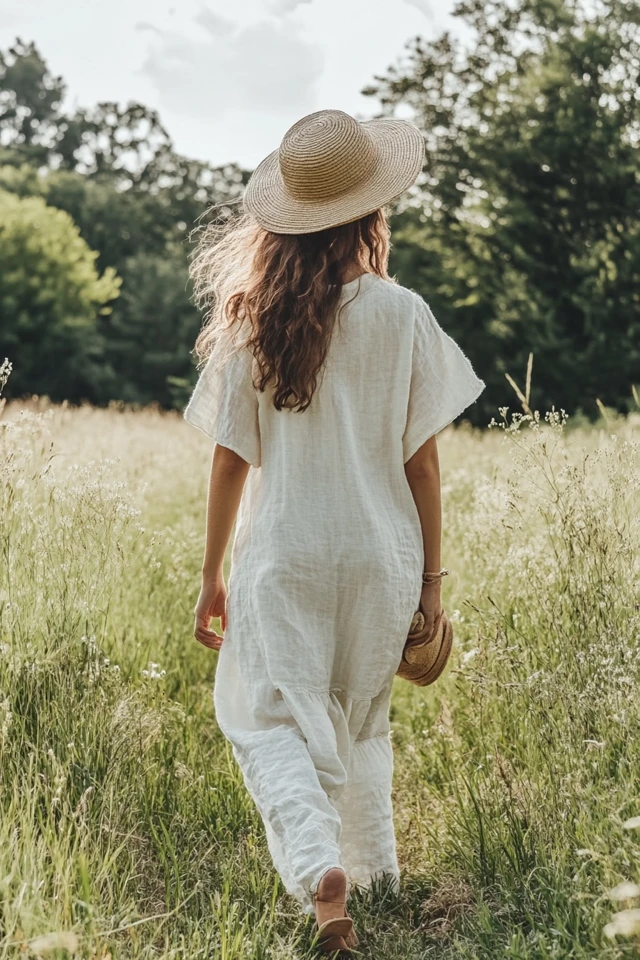
Light neutrals such as white, sand, stone and pale olive look calm and airy, and they show sweat less than mid-gray. Rust and deeper earth tones still work in linen because the texture softens them. As an architect trained in evidence-based design, I'd keep the palette to two or three related tones so the outfit looks relaxed rather than busy.

Outfit formulas for humid days
Casual
A linen button-down, cotton shorts and flat sandals. Swap the shirt for a cotton tank when it is truly sticky.

Bohemian
A loose linen maxi skirt with a lightweight cotton top. Add a thin cotton kimono if the evening cools.

Dressier
A linen blazer worn open over a cotton blouse and wide trousers. Unlined jackets breathe far better than lined ones. For mixing the two fibers, see cotton and linen blends for summer outfits.

Caring for linen and cotton so they stay soft
Wash in cool or lukewarm water on a gentle cycle and air dry or tumble on low. High heat shrinks both fibers. Linen softens with each wash, and its wrinkles are part of the look, so do not fight them too hard.

For more on the fiber that suits you across seasons, read cotton comfort year-round. A plain white cotton shirt over linen trousers is a solid starting outfit.

Frequently asked questions
What is the best fabric to wear in humid weather?
Linen is usually the best pick because it breathes and dries quickly. Lightweight cotton and open-weave blends come next, and quick-dry synthetics suit active days.
What fabric is best for staying cool in the summer?
Loosely woven linen and thin cotton keep air moving against your skin. A loose cut and a light color add to the effect.
What are the worst fabrics for hot, humid weather?
Heavy cotton twill or denim, dense synthetics and lined garments tend to trap heat or stay damp. Tight cuts make any fabric feel hotter.
Can linen and cotton be worn together?
Yes. Pairing a linen shirt with cotton trousers, or the reverse, adds texture and works well in heat.
Filed under Fabrics & Textures