
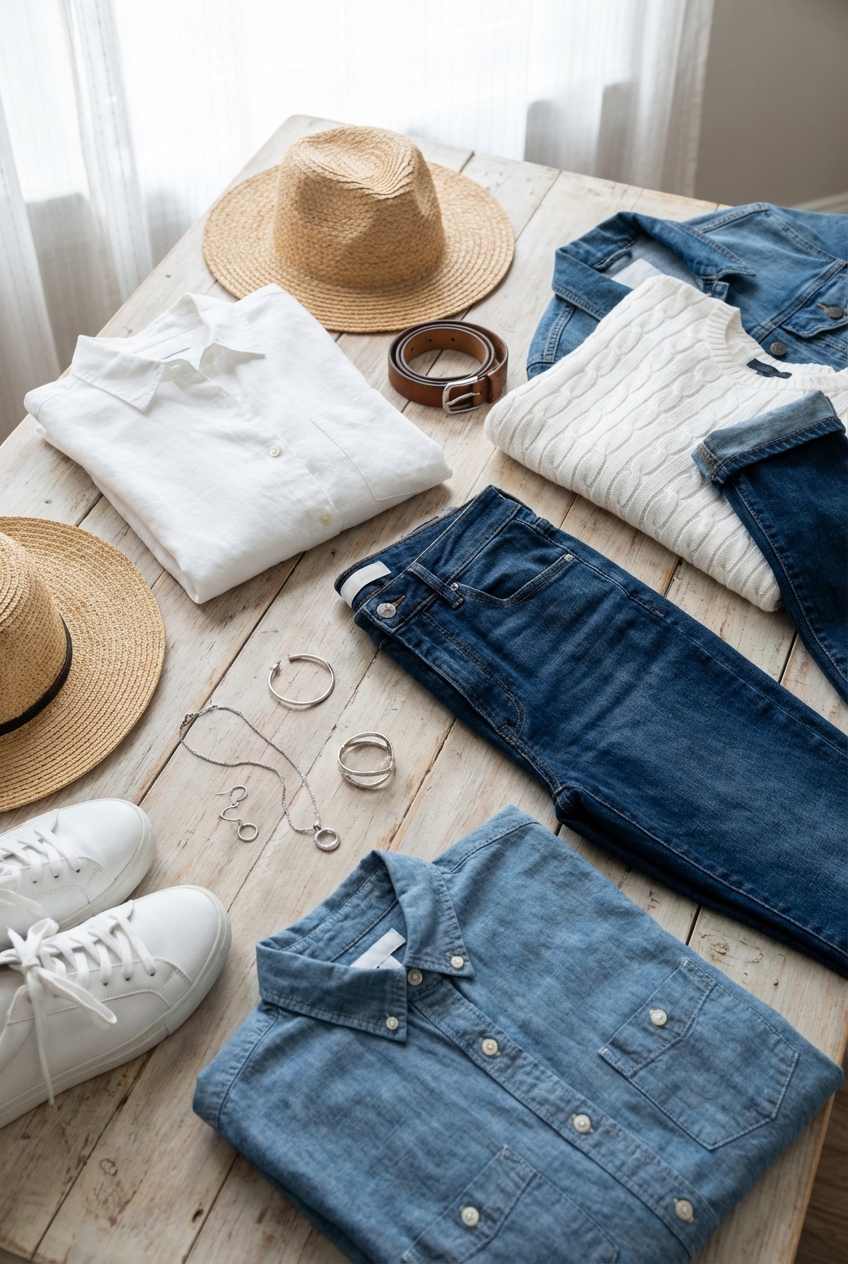
Crisp White And Denim Blue Outfits For Timeless Style
There is a quiet power in the combination of a crisp white shirt and perfectly fitted blue denim. It is the uniform of off-duty editors, fashion icons, and women who understand that true style relies on architecture, not trends. This pairing serves as a blank canvas that highlights the wearer rather than the clothing.
However, executing this look requires more than just grabbing a t-shirt and a pair of old jeans. As a fashion stylist, I treat this combination with the same rigor as a couture gown. The success of the look hangs on precise tailoring, fabric quality, and the interplay of proportions.
When you master the nuances of scale and silhouette, this simple formula becomes your most powerful style asset. Be inspired by our curated Picture Gallery at the end of this post to see these concepts in action.
The Architecture of the White Top
The white component of this outfit acts as your source of light. It draws attention to the face and establishes the formality of the look.
In my years of styling, I have found that fabric weight is the most overlooked variable. A flimsy, sheer cotton tee often looks unintentional. Instead, I recommend seeking out “heavyweight” cotton jersey or poplin with a high thread count.
For button-downs, structure is paramount. Look for a shirt with a fused collar and cuffs. This stiffness frames the face and allows you to roll sleeves while maintaining a sharp, geometric shape.
Fabric Selection Guide
- Poplin: Crisp, cool, and smooth. Best for structural looks and office environments. It wrinkles, but the wrinkles should look architectural.
- Silk Crepe de Chine: Offers a matte sheen and fluid drape. This softens the ruggedness of denim. Ideal for evening transitions.
- Linen: The ultimate textural contrast to denim. Look for Irish linen, which has a heavier hand and holds its shape better than blends.
Designer’s Note: The Fit Test
When fitting a client for a white button-down, I always check the bust button first. There should be zero pulling. If the placket gapes even a millimeter, size up. It is far chicer to have a shirt tailored down at the waist than to have fabric straining across the chest.
Denim Mechanics: Wash, Weight, and Rise
Denim serves as the anchor of this outfit. The goal is to find a pair that acts as a neutral foundation while flattering your specific body geometry.
For a timeless aesthetic, steer clear of extreme distressing or “whiskering” (the pre-fabricated fade lines around the hips). These artificial details date the outfit and interrupt the visual vertical line.
I prefer a “mid-vintage” blue or a deep indigo rinse. These shades provide high contrast against crisp white, which makes the outfit pop. Lighter, acid-wash blues can sometimes muddy the look if the white top isn’t stark enough.
Understanding Denim Weight
- 10-11 oz: Lightweight and usually contains stretch. Good for skinny jeans but lacks the “hold” for straight legs.
- 12-13 oz: The sweet spot for daily wear. It has structure but softens with wear.
- 14 oz+: Heavy, rigid denim. This creates the best silhouettes for wide-leg or boyfriend styles as the fabric stands away from the body.
Common Mistakes + Fixes
Mistake: Relying on stretch denim for wide-leg silhouettes.
Fix: Stretch denim collapses at the knee and thigh, ruining the line. For wide-leg or straight cuts, choose 100% cotton or a blend with maximum 1% elastane. This maintains the “column” effect essential for a polished look.
Mastering Proportions and The Tuck
The magic of white and blue lies in how you manipulate the silhouette. Because the colors are high-contrast, where they meet on your body creates a distinct horizontal line.
You must control where this line cuts you. As a general rule of thumb, we rely on the Rule of Thirds. You want your outfit to divide your body into a 1:2 ratio (one-third torso, two-thirds leg) rather than cutting you strictly in half.
This is why the “tuck” is non-negotiable. Leaving a white shirt untucked over jeans usually results in a 1:1 ratio, which shortens the legs and widens the hips visually.
Tucking Techniques for Different Rises
- The Full Tuck: Essential for high-rise denim (11-inch rise or higher). It maximizes leg length. Ensure the shirt is smoothed flat against the back to avoid bunching.
- The French Tuck: Tucking just the front center and letting the back drape. This works best with mid-rise jeans and oversized knitwear or linen shirts. It defines the waist without exposing the hip width.
- The Bodysuit Hack: If you struggle with shirts coming untucked, switch to a high-quality bodysuit. It guarantees a sleek, wrinkle-free line that creates a perfect contrast with rigid denim.
The Third Piece Rule
While white and blue is a complete outfit, adding a “third piece” is what takes the look from average to expert. In fashion styling, the third piece adds dimension and finishes the thought.
Because the base is neutral, your third piece can be the texture or pattern hero. However, keeping it in the neutral family often looks the most expensive.
Top Layering Options
- The Navy Blazer: A classic choice. Look for gold buttons to play up the nautical history of the color palette. Ensure the shoulders are sharp to contrast the casual denim.
- The Camel Trench: Creates a triad of classic American sportswear colors (White, Blue, Tan). The length of the trench should hit below the knee to elongate the figure.
- The Cashmere Sweater: Rather than wearing it, drape a grey or navy sweater over your shoulders. Tie the sleeves loosely across the chest. This adds texture near the face and softens the collar of a crisp shirt.
What I’d Do in a Real Project
If I were styling a client for a casual Friday who wants to look authoritative but relaxed:
1. Base: High-waisted, straight-leg indigo jeans (no distressing).
2. Top: White silk blouse, fully tucked.
3. Third Piece: An oversized houndstooth blazer.
4. Shoe: A pointed-toe flat to extend the leg line.
Accessorizing: The Gold Standard
White and blue are cool tones by nature. To warm them up and make the outfit feel expensive, metals are crucial. Gold hardware is the traditional and most effective choice here.
I advise clients to match the hardware on their accessories to the rivets on their jeans. If your denim has copper or gold rivets, wear gold jewelry. If the hardware is silver or matte black, switch to silver jewelry or black leather accessories.
Leather Goods Selection
The color of your belt, bag, and shoes dictates the vibe.
- Tan/Cognac Leather: Creates a casual, daytime, “Ralph Lauren” aesthetic.
- Black Leather: Makes the outfit sharper, more urban, and appropriate for evening.
- White/Cream Leather: A fashion-forward choice. White shoes extend the eye if the denim is light, or create a bookend effect with the white top.
Designer’s Note: The Belt Width
Never underestimate the belt. With a high-contrast outfit, the belt is a focal point. For jeans, a belt width of 1.25 to 1.5 inches is standard. Skinny belts (under 1 inch) often get lost in denim loops and look dated. Wide belts (over 2 inches) can shorten the torso.
Selecting the Right Shoe for the Hemline
The interaction between your denim hem and your shoe is where the outfit succeeds or fails. A millimeter difference in hem length changes the entire silhouette.
When I work on set, we often tape hems to get them exactly right for the shoe. In real life, you need to commit your jeans to a specific heel height.
Hemming Rules of Thumb
- Straight Leg / Mom Jean: The hem should hit at the ankle bone. This shows a sliver of skin, which is slimming. Pair with loafers, ballet flats, or ankle boots.
- Wide Leg / Trouser Jean: The hem should graze the top of your foot, sitting about 0.25 to 0.5 inches off the ground when wearing your intended shoes. These require a heel or a platform sneaker to keep the fabric from dragging.
- Kick Flare / Cropped Flare: The hem should hit 2 inches above the ankle bone. This highlights the narrowest part of the leg. High-shaft boots that slide under the hem look excellent here.
Fabric Care and Maintenance
A white and blue outfit only looks luxurious if the white is brilliant and the blue is rich. Faded whites or yellowed armpits destroy the illusion of high style.
You must treat these garments with specific care protocols. Fashion maintenance is just as important as the purchase.
Keeping Whites Bright
Use a bluing agent in your wash cycle once a month. This counteracts the natural yellowing of cotton. Never bleach your white shirts frequently; bleach breaks down fibers and can actually cause yellowing over time. Instead, use an enzymatic stain remover on collars and cuffs before every wash.
Preserving Denim Indigo
Wash your denim as little as possible. When you do, turn them inside out and wash on cold. Air dry only. Heat is the enemy of elastic fibers (stretch) and indigo dye. If your jeans get stiff, put them in the dryer on “air fluff” (no heat) for 10 minutes with a dryer ball to soften them up.
Finish & Styling Checklist
Use this final punch list before you walk out the door to ensure your look is polished.
- Check the Collar: Is it standing up properly? Use collar stays if necessary.
- The Tuck Inspection: Raise your arms. Does the shirt pull out completely? If so, you need a longer shirt or higher-rise jeans.
- Undergarments: Are you wearing a nude bra? Never wear a white bra under a white shirt; it will show. The tone should match your skin, not the shirt.
- Lint Check: Dark denim loves to transfer lint to white shirts, and vice versa. A quick roll is mandatory.
- Shoe Condition: Since the outfit is simple, scuffed shoes will be obvious. A quick wipe-down makes a huge difference.
FAQs
Can I wear white and blue denim in the winter?
Absolutely. The key is weight and texture. Swap the cotton poplin shirt for a white cashmere turtleneck or a heavy oxford cloth. Swap light-wash denim for a dark, saturated indigo. Top it with a camel coat and leather boots.
How do I stop my dark jeans from transferring blue dye onto my white shirt?
This is a major risk with raw indigo. Before wearing new dark jeans, soak them in a bucket of cold water with a cup of white vinegar for 30 minutes to set the dye. Even then, be cautious with the “French Tuck” on very new raw denim until it has been washed a few times.
What is the best denim cut for a petite frame?
Avoid wide-leg jeans that are too voluminous, as they can swallow a small frame. A straight-leg cut with a high rise (to elongate the legs) is universally flattering. Ensure the hem hits right at the ankle bone to show separation between the pant and the shoe.
Is double denim (Canadian Tuxedo) acceptable?
Yes, but it requires contrast. If you are wearing a denim shirt with jeans, ensure the washes are at least two shades apart (e.g., a bleached denim shirt with dark indigo jeans). However, the classic “White and Blue” combo discussed here is generally more versatile for mixed settings.
Conclusion
The combination of a white top and blue jeans is the fashion equivalent of a perfectly designed living room: it is functional, comfortable, and endlessly adaptable. It creates a space where your personality can shine through accessories and attitude.
By investing in high-quality architectural fabrics and adhering to the rules of proportion, you elevate this daily uniform into a statement of intent. It says you value quality over quantity and style over fleeting trends.
Picture Gallery


