
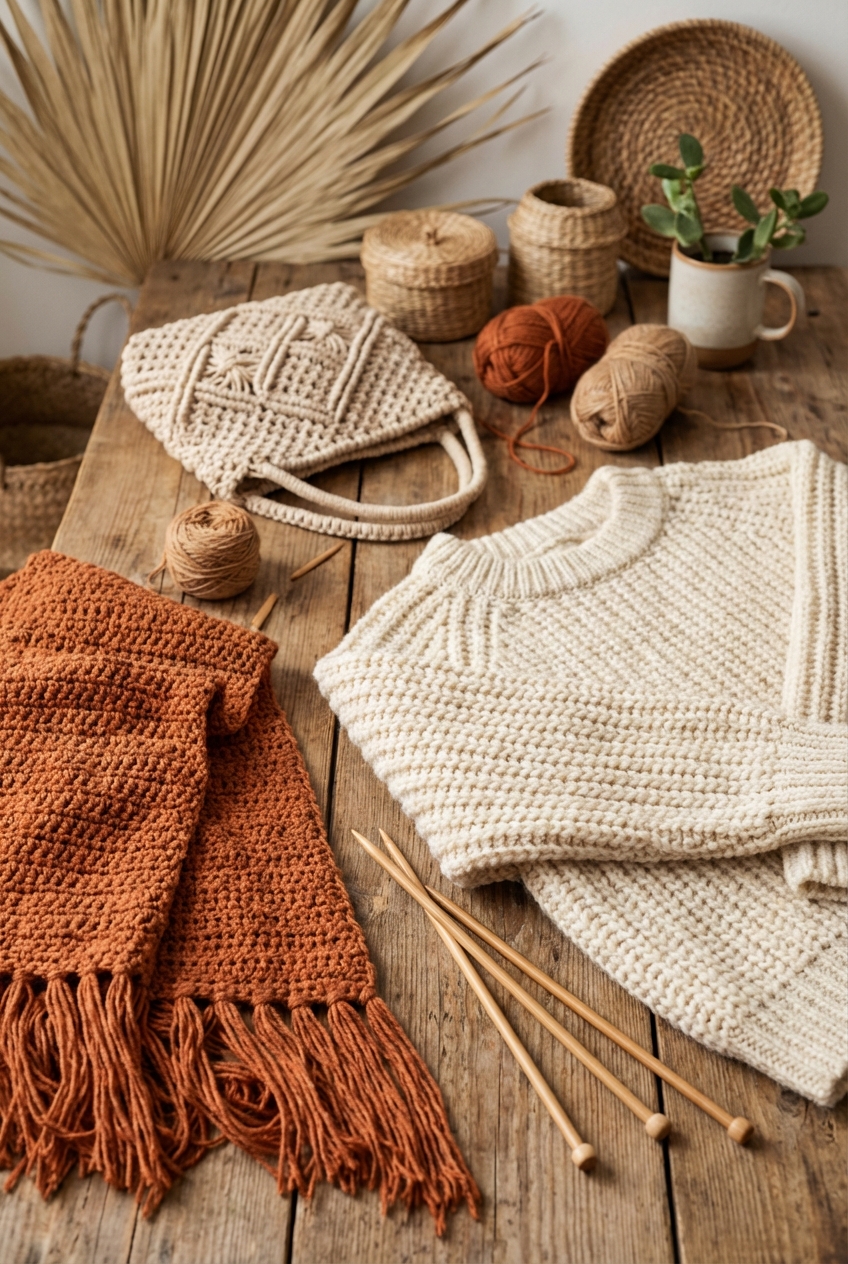
Crochet And Knitwear Handmade Textures For Boho Vibes
There is a distinct crossover between the way we dress ourselves and the way we dress our homes. In the fashion world, we understand that a monochromatic outfit relies entirely on texture to keep it from looking flat. We layer a chunky cable-knit sweater over a silk slip skirt to create tension and interest. That same principle applies perfectly to interior design, especially when aiming for that coveted, high-end bohemian aesthetic.
I remember walking into a client’s living room in Tribeca that was technically “perfect” but felt incredibly cold. It was full of sleek Italian leather and glass, but it lacked soul. The solution wasn’t buying new furniture; it was layering in the warmth of the human hand. We introduced oversized knit wool pillows, a hand-crocheted throw, and a woven wall hanging. Suddenly, the room exhaled. It became inviting rather than just impressive.
Incorporating crochet and knitwear into your home decor is about balancing nostalgia with modern sophistication. It moves the bohemian look away from cluttered festival aesthetics and toward a curated, artisan vibe that feels expensive and collected. If you are looking for visual inspiration, don’t miss the curated Picture Gallery at the end of this post.
The Art of Layering: Translating Wardrobe to Living Room
When styling a room with knits, think of your sofa as the base layer of an outfit. If you have a linen or velvet sofa, you have the perfect foundation for heavy textures. The goal is to create depth without creating clutter.
I follow a strict “Rule of Three” regarding textures in a seating area. You want a smooth base (leather or tight-weave fabric), a medium texture (like a boucle or raw silk), and a heavy texture (chunky knit or crochet). This hierarchy keeps the eye moving and prevents the space from looking messy.
For throws, size matters immensely. A standard 50″ x 60″ throw often looks skimpy on a modern, deep-seated sectional. I always source “blanket size” throws, closer to 60″ x 80″. This allows for a substantial drape that looks intentional, rather than like an afterthought.
Designer’s Note: The Weight Test
One lesson I learned early on is that gravity affects styling. A heavy wool knit throw will slide off a leather sofa instantly. If you have leather furniture, look for knits that have a backing or a rougher underside to create friction. Alternatively, use a large, textured pillow as an anchor to hold the throw in place.
Crochet in the Bedroom: Romanticism Without the Kitsch
Crochet can easily veer into “grandma’s house” territory if not handled with a modern eye. To keep it chic and fashion-forward, I almost exclusively stick to neutral or monochromatic palettes. Think ecru, oatmeal, sage, or varying shades of charcoal.
In the master bedroom, a crochet bed runner provides texture without the visual noise of a patterned duvet. Place the runner at the foot of the bed. For a King bed (80 inches wide), your runner should be at least 90 to 100 inches long to allow for a graceful overhang on either side.
When mixing crochet pillows, vary the scale of the stitches. I like to use two large Euro shams (26″ x 26″) in a tight, popcorn knit against the headboard. Then, I layer smaller lumbar pillows (12″ x 24″) in a looser, open-weave crochet in front. This mimics the look of fine lace but with a heavier, cozier hand feel.
Common Mistake + Fix
Mistake: Using multicolored “granny square” blankets in a room that already has patterned wallpaper or rugs.
Fix: Treat multicolored crochet as art. If you have a colorful vintage afghan, drape it over a solid white or neutral reading chair in a corner. Let it be the hero piece of that specific zone rather than fighting with the main bedding.
Statement Knits: Rugs, Poufs, and Floor Texture
Bringing knit textures down to the floor level grounds the room and softens acoustics. This is particularly vital in homes with hardwood or concrete floors. Braided wool rugs are a staple in high-end boho design because they offer extreme durability while looking soft.
For high-traffic areas, avoid delicate loop knits that can snag on heels or dog claws. Instead, opt for flat-woven wool or felted wool designs. These give the appearance of a sweater but can withstand the wear and tear of daily life.
Knit poufs are versatile, but they are often sized incorrectly for the furniture they accompany. A pouf used as a footrest needs to be within 2 inches of the seat height of your chair. If your chair seat is 18 inches high, a 12-inch pouf will be uncomfortable and look visually unbalanced.
What I’d do in a real project:
If I am designing a nursery or a low-traffic reading nook, I love using a super-chunky Merino wool rug. However, for a living room, I would layer a smaller, textured knit rug on top of a large, flat jute or sisal rug. This gives you the softness underfoot where you sit, but protects the investment piece from heavy foot traffic.
Window Treatments: The Macramé and Lace Revival
Window treatments are the jewelry of the room. In a boho-chic space, you want light filtration, not a blackout (unless it’s a bedroom). Macramé panels or open-knit crochet curtains create stunning shadow play when the sun hits them.
The key to making this look expensive is fullness. A common error is buying panels that are too narrow. Your curtain width should be 2 to 2.5 times the width of the window. If your window is 40 inches wide, you need 80 to 100 inches of fabric width to ensure the curtains still ripple and fold when closed, rather than hanging like a flat sheet.
Hang your curtains high and wide. The rod should be mounted 4 to 6 inches above the window frame (or all the way to the ceiling molding) and extend 8 to 12 inches past the frame on each side. This maximizes natural light and makes the ceilings feel taller.
Designer’s Note: The “Puddle” Effect
With knit or crochet curtains, I prefer a “break” or a slight “puddle” on the floor (about 1 to 2 inches of extra fabric). Knit fabrics can stretch over time due to their own weight. Hemming them to hover perfectly 1/2 inch off the floor is risky because they might sag and drag later. Planning for a deliberate puddle accounts for this relaxation of the fiber.
Outdoor Oasis: Weatherproof Wovens for Patios
The boundary between indoor and outdoor living is disappearing. To bring the boho vibe to a patio or lanai, we need textures that can survive the elements. Natural wool and cotton will rot or mildew if left exposed to rain and humidity.
I source “performance knits” for outdoor spaces. These are usually made from solution-dyed acrylics or recycled PET (polyester from plastic bottles) spun to look like wool. They are UV stable, meaning they won’t fade in the harsh sun, and they resist mold growth.
Hammocks are the ultimate boho accessory. When installing a hammock, ensure you have the proper spacing. For a standard spreader-bar hammock, you typically need 13 to 15 feet of distance between anchor points. If your trees or posts are further apart, use heavy-duty chains to bridge the gap, but never try to stretch a hammock flat; it needs a natural curve (banana shape) for stability.
Common Mistake + Fix
Mistake: Leaving natural fiber macramé plant hangers outdoors year-round.
Fix: Cotton macramé becomes brittle in the sun and gray with mildew. Swap these for synthetic rope or jute hangers specifically treated for outdoor use. Alternatively, bring your natural fiber hangers inside during the rainy season.
Care and Maintenance: Keeping Handmades High-End
The fastest way to lower the value of a room is with pilling, snagged, or dirty textiles. Handmade items require specific care protocols to maintain their structure and beauty.
Never hang a heavy knit throw or blanket on a clothesline to dry. The weight of the water will stretch the fiber, distorting the rectangular shape into an unrecognizable blob. Always dry knits flat. I recommend laying them on a clean towel over a drying rack to ensure air circulation from underneath.
For snags—which are inevitable with jewelry and zippers—never cut the thread. Cutting a snag creates a hole that will unravel. Instead, use a “snag repair tool” (a tiny needle with a textured end) or a crochet hook to pull the loose thread through to the back side of the fabric.
Designer’s Note: The Shaver Trick
Just like your favorite cashmere sweater, wool pillows and rugs will pill. Invest in a high-quality fabric shaver. I do a “maintenance sweep” on my knit decor once a season. It takes ten minutes and makes pillows look brand new.
Finish & Styling Checklist
Ready to style your space? Here is the mental checklist I use before declaring a room “finished.”
- Check the Scale: Is the knit texture visible from the doorway? If the weave is too small, it reads as a solid color from a distance. Go chunkier for impact.
- The Odd Number Rule: Group knit pillows in sets of three or five, mixing shapes (square, round, lumbar).
- Color Coordination: Does the yarn color clash with the undertones of the sofa? (e.g., A yellow-cream knit looks dirty against a cool-white sofa. Match the undertones).
- Safety Check: Are rug corners secured? Knit rugs can be slippery. Use a high-quality rug pad for safety and to extend the life of the fibers.
- Lighting: Aim a floor lamp or sconce to graze the surface of a wall hanging or textured pillow. Shadows emphasize the handmade nature of the work.
FAQs
Can I mix knitting and crochet in the same room?
Absolutely. In fact, I encourage it. The difference between the loops of knitting and the knots of crochet adds sophisticated variety. The key is to keep them in the same color family or tonal palette to prevent the look from becoming chaotic.
How do I kid-proof or pet-proof knit decor?
This is a tough reality. Cats love to knead on chunky knits, and kids can easily snag loops. For households with pets, I recommend tight-weave velvets for the main furniture and saving the knits for throws that can be stored in a basket when not in use. Avoid loop-style rugs entirely; go for cut-pile or flat-weave instead.
Is handmade always expensive?
Labor is the biggest cost in handmade goods. While artisan pieces are an investment, you can find budget-friendly options that mimic the look. However, check the material content. Acrylic yarns are cheaper but can feel “squeaky” and trap heat. Cotton and wool blends offer the best balance of price and luxury feel.
Conclusion
Integrating crochet and knitwear into your home is the interior design equivalent of putting on your most confident, comfortable outfit. It tells a story of craftsmanship, comfort, and relaxed luxury. By respecting the rules of scale, layering with intention, and choosing materials that suit your lifestyle, you can achieve those boho vibes without sacrificing elegance.
Remember that a home, like a wardrobe, is meant to be lived in. These textures invite you to touch, settle in, and relax. Don’t be afraid to mix the high-end with the handmade; that tension is where true style lives.
Picture Gallery


