Quilted Jackets: How to Choose and Style Them
- Words by
- Julio Arco
- Published
- Reading
- 4 min
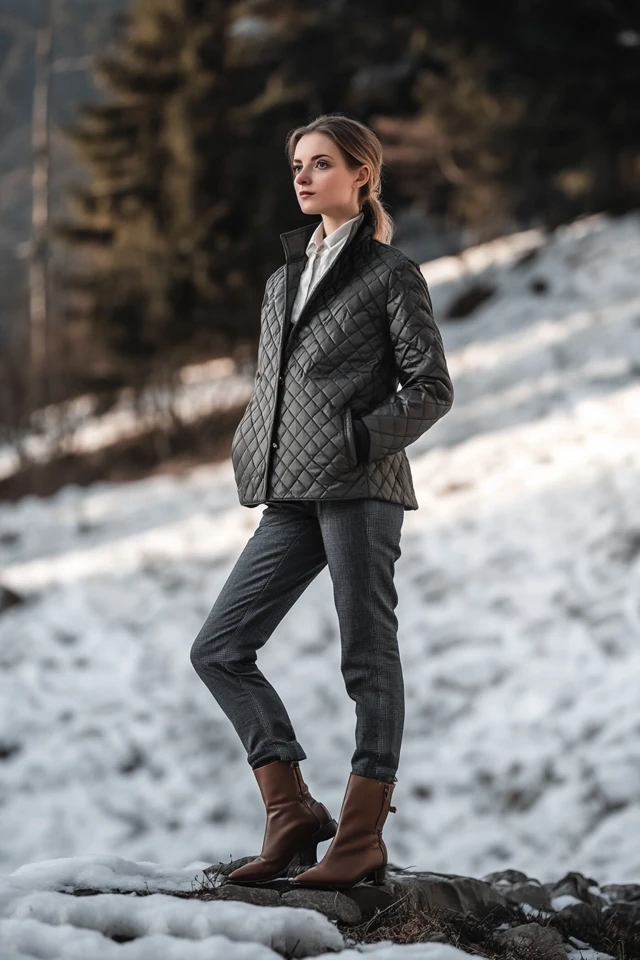
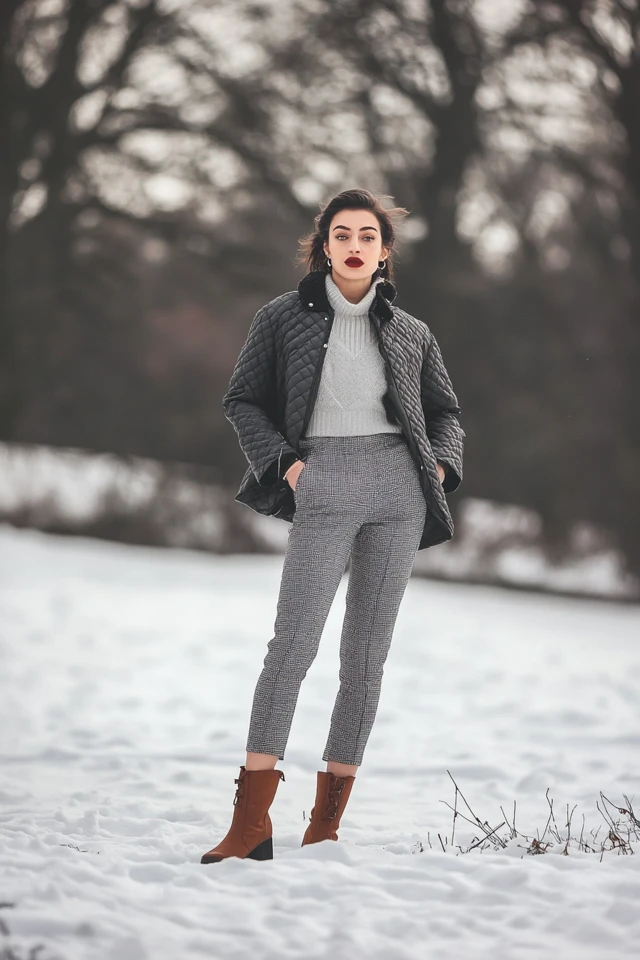
Quilted jackets are padded jackets whose outer fabric is stitched to a lining with insulation between, usually in a diamond or channel pattern. The stitching holds the filling in place, so you get warmth without a shapeless puff. Pick a lightweight one for spring and fall, a heavier one for winter, and keep the rest of the outfit smooth.
If a quilted jacket looks bulky on you, that is usually a cut or layering issue, not a body issue. The sections below cover the styles, the fit checks and a few outfit formulas.
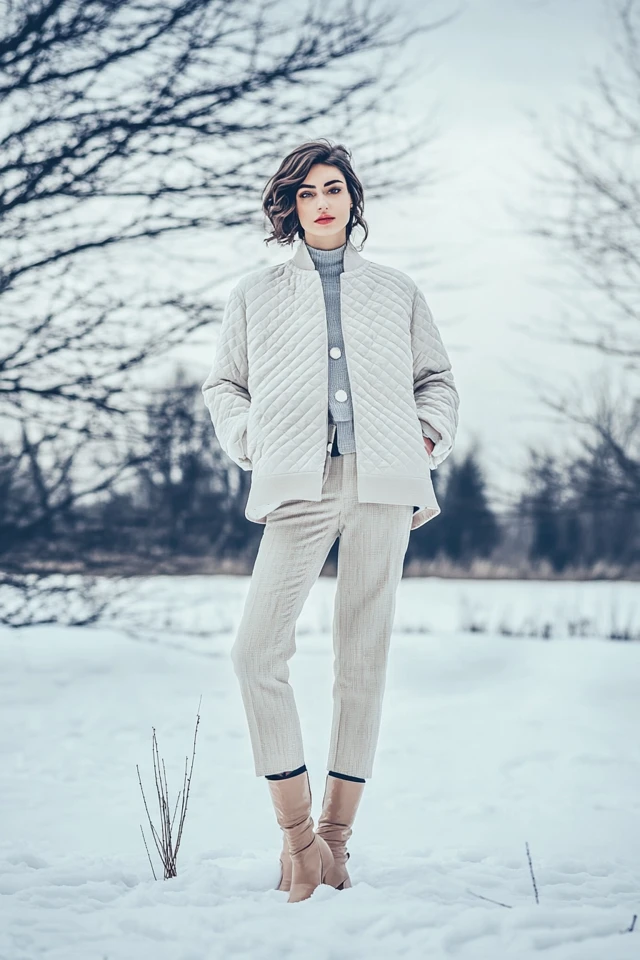
What is a quilted jacket?
A quilted jacket has three layers: an outer shell, a filling (down, synthetic wadding or similar) and a lining. Lines of stitching run through all three. Those stitched compartments stop the filling from shifting and bunching, and they give the jacket its ridged surface.
The pattern changes the look. Wide diamonds read classic and a little country. Narrow horizontal channels read sportier and closer to a puffer. Fewer, larger panels look cleaner and more modern.
Are quilted jackets still in fashion?
Yes, in the sense that they never fully leave. The diamond-quilted barn-style jacket, the cropped bomber and the long quilted coat all keep returning in new proportions. I would not tie one to a trend cycle. Choose the shape you will wear on repeat and a color that works with what you already own.
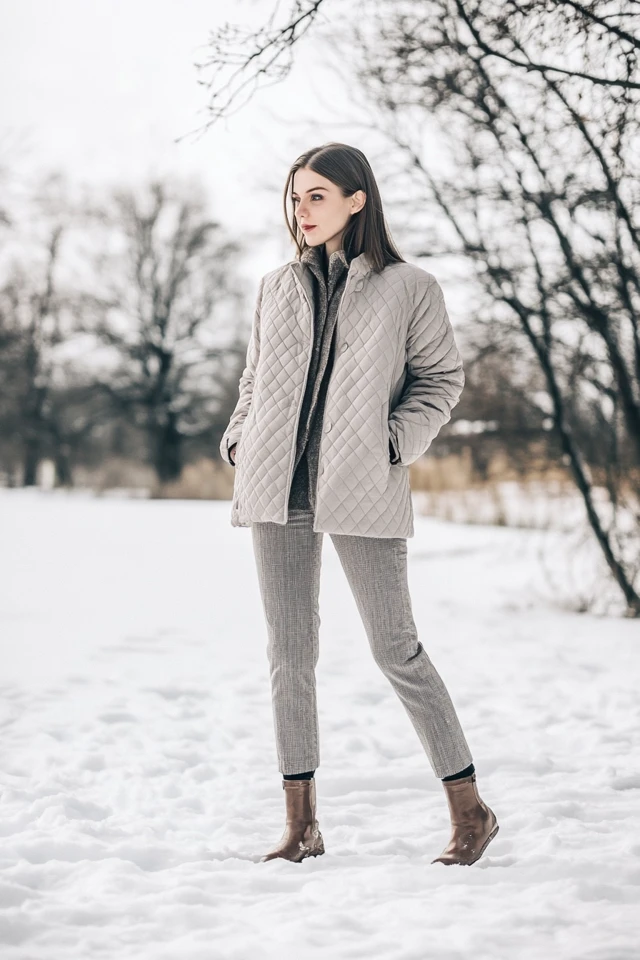
Which style should you choose?
Lightweight quilted jacket for women
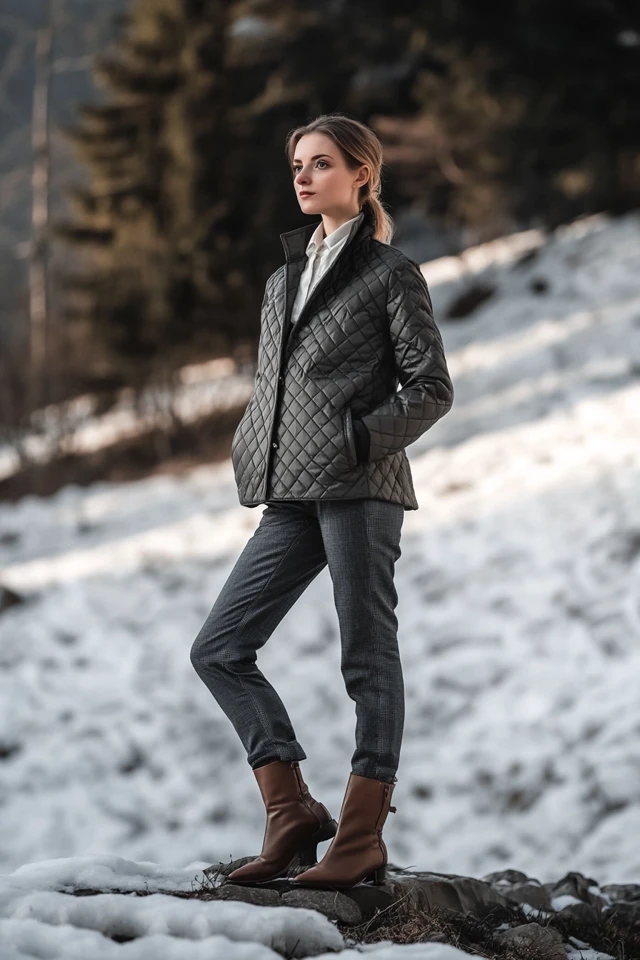
A thin fill and a smooth shell make a good layer over a sweater or under a coat. Look for a body that skims the hip rather than clinging. Because the padding is slim, a lightweight jacket suits petite frames and anyone who dislikes bulk at the shoulders.
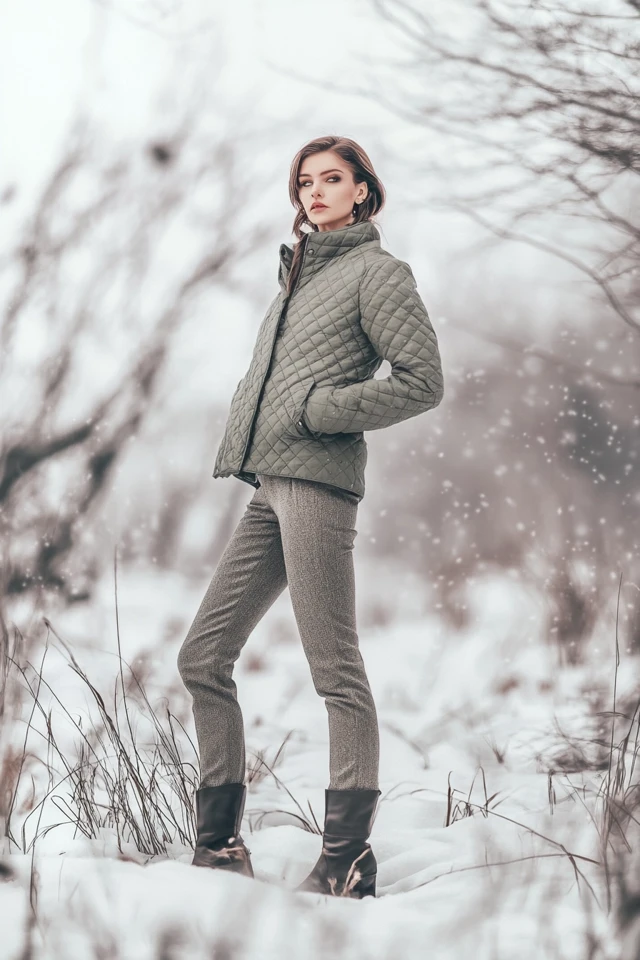
Quilted jackets with a hood
A hood adds weather cover and changes the neckline, so check it. A hood that sits flat when down looks tidy over a collared shirt. A big, stiff hood pushes the head forward and makes the shoulders look heavier. A detachable one gives you both options.
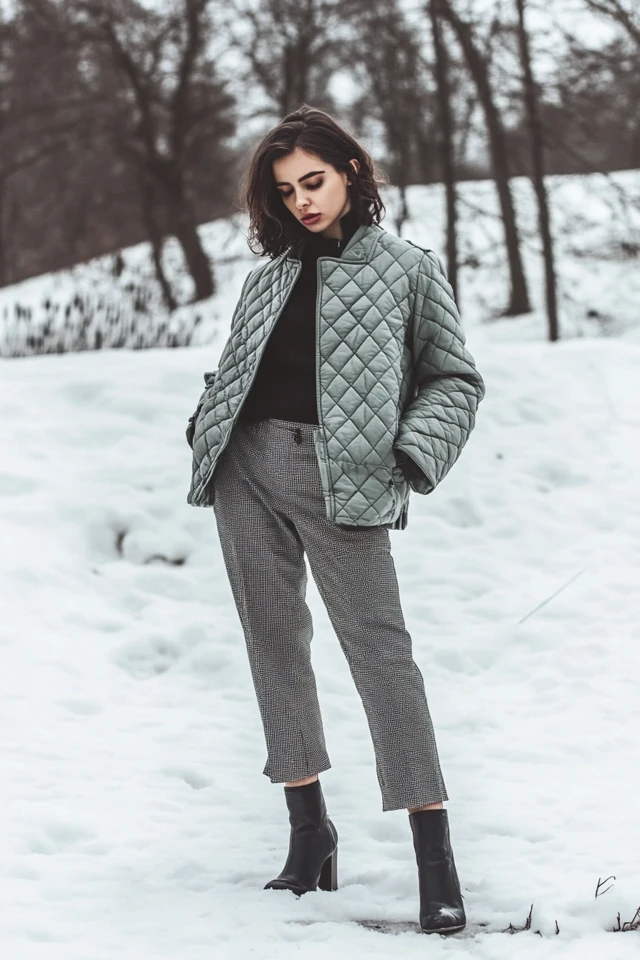
Patchwork quilted jacket
Patchwork jackets are built from fabric pieces in different prints or tones, often with a handmade look. They carry plenty of pattern by themselves, so treat the jacket as the statement and keep the rest in solid, quiet colors. Denim, plain tees and dark trousers all let it speak.
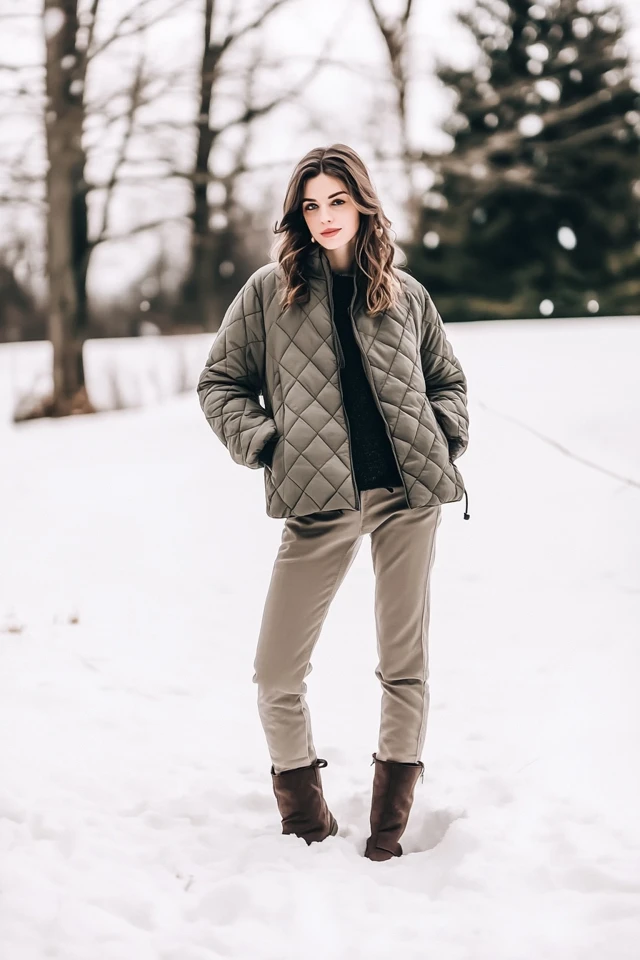
Quilted jackets for men
The same silhouettes work: barn jacket, bomber, vest and longer field coat. Olive, navy, tan and black are easy to pair with jeans and chinos. A slimmer quilt panel looks sharper over a knit than a large, puffy one.
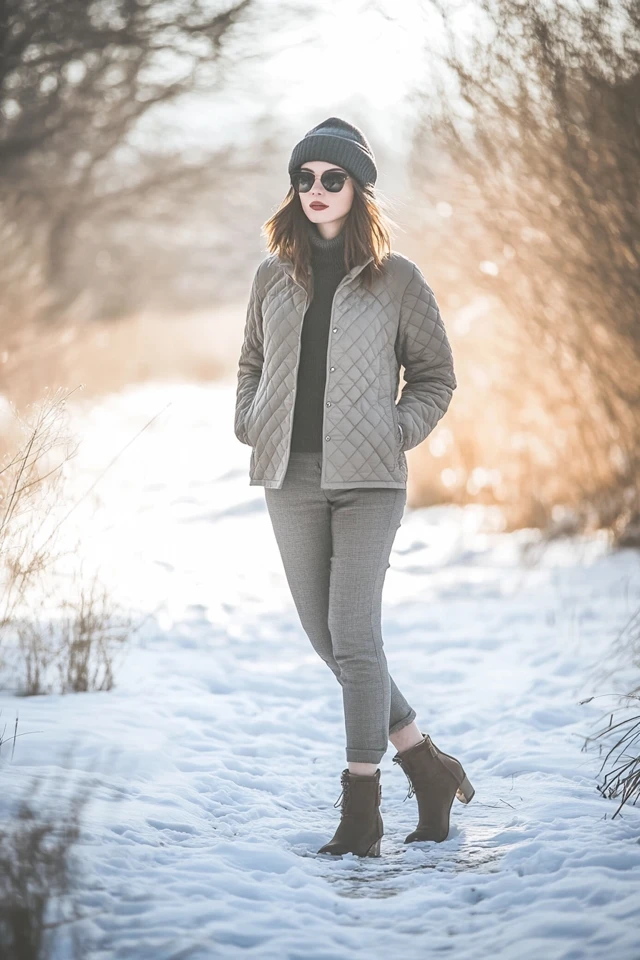
How should a quilted jacket fit?
- Shoulder seams sit at the edge of your shoulder, not down the arm.
- You can fit a medium-weight sweater underneath without the sleeves pulling up your forearm.
- The hem lands at the hip or mid-thigh. Cropped styles pair best with high-waisted bottoms.
- The jacket closes comfortably without the quilting lines stretching open.
Through the lens of evidence-based design, I'd treat the proportion as the first thing the eye reads. Quilting adds visual volume, so a clean, fitted layer underneath keeps the whole outline balanced.
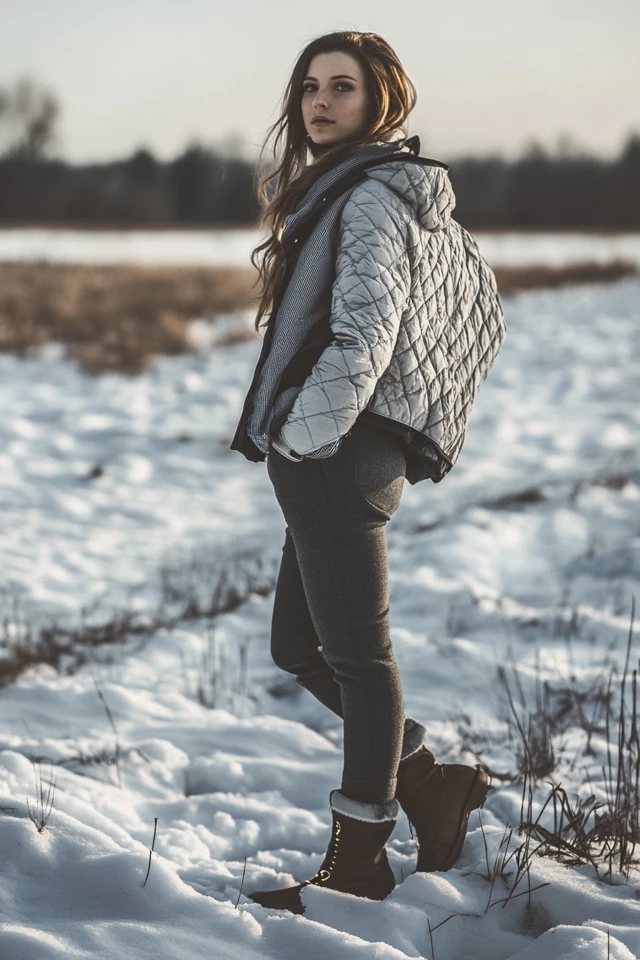
How to style a quilted jacket
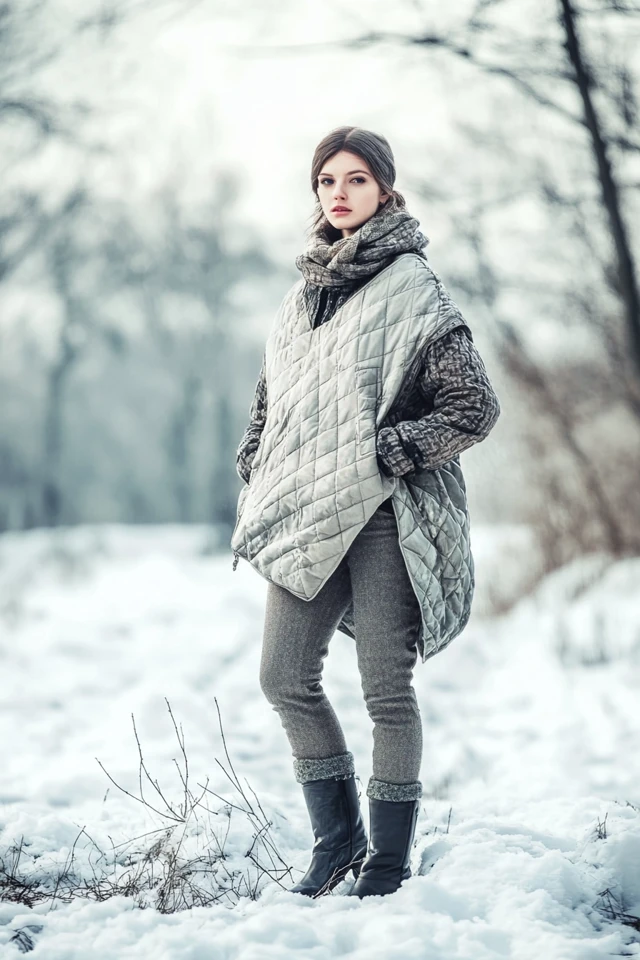
Quilting is a strong texture, so balance it with smooth ones. Silk, fine knits, denim and wool all sit well next to it. A matte quilted shell and a glossy one in the same color do not look identical, because the surface changes how light reaches the eye. I'd pick matte if you want the jacket to look calmer and easier to dress up.
- Casual: quilted bomber, striped tee, straight jeans, white sneakers.
- Smart: long quilted coat over a fitted dress or tailored trousers, with ankle boots or loafers.
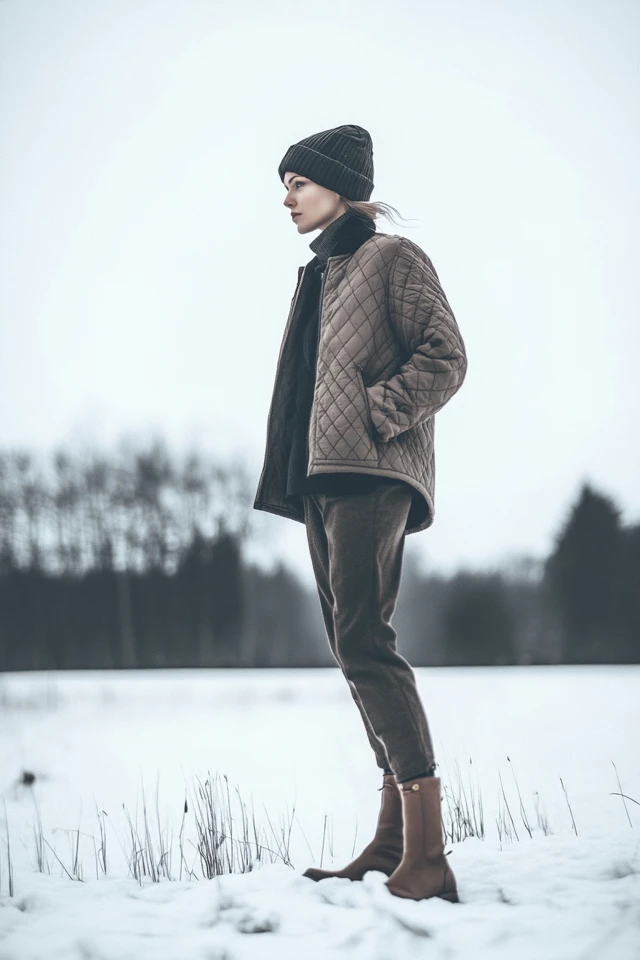
- Weekend: barn jacket over a chunky knit, with boots.
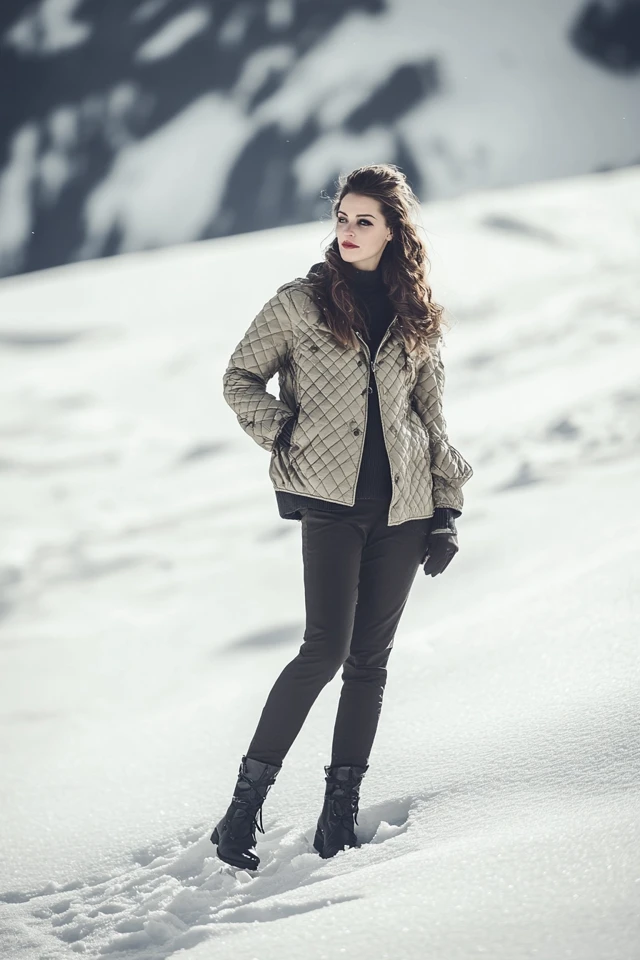
If you like the texture but want a different piece, quilted skirts for winter street style use the same idea lower down, and wool and leather outerwear is a sleeker option for a polished coat.
What to wear under it in the cold
The jacket insulates, but what touches your skin matters too. For outdoor exercise, Texas A&M's Howdy Health advises that the layer closest to your skin should be made of moisture-wicking materials that draw sweat away. The same page says to avoid cotton, because it absorbs moisture and can keep it next to your skin, making you cold. For a walk to work, cotton is fine. For a hike or run, choose a wicking base layer.
For everyday warmth, a breathable base is easy to find. Our note on cotton and breathable fabrics covers when it works, and spring layering with light fabrics helps with mixed-weather days.
Care basics
Follow the care label first, because fillings differ. Wash on a gentle cycle with mild detergent, avoid overloading the machine, and dry on low heat or air dry. Skip direct ironing over the quilted areas, since it flattens the stitching and padding.
Frequently asked questions
Are quilted jackets still in fashion?
Yes. Barn jackets, bombers and long quilted coats keep coming back with slightly different proportions. A classic cut in a neutral color stays wearable longer than an extreme shape.
What does the term "quilted jacket" mean?
It means a jacket where the outer fabric is stitched to a lining with padding between, usually in a repeating pattern. The stitching keeps the filling evenly spread.
Which quilted jacket is the best?
It depends on the use. Choose a thin-fill, hip-length jacket for mild weather, a heavier long coat for winter, and a hooded style if you need weather cover.
How can I wear a quilted jacket without looking bulky?
Pick a slimmer quilt panel and a hem at the hip, and wear fitted layers underneath. Pair it with slim or straight bottoms to balance the volume on top.
Filed under Fabrics & Textures