Dance Competition Dresses with Feathers: How to Choose
- Words by
- Julio Arco
- Published
- Reading
- 4 min
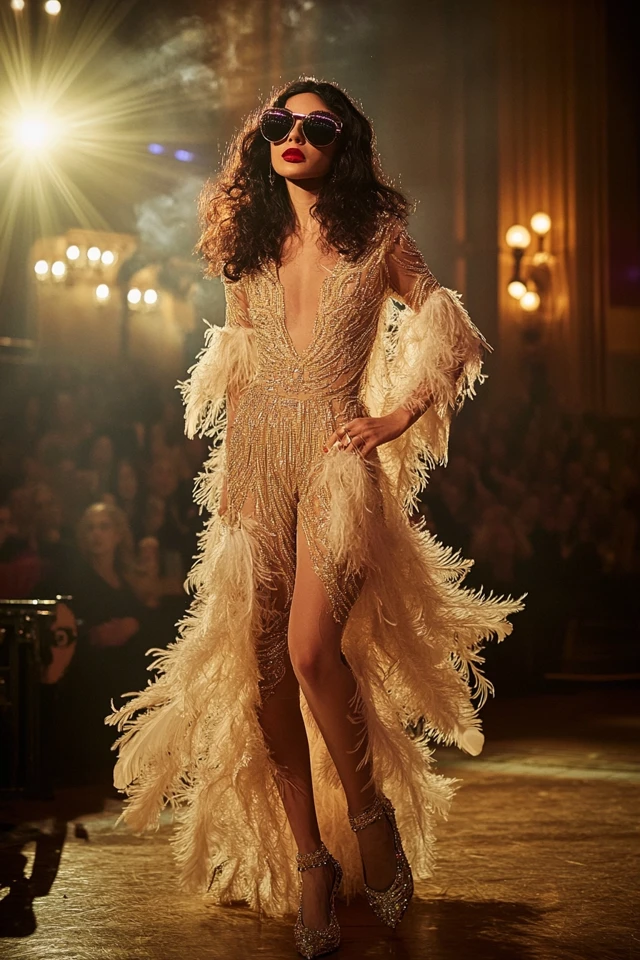
The best feathered dance dress has a light base fabric, feathers that are firmly attached, and placement that follows your choreography. Feathers at the hem or sleeve exaggerate the movement you already make, so put them where you want the eye to follow.
Below: where to place feathers for your body and routine, which colors read well under stage light, and how to test and care for the dress before competition day.
Why do feathers work so well on a dance dress?
Feathers respond to motion. A turn makes a hem float, a hip action makes a fringe ripple, and a held pose lets the edges settle. Few trims do that without extra effort from the dancer.
They also add texture. A soft, matte feather next to a smooth satin or sequined bodice gives the eye two surfaces to read, which helps a costume look full from the back of a hall.
Where should feathers go for your body and routine?
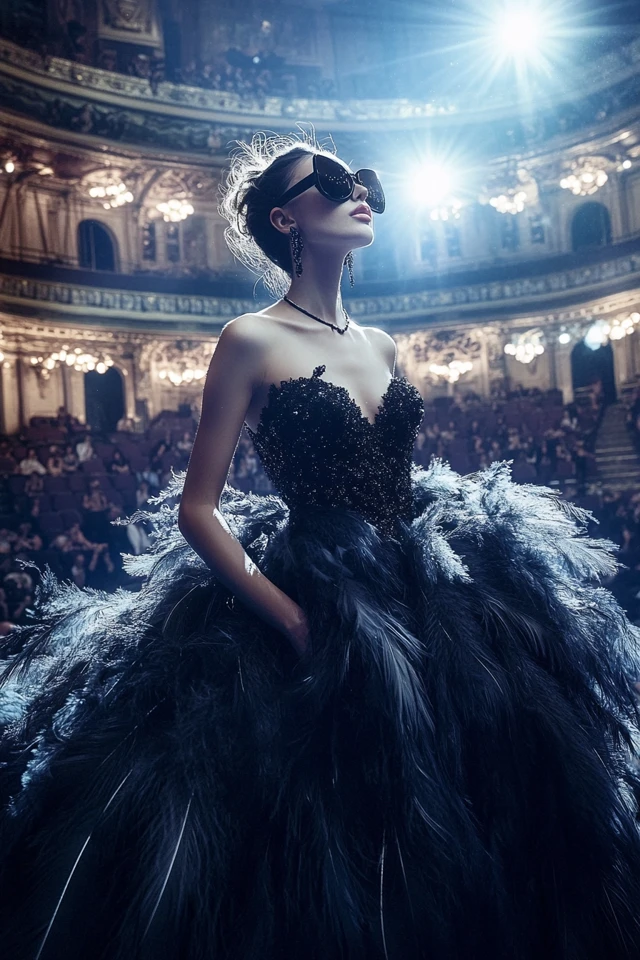
Placement changes proportion. Feathers add visual weight wherever they sit, so decide first where you want attention.
Petite frames
Keep feathers to the hem or neckline and avoid very full skirts that can swallow your legs. A fitted shape with a small feather flick at the hem keeps the line long.
Curvy figures
Feathers at the shoulder or along the waist draw the eye to those lines. A mermaid or A-line skirt with a feathered hem adds movement below the hip without bulk at the middle.
Athletic frames
Feathers at the hip, bust or hem add softness and curve. Asymmetrical or cascading feathers also suit sharper, more dynamic choreography.
Taller frames
You can carry a long train, feathered shoulders or layered tiers. Floor-length skirts with a dramatic hem look balanced at your height.
Which colors work best under stage lights?
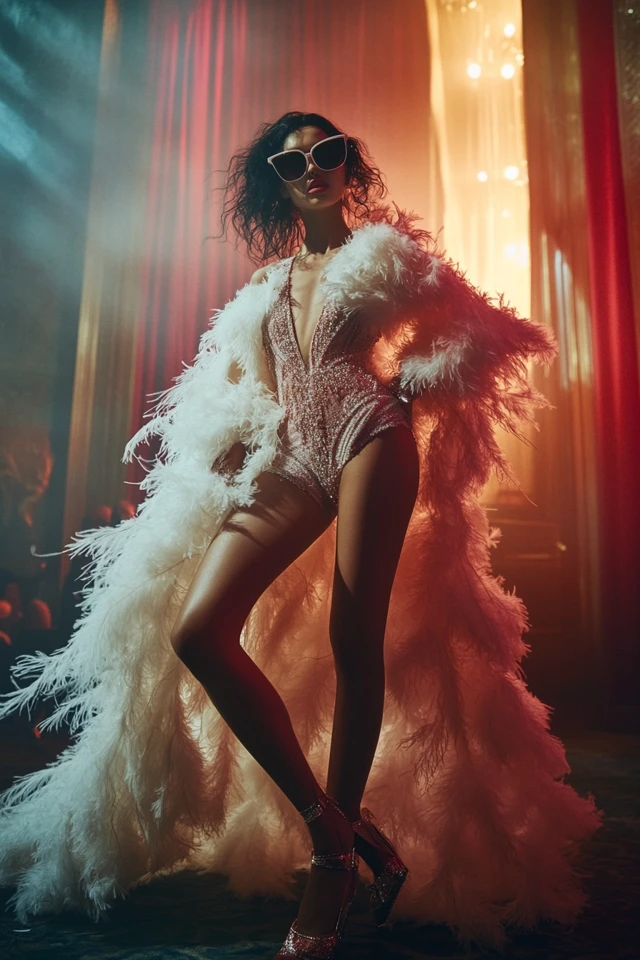
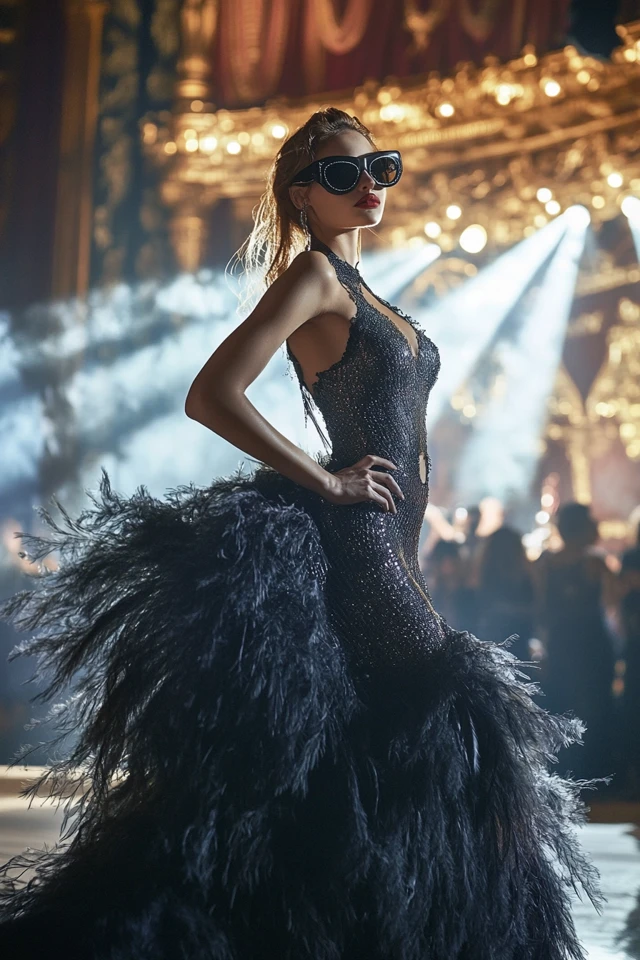
Light changes color, so choose a shade with enough depth to hold up. Jewel tones such as emerald and sapphire tend to look saturated under spotlights. Through the lens of evidence-based design, I'd pick them first because deep, even color reads clearly from a distance, while pale shades can wash out.
- Red and scarlet read as bold and are a classic choice for Latin routines.
- Black looks sleek and works well with contemporary or dramatic numbers.
- White and ivory feel light, which suits waltz and lyrical pieces.
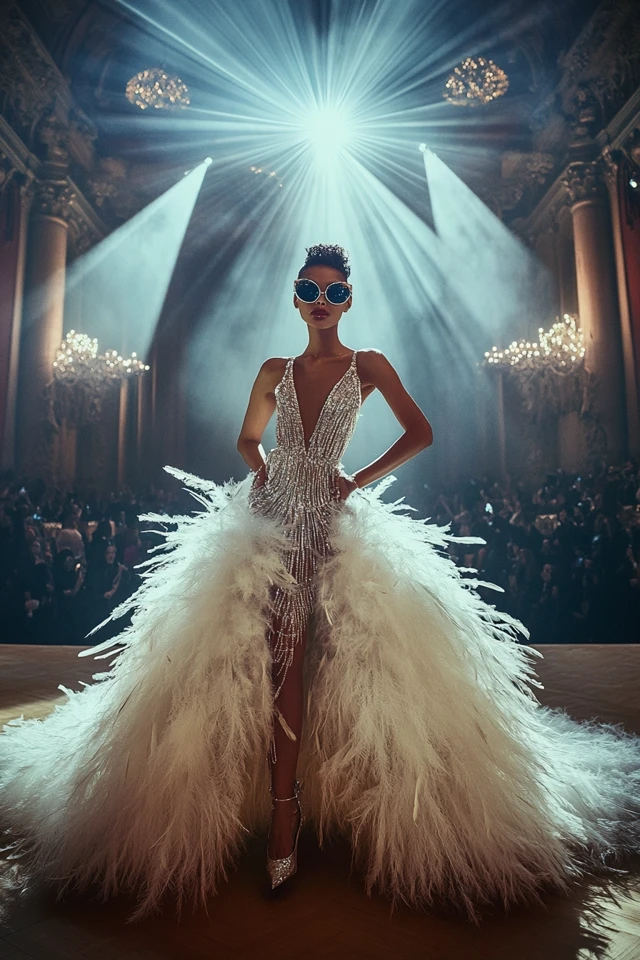
- Gold and silver catch light and shimmer when you move.
- Soft pastels suit playful or romantic routines, but check them under bright light first.
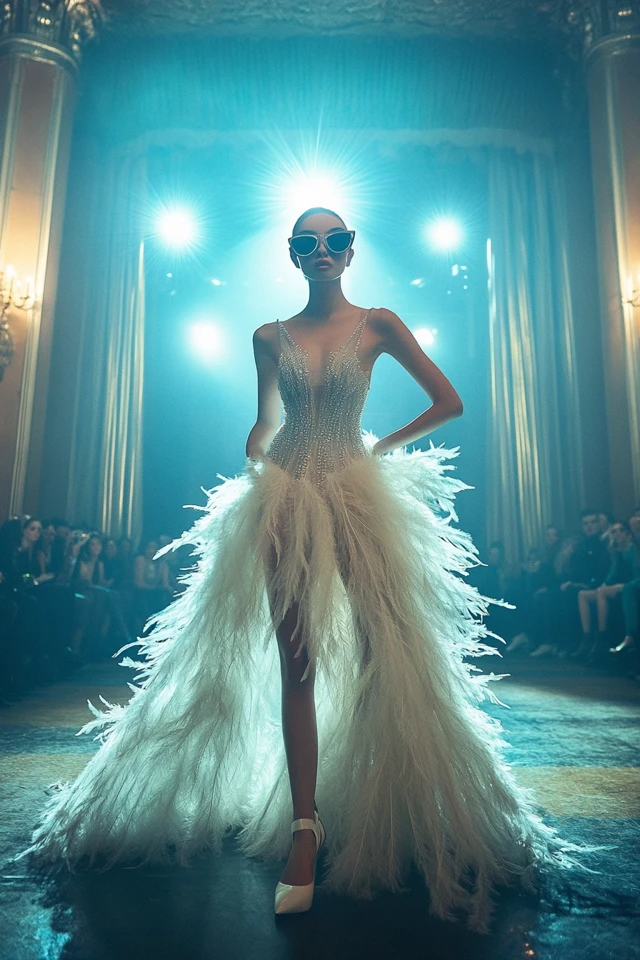
For more on pairing feathers with other fabrics, see satin and feathered details for luxe dresses and velvet and feather accents.
What styles are popular right now?
Several feather treatments come up again and again.
- Ombre feathers that shift gradually from one shade to another.
- One-sided or asymmetrical feather trim.
- Feathers over sheer illusion panels for a lighter look.
- Color-blocked feathers in contrasting shades.
- Detachable feather capes or trains, useful if you want one dress for two routines.
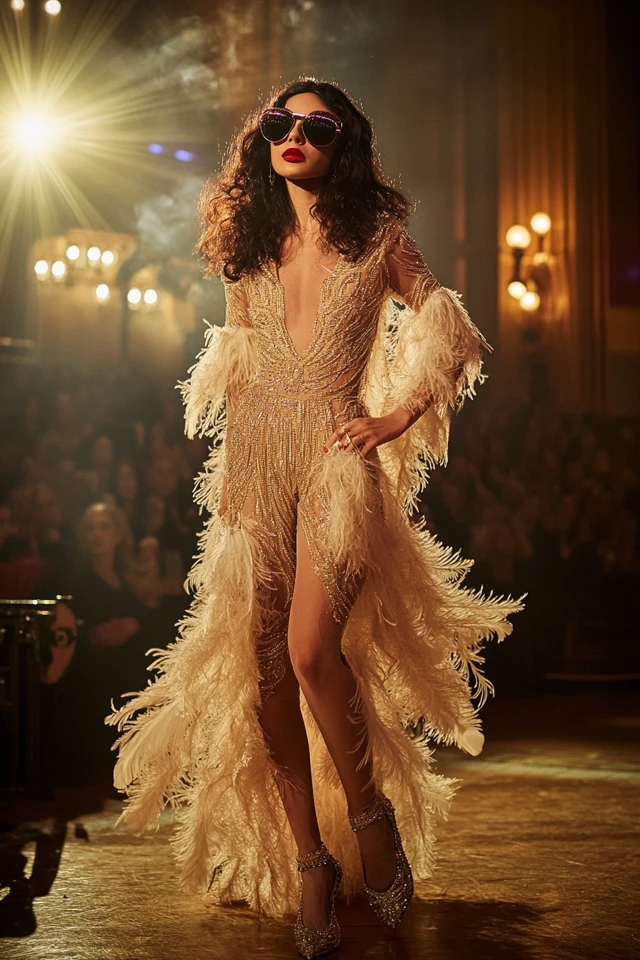
Classic options stay reliable: a feathered hem, a soft feathered collar, an all-over feather gown, or feathers mixed with beads and sequins. A solid red, black or white feather dress rarely looks dated.
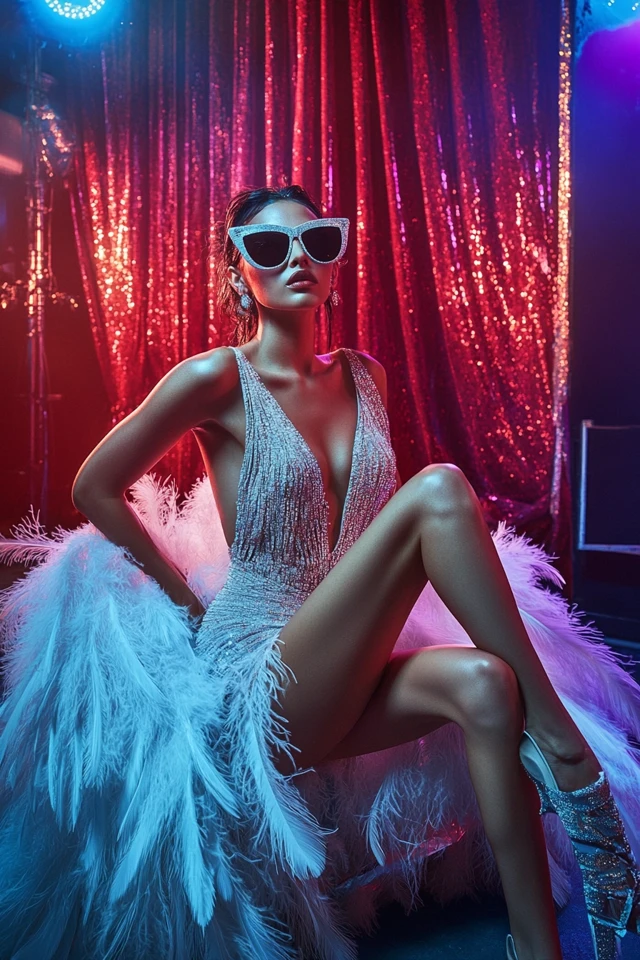
If your routine is ballroom, glamorous ballroom gowns for dance nights shows more silhouettes to compare.
How do you make a feathered dress comfortable to dance in?
Start with the base. Chiffon, tulle and mesh are light and let you move freely, so the dress does not drag at the end of a long routine.
- Rehearse in the dress. Check that feathers do not catch on your arms, partner or heels, and that the neckline stays put during lifts and turns.
- Tug gently on the feathers and look at the attachment points. Anything loose will shed on the floor mid-routine, so have it re-sewn beforehand.
- Keep jewelry small. Delicate earrings or one slim bracelet leave the feathers as the focus.
- Match shoes to the dress tone, but choose them for support first.
- Hang or fold the dress in a garment bag with tissue between layers, and handle feathers gently to avoid fraying.
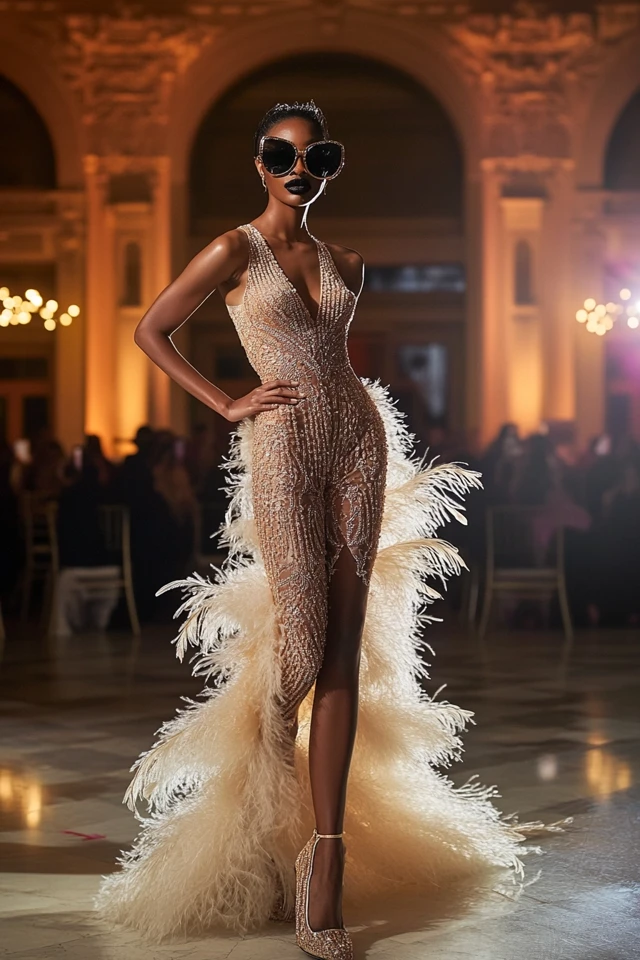
As an architect trained in evidence-based design, I'd also treat the hemline as the first thing the eye follows on stage. A feathered hem adds movement without covering the shape of the bodice.
For hair, a sleek bun or ponytail keeps the head from competing with the trim. If you want more inspiration for winter or evening events, feather accents in dresses for winter glam has more looks.
Frequently asked questions
Are feathered dresses suitable for all dance styles?
They suit ballroom, Latin and many contemporary routines. Choose placement that matches the choreography, since heavy trim can interfere with partnered lifts or floor work.
How do I stop feathers from shedding during a performance?
Make sure each feather is sewn or glued firmly and avoid very delicate trim. Dance in the dress during rehearsal so loose spots show up before competition.
Are feathered dance dresses heavy to wear?
Many are light, especially when the base is chiffon, tulle or mesh. Weight depends on how many feathers there are and how they are attached, so try the dress on and move in it.
How should I style hair and makeup with a feathered dress?
A sleek bun or ponytail keeps the focus on the dress. Bold eyes or lips hold up under stage lighting without competing with the feathers.
Filed under Outfit Ideas