
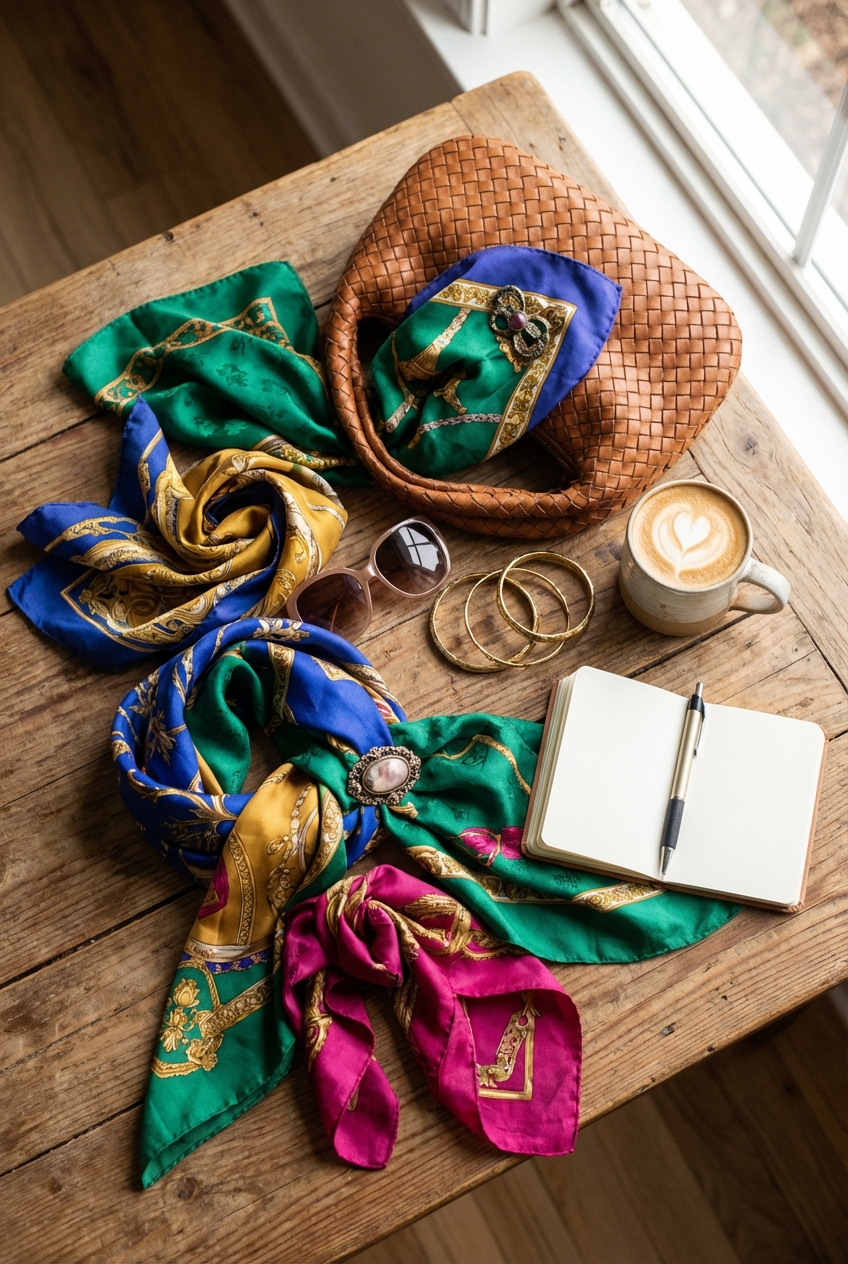
How To Style Silk Scarves Like A Fashion Pro
Introduction
There is perhaps no accessory more transformative in a woman’s wardrobe than a high-quality silk scarf. It is the ultimate equalizer in fashion. You could be wearing a simple white cotton t-shirt and vintage denim, but the moment you add a rolled silk carré to your neck, the outfit shifts from “running errands” to “Parisian chic.” I remember my first investment scarf—a vintage geometric print I found in a consignment shop in Milan. I was terrified to wear it because I didn’t know how to fold it without looking like a flight attendant from the 1980s.
Over the years, styling hundreds of clients, I have learned that the hesitation around silk scarves usually comes down to a fear of the knot. We worry it will slip, look too stiff, or feel too formal for modern life. The reality is that silk is meant to be lived in. It should drape fluidly and move with you. The secret isn’t in complex origami; it is in understanding the bias of the fabric and trusting your own flair.
Whether you are working with a classic 90cm square, a diamond shape, or a slender “twilly,” the principles of balance and tension remain the same. In this guide, I am going to walk you through the techniques I use on photo shoots and private styling sessions to make silk look effortless. If you are looking for visual inspiration on specific knots, be sure to check out the Picture Gallery at the end of the blog post.
1. The Foundation: Choosing the Right Scarf
Before you even attempt a knot, you have to understand the canvas you are working with. Not all scarves are created equal, and size dictates function. In the world of high-end fashion, we categorize scarves primarily by dimension.
The “Gold Standard” is the 90cm x 90cm (approximately 35 inches) square. This is the classic size made famous by heritage French fashion houses. It is large enough to be worn as a top, a substantial neck wrap, or a headscarf. If you are starting your collection, start here. It offers the most versatility.
The “Gavroche” or Pocket Square size is usually 45cm x 45cm (17 inches). These are fantastic for short necks, petite frames, or tying around a wrist or messy bun. They do not have enough fabric for elaborate draping, but they add a perfect pop of color without overwhelming a silhouette.
Finally, there is the “Twilly” or Ribbon Scarf. These are long, narrow strips of double-sided silk. I use these constantly for handle wraps on luxury handbags or as a substitute for a bracelet. They require zero folding, making them the easiest entry point for beginners.
2. The Golden Rule: The Bias Fold
If you take only one thing away from this guide, let it be the Bias Fold. This is the “prep work” that separates amateurs from pros. Most people try to fold a scarf square-on-square, like folding a towel. This creates a stiff, bulky rectangle that refuses to curve around the neck.
To make silk fluid, you must fold it on the bias (diagonally). This utilizes the natural stretch of the weave.
Step-by-Step Bias Fold:
- Lay the scarf flat, face down.
- Bring the top left corner and bottom right corner toward the center, but don’t let them touch. Leave an inch of space in the middle.
- Fold those new outer edges inward again toward the center.
- Fold the entire strip in half lengthwise so the two sides meet.
You now have a long, slender, flexible strip of silk that curves naturally. This strip is the starting point for almost every neck knot and headband style I will mention below.
3. Neck Styling Mastery
The neck is the most traditional placement, but it requires finesse to avoid looking dated. The goal is “studiously unstudied.” We want the knot to look secure but not strangled.
The Classic Side Knot
This is my go-to for daily wear. It works with button-downs, sweaters, and trench coats.
- Start with your Bias Fold.
- Wrap the scarf around your neck so the ends hang forward. Make one end slightly longer than the other.
- Cross the long end over the short end and loop it underneath and through (a standard overhand knot).
- The Pro Move: Do not pull it tight against the throat. Rotate the scarf 45 degrees so the knot sits asymmetrically on your collarbone. This elongates the neck rather than cutting it off.
The Cowboy Drape (The Triangle)
This style showcases the print of the scarf best. It is ideal for V-neck sweaters or underneath a blazer to fill the empty space.
- Fold the square scarf in half diagonally to create a large triangle.
- Place the triangle in front of your chest, bringing the two skinny points around the back of your neck.
- Cross the ends behind your neck and bring them forward.
- Tie a small double knot casually under the triangle in the front, or tuck the ends under the triangle for a seamless look.
Designer’s Note:
A common issue with the Cowboy Drape is that it can look like a bib if the scarf is too small. Only use this style with a 90cm (35-inch) scarf or larger. If you have a larger bust, ensure the point of the triangle ends above the bust line to keep your proportions balanced.
4. Head & Hair Techniques
Silk in the hair screams “vacation in Capri,” even if you are just driving to the grocery store. It is also a fantastic practical solution for bad hair days or protecting your blowout from humidity.
The Grace Kelly (Hood Style)
This is vintage glamour at its peak. It protects hair from wind and sun.
- Fold your scarf into a large triangle.
- Drape the scarf over your head with the long straight edge across your forehead (just above the hairline/bangs).
- Take the two loose ends, cross them under your chin, and bring them to the back of your neck.
- Tie a secure square knot over the hanging point of the triangle at the nape of your neck.
The Silk Headband
Silk is slippery. This is the main complaint I hear about using it as a headband. The fix lies in your hair texture, not the scarf.
- Start with a Bias Fold.
- Place the center of the folded scarf at the nape of your neck, under your hair.
- Bring the ends up to the top of your head.
- Cross the ends and twist them once (interlocking them) before bringing them back down to the nape of the neck.
- Tie securely at the back.
What I’d do in a real project:
To prevent slipping, I use two bobby pins behind the ears. I cross the bobby pin over the silk fabric and pin it securely into the hair. Alternatively, I spray dry shampoo on the hair section where the scarf will sit to add “grip” before tying the scarf.
5. Bag Charms & Handle Wraps
Styling your handbag with silk serves a dual purpose: it adds a unique flair to a mass-market bag, and it protects the leather handles from the oils and lotions on your hands. This is crucial for maintaining the resale value of high-end bags.
The Full Handle Wrap
This requires a Twilly or a long rectangular scarf.
- Tie a small knot at the very base of one handle.
- Wrap the silk tightly around the handle, overlapping the fabric slightly with each turn to ensure no leather shows.
- Keep the tension high. If it’s loose, it will unravel.
- When you reach the other side, tie a finishing knot at the base.
The Rosette Knot
This is purely decorative and looks stunning on clutch bags or structured totes.
- Wrap the scarf around the handle base once.
- Twist the fabric until it becomes a tight rope.
- Coil the rope around itself like a cinnamon roll.
- Tuck the loose tail through the center of the coil to secure it.
6. The Scarf Top & Belting
For summer months or resort wear, a large silk scarf can replace clothing entirely. This requires a 90cm scarf at minimum, but a 140cm scarf offers more coverage and security.
The Halter Top
- Fold the scarf into a triangle.
- Hold the two widest corners and wrap them around your torso, tying them in a double knot at the middle of your back.
- You should now have the point of the triangle hanging loose in front of you.
- Gather the top point of the triangle and tie it around your neck.
Common mistakes + fixes:
Mistake: The fabric gapes at the sides, exposing too much.
Fix: Wear a stick-on bra or nipple covers. For added security, you can take a gold chain necklace and loop the top of the scarf through it rather than tying the fabric directly around your neck. This adds a jewelry element and often sits more comfortably.
The Belt Loop Trick
If you want to wear a scarf as a belt, do not just tie it around your waist—it will slide around.
- Use the Bias Fold to create a long strip.
- Thread the scarf through the back three belt loops of your jeans or trousers.
- Let the ends hang loose at the sides, or tie them in a bow at the front slightly off-center.
- This adds a softening element to denim and breaks up a monochromatic outfit.
7. Color Theory & Outfit Coordination
Choosing the right scarf isn’t just about the print; it’s about color theory. Because a scarf is worn so close to the face, it has a “cosmetic effect.” It can either brighten your complexion or make you look tired.
Warm vs. Cool Undertones
If you have cool undertones (veins look blue, you look better in silver jewelry), opt for scarves with bases of icy blue, grey, black, white, or jewel tones like emerald and magenta.
If you have warm undertones (veins look green, you look better in gold jewelry), look for scarves with bases of cream, beige, camel, orange, tomato red, or olive green.
Pattern Mixing
Can you wear a patterned scarf with a patterned top? Absolutely, but scale is key.
- If your top has a small, tight print (like a micro-floral or fine stripe), choose a scarf with a large, bold geometric pattern.
- If your top has a large print, choose a scarf with a micro-print or a solid border.
- Ensure there is at least one shared color between the two items to tie the look together.
8. Maintenance & Care
Silk is a protein fiber. It is durable, but it is not invincible. Proper care is the difference between a scarf that lasts a season and one you pass down to your daughter.
Cleaning
I almost always recommend dry cleaning for high-end silk. However, if you must hand wash:
- Use cold water and a specific silk detergent (pH neutral).
- Never wring or twist the wet silk. This breaks the fibers and ruins the shape.
- Roll the wet scarf in a clean white towel to absorb excess moisture, then lay it flat to dry away from direct sunlight. Sun fades silk dyes rapidly.
Ironing
Wrinkled silk looks messy. Ironing is essential.
- Always iron on the “Silk” setting (low heat).
- Critical: Always iron on the reverse side of the print.
- Use a pressing cloth (a clean white cotton pillowcase works) between the iron and the scarf to prevent “glazing”—shiny burn marks that cannot be removed.
Storage
Do not leave scarves tied in knots when you take them off. The creases will become permanent. Untie them immediately. Store them loosely folded in a drawer or draped over a padded hanger. Avoid hanging them on metal hooks, which can snag the delicate twill weave.
Finish & Styling Checklist
Before you head out the door, run through this quick mental checklist to ensure your look is polished:
- The Bias Check: Did I fold on the bias? If the scarf feels stiff or bulky, refold it diagonally.
- The Knot Placement: Is the knot choking me? Pull it slightly away from the neck and tilt it to the side for a more relaxed look.
- The Secure Test: If wearing it as a top or headband, have I done the “wiggle test”? Secure with safety pins or bobby pins if necessary.
- Label Check: Did I remove the care tag? Nothing ruins the illusion of luxury like a white polyester tag flapping in the wind. (Pro tip: gently snip the thread holding the tag; keep the tag in the box if you plan to resell).
- Jewelry Clash: Am I wearing a necklace that will snag the silk? Avoid jagged prongs or open clasps near the fabric.
FAQs
How do I stop my silk scarf from slipping off my hair?
The most effective method is using a “grip” product. Spray dry shampoo or texture spray on your hair before applying the scarf. Alternatively, use bobby pins behind the ears, crossing them over the fabric. You can also thread the scarf through a small clear elastic band at the nape of the neck to anchor it.
Can I wear a silk scarf in the winter?
Yes! Silk is a natural thermal regulator. It keeps you warm in winter and cool in summer. A tightly woven silk twill scarf tucked into a wool coat provides surprising warmth and protects your neck from scratchy wool collars.
Is there a difference between silk twill and silk chiffon?
Huge difference. Silk twill (like the classic Hermès scarves) has a diagonal weave, is opaque, and holds structure well. Silk chiffon is sheer, gauzy, and very fluid. Chiffon is better for soft, romantic drapes, while twill is better for architectural knots like bows.
What is the best size for a beginner?
The 90cm (35-inch) square. It is the industry standard for a reason. It is large enough to handle 90% of knot styles but not so huge that it becomes a blanket.
Conclusion
Styling a silk scarf is an exercise in creativity. It allows you to take a capsule wardrobe of neutrals and reinvent it every single day. One day, you are channeling 1950s Hollywood with a headscarf; the next, you are adding a rock-and-roll edge with a wrist wrap.
Do not be afraid of the fabric. The high-quality silk used in luxury scarves is stronger than you think. Experiment with the bias fold, play with asymmetry, and remember that the most stylish way to wear a scarf is with confidence. It shouldn’t look like a geometry project; it should look like the final touch of a woman who knows exactly who she is.
Picture Gallery


