
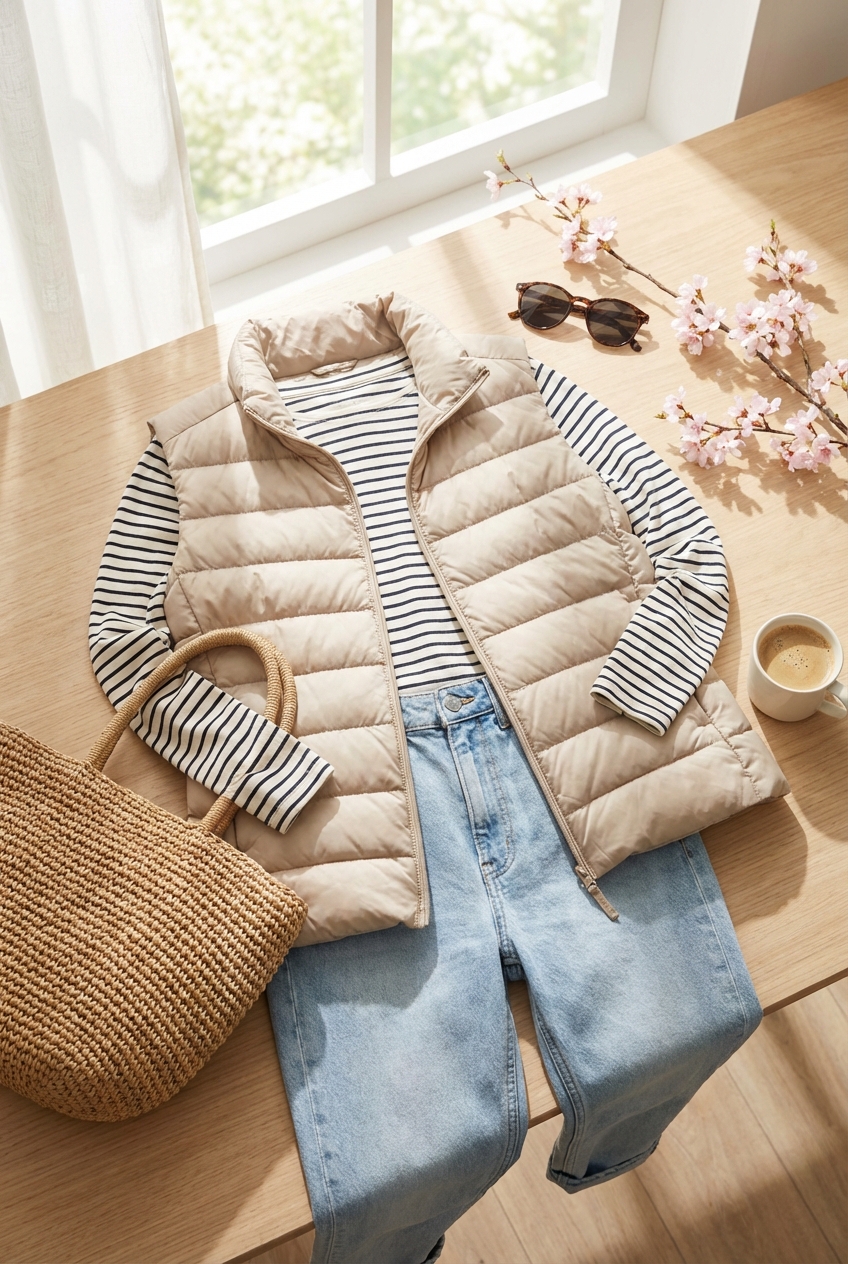
Lightweight Vests For Sunny Yet Chilly Spring Days
Spring weather is notoriously deceptive. We have all experienced that specific morning struggle where the sun is shining brightly through the window, promising a beautiful day, only to step outside and be greeted by a biting wind. It is the classic “Goldilocks” dilemma of dressing: a full wool coat is too heavy and stifling by noon, but a simple blouse or light sweater leaves you shivering in the shade. This transitional period requires a strategic approach to your wardrobe that prioritizes versatility without sacrificing silhouette.
For my clients, I always prescribe the lightweight vest as the ultimate solution to this thermal puzzle. It protects your core—where you lose the most heat—while leaving your arms free, allowing for temperature regulation that jackets simply cannot offer. Beyond function, a well-tailored vest acts as that crucial “third piece” in an outfit, elevating a basic jeans-and-tee combination into a deliberate, polished look. It adds texture and dimension without the bulk of a blazer or the commitment of a trench coat.
Over the years, I have styled hundreds of women for this exact season, and the vest remains my most utilized tool for navigating March and April fluctuations. Whether you gravitate toward the structured elegance of a tuxedo waistcoat or the relaxed utility of a quilted liner, there is a version that fits your lifestyle. If you are looking for visual inspiration, don’t miss the curated Picture Gallery at the end of this post.
Understanding Spring Fabrics: The Foundation of Comfort
Before we discuss cuts or trends, we must address the most critical element of high-end style: material composition. In interior design, we choose textiles based on durability and drape; in fashion, we choose them for breathability and thermal regulation. A vest made from the wrong material will feel like a plastic bag against your body the moment the temperature rises above 60 degrees.
For spring, avoid heavy, felted wools or 100% acrylic knits that trap moisture. Instead, look for “cool wool” (tropical weight), cotton-cashmere blends, or technical nylons with breathable weaves. Linen blends are also exceptional for late spring, as the addition of cotton or silk prevents the linen from wrinkling aggressively while maintaining airflow.
Stylist’s Note: The “Crush Test”
When shopping, perform a quick quality check. Squeeze the fabric of the vest tightly in your hand for ten seconds and release. If the fabric springs back immediately, it has good structural integrity and will look polished throughout the day. If it stays crumpled, it will look messy by the time you finish your morning commute.
Common Mistakes + Fixes
- The Mistake: Buying 100% synthetic polyester linings. These do not breathe and will cause you to sweat even when it is chilly.
- The Fix: Check the care label. Look for linings made of cupro, viscose, or silk. These natural or semi-synthetic fibers allow heat to escape from your core.
The Tailored Waistcoat: Office Polish
The menswear-inspired waistcoat has graduated from a three-piece suit accessory to a standalone wardrobe staple. This is currently the most requested item from my private clients who work in corporate environments but want to feel modern. The beauty of the tailored vest is its ability to create a waistline where there might not be one, using darts and structure to carve out a silhouette.
When fitting a tailored vest, the most important measurement is the fit across the bust and the height of the armhole. Unlike a jacket, you cannot easily hide a poor fit. The buttons should lay flat without pulling—if you see “gaping” between the buttons, the vest is too small, regardless of what the size tag says.
What I’d do in a real project:
For a client with a fuller bust, I opt for a V-neck cut with a higher break point. This elongates the neck. For clients with a smaller bust, a high crew neck or a double-breasted cut adds necessary volume and visual interest to the upper body.
Styling Formula: The Modern Professional
- Base: A crisp white button-down shirt with the sleeves rolled up to the elbows.
- Layer: A navy or camel wool-crepe waistcoat left unbuttoned.
- Bottom: Wide-leg trousers that match the color of the vest (monochromatic column).
- Shoe: A pointed-toe mule or loafer.
The Elevated Quilted Liner: Weekend Luxury
Forget the bulky, shiny puffer vests of the past that made you look like you were embarking on an arctic expedition. The modern “liner” vest is thin, matte, and incredibly chic. These are inspired by the liners of military field jackets but reimagined in high-quality materials like diamond-quilted silk or matte technical cotton.
The goal here is low-profile warmth. These vests should be thin enough to slip under a trench coat if the weather turns, but stylish enough to wear over a cashmere sweater. I recommend avoiding horizontal channel quilting (the “Michelin man” look) and opting for diamond, onion, or wave quilting patterns. These organic shapes are more flattering to the female form and reduce visual bulk.
Designer’s Note: Hardware Matters
Pay close attention to the zippers and snaps. Cheap, shiny hardware is a dead giveaway of a lower-quality garment. Look for matte zippers, invisible snaps, or horn buttons. These subtle details are what separate a “gear” vest from a “fashion” vest.
Common Mistakes + Fixes
- The Mistake: Choosing a vest that is too long or too short for your torso. A quilted vest that hits at the widest part of your hips will make you look wider.
- The Fix: Aim for a hemline that hits either at the high hip (just below the belt line) or fully covers the seat. Avoid the awkward middle ground.
The Longline Trench Vest: Drama and Height
If you want to look instantly taller and more put-together with zero effort, buy a longline vest. Essentially a trench coat without sleeves, this piece creates a powerful vertical line down the center of your body. It is arguably the most versatile piece for transitional weather because it provides significant wind protection for your back and legs while keeping your arms cool.
In my styling practice, I use longline vests to balance out tighter clothing. If a client loves wearing skinny jeans or leggings but feels self-conscious, a longline vest provides coverage and sophistication. It creates a “cape” effect that is incredibly elegant in motion.
Scale and Proportion Rules
The length of the vest must interact correctly with your height.
- Petite (under 5’4″): The vest should hit no lower than the knee. Anything longer will swallow you. Keep the lapels slim to avoid overwhelming your frame.
- Tall (over 5’7″): You can carry a midi or tea-length vest (mid-calf). This looks dramatic and high-fashion.
Styling Formula: The Saturday Market
- Base: A fitted turtleneck in a lightweight merino wool.
- Layer: A beige or sage green longline trench vest, belted loosely in the back (never buckled in front).
- Bottom: Straight-leg denim in a medium wash.
- Shoe: White leather sneakers or ankle boots.
The Knit Vest: Texture and Preppy Charm
Knits add a necessary softness to spring outfits that might otherwise feel too crisp or utilitarian. The sweater vest has seen a massive resurgence, moving away from the “golf dad” aesthetic toward chunky, artisanal textures and cropped silhouettes.
When selecting a knit vest for spring, look for open gauges or crochet details. A tight, heavy cable knit is for December; a loose, breathable weave is for April. Cotton yarns and linen-cotton blends are ideal here because they have a dry hand-feel and won’t itch against bare skin if you choose to wear the vest as a top.
How to Wear It: The “French Tuck”
Because knitwear has volume, it can look boxy. I always instruct clients to do a “French tuck” (tucking just the front inch of the hem) into their waistband. This defines the waist without creating bulk around the hips.
Common Mistakes + Fixes
- The Mistake: Wearing a chunky knit vest over a chunky knit sweater.
- The Fix: Contrast your weights. If the vest is chunky, the layer underneath must be sleek (like a poplin shirt or a tissue-weight tee). If the vest is fine-gauge, you can layer it over a slightly heavier shirt.
Layering Mechanics: Avoiding the “Stuffed” Look
The biggest hesitation women have with vests is the fear of looking bulky or feeling restricted. This usually happens because of poor layering mechanics. As a stylist, I treat an outfit like an architectural blueprint—you have to leave room for movement.
The “Armscye” Rule is critical here. The armscye is the armhole opening. Your vest must have an armhole that is larger than the armhole of the garment underneath it. If your shirt bunches up into your armpit because the vest opening is too high or tight, you will be uncomfortable, and the fabric will pull unattractively across the chest.
What I’d do in a real project:
I often take vests to a tailor to have the armholes lowered by half an inch. It is a minor alteration that costs very little but dramatically improves the comfort and drape of the garment, allowing for thicker sweaters to be worn underneath.
The Balance Checklist
- Volume: If the vest is puffy, the pants should be slim or straight. If the vest is tailored and slim, the pants can be wide and flowing.
- Length: Ensure your under-layer is not poking out awkwardly at the bottom unless it is a deliberate tunic style.
- Color: Use the “sandwich method.” Match your vest color to your shoes to create cohesion, sandwiching a different color outfit in between.
Finish & Styling Checklist
Before you walk out the door, run through this mental checklist. These are the exact final touches I do on set or with private clients to ensure the look is polished.
1. The Sit Test
Sit down in a chair. Does the vest bunch up near your chin? If it’s a zippered vest, unzip it slightly from the bottom (if it has a two-way zipper) to release tension on the hips.
2. The Collar Check
If you are wearing a collared shirt underneath, ensure the collar points are tucked inside the vest’s neckline (for V-necks) or popped cleanly (for trench vests). Do not let one collar wing fly away.
3. The Lint Audit
Vests, particularly wool or dark cotton ones, are magnets for lint because they rub against other layers. A quick pass with a lint roller is non-negotiable.
4. The Monochromatic Calibration
If you are trying to look taller, match your vest color to your pants. This creates an unbroken line of color that lengthens the body.
5. The Sleeve Roll
If your arms feel “short” because of the vest, push the sleeves of your under-layer up to the elbow. exposing the forearm changes the proportions and makes the look feel breezier and more intentional.
FAQs
Can I wear a vest to a formal evening event in the spring?
Absolutely. A tuxedo-style waistcoat in black, white, or ivory is incredibly chic for evening wear. Pair it with matching trousers and strappy heels. You can wear it as a top (buttoned up with nothing underneath) for a sultry, modern look, or over a sheer organza blouse for coverage.
How do I wash a down or synthetic-fill vest?
Always check the label, but generally, you want to avoid the dry cleaner for down, as the chemicals strip the natural oils from the feathers. Wash on a delicate cycle with a specific down detergent. The most important step is drying: toss it in the dryer on low heat with three clean tennis balls. The balls will beat the vest as it tumbles, refluffing the filling and preventing clumps.
Are long fur (faux) vests still in style?
The “shaggy” faux fur vests that were popular in 2010 have largely fallen out of rotation in high-end fashion. They tend to look dated and add unnecessary bulk. For a textured look, opt for shearling (short pile) or a boucle knit instead. These offer the same cozy vibe but with a much more modern, streamlined silhouette.
What do I do if my vest feels too boxy?
If you love the vest but hate the shape, belt it. Use a leather belt rather than the fabric sash that came with it. A leather belt adds structure and polish. Alternatively, take it to a tailor and have them add “darts” to the back. This takes in the excess fabric at the waist without altering the front design.
Conclusion
Navigating the shift from winter to spring does not require a complete wardrobe overhaul; it simply requires smarter layering. The lightweight vest is the unsung hero of this season, bridging the gap between the heavy coat and the light blouse. By focusing on breathable natural fabrics, correct proportions, and proper layering mechanics, you can create outfits that are functional enough for the chill but polished enough for the boardroom or brunch.
Remember that style is about intentionality. A vest should never look like an afterthought or something you grabbed just to stay warm. It should be an integral part of your outfit’s geometry. Whether you choose the sharp lines of a tailored waistcoat or the soft luxury of a cashmere knit, wear it with confidence. The sun is out, the air is fresh, and you are perfectly dressed for both.
Picture Gallery


