Medium Feathered Haircut: How to Ask For It and Style It
- Words by
- Julio Arco
- Published
- Reading
- 4 min
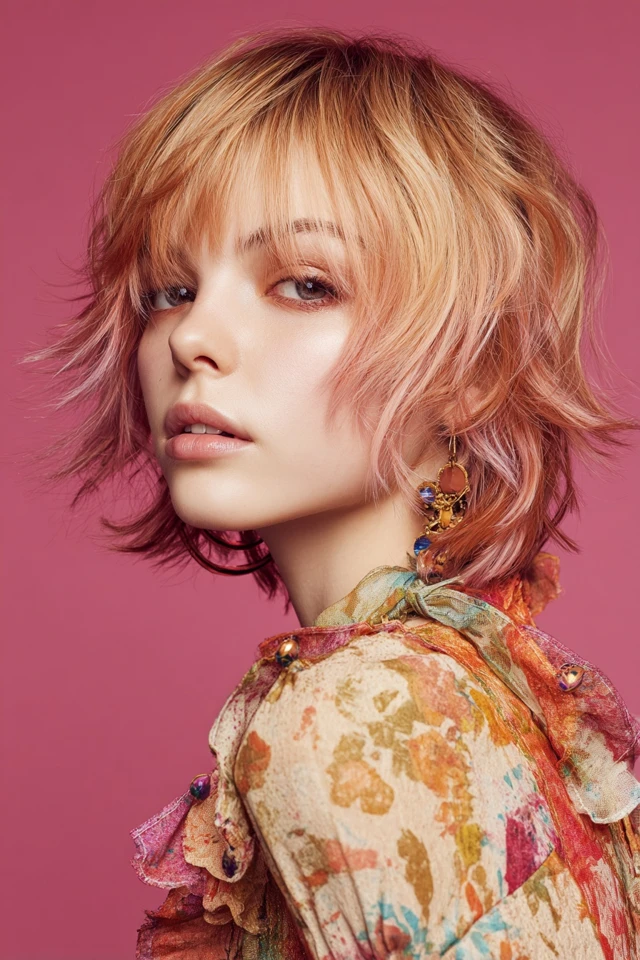
A medium feathered haircut is a shoulder-grazing cut with soft, graduated layers that taper at the ends and fall away from the face. Ask for long, blended layers with thinned tips rather than short, visible steps, and you get movement without losing length.
The light version is the easiest to wear: gentle feathering through the ends and around the face, with lighter tones kept subtle. It sits in the same family as other medium layered cuts, but the finish is wispier and softer.
What makes a feathered cut different from regular layers?
Regular layers are cut at set lengths and can look stepped. Feathering is blended, so each layer is shorter than the one beneath it by a small amount and the ends are tapered to a fine point. The hair moves as one soft mass instead of separate pieces.
On a medium length, that usually means the shortest pieces start around the cheekbones or chin and the longest end near the collarbone. If you are comparing it with a shoulder-length feathered cut, the idea is the same, and only the length changes.
Who does it suit?
Feathering suits most face shapes because the layers can be placed where you want softness. Round faces do well with the longest face-framing pieces starting below the chin, which adds a vertical line. Square jawlines look softer with layers that start at the jaw. Long faces can keep the layers fuller at the sides.
Hair type matters more than face shape. Fine, straight hair gains body from feathering. Thick hair benefits from the removed weight. Very curly hair can feather too, but it needs a cutter who works on dry curls, since the shape changes as it springs up.
How do you ask for it at the salon?
Bring two or three photos and say what you like about them: the length, the face-framing, the soft ends. Then be specific:
- Long, blended layers, not short, choppy ones.
- Tapered or point-cut ends for a wispy finish.
- Face-framing pieces that start at the cheekbone or chin, depending on your face.
- Enough length that you can still tie it back.
If you want something with more texture, choppy layers are the next step up. For a lighter touch, a shoulder-skimming cut keeps most of the length.
How do you style it?
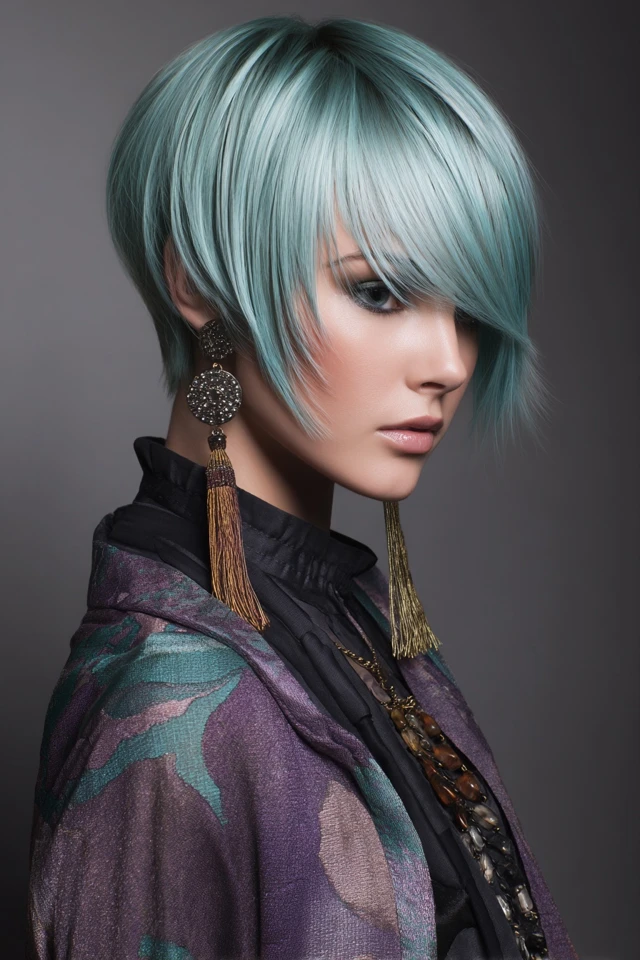
Start with towel-dried hair and a lightweight mousse or texturizing spray. Heavy creams flatten the ends, and the ends are the whole point of the cut. Blow-dry with a round brush, turning the ends slightly away from the face, then let the hair cool before you touch it.
Detangle wet hair gently. The American Academy of Dermatology notes that hair is delicate when wet, so it recommends a wide-tooth comb instead of a brush for wet hair. If you use a flat iron to flip the ends, the AAD advises dry hair, low or medium heat, and no more often than every other day.
A leave-in conditioner helps fine ends stay smooth. Board-certified dermatologist Zoe D. Draelos, MD, FAAD, says of leave-in conditioner: "You should see less frizz. Your hair should be easier to brush or comb, so you'll have less breakage."
How does hair color change the look?
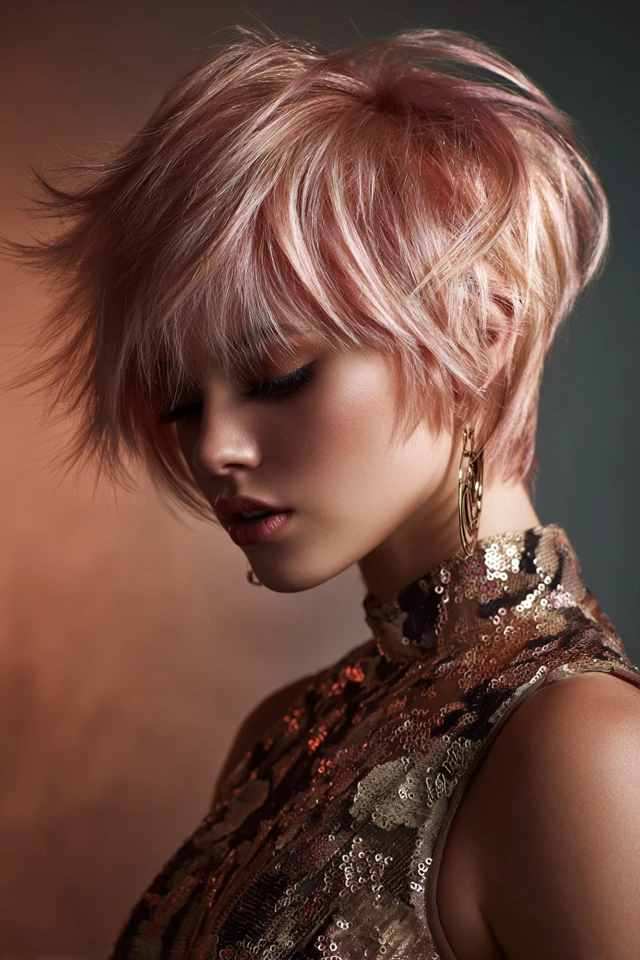
Through the lens of evidence-based design, I'd think about color and texture together. Feathered ends are fine and uneven, so lighter tones there catch more light and make the layers easier to see. A solid dark color shows the shape as a softer outline.
Honey, sandy or soft chestnut tones suit the light version, and a few shades of difference is enough. Keep contrast gentle near the face. As an architect trained in this lens, I'd treat the face-framing pieces as the first thing the eye reads, so that is where lighter tones do the most.
To work out whether warm or cool shades suit you, check which metal flatters your skin more, gold or silver, and see how your skin looks in daylight against both. If you are unsure, ask your colorist to test shades near your face.
How much upkeep does it need?
It sits between the short feathered cut and longer styles, so it is forgiving. Trims about every 6-8 weeks keep the ends from looking ragged. Between trims, the cut grows out gracefully, which makes it one of the more practical medium short hairstyles if you dislike frequent appointments.
For color care, a gentle shampoo and a conditioner help lightened ends hold up. If your hair is dry or textured, the AAD says you can shampoo at least once every 2 to 3 weeks as needed, so you do not need to wash daily.
Those wanting short haircuts that require little upkeep or short layered haircuts easy to style will find that feathering at this length air-dries well with a bit of product. I'd still have it shaped by someone who has done it before, because the cut depends on how the layers are blended.
What should you wear with it?
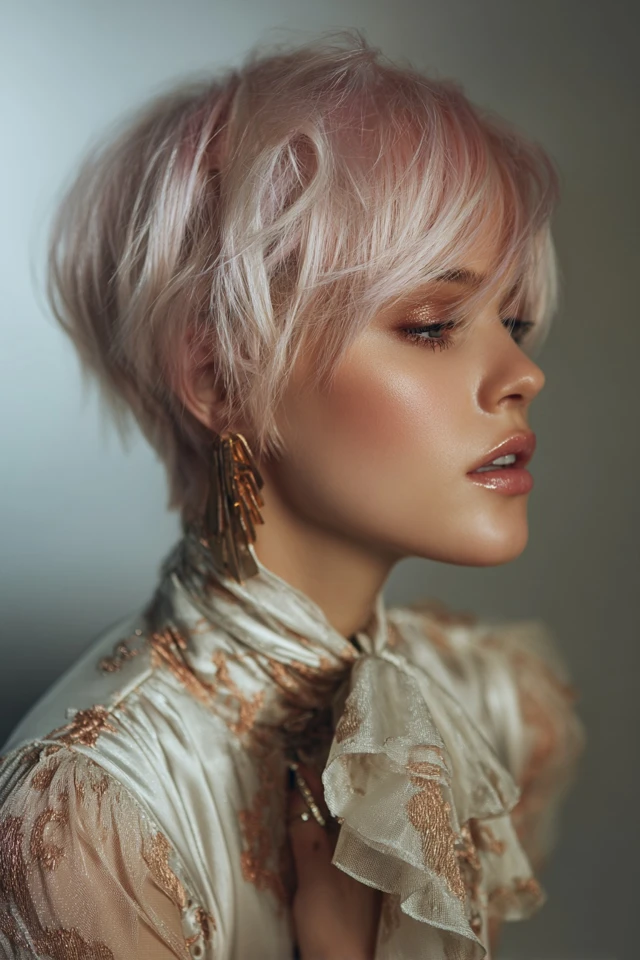
Soft hair pairs well with a bit of structure: a tailored blazer, a crisp shirt, a straight-leg denim. Open necklines and simple earrings keep attention on the layers around your face. Scarves and high collars can push the ends out, so check how they sit before you leave the house.
Frequently asked questions
How often should you trim a medium feathered haircut?
About every 6-8 weeks keeps the tapered ends looking intentional. If your hair is fine, you may want to trim a little sooner, since thin ends show wear quickly.
Does a feathered cut work on thin hair?
Yes, as long as the layers are long and blended. Too many short layers can make fine hair look sparse, so ask your cutter to keep the perimeter full.
Can you get a feathered cut with curly or wavy hair?
You can, but ask for the layers to be cut with your natural texture in mind. Curls shrink as they dry, so the finished shape differs from how it looks wet.
Filed under Haircuts