
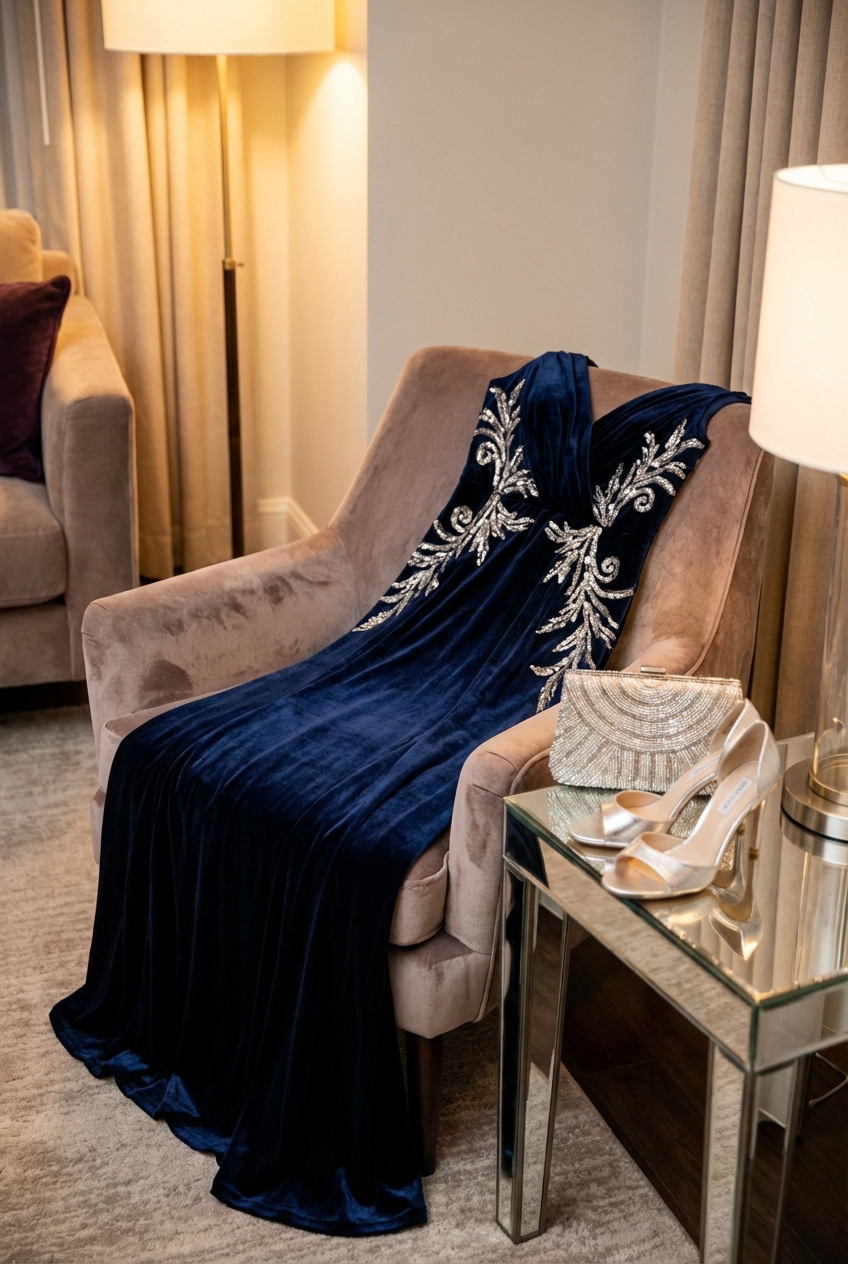
Midnight Blue And Silver Accents In Glamorous Dresses
There is a precise moment during a black-tie fitting where a client steps out in midnight blue, and the entire energy of the room shifts. While black is safe and red is bold, midnight blue offers a depth and mystery that few other colors can achieve. It mimics the infinite capacity of the night sky, and when you pair it with silver accents, you create a look that is both celestial and grounded in high-fashion architecture.
I remember dressing a client for a winter gala who was terrified of wearing color. She insisted on black until I pulled a midnight velvet column gown with silver thread embroidery along the bodice. The cool undertones of the blue brightened her complexion instantly, and the silver acted as a built-in illuminator. It wasn’t just a dress; it was a lighting strategy for her skin.
Getting this combination right requires more than just picking a blue dress and silver shoes. It requires an understanding of fabric weight, the reflectivity of the metallic elements, and how cool tones interact with gallery lighting versus candlelight. While you read through these styling tips, remember to check out our curated Picture Gallery at the end of this blog post.
Understanding the Color Physics: Why This Pairing Works
Midnight blue is technically a “receding” color. In design terms, this means it visually pushes back, making the wearer appear more streamlined and statuesque. It absorbs light rather than bouncing it back, which creates a blurring effect on body contours that many women find incredibly flattering.
Silver, conversely, is an “advancing” texture. It grabs light and pulls the eye toward it. When I style a gown, I use silver accents strategically to highlight the client’s best features. If we want to accentuate the waist, we look for a silver beaded belt or embroidery at the narrowest point of the torso.
The contrast ratio here is vital. High-contrast pairings (like navy and white) can sometimes look nautical or daytime-appropriate. Midnight blue and silver, however, share a cool temperature. This shared “coolness” allows them to blend sophisticatedly rather than clashing, making the look appropriate for evening wear, galas, and high-stakes social events.
Designer’s Note: Fabric Weight and Drape
The success of a midnight blue gown relies heavily on the quality of the textile. Because the color is dark, cheap fabrics can look flat or muddy. You need a fabric that holds the dye with richness and interacts well with the weight of silver embellishments.
The Best Fabrics for this Palette:
- Silk Velvet: This is the gold standard for midnight blue. The pile of the velvet catches the light, creating natural highs and lows in the color. It supports heavy silver beadwork well without sagging.
- Duchess Satin: This fabric has a high thread count and a pearlescent sheen. It provides structural integrity, which is necessary if you are wearing a dress with large silver architectural details or bows.
- Chiffon overlay: For a softer look, midnight blue chiffon over a silver lining creates an iridescent, ethereal effect. However, be careful with snagging; silver jewelry can easily catch on delicate chiffon.
Common Mistake: Choosing a thin jersey or polyester blend for a dress with heavy silver beading. The weight of the beads will pull the fabric down, causing the neckline to gape and the hem to hang unevenly. Always check that the fabric weight (GSM) is substantial enough to support the embellishment.
Strategic Placement of Silver Accents
As a stylist, I treat silver accents as architectural lighting. Where do we want the viewer to look? The placement of sequins, crystals, or metallic threads should be intentional, not random.
The “Rule of Thirds” in Gown Embellishment:
- The Bodice (Top Third): Silver near the face acts as a reflector board. If you have cool-toned skin, silver embroidery around the neckline will brighten your eyes and teeth. This is ideal for seated dinners where you are only seen from the waist up.
- The Waist (Middle Third): A silver motif radiating from the waist creates an hourglass illusion. I often look for patterns that taper inward toward the center of the body.
- The Hem (Bottom Third): A gradient of silver rising from the hem (ombre effect) adds weight to the bottom of the dress. This is excellent for tall women, as it grounds the look, but can shorten the silhouette of petite women.
What I’d do in a real project: If a client falls in love with a plain midnight blue dress, I will often source a vintage silver brooch or a high-quality crystal appliqué sash to add that customized sparkle. It is a cost-effective way to elevate a simple garment into a custom piece.
Accessorizing: The Metallic Balance
The most common question I get is, “Do I have to wear silver jewelry?” The answer is generally yes. Gold clashes with the cool undertones of midnight blue, creating a jarring visual temperature. However, you must manage the volume of the silver.
If the dress is heavily beaded with silver:
- Keep jewelry minimal. Opt for diamond or white sapphire studs rather than chandeliers.
- Skip the necklace entirely. Let the dress neckline speak for itself.
- Wear a shoe in a matching midnight blue satin or a “barely there” silver strappy sandal.
If the dress is solid midnight blue:
- This is your canvas for statement silver pieces. A structured silver collar necklace looks incredible against blue velvet.
- You can carry a fully crystal-encrusted clutch without looking like a disco ball.
- Consider a shoe with a crystal buckle or metallic sheen to tie the bottom of the look to the jewelry at the top.
Designer’s Note on Shoes: When hemming a floor-length midnight blue gown, I always ask the client to bring the specific silver shoes they plan to wear. Silver shoes often have a platform or a specific arch. We hem the dress to hover exactly 0.5 to 1 inch off the floor. Any longer, and the heel will catch the hem; any shorter, and the dress looks ill-fitted.
Hair and Makeup: The Cool Tone Palette
Your beauty look is the final accessory. When wearing midnight blue and silver, you are committing to a cool color palette. Your makeup needs to respect that harmony to avoid looking washed out or disjointed.
Makeup Rules for this Look:
- Foundation: Ensure your color match is perfect. Dark blue reflects onto the jawline, highlighting any mismatch between your face and neck.
- Highlighter: Use a pearl or icy champagne highlighter. Avoid gold or bronze highlighters, which will look orange against the blue dress.
- The Lip: You have two classic choices here. A cool-toned red (blue-based red) creates a classic Hollywood look. Alternatively, a cool nude with a gloss finish keeps the focus on the dress. Avoid corals or brick reds.
- The Eye: A silver or gunmetal smokey eye is stunning. If you want color, use navy eyeliner instead of black for a softer, more cohesive definition.
For hair, consider the neckline of the dress. If the silver accents are around the neck or shoulders, sweep the hair up into a sleek chignon or high pony. If the dress is strapless or off-the-shoulder, Hollywood waves add a soft texture that balances the structural rigidity of metallic fabrics.
Practical Constraints: Durability and Comfort
Glamour falls apart the moment you look uncomfortable. Midnight blue and silver gowns often come with specific practical challenges that I prepare my clients for before they leave the studio.
The “Scratch Factor”:
Metallic threads and sequins can be incredibly itchy, especially under the arms where the fabric rubs against sensitive skin.
The Fix: Before purchasing, rub the embellished part of the dress against the inside of your wrist. If it scratches, it will be unbearable after two hours. I often apply a small strip of clear styling tape or moleskin to the underarm seam of the dress to create a barrier.
The “Sit Test”:
Velvet and satin in dark colors show creases unforgivingly.
The Fix: When traveling to the event, lift the skirt slightly before sitting in the car to avoid deep lap creases. If possible, hang the dress high in the vehicle rather than folding it.
Undergarments:
Midnight blue is dark, but high-flash photography can sometimes render thin fabrics semi-transparent.
* The Fix: Always wear seamless undergarments in black or a deep cocoa tone closer to the dress shade. Nude undergarments can sometimes reflect a “flash” of light under dark fabric, whereas dark undergarments absorb the light and remain invisible.
Navigating Dress Codes
Where can you actually wear this combination? Midnight blue and silver is inherently formal. It is rarely appropriate for a daytime wedding or a business casual luncheon. It reads as “Evening” or “Black Tie.”
Black Tie Optional:
A midi-length cocktail dress in midnight blue with silver accessories is perfect. It feels dressy without being a full ballgown.
Strict Black Tie:
This requires a floor-length gown. This is where you can embrace full sequins or heavy velvet. The scale of the event dictates the scale of the dress.
Winter Weddings:
This is a fantastic alternative to black for a winter wedding guest. It feels festive and respectful but somber enough for an evening ceremony. Just ensure the silver content isn’t so high that you look bridal (white/silver) in dim lighting.
Finish & Styling Checklist
Before you walk out the door, run through this quick professional checklist. These are the final details I check on my clients to ensure the look is camera-ready.
- Hem check: Put on your shoes. Does the dress graze the floor without buckling? (Ideal gap: 1/2 inch to 1 inch).
- Underarm protection: If the dress is sequined, have you applied a glide stick or tape to prevent chafing?
- Jewelry audit: Remove one accessory. If you have earrings, necklace, bracelet, and rings, take off the necklace. Let the collarbones breathe.
- The “Clutch Test”: Can your evening bag fit your phone, lipstick, and ID? If not, it’s a prop, not a bag. Swap for a slightly larger silver minaudière.
- Static guard: Midnight blue shows lint and static cling aggressively. Spray the inside of the skirt and your legs with static guard.
- Lint roller: Give the dress one final pass, especially if it is velvet.
FAQs
Can I mix gold jewelry with a midnight blue and silver dress?
I strongly advise against it. The clash between the warm gold and the cool silver/blue tones creates visual confusion. Stick to white gold, platinum, or silver to maintain a cohesive, high-end aesthetic.
Is midnight blue appropriate for a summer formal event?
Yes, but switch the fabric. Avoid velvet, which reads as winter. Opt for midnight blue silk chiffon, organza, or tulle. These fabrics breathe and move with the summer air while maintaining the color sophistication.
What color shoes should I wear if I don’t have silver?
If you want to elongate your leg, a “barely there” nude sandal is acceptable, though less glamorous. A black shoe can work if it is patent leather or satin, but it often looks heavy. A shoe dyed to match the dress exactly is the most professional alternative to silver.
How do I clean a dress with silver beads?
Never dry clean a heavily beaded gown at a standard cleaner without pointing out the embellishments. The chemicals can melt plastic sequins or tarnish silver-plated beads. Look for a cleaner who specializes in “preservation” or wedding gowns.
Conclusion
Embracing the combination of midnight blue and silver is a declaration of confidence. It steps away from the safety of the Little Black Dress and moves toward something more regal and cinematic. By focusing on the quality of the fabric, the temperature of your accessories, and the architecture of the silhouette, you can curate a look that is timeless.
Remember that the dress is the foundation, but the styling—the hair, the posture, the careful selection of a silver earring—is what builds the moment. Fashion is about the details, and in this color palette, the details shine brighter than anywhere else.
Picture Gallery


