Minimalist Back to School Outfits That Work All Week
- Words by
- Julio Arco
- Published
- Reading
- 4 min
The easiest back to school outfits are built from a small palette of neutrals, two or three pieces that fit well, and one layer you can add or remove. Pick a base color (navy, gray, oat or black), a lighter top, and a single accent, and every morning becomes a swap rather than a decision.
Below: what to wear on the first day, outfit formulas that repeat well, how to choose color and fabric, and how to keep a minimal wardrobe from feeling boring.
What should you wear on the first day back to school?
Choose the outfit you feel most like yourself in, and test it a day early. Sit down in it, raise your arms, walk a few minutes with your bag on. If anything pulls, itches or needs adjusting, swap it.
A reliable first-day formula: a crisp white or light shirt, straight-leg jeans or trousers, and clean shoes (loafers, plain sneakers or low boots). Add a blazer or cardigan if the classrooms run cold. It works for a more polished school look or a relaxed one, depending on the shoes.
Which colors work best for a minimalist school wardrobe?
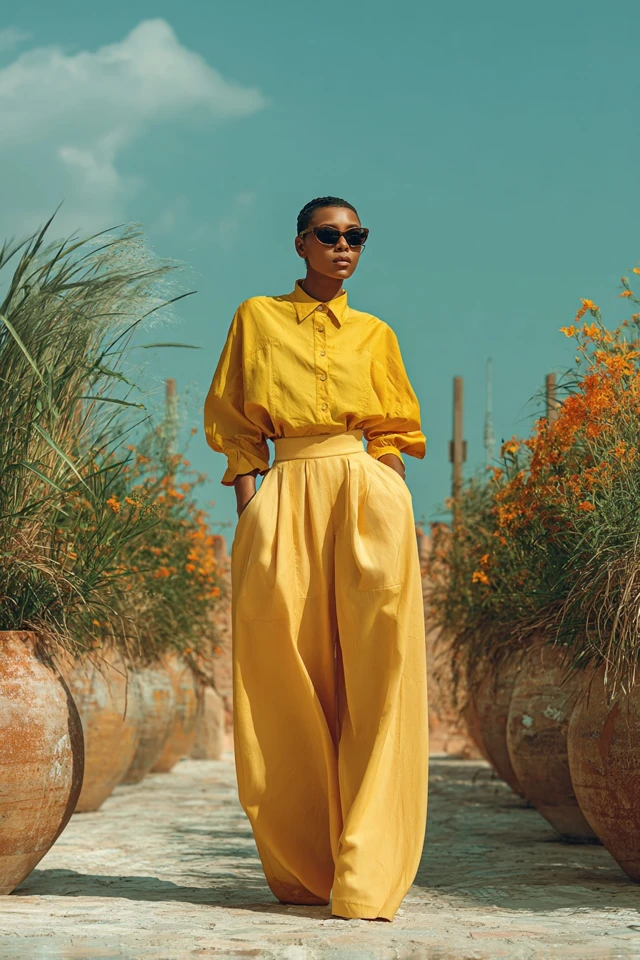
Start with neutrals: beige, gray, navy, black, white and oat. They mix with each other freely, so five or six pieces make many combinations.
Through the lens of evidence-based design, I'd think about contrast before hue. A white shirt under a navy blazer reads sharp and clear because the difference in value is large. Oat on cream reads soft and quiet. Decide which of those two moods you want that day.
Add one accent: rust, muted sage or a deeper blue. Keep it to a single piece, such as a scarf, a knit or shoes, so the outfit stays simple.
Does what you wear change how you feel?
There is some research on clothing and behavior, though it is about uniforms, not school outfits. A Frontiers in Psychology study on military and Red Cross uniforms found that wearing the Red Cross uniform led to more prosocial behavior compared to civilian clothing. It suggests clothing can shape how people act, but it does not prove that any particular color will change your day. Treat color as a nudge toward the mood you want, not a guarantee.
Five outfit formulas that repeat well
- White shirt, straight-leg jeans, loafers or clean sneakers.
- Knit top, tailored trousers, simple boots.
- Slip or shirt dress with a cardigan and sneakers.
- Oversized blazer over a tee, with straight-leg trousers.
- Turtleneck under a pinafore or midi skirt, with flat boots.
Each one uses a top, a bottom and a layer, so they are easy to rotate. For older students, these also cover most back to school outfits for high school and back to school outfits for university: swap sneakers for loafers and a tote for a backpack as the setting gets more formal.
How should minimalist school clothes fit?
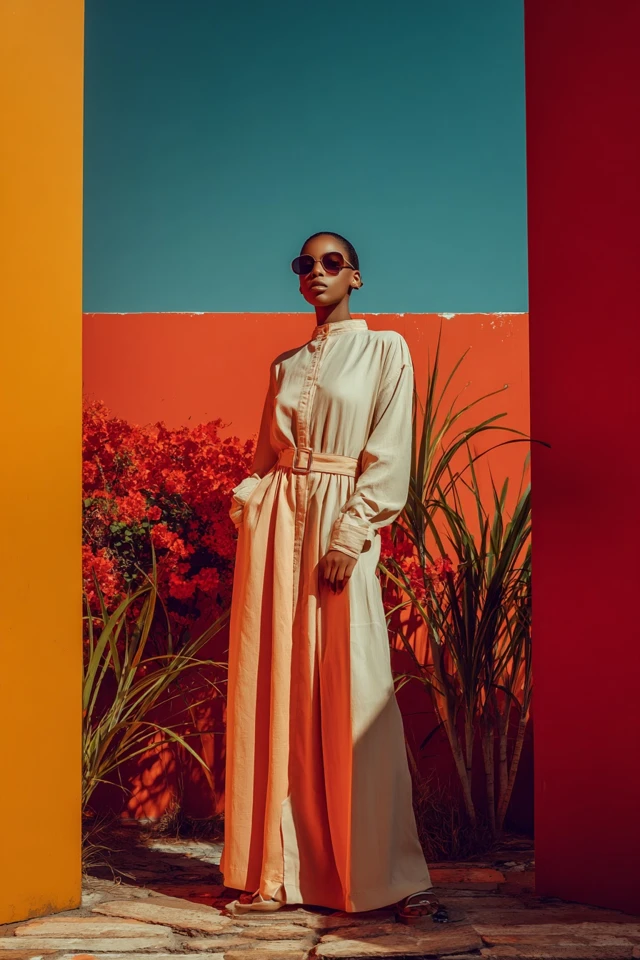
Fit matters more when there are fewer details to distract. A jacket that pulls at the shoulders is a fit problem, not a you problem. Check the shoulder seam first: it should sit where your shoulder ends.
- Tops: room to lift your arms without the hem riding up.
- Trousers: a straight leg that skims the shoe, with the waist comfortable while seated.
- Blazers: sleeves ending near the wrist bone, with space to layer a thin knit.
If you want shape-specific advice, see the guides for curvy, tall and pear-shaped proportions.
Which fabrics hold up through a school day?
Cotton, linen blends and wool blends breathe and drape well, and they survive being sat in for hours. As an architect trained in evidence-based design, I'd treat texture as part of the color: a matte knit and a glossy satin in the same navy do not read as the same color, because the surface changes how light reaches your eye. Matte and softly woven fabrics suit a quiet wardrobe best.
What are trendy back to school clothes right now?
Relaxed tailoring, straight-leg trousers, oversized blazers and understated knitwear keep showing up in neutral colors, which suits a minimalist closet. Because they are basics, you can add the trend through one piece without replacing everything.
For something more playful in the same palette, look at boho crop tops or athleisure sets.
How do you build a small school wardrobe?
Aim for about 10-15 interchangeable pieces: tops, bottoms and a couple of layers, all within one palette. Spend on what you wear most (jeans, a good knit, shoes) and go cheaper on the rest. Secondhand and sale pieces suit neutrals well, since plain basics look similar at any price.
Layering is what makes a small wardrobe work: a thin turtleneck under a blazer, or a light cardigan over a dress, adapts to classrooms that run hot or cold. Keep accessories minimal, such as a slim watch, a structured tote and one accent piece.
The night before, lay out the next day's outfit. It takes two minutes and removes the morning guesswork.
Frequently asked questions
What should I wear on the first day back to school?
Wear something comfortable that you've already tried on, such as a light shirt, straight-leg jeans and clean shoes, plus a layer for cold classrooms. Feeling at ease matters more than newness.
What is the 3 3 3 rule in fashion?
It is commonly described as building a mini wardrobe from three tops, three bottoms and three pairs of shoes that all mix together. It is a shorthand for a small capsule, not a fixed rule.
How do I find my signature color for school outfits?
Notice which colors you reach for and feel good in, then pair a neutral base with one recurring accent. Over a few weeks that accent tends to become your signature.
Can minimalist style work on a tight budget?
Yes. Buy fewer, versatile basics in one palette, and look at secondhand shops and sales for neutrals.
Filed under Outfit Ideas