
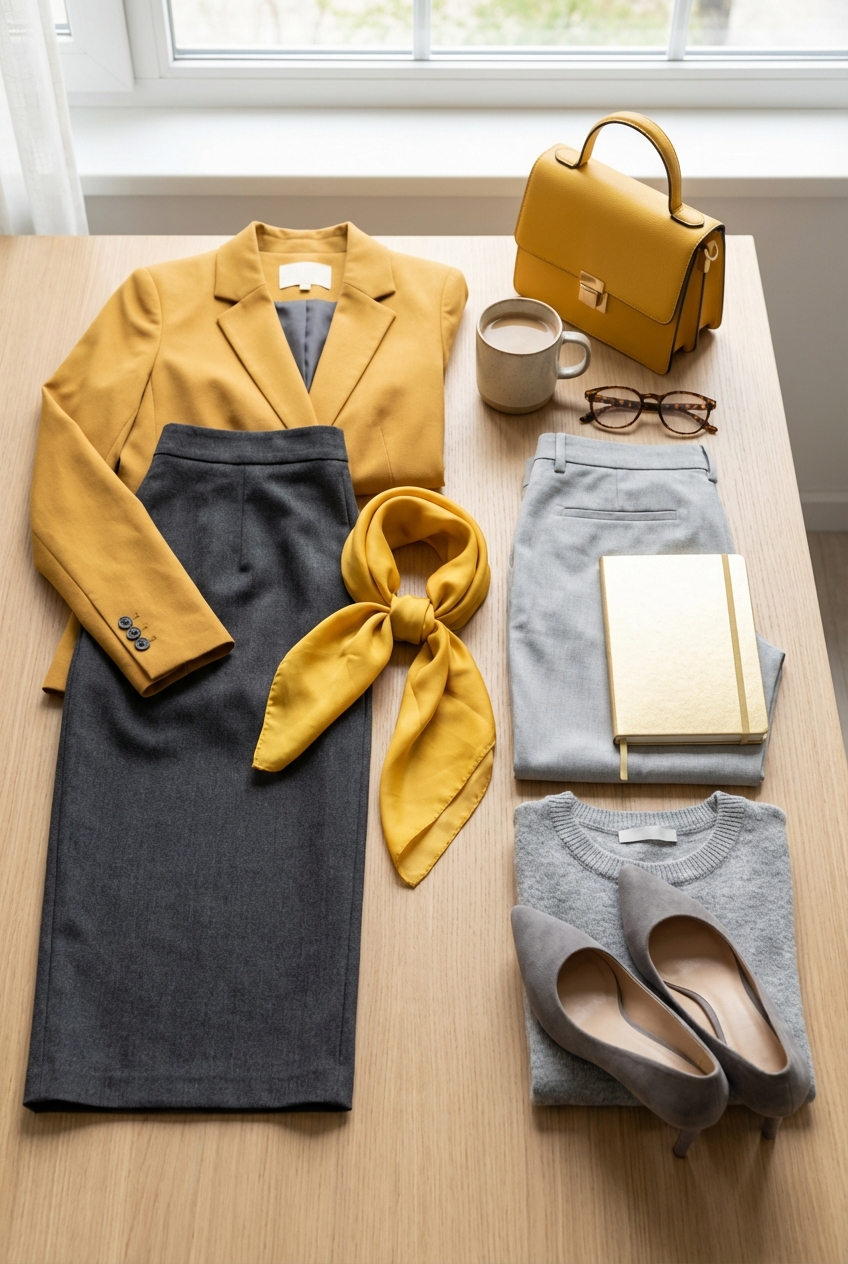
Perfect Shades Of Yellow And Grey For Office Wear
I still remember the first time I tried to integrate yellow into my professional wardrobe. I bought a stunning, structural lemon dress that looked incredible on the hanger, but the moment I stepped under the fluorescent lights of a corporate boardroom, I felt less like a fashion-forward executive and more like a highlighter. I learned a valuable lesson that day: vibrancy requires a grounding force.
That is where grey comes in. In the world of high-end styling, we view grey not as a boring default, but as the ultimate anchor. It possesses the authority of black but offers softer, more complex nuances that allow brighter colors to shine without overwhelming the room. When you pair the optimism of yellow with the steadfast intellect of grey, you create a look that says you are creative yet reliable.
Navigating this color combination requires a bit of strategy regarding fabric, tone, and proportion. It is not enough to just throw these colors together; you must understand how they interact with your skin tone and your office environment. If you are looking for visual inspiration on how to execute these looks, be sure to scroll to the Picture Gallery located at the end of the blog post.
Understanding The Psychology of Color in Professional Settings
Before we start buying blazers, we need to understand the message we are sending. In color psychology, yellow is the strongest psychological primary color. It stimulates the nervous system and signals confidence, creativity, and friendliness. However, in large doses, it can signal anxiety or impulsiveness.
Grey, conversely, is the color of compromise and control. It is solid, stable, and creates a sense of calm. It is the perfect professional canvas because it does not demand attention, allowing your work—or your accent colors—to do the talking.
When I style clients for high-stakes presentations, I often suggest this pairing because it balances approachability with competence. A charcoal suit with a mustard silk blouse suggests you are serious about business but open to innovative ideas. It is a strategic visual tool that works in creative agencies and conservative law firms alike, provided you choose the right shades.
Designer’s Note: The Lighting Trap
A common mistake I see is ignoring office lighting. Standard office lighting tends to have a cool, blue cast. If you wear a cool, greenish-yellow (like neon or chartreuse) with a cool grey, you might look washed out or sickly. In typical office settings, warmer yellows (like marigold or butter) act as a color corrector for your complexion.
Finding Your Perfect Temperature: Warm vs. Cool
The success of this color combination depends entirely on undertones. As a stylist, the first thing I do is determine if a client has cool or warm undertones in their skin. This dictates which grey and which yellow will make them look radiant rather than tired.
If you have cool undertones (veins appear blue, you look better in silver jewelry):
- The Grey: Look for slate, steel, or icy greys. These have blueish or crisp white undertones.
- The Yellow: Opt for clear, bright lemons or pale, icy daffodils. Avoid mustard, as it can make cool skin look sallow.
If you have warm undertones (veins appear green, you look better in gold jewelry):
- The Grey: Choose greige, taupe, or charcoal with brown undertones. These are “warmer” greys.
- The Yellow: Embrace rich hues like mustard, ochre, honey, or butterscotch.
Common Mistake + Fix
Mistake: Wearing a yellow top that clashes with your skin tone because you love the color.
Fix: If a shade of yellow does not suit your face, move it away from your face. Wear that specific yellow as a skirt, trouser, or shoe, and keep a flattering shade of grey or white near your visage.
The Power Dynamic: Charcoal and Mustard
For conservative offices or high-level management positions, contrast is your friend. High contrast implies authority. The deepest shade of grey—charcoal—is universally flattering and serves as a softer alternative to stark black.
Mustard is the ideal partner for charcoal because it has depth. It is not a frivolous color; it feels grounded and earthy. This combination works exceptionally well in autumn and winter, utilizing heavier fabrics like wool and cashmere.
What I’d do in a real project:
- The Suit: A tailored charcoal wool suit (trousers or pencil skirt).
- The Top: A silk bow-tie blouse in deep mustard.
- The Shoes: Suede pumps in grey or black.
- Why it works: The matte texture of the wool absorbs light, while the sheen of the silk reflects it, creating a sophisticated textural interplay.
The Soft Approach: Dove Grey and Butter Yellow
As we transition into spring or if you work in a more creative or casual environment, deep contrasts can feel too heavy. This is where we lighten the palette. Dove grey—a soft, medium grey—feels airy and modern.
Pairing this with butter yellow or pastel lemon creates a fresh, approachable look. This combination is particularly effective for networking events or days where you need to build rapport with clients. It is less intimidating than the charcoal power suit.
Styling Rules for Lighter Shades:
- Fabric Quality is Key: Lighter colors show fabric quality more than dark colors. Cheap polyester in pale yellow can look transparent or flimsy. Opt for lined crepe, structured cotton, or heavy silk.
- Opacity Check: Always check pale yellow trousers or skirts in natural light to ensure they are not sheer. I usually recommend sizing up in pale bottoms to ensure the pockets don’t pull, which ruins the line of the garment.
The Ratio Rule: 70/20/10
When mixing colors, balance is everything. You rarely want a 50/50 split between yellow and grey, as this can look like a sports team uniform rather than a curated outfit. I use the 70/20/10 rule to ensure the look remains polished.
- 70% The Base (Grey): This should be your suit, your dress, or your main separators (trousers and blazer). Grey grounds the look.
- 20% The Secondary (Yellow): This is your blouse, a cardigan, or a statement skirt. It provides the personality.
- 10% The Accent (Metals/Neutrals): This is your jewelry, buttons, belt, or shoes. Metallic gold pairs beautifully with yellow and grey.
You can flip this for a bolder look (70% yellow dress with a 20% grey blazer), but this requires a very specific office culture. For most professional settings, let grey take the lead.
Prints and Patterns: Adding Complexity
Solids are safe, but patterns show high-level style competence. A grey plaid styling with a yellow thread running through it is one of the most sophisticated ways to wear this trend. It is subtle and shows an attention to detail.
Glen plaid, Prince of Wales check, or houndstooth in grey often naturally incorporate subtle accent colors. Look for these heritage fabrics that feature a faint yellow windowpane check. This allows you to wear a “solid” yellow blouse that perfectly pulls out the accent thread in the suit.
Pattern Mixing Guidelines:
- Scale Matters: If your skirt has a large grey and yellow plaid, keep your top solid.
- The Distance Test: Some micro-patterns look like a solid grey from a distance. These are excellent for conservative offices as they only reveal their yellow complexity up close.
Fabric Choice and Textural Depth
The shade is only half the battle; the texture determines the vibe. In a corporate environment, structure conveys professionalism. In a casual office, drape conveys ease. Mixing these textures prevents a grey outfit from looking dull.
Best Fabric Combinations:
- Tropical Wool + Silk: The gold standard for corporate wear. Wool absorbs light; silk reflects it.
- Cashmere + Leather: A grey cashmere sweater paired with a yellow leather midi skirt (or vice versa) is incredibly chic for creative directors or fashion-forward roles.
- Tweed + Chiffon: A structured grey tweed jacket over a soft yellow chiffon blouse balances masculine tailoring with feminine softness.
Designer’s Note on Maintenance:
Yellow fabrics, especially silks and cottons, are prone to showing perspiration marks more than darker colors. If you have a high-stress presentation, layer a yellow shell under a grey blazer. The blazer protects you, and the yellow stays pristine.
Accessories: The Subtle Nod
Sometimes, the best way to wear yellow is not on your body at all, but in your accessories. If you prefer a monochromatic grey look—which lengthens the body and is incredibly slimming—yellow accessories provide a “pop” without breaking the vertical line of your outfit.
Footwear:
A grey suit with a yellow pump is a classic stylistic choice. However, ensure the yellow shoe is suede rather than patent leather. Bright yellow patent leather can look costume-like, whereas suede softens the color and makes it look expensive.
Scarves and Belts:
A silk scarf incorporating greys, yellows, and creams can tie a whole look together. It acts as a bridge between your face and your outfit. Similarly, a thin yellow belt over a grey sheath dress emphasizes the waist and adds a focal point.
Finish & Styling Checklist
Before you head out the door, run through this mental checklist. I use this with my clients to ensure the look is “finished” rather than just “dressed.”
- The Wrinkle Test: Yellow fabrics, particularly lighter cottons and linens, highlight wrinkles aggressively. Have you steamed your yellow pieces?
- The Undergarment Check: If wearing pale yellow or light grey, are your undergarments nude (matching your skin tone)? White undergarments will show through; nude will disappear.
- The Shoe Anchor: If your top is yellow and bottoms are grey, do not wear yellow shoes. It creates a “sandwich” effect that can shorten you. Opt for grey, nude, or metallic shoes to elongate the leg.
- Hemlines: For office wear, ensure skirts hit at the knee or just below. The brightness of yellow draws the eye, so fit and length issues become more noticeable than they would in black.
- Hardware Harmony: If your grey is cool, stick to silver jewelry. If your grey is warm (taupe) and yellow is mustard, gold hardware looks more cohesive.
FAQs
Can I wear yellow pants to a corporate office?
It depends on the cut and shade. Bright lemon skinny trousers are likely too casual. However, a wide-leg trouser in a muted mustard or a pale butter-yellow wool crepe can look very elegant. Balance them with a structured charcoal blazer to professionalize the look.
What is the best shoe color for a yellow and grey outfit?
Nude is your best friend here. It elongates the leg and lets the clothes be the focal point. If you want more authority, match your shoes to the grey in your outfit. Avoid black shoes if the grey is light, as it can look heavy and drag the eye down.
Does this color combination work for all seasons?
Absolutely, but the shades must shift. In spring/summer, think “Dove Grey + Lemon/Butter.” In autumn/winter, shift to “Charcoal/Slate + Mustard/Ochre.” The fabrics should shift too—linen and cotton for warm months; wool and cashmere for cold months.
I have silver hair. Will grey make me look old?
Not if you choose the right contrast. If you have silver hair, avoid a grey that matches your hair exactly. Go significantly darker (charcoal) or pick a grey with a distinct texture. The yellow will actually help reflect warmth onto your face, countering any dullness.
Conclusion
Mastering the combination of yellow and grey elevates your work wardrobe from functional to intentional. It moves you away from the safety net of all-black ensembles and introduces a level of sophistication that commands respect. The grey says you are grounded and professional; the yellow says you are energetic and ready for what comes next.
Remember that the key lies in the undertones and the tailoring. A well-fitted grey blazer over a quality yellow blouse is a timeless uniform that works for almost any age and any industry. Trust your mirror, check your lighting, and do not be afraid to let a little optimism into your office attire.
Picture Gallery


