
Relaxed Hiking Date Outfits With Functional Pieces
Introduction
There is a unique kind of pressure that comes with a hiking date. Unlike a dinner reservation where low lighting and a seated position can hide a multitude of wardrobe sins, a hike puts you in the elements. You want to look effortless and chic, but you also need to physically keep up without shivering, sweating profusely, or tripping over improper footwear. I remember my first high-stakes hiking date years ago; I prioritized a cute cotton sundress over functionality. Ten minutes in, I was battling chafing and brambles, and my aesthetic evaporated faster than the morning dew.
The secret to mastering this look lies in the intersection of “gorpcore” luxury and genuine utility. It is about selecting pieces that perform under physical stress while maintaining a silhouette that feels curated and intentional. We are aiming for a look that says you love the outdoors, but you also respect good design. You do not have to sacrifice your personal style just because you are gaining elevation.
In this guide, I will break down the anatomy of a relaxed hiking outfit using high-end fashion principles applied to technical gear. We will cover fabric weights, layering ratios, and color palettes that complement the natural landscape. If you are looking for specific visual inspiration, make sure you look at our Picture Gallery at the end of the blog post.
The Foundation: Base Layers and Fabric Science
The biggest mistake I see clients make when styling activewear is ignoring the composition label. In high-end fashion, we obsess over the hand-feel and drape of a fabric; in hiking fashion, we must obsess over moisture management. The golden rule is simple: never wear cotton. Cotton absorbs moisture and holds it against the skin, which creates a “wet towel” effect that ruins your silhouette and your body temperature regulation.
Instead, I opt for Merino wool or high-tech synthetics. Merino is the cashmere of the hiking world. It is naturally antimicrobial, meaning you won’t smell after an hour of uphill walking, and it regulates temperature beautifully. Look for lightweight Merino tops (around 150 GSM) for warmer days or mid-weight (250 GSM) for crisp fall mornings.
If you prefer a more sculpted look, synthetic blends with nylon and elastane offer incredible shape retention. When choosing a base layer, fit is paramount. It should skim the body without constricting. A slightly loose, cropped technical tee allows for airflow and looks incredibly modern when paired with high-waisted bottoms.
Designer’s Note: The Texture Mix
In interior design, we mix textures to create interest. The same applies here. If your bottoms are sleek and matte, choose a base layer with a bit of texture, like a ribbed wool tank or a waffle-knit thermal. This prevents the outfit from looking like a flat, one-dimensional gym uniform.
Common Mistakes + Fixes
- Mistake: Wearing an old oversized cotton t-shirt.
- Fix: Swap it for a boxy-cut technical tee that hits right at the hip bone. It creates a deliberate silhouette rather than a sloppy one.
Bottoms: Balancing Compression and Utility
When selecting bottoms for a hiking date, you generally have two high-fashion paths: the streamlined legging or the relaxed technical trouser. Your choice dictates the rest of the outfit’s proportions. If you choose leggings, you are working with a tight base, so you need volume on top. If you choose trousers, you need a more fitted top to define your waist.
For leggings, I always recommend a 7/8 length. This length hits just above the ankle bone, which is the most flattering cut for the leg line, especially when wearing hiking boots. Look for leggings with side drop-in pockets. They are functional for your phone, but they also break up the visual expanse of the thigh, adding a structural element to the garment.
Technical trousers or “hiking joggers” are having a major moment in luxury streetwear. Look for a high-rise waist with a tapered ankle. The fabric should be a ripstop nylon or a four-way stretch woven material. These offer more breathability than spandex and give off a cool, relaxed vibe that suggests you are an experienced hiker.
What I’d Do in a Real Project
If I were styling a client for a casual 3-mile hike followed by a brewery visit, I would choose high-waisted, wide-leg technical crops in an olive green. I would pair them with a fitted black bodysuit. The contrast between the tight top and loose bottom highlights the waist while offering total freedom of movement.
Pro-Level Rule of Thumb: The Squat Test
Before you leave the house, do a deep squat in front of a mirror with good lighting. High-end leggings will maintain their opacity. If you see skin or undergarments, the fabric density is too low (usually under 200 GSM). Discard them for hiking. Transparency reads as cheap and accidental.
Mid-Layers: The Art of Volume
The mid-layer is your primary styling piece. This is where you introduce color, pattern, and coziness. The current trend leans heavily toward retro-inspired fleece. We are seeing a resurgence of high-pile Sherpa fleece and bold color-blocking that nods to the 1980s alpine aesthetic.
Proportion is critical here. If you are wearing a fleece pullover, ensure it has a toggle at the hem. Cinching the hem allows you to crop the length slightly, creating a “blouson” effect. This ensures your legs look longer and keeps the wind out. A mid-layer that hangs straight down over your hips can make your torso look boxy and shorten your vertical line.
Another excellent option is the insulated vest. A vest keeps your core warm while venting heat from your arms—a practical choice for dates where the pace might vary. Opt for a down or synthetic fill vest with a matte finish. Shiny fabrics can sometimes look too sporty or “tech-y,” whereas matte finishes read more sophisticated and luxurious.
Designer’s Note: Color Coordination
Nature provides the best color palette. I love using monochromatic earth tones—think sage green leggings with a forest green fleece and olive boots. It looks elongated and expensive. Alternatively, a “pop” color works well, but keep it to one item. If you wear a neon orange beanie, keep the rest of the outfit neutral (navy, charcoal, or beige).
Common Mistakes + Fixes
- Mistake: Tying a heavy sweatshirt around your waist when you get hot.
- Fix: Use a “sling” carry or invest in a packable layer that fits in your bag. If you must tie it, fold the arms neatly and knot them securely to avoid the “apron” look that adds unnecessary bulk to your hips.
Outerwear: Shells and Silhouettes
Your outer layer is your shield against the elements, but it is also the first thing your date sees at the trailhead. The trench coat has no place here. You need a technical shell, preferably a rain jacket or a windbreaker. The key to making this look fashionable is “articulation.” High-end outdoor jackets have articulated sleeves, meaning they are cut to follow the natural curve of a bent arm. This provides a better range of motion and a superior fit compared to boxy, straight-cut jackets.
Look for a jacket with a high collar structure. When unzipped, a stiff collar frames the face beautifully. When zipped up, it provides essential protection. I prefer jackets that hit at the mid-hip. Anything longer can restrict your stride on steep inclines.
Regarding materials, GORE-TEX is the gold standard for waterproofing, but it can be stiff. For a relaxed date hike, a soft-shell jacket might be better. Soft shells are water-resistant, stretchy, and quiet. They don’t make that “swishing” sound with every arm movement, allowing for better conversation.
Realistic Constraints: Packability
On a date, you do not want to be carrying a massive coat in your arms if the sun comes out. Choose a shell that packs down into its own pocket or weighs less than 10 ounces. Being encumbered by heavy gear makes you look flustered, not relaxed.
Footwear: Anchoring the Look
Footwear is the non-negotiable anchor of a hiking outfit. Sneakers or gym shoes are dangerous on uneven terrain and signal a lack of preparation. However, traditional hiking boots can feel clunky. The solution is the “hybrid” hiker or the trail runner.
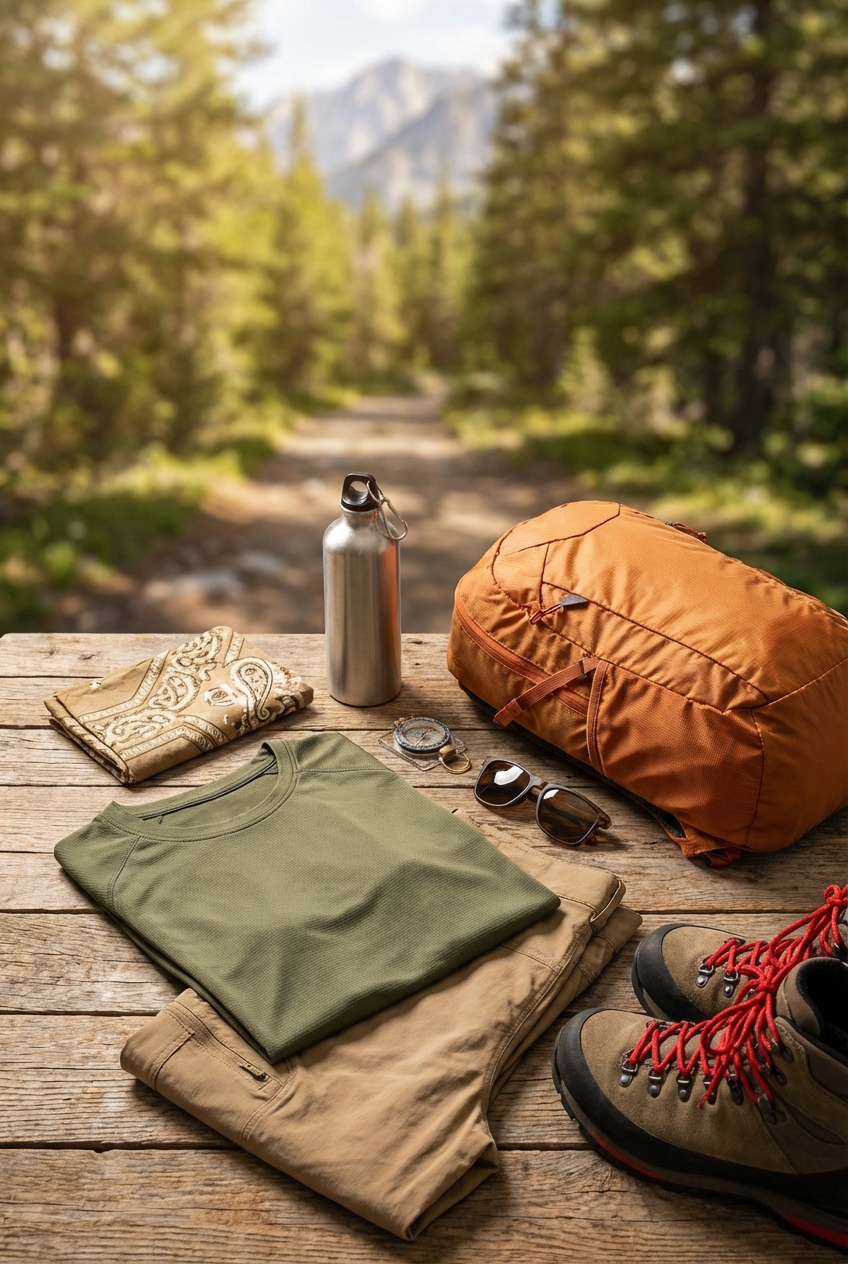
For a classic aesthetic, a leather hiking boot with red laces is timeless. It pairs perfectly with thick, marled wool socks. I always advise scrunching your socks down slightly so they peek out about two inches above the boot. This creates a textural bridge between the hard leather of the boot and the soft fabric of your leggings.
If you prefer a modern, athletic look, go with trail running shoes in a neutral colorway. They have aggressive traction treads but the profile of a sneaker. Avoid white shoes at all costs. One step in the mud and the pristine look is gone. Dark greys, tans, and blacks hide dirt and maintain a polished appearance throughout the hike.
Designer’s Note: The Sock Gap
Never show bare skin between your leggings and your socks on a hike. It breaks the visual line of the leg and leaves you vulnerable to ticks and scratches. Ensure your socks are tall enough to overlap your leggings by at least three inches.
Common Mistakes + Fixes
- Mistake: Wearing brand new boots for the first time on a date.
- Fix: Blisters are not chic. If you buy new boots, wear them around the house with thick socks for at least 4 hours total before the hike to break them in.
Accessories: The Finishing Touches
Accessories are where you can inject your personality and elevate the outfit from “gear” to “fashion.” A belt bag (fanny pack) worn across the chest is incredibly practical for accessing lip balm or your phone without stopping. Look for one in a premium fabric like Cordura or a sleek, waterproof canvas.
Headwear serves a dual purpose: sun protection and hiding “hike hair.” A dad hat or a structured 5-panel cap works well in summer. In cooler weather, a cashmere or merino beanie adds a touch of luxury. Avoid slouchy beanies that look messy; opt for a fisherman style that fits closer to the head.
Finally, sunglasses. Polarized lenses are a must for reducing glare on trails. I recommend a classic aviator or a wayfarer shape with acetate frames. Sport-specific sunglasses (the wraparound kind) are functional but can look too intense for a relaxed date. Stick to classic shapes with high-quality lenses.
Finish & Styling Checklist
Before you head out the door, run through this mental checklist to ensure your outfit is balanced, functional, and date-ready.
Check the Silhouette: Are you balancing volume? Tight bottoms = loose top. Loose bottoms = fitted top.
The Layer Test: Can you move your arms freely with all layers on? If you feel like a marshmallow, remove a mid-layer and opt for a warmer base layer instead.
Sock Check: Do your socks bridge the gap between your pants and boots? Are they wool or synthetic (no cotton)?
Hardware Scan: Are zippers working smoothly? Are loose straps on your backpack tucked away? Dangling straps look messy.
Color Harmony: Do you have no more than three main colors in your outfit? Keeping the palette restrained looks more high-end.
Dirt Defense: Are you wearing dark colors on your lower half? Mud splatter is inevitable; plan for it.
FAQs
What kind of bag should I bring on a hiking date?
Leave the massive trekking backpack at home. For a day date, a small daypack (10–15 liters) or a belt bag is sufficient. Look for a mini-backpack with clean lines and gold or matte black hardware. It should hold water, a snack, and your extra layer.
How do I handle hair and makeup for a hike?
Keep makeup minimal. A tinted moisturizer with SPF, waterproof mascara, and a tinted lip balm are all you need. Heavy foundation will sweat off and look patchy. For hair, a low bun or a braid is practical and cute. It keeps hair off your sweaty neck and prevents tangles from the wind.
Can I wear jewelry on a hike?
Keep it simple. Small stud earrings or a delicate gold necklace are fine. Avoid long necklaces that can bounce and hit you in the face, or large hoop earrings that could catch on branches. You also want to avoid rings that might swell on your fingers as your hands get warm during the hike.
What if the date involves dinner right after?
This is where the “technical trouser” shines. If you wear sleek hiking pants and a clean body suit, you can simply swap your hiking boots for a pair of fashion sneakers or loafers (left in the car) and remove your technical shell. Refresh with some face wipes and deodorant, and you are ready for a casual meal.
Conclusion
Dressing for a hiking date does not mean you have to abandon your sense of style. By borrowing principles from high-end fashion—focusing on silhouette, texture, and color palettes—and applying them to functional outdoor gear, you can create a look that is both impressive and practical.
The goal is to look comfortable in your environment. When you aren’t worried about your waistband slipping, your feet hurting, or being cold, you can focus entirely on the conversation and the connection. Confidence is the ultimate accessory, and nothing builds confidence like knowing your outfit is perfectly suited for the adventure at hand.
Picture Gallery


