Velvet Satin Evening Gowns: How to Pair the Fabrics
- Words by
- Julio Arco
- Published
- Reading
- 4 min
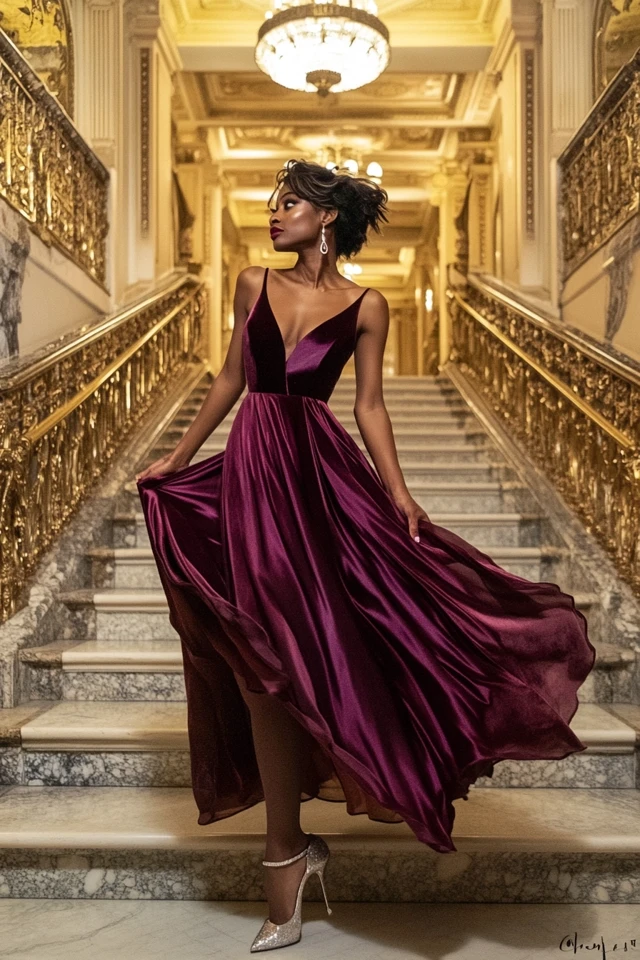
Velvet and satin work together because they treat light in opposite ways. Velvet soaks it up and looks deep and soft; satin bounces it back and looks smooth and bright. Put them in one gown and each makes the other more noticeable.
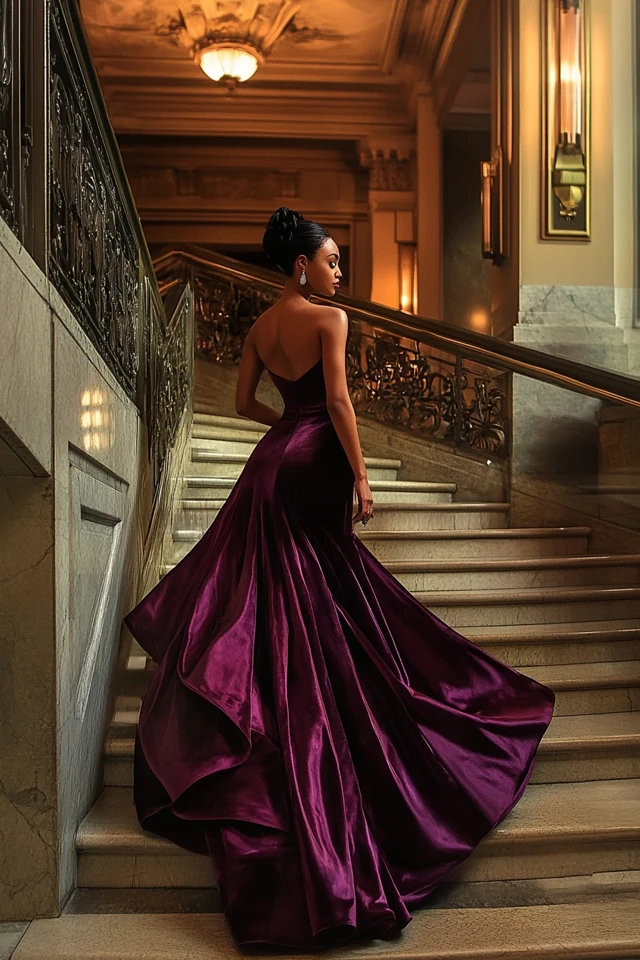
The easiest formula: velvet where you want structure and warmth (bodice, sleeves, cape, belt), satin where you want movement (skirt, train, sash). Below is how to choose the balance, the silhouette and the finishing touches for women's velvet satin evening gowns.
Why do velvet and satin look good together?
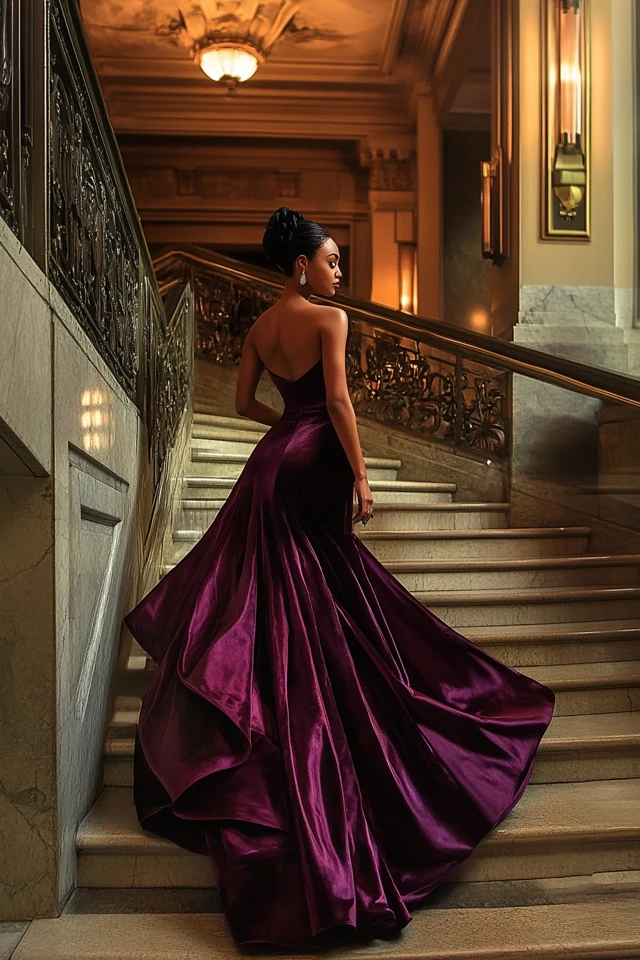
It comes down to contrast in surface. A velvet pile has tiny upright fibers that scatter light, so color looks dense and quiet. Satin has long, flat threads on the surface, so it shows highlights that shift as you move.
Through the lens of evidence-based design, I'd say texture changes how a color reads before you ever think about the shade. The same emerald in velvet and in satin can look like two different greens, which is why a two-fabric gown gives you depth without adding a second color.
How do you balance the two fabrics?
Pick one fabric as the lead and let the other support it. A gown that is half and half can look undecided.
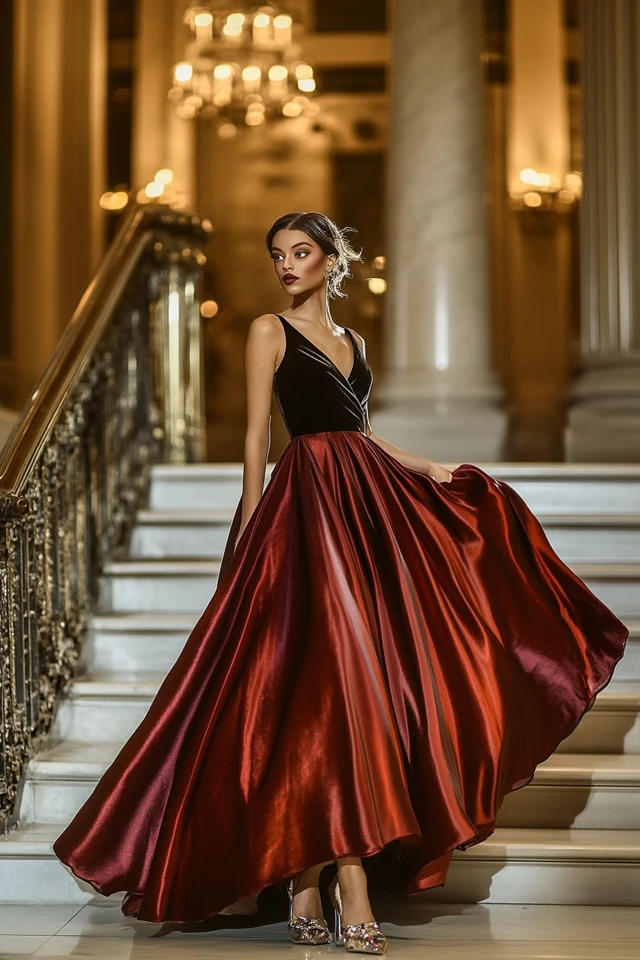
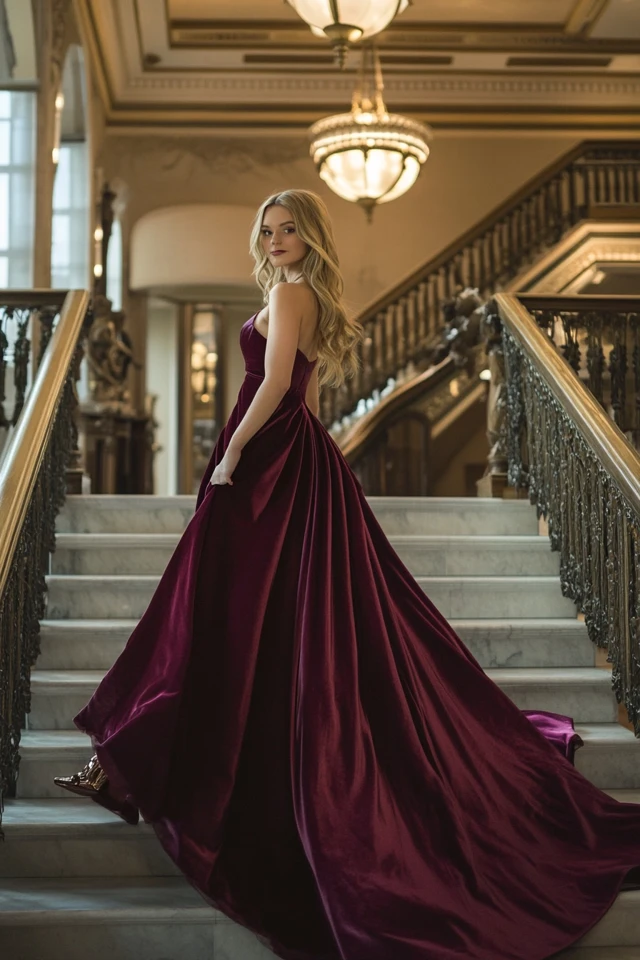
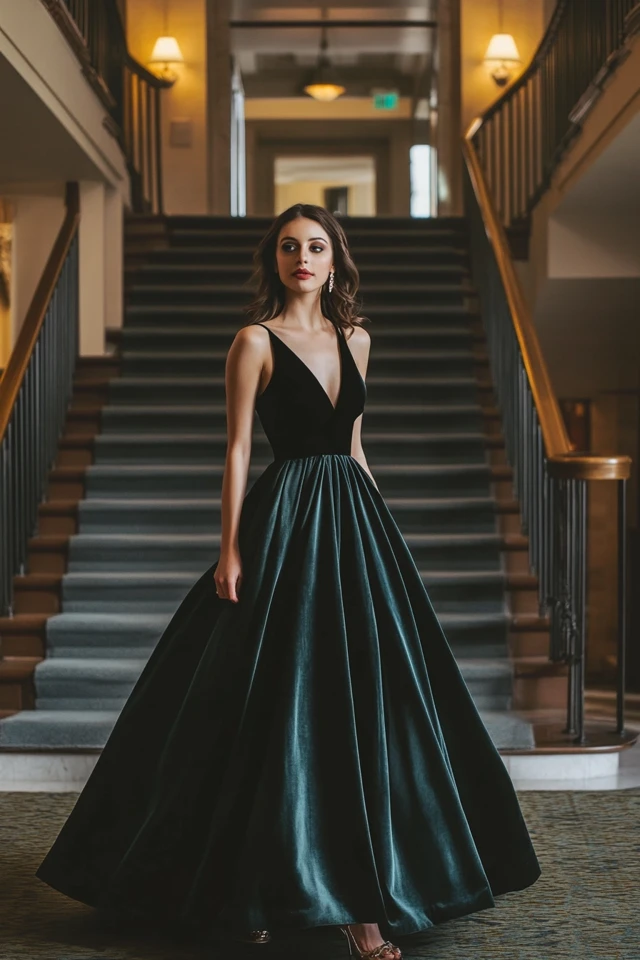
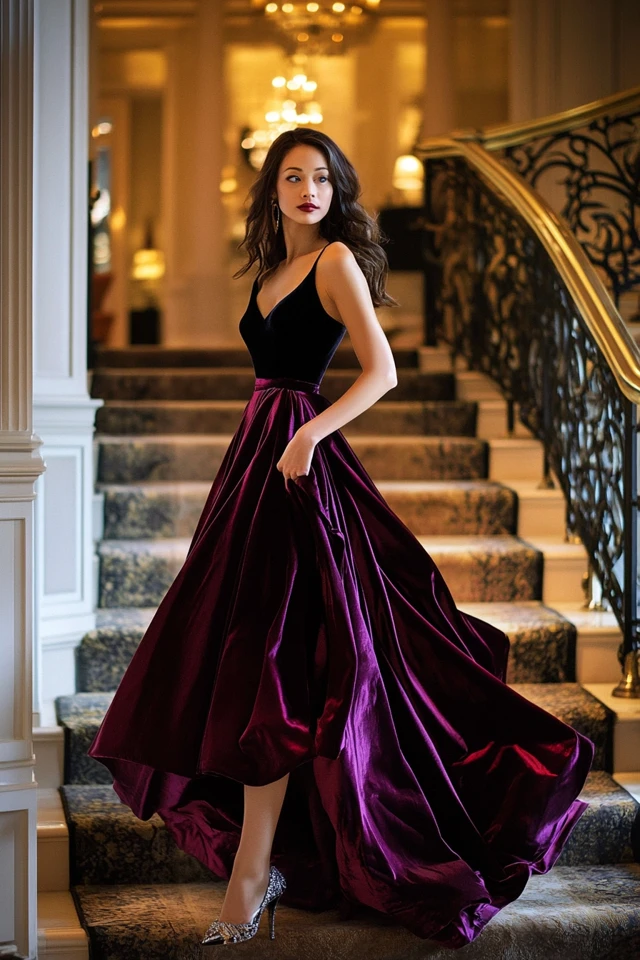
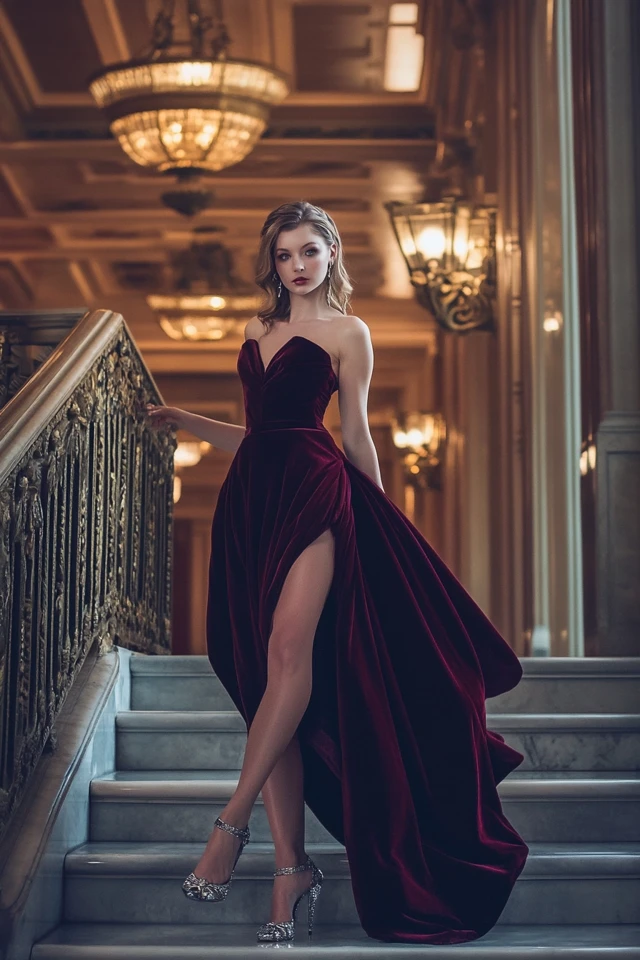
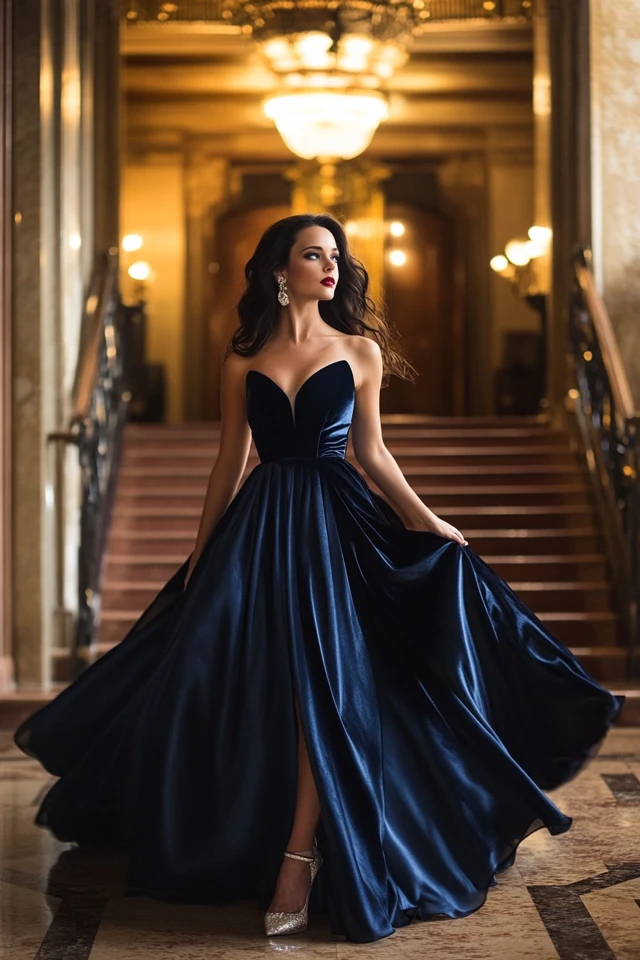
- Velvet bodice with a satin skirt: structured on top, fluid below. The classic choice for a ball-gown or A-line shape.
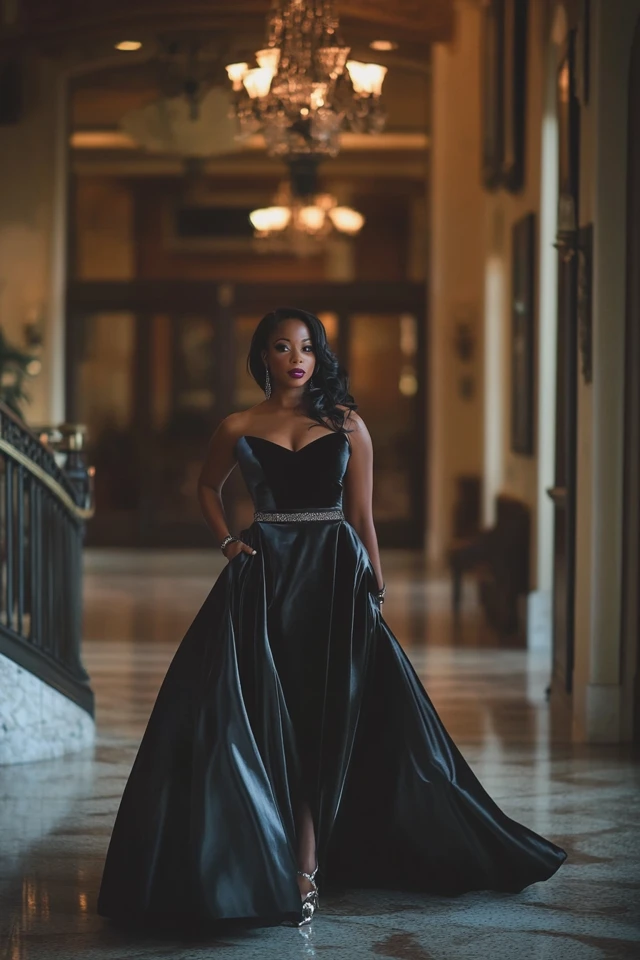
- Satin gown with velvet trim, belt or panels: sleek and minimal, with texture only where you place it.
- Satin slip dress with a velvet cape or wrap: easy to separate, so you can wear the dress alone in warmer rooms.
- Velvet sheath with a satin shawl: simple lines, with the shine kept near your face.
Which colors suit velvet and satin gowns?
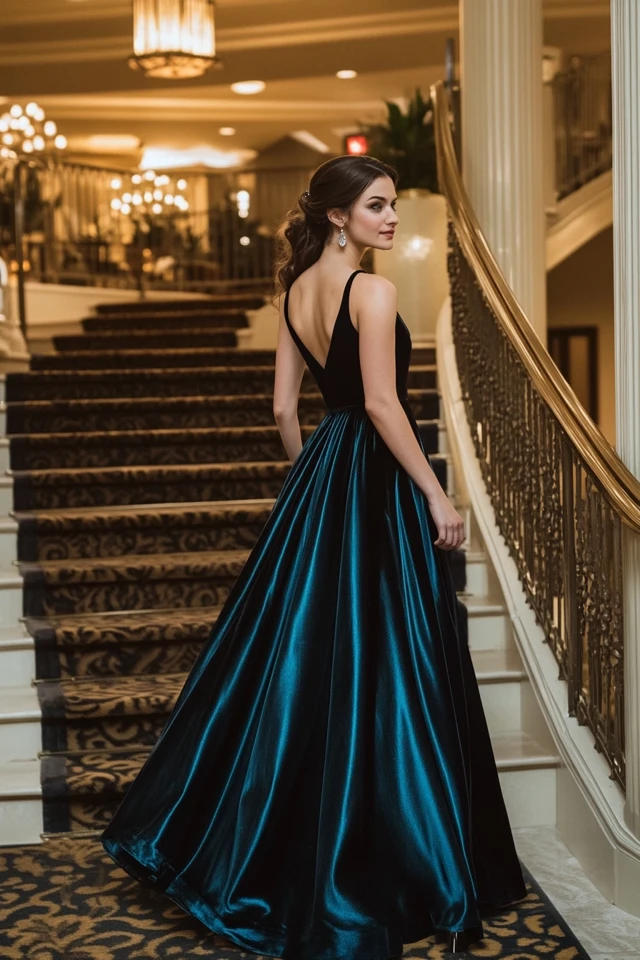
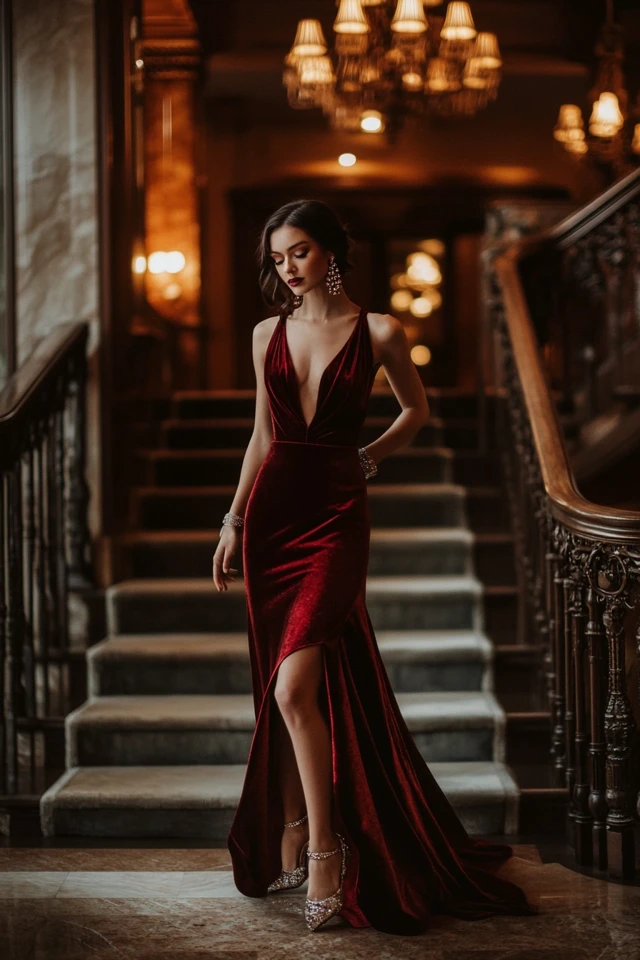
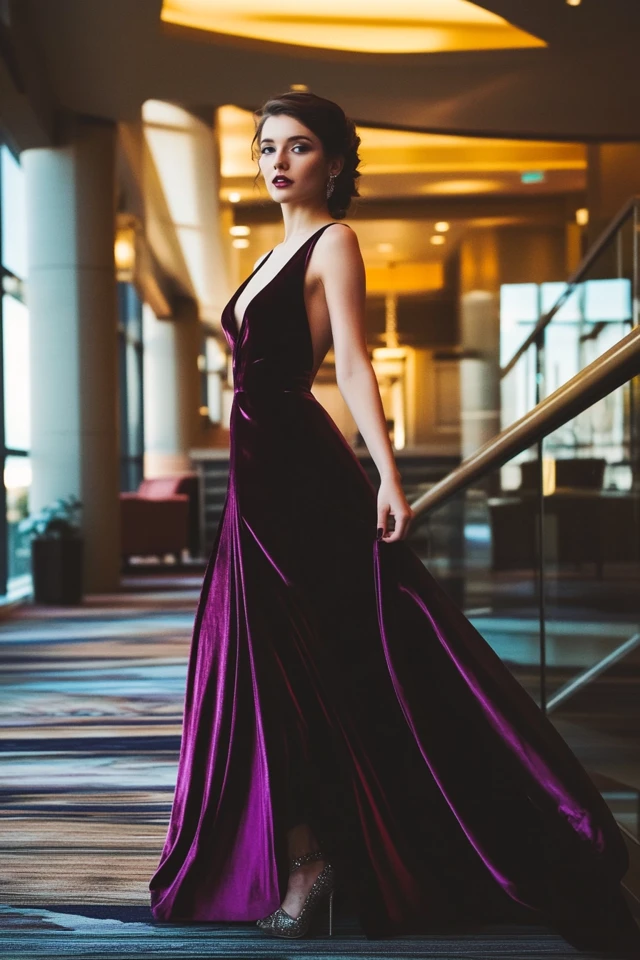
Deep tones such as emerald, navy, burgundy and black show the difference between the fabrics best, because the velvet looks nearly saturated and the satin shows clear highlights. Champagne and ivory work in a lighter version, usually with the velvet in a small detail like a belt or embroidery.
Skin tone matters more near the face than at the hem. Hold a swatch or try the neckline in daylight if you can, since satin shifts color under warm and cool light. For a related palette idea, see coral and midnight blue pairings for evening gowns.
Which silhouette fits your body type?
Treat these as starting points, not rules. Fit at the shoulders and waist matters more than any category.
- Petite: empire waists or sheaths with vertical seams keep the line long. Keep heavy velvet detail from overwhelming the frame.
- Tall: maxi lengths, trains and bold velvet details carry well.
- Curvy: A-line or wrap shapes with a velvet bodice define the waist, and a satin skirt skims rather than clings.
- Athletic: ruffles, draping or pleats add softness at the waist and hip.
How do you match the gown to your style?
Classic: an A-line with velvet bodice and satin skirt in navy or emerald. Modern: a satin mermaid with narrow velvet panels. Romantic: a velvet corset over layered satin. Dramatic: asymmetry, velvet panels and satin draping in burgundy or gold.
If bridal or other formal looks interest you, compare with satin and velvet together for luxe bridal gowns and velvet and silk for formal gowns.
Is velvet satin right for every season?
Velvet is warm and is usually worn in fall and winter. Satin is lighter, so a gown with velvet only on the bodice or trim feels more comfortable in milder weather. For cold evenings, satin gowns for romantic winter evenings has more ideas.
How should you accessorize?
- Jewelry: gold or silver, kept delicate. The fabrics already carry the richness, so one statement piece is enough.
- Shoes: satin heels or velvet pumps echo the gown. A metallic shoe also works.
- Layers: a velvet wrap or satin stole for cool venues.
- Hair: an updo shows a high neckline; loose waves suit strapless or off-the-shoulder shapes.
- Makeup: luminous skin with either a bold lip or shimmery lids, not both.
For texture and shine on top of satin, see combining satin and beaded accents in evening gowns.
How do you care for the gown?
Mixed-fabric gowns are best left to a professional dry cleaner, and the care label comes first. Store the gown in a breathable garment bag, hung so velvet pile isn't crushed.
If a spill happens, treat it quickly, since the University of Georgia Extension notes that heat-set stains are difficult to remove. The same page warns that ammonia damages silk, so skip home remedies on silk satin and go to a cleaner.
Frequently asked questions
Can you wear a velvet and satin gown to a semi-formal event?
Yes. Choose a simpler silhouette with fewer embellishments, such as a satin dress with a velvet belt or wrap.
Are velvet and satin gowns suitable year-round?
Mostly in cooler months, but a gown with velvet only as trim or on the bodice and a satin skirt is lighter and works in milder weather.
What jewelry goes with velvet and satin gowns?
Delicate pieces such as pearl or diamond earrings, a thin bracelet or a simple necklace keep the focus on the fabrics.
Filed under Fabrics & Textures