
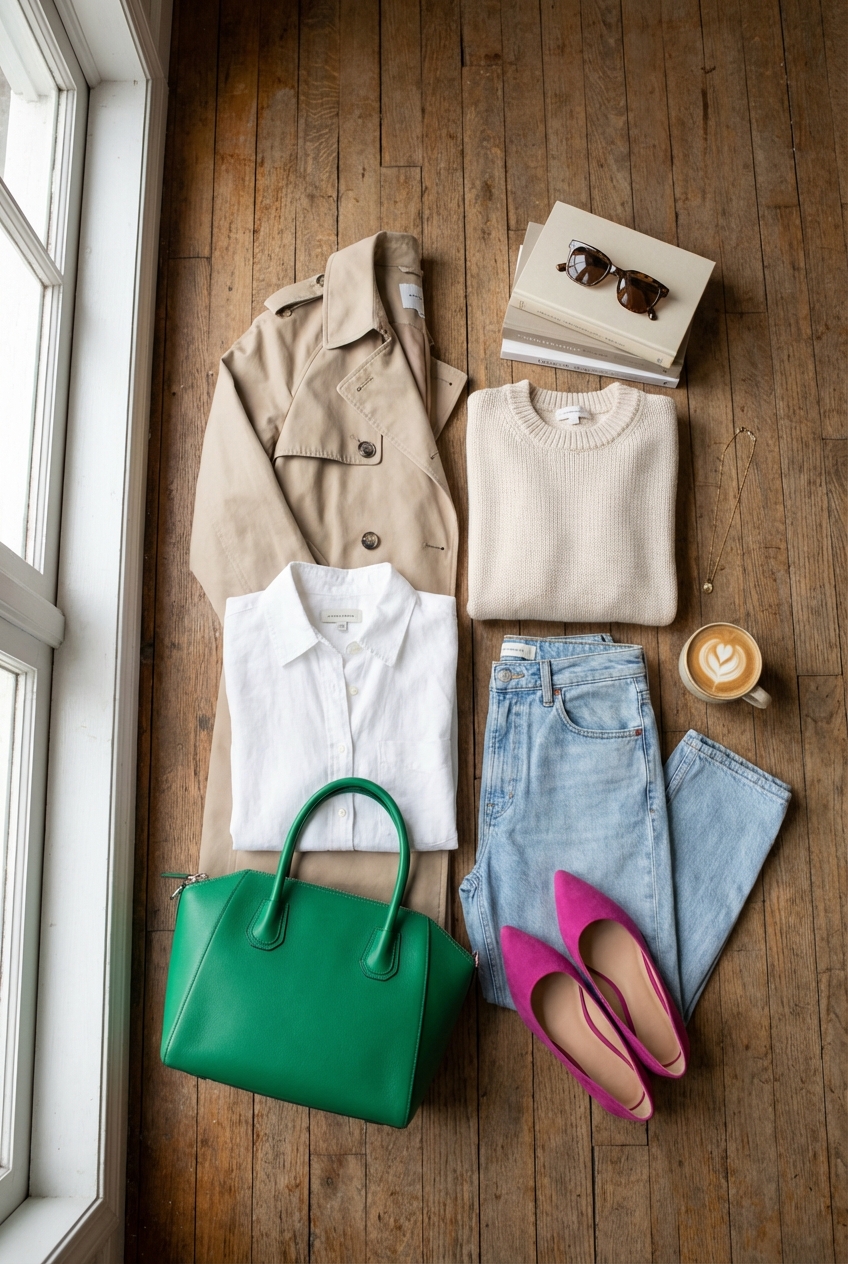
The Ultimate Guide To Neutral Outfits With A Pop Of Color
There is a misconception in the fashion world that dressing in neutrals implies a lack of imagination. As a stylist who has curated wardrobes for high-powered executives and creative directors alike, I can tell you that a monochromatic or neutral palette is actually the ultimate power move. It suggests confidence, restraint, and an understanding of fabric quality. However, living exclusively in beige and black can sometimes feel a bit monotonous.
The secret to keeping a neutral wardrobe feeling fresh, modern, and deeply personal lies in the strategic use of color. We aren’t talking about wearing a rainbow; we are talking about the “pop.” A singular, intentional splash of vibrancy that transforms an outfit from “safe” to “signature.” It is about controlling the eye of the observer and directing focus exactly where you want it.
In this guide, I am going to break down exactly how to execute this look with the precision of a high-end editorial. We will cover color theory, the specific ratios that work best, and the accessories that offer the highest return on investment. Make sure to scroll all the way down, because there is a curated Picture Gallery at the end of the blog post with real-world examples to inspire your next look.
1. Mastering The Neutral Foundation
Before we can successfully introduce color, we must ensure the canvas is flawless. In my years of styling, the biggest mistake I see is treating all neutrals as interchangeable. They are not. A successful outfit begins with understanding the undertones of your neutral base. You need to determine if your “whites” are cool (crisp, blue-based) or warm (creamy, yellow-based).
When you mix conflicting undertones—like a cool, steel grey trouser with a warm, oatmeal sweater—the outfit often looks accidental or muddy. I always advise clients to stick to one temperature per outfit. If you are wearing cool tones like slate, charcoal, or stark white, your pop of color should generally be a cool jewel tone or a sharp citrus. If you are wearing warm tones like camel, cream, or brown, earthy pops usually harmonize better.
Texture is the second pillar of your foundation. When you remove color, texture becomes the primary visual interest. A flat cotton beige t-shirt with flat beige chinos looks like a uniform. However, a chunky cable-knit cream sweater paired with a silk midi skirt creates depth and luxury. Before adding your pop of color, ask yourself if the neutrals themselves are working hard enough.
Stylist’s Note on Quality:
In neutral clothing, cheap fabric has nowhere to hide. Dark dyes can mask poor stitching or low-grade polyester, but lighter neutrals like white, cream, and taupe reveal everything. If you are building this look on a budget, invest your money in the neutral staples (the coat, the trousers) and save your money on the colorful accents.
2. The 10% Rule: Accessorizing With Intent
If you are nervous about introducing color, or if you prefer a very minimalist aesthetic, strictly follow the 10% rule. This guideline suggests that 90% of your outfit should remain neutral, while only 10% comprises that vivid hue. This is the most foolproof way to look chic rather than chaotic.
The easiest entry point for this is footwear. A pair of cerulean blue pumps worn with an all-black suit is a classic for a reason. It shows personality without breaking professional dress codes. Alternatively, consider the “red shoe theory,” which suggests that adding red shoes to any outfit instantly makes it more stylish and intentional.
Handbags are another high-impact, low-risk vehicle for color. I often recommend clients buy their daily work tote in a safe neutral like cognac or black, but purchase their evening clutches or weekend crossbody bags in bold shades like emerald green, saffron, or fuchsia. This allows you to rotate the “pop” without committing to a colorful coat you might tire of.
Common Mistakes + Fixes:
Mistake: Matching the shoes and the bag perfectly in a bright color.
Fix: While this was standard in the 1950s, it can look a bit costume-like today. If you have bright red shoes, let them be the star. Carry a neutral bag. If you want a second pop of color, try a different element, like a red lip or a red detail in a scarf, rather than a large matching accessory.
3. Color Theory 101: Pairing Shades With Neutrals
Not every bright color works with every neutral. While black and white are technically universal donors, other neutrals require a bit more finesse to avoid clashing. Understanding these pairings will save you time in the morning and prevent “outfit regret” later in the day.
Camel and Tan: These warm earth tones look expensive and sophisticated when paired with other warm, rich colors. My go-to pairings for camel are deep burgundy, burnt orange, and forest green. Avoid neons with camel; the contrast is usually too jarring and cheapens the look of the wool or cashmere.
Grey and Charcoal: These are cool neutrals that serve as an excellent anchor for electric and pastel shades. A charcoal suit looks incredible with a neon pink blouse or an electric blue scarf. Grey also pairs beautifully with soft lilacs and mint greens, which can look washed out against white but pop against the moodiness of grey.
Navy Blue: While often considered a color, navy acts as a neutral in high-end fashion. It is less harsh than black. Navy pairs exceptionally well with chartreuse, mustard yellow, and coral. The classic nautical combination of navy and red is timeless, but try pairing navy with a bright turquoise for a more modern, monochromatic approach.
4. The “Third Piece” Power Move
In styling, the “third piece rule” states that an outfit needs three items to feel finished (pants and a top are the first two; the third is a jacket, sweater, or statement accessory). Using the third piece as your vehicle for color is a strategy I use constantly for editorial shoots and client fittings.
A structured blazer in a bold hue is a wardrobe workhorse. Imagine a simple white tee and your favorite vintage-wash denim jeans. On their own, they are casual. Throw on a structured blazer in Kelly Green or Cobalt Blue, and you are suddenly ready for a creative client meeting or a dinner date. The jacket does all the heavy lifting.
Outerwear is another area where I encourage risk-taking. Most people buy black winter coats because they are practical. However, in the dead of winter, when the sky is grey, a coat in a vibrant tangerine or a deep violet is a mood lifter. Since you wear your coat every day, cost-per-wear justifies the investment in a unique color.
What I’d Do in a Real Project:
If I am styling a client for a capsule wardrobe, I usually ensure they have one “hero” coat. We will buy the classic camel trench, but we will also hunt for a wool coat in their “power color.” If they have cool undertones, I look for magenta. If they are warm, I look for a rich marigold.
5. Beauty As Your Best Accessory
We often forget that our face and hands are part of the overall visual presentation. Sometimes, the most sophisticated way to add a pop of color to a neutral outfit isn’t with clothing at all—it is with beauty choices. This approach is particularly effective for those who prefer a very stark, architectural fashion aesthetic.
A classic red lip worn with a head-to-toe beige or cream outfit is iconic. It draws attention immediately to your face and adds a level of polish that feels deliberate. The shade of red matters here; blue-reds make teeth look whiter and suit cool neutrals, while orange-reds bring warmth to the face and suit tans and browns.
Nail polish is the most subtle “pop” available. I love the contrast of a very sombre, all-black outfit paired with a surprising nail color, like a milky lavender or a neon lime. It signals that you are aware of trends but aren’t a slave to them. It adds a touch of playfulness to an otherwise serious silhouette.
Practical Constraint:
If you are working in a very conservative corporate environment where bright clothing is frowned upon, beauty accents are your loophole. A vibrant pedicure hidden in pumps or a bold lip color that can be blotted down for meetings allows you to express creativity without violating dress codes.
6. Seasonal Adaptations
The “pop of color” strategy is year-round, but the specific shades should shift with the seasons to keep your style current. Wearing a neon yellow in November can look out of place, just as a heavy burgundy might feel heavy in July.
Spring/Summer: This is the time for pastels and neons. I love taking a white linen base—wide-leg trousers and a tank—and adding a pistachio green sandal or a lavender bag. The lighting in summer is harsh and bright, so your colors can afford to be lighter and more whimsical.
Fall/Winter: As the light changes, ground your neutrals with jewel tones. If you are wearing heavy grey wools, pair them with ruby red, amethyst purple, or sapphire blue. These colors have depth and weight that can stand up to heavy winter fabrics. A silk scarf in a rich jewel tone tied around the handle of a bag is a perfect winter accent.
Stylist’s Note on Fabrics:
Remember that fabric changes color perception. Velvet absorbs light and makes colors look deeper and richer. Silk reflects light and makes colors look brighter and more vibrant. If you feel a color is too loud, try it in a suede or velvet texture; the matte finish will dampen the intensity.
Finish & Styling Checklist
Before you head out the door, run through this quick mental checklist to ensure your outfit is balanced. This is the exact process I use on set to make sure a look reads “chic” rather than “cluttered.”
The Squint Test: Look in the mirror and squint your eyes. Does the pop of color dominate the frame, or does it guide the eye? If it’s the only thing you see, you might need to ground it with a textured neutral.
Undertone Check: Did you mix cool greys with warm oranges? Double-check that your metals (jewelry/hardware) and your neutrals share the same temperature as your color pop.
The Rule of Three: Do you have more than three distinct colors on? Ideally, stick to one or two neutrals plus ONE pop color. More than that enters “color blocking” territory, which is a different skill set.
Fabric Condition: Is your neutral base clean and pressed? Light neutrals show wrinkles and lint. Use a lint roller on black and a steamer on white before leaving.
Comfort Level: Does the pop of color make you feel self-conscious? If you aren’t used to wearing red, don’t wear a red blazer to a high-stakes presentation. Start with a red notebook or phone case and work your way up.
FAQs
Can I wear multiple pops of color at once?
Yes, but proceed with caution. The safest way to do this is to choose analogous colors—colors that are next to each other on the color wheel. For example, pink and red look beautiful together against a white background. Blue and green also work well. Avoid complementary colors (opposites like red and green) unless you want a very high-contrast, bold look.
Does leopard print count as a neutral or a pop of color?
In the fashion industry, we famously consider leopard a neutral. It is comprised of black, brown, and beige, so it pairs with almost anything. However, visually, it acts as a pattern. Treat it like a texture. You can absolutely wear leopard print shoes as your “interest” piece with an all-black outfit, but you can also* add a red bag to that mix.
I’m petite. Will color blocking cut me in half?
It can if you aren’t careful. If you are petite, I recommend keeping your column of color (top and bottom) neutral and unbroken. This elongates the frame. Place your pop of color in your coat (worn open) or your accessories. Avoid wearing a white top and black pants with a bright red belt, as this creates horizontal lines that shorten the body.
What is the best neutral for someone who looks washed out in beige?
Not everyone looks good in traditional beige. If warm neutrals make you look tired, switch to “greige” (a grey-beige hybrid), taupe, or soft grey. Alternatively, navy is a universally flattering neutral that is much softer than black but provides the same slimming effect.
Conclusion
Embracing neutral outfits with a pop of color is about more than just getting dressed; it is about cultivating a wardrobe that serves you. It allows you to invest in high-quality staples that last for years while satisfying your craving for novelty through smaller, trend-driven accents.
Start small. Maybe tomorrow, you wear your usual grey suit but swap the black blouse for a silk one in emerald green. Maybe you tie a vintage patterned scarf onto your leather tote. Fashion should be a playground, not a prison. By anchoring yourself in neutrals, you give yourself the safety net you need to take exciting, colorful leaps. Trust your eye, respect your proportions, and never underestimate the power of a single, well-placed hue.
Picture Gallery


