Warm Puffer Jackets for Cold Weather Comfort
- Words by
- Julio Arco
- Published
- Reading
- 5 min
For puffer jackets and vests for cold weather, choose by three things: insulation (down for cold and dry, synthetic for damp), length (hip-length is the most flexible), and a shell that blocks wind. Everything else, from color to quilting pattern, is a styling choice.
A jacket keeps your torso and arms warm. A vest keeps your core warm and leaves your arms free, which suits mild days, layering and active use. Below is how to decide between them and how to wear and care for whichever you pick.
Down or synthetic insulation?
Down comes from the under-feathers of ducks or geese. It is very warm for its weight and compresses small, but it loses much of its loft when soaked. It suits cold, dry climates. Fill power measures how lofty the down is, and higher numbers (roughly 600-900) generally mean more warmth for the same weight.
Synthetic fill is polyester-based. It stays warmer when damp, dries faster and usually costs less. It is a little heavier and bulkier for the same warmth. If your winter means slush, drizzle or wet snow, synthetic is the safer pick.
Do puffer vests keep you warm?
Yes, for your core, which is where staying warm starts. A vest will not protect your arms, so it works best over a long-sleeve layer such as a knit or fleece, or in cold-but-not-freezing weather. For deep cold, choose a jacket, or wear a vest under a coat.
If your winters are mild but chilly, our guide to puffer vests for mild but cold winter weather goes deeper. For a lighter jacket option, see lightweight puffer jackets for practical warmth.
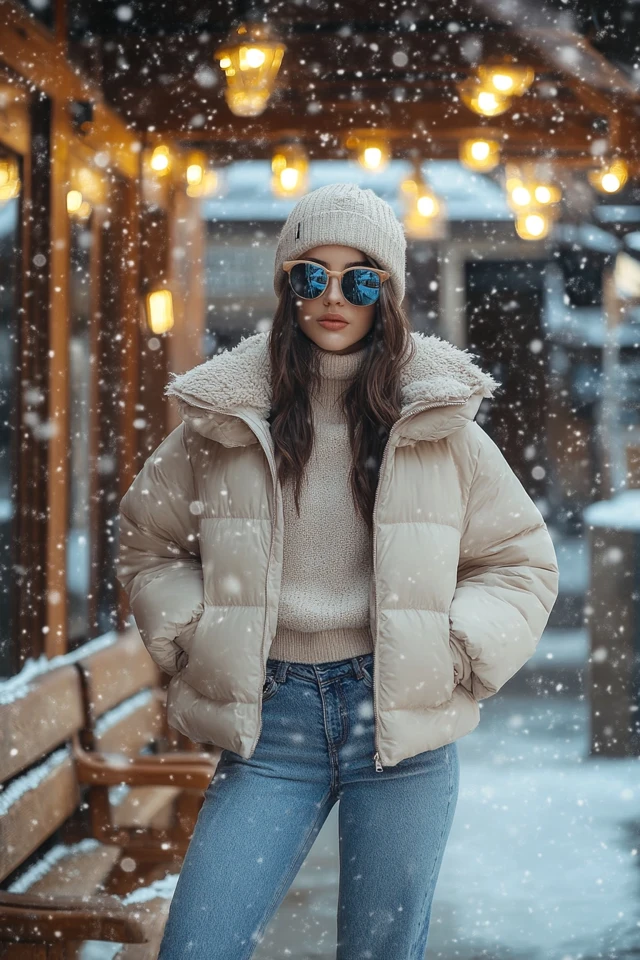
Which length and fit work best?
Cropped
A cropped puffer ends at or above the hip bone. It reads casual and pairs well with high-waisted jeans or trousers, so the volume on top is balanced by a defined waist. It gives less coverage in real cold.
Hip-length
This is the easiest length to live in. It covers your waistband, moves with you when you sit or bend, and works with nearly every bottom.
Longline
A longline puffer reaches the thigh or knee and gives the most coverage. A women's puffer vest in a long cut does the same for your core. Keep the bottom half slimmer (straight trousers, leggings, a narrow boot) so the outfit does not become one big column of fabric.
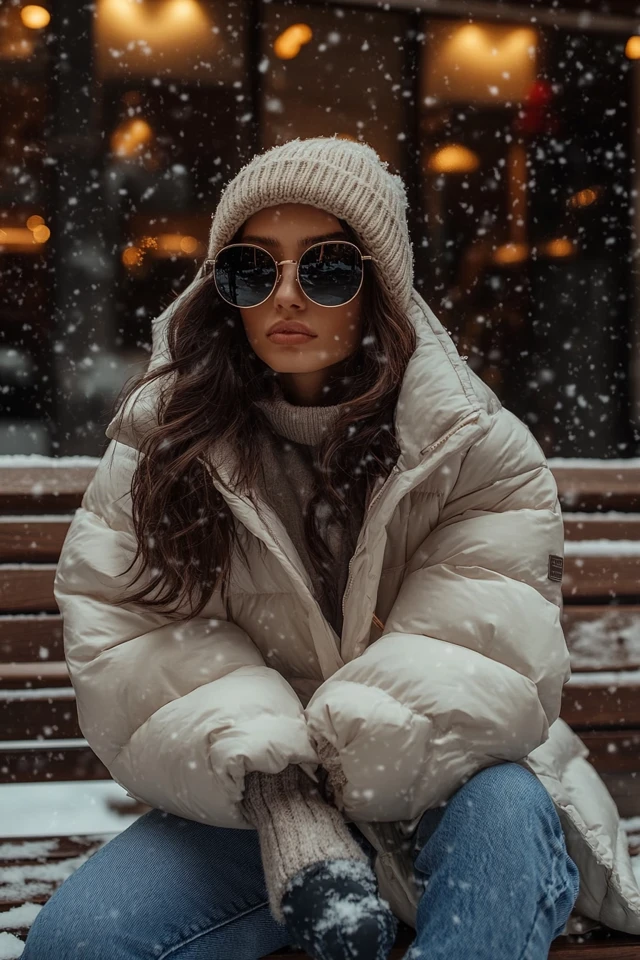
Check the shoulder seam first. It should sit where your shoulder ends. A jacket that pulls across the back when you reach forward is a fit problem, not a you problem. Size up or try a different cut, and leave room for a sweater underneath.
What features are worth having?
- A hood, ideally adjustable or detachable. A men's puffer jacket with a hood is a good choice for wind and snow, and the same goes for any cut.
- A water-resistant outer shell, which helps in light rain or wet snow. Check the label to see whether it is water-resistant or fully waterproof, since they are not the same.
- Zippered pockets, so your phone and keys stay put and your hands have somewhere warm to go.
- Elastic or snug cuffs and a drawcord hem, which seal in warm air.
- Packability, if you travel or want a layer you can stash in a bag.
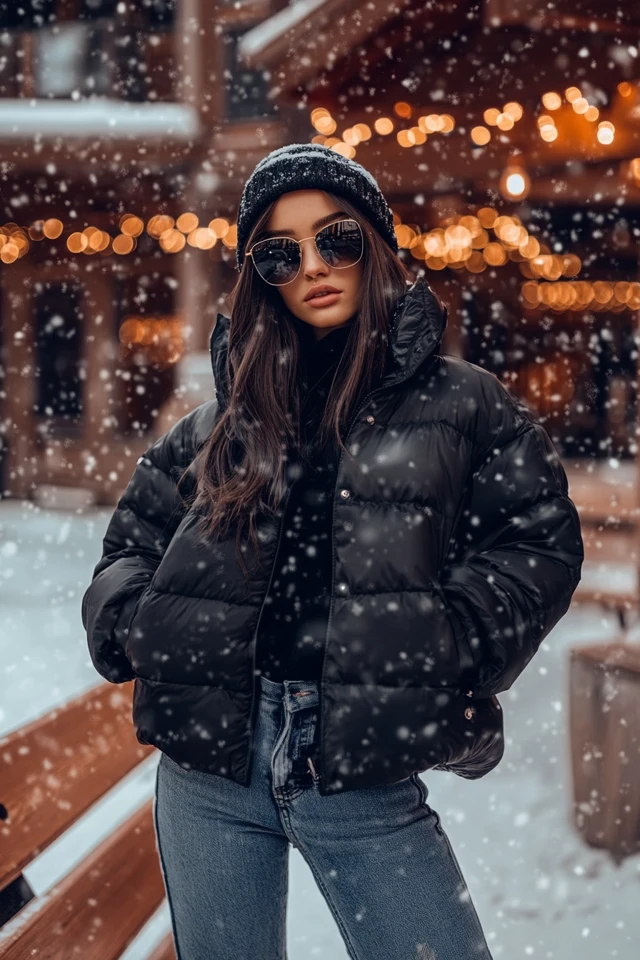
How do you layer under a puffer?
Start with a base layer that moves moisture away. Texas A&M's Howdy Health puts it this way: the layer closest to your skin should be moisture wicking material that draws sweat away from your skin. The same page advises avoiding cotton, because it absorbs moisture and can keep it next to your skin, making you cold.
Add a mid layer, such as a fleece or a knit, then the puffer on top. If you want a closer look at knits, see pairing corduroy and knit fabrics for warm layers. Through the lens of evidence-based design, I'd pick a matte, textured knit under a glossy puffer shell, because the contrast in surface makes the outfit look deliberate instead of one slick block.

How do you style a puffer jacket?
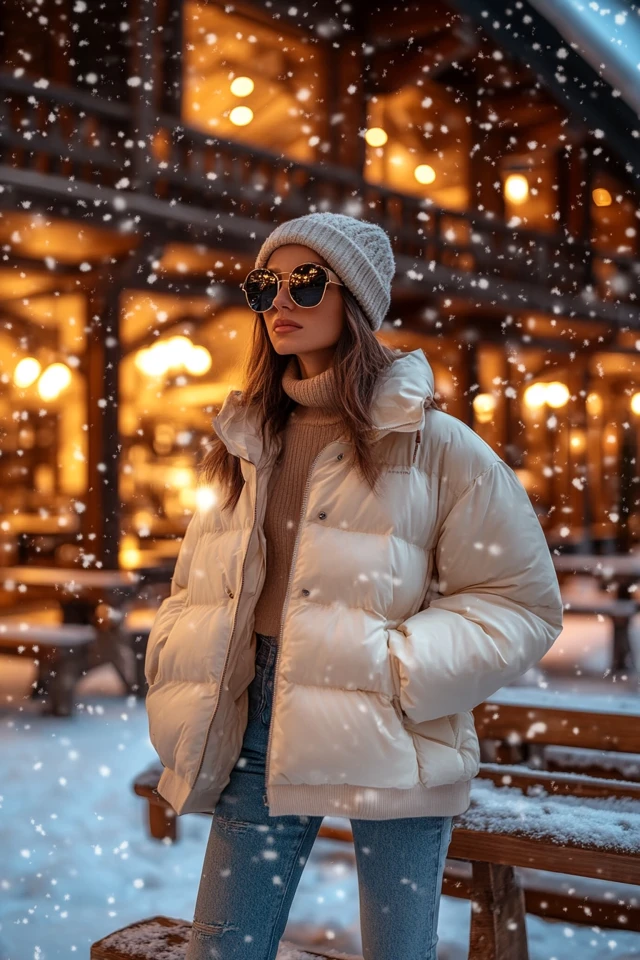
- Everyday: hip-length puffer, jeans or leggings, boots, a beanie. A cable knit beanie adds texture.
- Polished: a longline puffer in black, camel or navy with tailored trousers and leather boots. Dark, solid colors look sharper because there is less to compete with the shape.
- Sporty: an oversized or cropped puffer with joggers or cargo pants and chunky sneakers.
- Snow days: a heavy puffer with waterproof boots and warm accessories such as gloves or mittens.

Choosing for your proportions
If you are petite, a cropped or hip-length cut keeps fabric from swallowing you, and vertical quilting lines can lengthen the look. If you are tall, longline cuts keep proportions balanced. For a curvier shape, a tapered fit or a waist cord defines the waist. For broader frames, an oversized cut reads relaxed rather than tight. As an architect trained in evidence-based design, I'd treat the line where the jacket ends as the first proportion the eye reads, so place it deliberately.

How do you care for a puffer?
- Read the care label first. Many puffers can be machine-washed on a gentle, cold cycle with mild detergent, but not all.
- Skip fabric softener, which can coat the fill.
- Dry on low heat with a few clean tennis balls or dryer balls to break up clumps. Make sure it is completely dry before storing.
- Store it somewhere cool and dry, uncompressed when possible, so the loft recovers.
- Patch small tears quickly with repair tape so the fill does not leak out.
For a broader plan, see building a capsule wardrobe for cold weather, where a puffer usually does the heavy lifting.

Frequently asked questions
Do puffer vests actually keep you warm?
They keep your core warm, which helps your whole body feel warmer, but your arms stay exposed. Wear one over a long-sleeve layer, or choose a jacket for deep cold.
Can I wear a puffer jacket in the rain?
Only if the shell is water-resistant or waterproof. Synthetic fill copes better with dampness than down, which loses loft when soaked.
How do I avoid looking bulky in a puffer?
Choose a tailored fit or a waist cord, and keep the bottom half slimmer with straight trousers or leggings. A hip-length cut usually looks more balanced than a boxy one.
Are puffer vests still in style?
Yes, they remain a common layering piece, particularly in neutral colors and longer cuts. Fit and fabric matter more than the trend.
Filed under Wardrobe Basics