
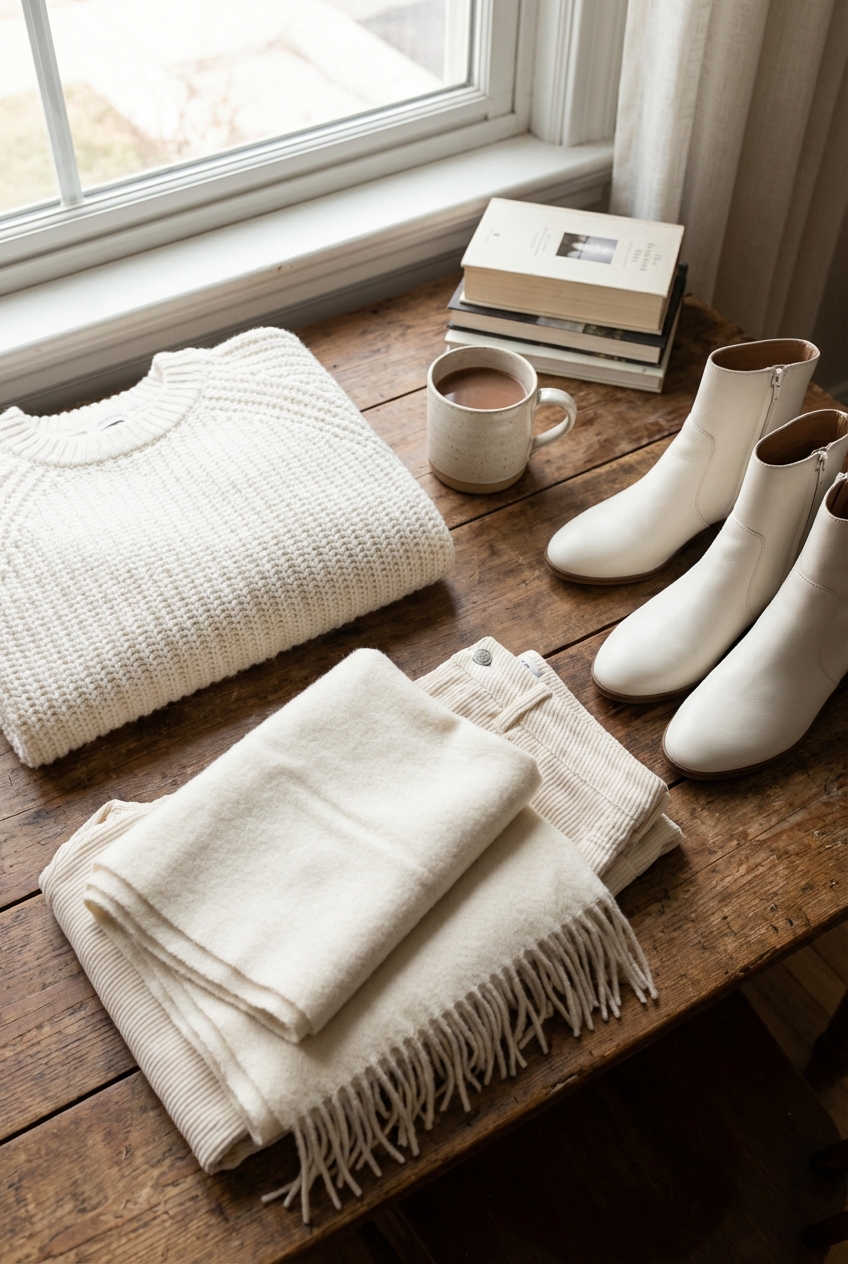
Winter Whites: How To Wear White In The Colder Months
The old adage that you cannot wear white after Labor Day is officially dead. In fact, wearing white in the depths of winter is one of the ultimate power moves in fashion. It signals a sense of luxury and confidence that darker colors simply cannot replicate. While black and navy are safe, practical choices for dreary weather, winter white is crisp, optimistic, and undeniably chic.
However, executing this look requires more strategy than simply throwing on a summer dress with tights. It is all about the weight of the fabric, the nuance of the tone, and the interplay of textures. When done correctly, an all-white ensemble looks expensive and intentional. When done poorly, it can look out of place or, worse, cheap.
I am going to walk you through exactly how to build these outfits with the eye of a stylist. We will cover fabric weights, mixing tones, and the practicalities of keeping pristine fabrics clean in harsh weather. If you are looking for visual inspiration to guide your shopping, make sure you look at the Picture Gallery at the end of the blog post.
1. Texture Is The Secret Ingredient
When you remove color from an outfit, texture becomes the most important variable. In interior design, we use texture to prevent a neutral room from looking flat; the exact same rule applies to your wardrobe. A flat, cotton white shirt worn with flat, white cotton pants looks like a uniform. To look high-end, you must mix materials.
Your goal is to create depth through surface interest. I recommend pairing at least three different textures in a single monochromatic look. For example, a chunky cable-knit cashmere sweater (rough/soft) pairs beautifully with a silk slip skirt (shiny/smooth) and leather boots (structured). The light hits each surface differently, creating a rich visual landscape.
Designer’s Note: The “Touch” Test
In my years of styling, the biggest failure point I see is relying on synthetic blends that look flat under winter lighting.
- The Mistake: Wearing high-polyester items that have a plastic-like sheen. In winter, natural light is scarce, and artificial light makes cheap fabrics look obvious.
- The Fix: Lean heavily into natural fibers. Wool, cashmere, shearling, and heavy cotton denim absorb light rather than reflecting it, which looks significantly more expensive.
2. Mastering The Tonal Mix
A common misconception is that “wearing white” means matching every item to the exact same shade of bright, printer-paper white. This is actually very difficult to do and often results in a harsh, uncoordinated look. The most sophisticated winter white outfits are actually a study in gradients.
You should feel free to mix bright white, ivory, cream, vanilla, and oat. These warm undertones are essential for winter because they soften the look. A stark, cool white can look clinical in the blue-toned light of winter. Creamy whites feel cozy and intentional.
Common Mistakes + Fixes
- Mistake: Thinking your whites clash.
- Correction: They rarely clash if the textures are different. However, if you have two items that are the exact same fabric (like a cotton tee and cotton jeans), the shades must match perfectly, or one will look dirty.
- The Rule: If the fabrics are different (wool vs. satin), the whites should be different shades. This looks intentional.
3. The Foundation: White Bottoms In Winter
Wearing white trousers or skirts in December feels rebellious because of the elements, but it is entirely doable with the right fabric weight. The rule of thumb here is opacity and density. Summer white denim is often thin and slightly see-through; winter white bottoms must be substantial.
For denim, look for 100% cotton rigid denim or blends with less than 2% elastane. The fabric needs to be thick enough to hide the pockets and any layers you have tucked in. For trousers, look for wool flannel or heavy crepe. These fabrics drape beautifully and provide necessary insulation.
Measurements and Proportions
When styling white bottoms, the break of the pant is critical to avoid the “slush line.”
- Wide Leg Trousers: Hem these so they hover exactly 0.5 to 1 inch off the ground while you are wearing your intended shoes. Any longer, and they will wick up moisture from the sidewalk.
- Cropped Styles: In winter, a cropped wide-leg pant should hit roughly 2 inches above the ankle bone. This allows you to wear a fitted shaft boot that tucks up under the pant leg, keeping you warm without breaking the visual line.
4. The Statement Outerwear
If you invest in one piece this season, make it a winter white coat. A long, tailored wool coat in ivory or cream is a transformative piece. You can wear sweatpants underneath, but if you throw a structured white coat over the top, you look pulled together.
When selecting a coat, pay close attention to the lining. High-end white coats should be fully lined in a high-quality viscose or silk blend. If the coat is unlined (double-faced wool), ensure the fabric is heavy enough that it doesn’t cling to the clothes beneath it.
What I’d Do In A Real Project
If I were building a capsule wardrobe for a client, here is the checklist for the perfect white coat:
- Length: It should hit mid-calf. This is the most versatile length that works with dresses and pants.
- Tone: I always choose a warm oat or cream over bright white. It shows less dirt and looks richer.
- Closure: Look for tortoise or gold buttons. White buttons can look cheap; contrasting hardware adds jewelry-like detail.
5. Footwear: Navigating The Elements
Footwear is the most intimidating part of the winter white trend. How do you keep white boots clean? The truth is, sometimes you don’t. This is why I often recommend anchoring an all-white outfit with contrasting footwear.
A column of white (white sweater, white pants) looks incredibly chic grounded by a cognac leather boot or a sharp black heel. This “bookending” technique keeps your look airy but practical. However, if you are committed to the white boot look, leather is your only option. Suede is a disaster waiting to happen in winter weather.
Leather Maintenance Strategy
- Pre-treatment: Before you ever wear white boots outside, spray them with a high-quality leather protectant. Do two coats, waiting 24 hours between applications.
- The Wipe Down: Keep baby wipes or a magic eraser near your front door. Salt stains damage leather if they sit. Wipe your boots down the second you get inside.
6. Styling For The Occasion
Context is everything. Wearing winter white requires reading the room and the environment. It is a high-maintenance look, so it signals that you are not doing manual labor or walking through mud. It is a status symbol.
For the office, a monochromatic suit in ivory wool is powerful. Pair it with a silk camisole in a matching tone. For a casual weekend, swap the trousers for white denim (straight leg is best) and an oversized fisherman sweater.
The “Event” Rule
- Weddings: This is the only hard “no.” Even if it is a “winter white” theme, unless the bride explicitly asks guests to wear white, steer clear. It is not worth the risk.
- Holiday Parties: This is the perfect time for white. A white velvet dress or a tuxedo jacket is festive without being cliché like red or green.
Finish & Styling Checklist
Before you head out the door, run through this mental checklist to ensure your look is polished and practical.
The “Winter White” Final Check:
- Opacity Check: Stand in bright light. can you see the outline of your pockets or undergarments? If yes, the fabric is too thin for winter.
- Texture Balance: Do you have at least one soft item (knit), one structured item (denim/leather), and one smooth item (silk/cotton)?
- Hemlines: Are your pants high enough to clear the wet ground?
- Undergarments: Are you wearing nude-to-you underwear? Never wear white underwear under white clothes; it acts like a highlighter.
- The “Third Piece”: Have you added a belt, a scarf, or a piece of statement jewelry to break up the monochrome? Gold jewelry looks exceptionally good with warm whites.
FAQs
Q: Can I wear black tights with a white skirt?
A: Generally, no. The contrast is too harsh and it visually cuts your body in half. If you need warmth, opt for tights in a grey, brown, or burgundy that coordinates with your shoes, or choose a midi-length skirt with tall boots that hide your legs entirely.
Q: How do I remove road salt stains from white hems?
A: Mix equal parts white vinegar and water. Dab (don’t rub) the stain gently with a clean white cloth. The vinegar neutralizes the salt. Follow up with a damp cloth to rinse.
Q: Does white make you look wider?
A: This is a myth. Wearing a column of color (monochrome) is actually the most lengthening and slimming way to dress, regardless of the color. The key is fit. Ensure your clothes skim the body rather than squeezing it.
Q: Can I mix silver and gold jewelry with white?
A: Absolutely. However, gold tends to warm up the complexion against white fabric, which can sometimes wash people out. If you have cool undertones, silver or pearls are a classic, icy choice that looks beautiful in winter.
Conclusion
Embracing winter whites is about more than just a color palette; it is a mindset shift. It requires a rejection of the gloominess of the season and an embrace of light, texture, and sophistication. While it demands a bit more care and attention than throwing on a black parka, the payoff is immense. You will stand out in a sea of grey and black, looking fresh, modern, and undeniably elegant.
Start with one key piece—perhaps a great oversized cream sweater or a pair of heavy white denim—and build from there. Remember to focus on natural fibers and mix your textures. Once you master the formula, you will find yourself reaching for these light, bright pieces all season long.
Picture Gallery


